BlackRock Latin American Investment Trust PLC ex-dividend date Invesco Bond Income Plus Ltd ex-dividend date Invesco Global Equity Income Trust PLC ex-dividend date JPMorgan Asia Growth & Income PLC ex-dividend date JPMorgan China Growth & Income PLC ex-dividend date
Company’s 30th anniversary of consecutive dividend growth
Primary Health Properties PLC, the UK’s leading investor in modern primary healthcare facilities, today publishes a trading update for the year ended 31 December 2025 and announces the first 2026 quarterly interim dividend of 1.825 pence per ordinary share, equivalent to 7.3 pence (2025: 7.1 pence) on an annualised basis, marking the Company’s 30th anniversary of consecutive dividend growth.
Highlights
· Transformational combination between PHP and Assura successfully delivered, creating a £6 billion healthcare REIT
· 60% of total annualised synergies of £9 million, identified at time of the deal, already delivered in the c. 2 months since Competition and Markets Authority (“CMA”) clearance, as integration moves forward at pace and benefits of the deal are delivered for shareholders
· Rent reviews in the year generated an additional £8.3 million, an increase of 6.8% over the previous passing rent or 3.2% on an annualised basis, which supports our positive rental growth outlook. Annualised contracted rent roll now stands at £342 million
· Enlarged Group is now well placed to take advantage of the improving rental growth outlook across primary care and private hospitals, with six developments on site and an advanced pipeline of 51 asset management projects
· Good progress is being made on expanding the existing joint ventures and establishing a strategic joint venture for our private hospital portfolio where we see exciting growth opportunities
· Strong support from the debt and credit markets for the combination with the refinancing of Assura debt facilities, subject to change of control clauses, now completed providing the enlarged Group with significant undrawn liquidity headroom, after capital commitments, of £552 million, a weighted average cost of debt of 3.7% and debt maturities of just over four years
Mark Davies, CEO of PHP, commented:
“2025 was a transformational year for PHP, obtaining overwhelming shareholder and wider stakeholder support for the combination with Assura plc (“Assura”) to create a £6 billion healthcare REIT invested in critical social infrastructure across the UK and Ireland which will deliver financial and strategic benefits to our stakeholders. Our immediate focus is now on delivering the post-transaction objectives of reducing leverage back to our targeted range of 40% to 50%; delivering the £9 million of annualised synergies identified; and integrating the two businesses to achieve the best of both organisations.
“We are delighted to be reporting that, despite only two months since CMA clearance on 29 October 2025, we have made good progress on delivering against the above objectives and we expect to report further progress with the Group’s full year results.
“The NHS’s 10-year Health Plan published in July 2025 is clearly positive for PHP. We welcome the Government’s commitment to strengthening the NHS, particularly its emphasis on shifting more services to modern primary care facilities embedded in local communities, enhanced by the NHS Neighbourhood Rebuild programme announced in the Autumn Budget. This plays directly to our strengths and long-standing partnerships across the NHS give us a strong foundation to support this transition and deliver value to our shareholders.
“We have now achieved PHP’s 30-year anniversary of consecutive dividend growth and approach the future with a dedicated determination to continue growing our dividend on a fully covered basis. We are encouraged by the improving rental growth outlook underpinned by the Group’s primary care assets along with the solid trading performance from the recently acquired private hospital portfolio.”
Combination with Assura
The acquisition of Assura was completed in full on 20 October 2025 when the final 2% of Assura shares were legally acquired and Phase 1 clearance from the CMA was received on 29 October 2025 which enabled integration of the two businesses to commence.
In the short space of time since CMA clearance, we have made strong progress and delivered annualised cost synergies totalling £5.4 million or 60% of the target, which has been achieved primarily through a reduction in people costs and elimination of duplicated professional fees.
The fair value of the total consideration paid for the acquisition of Assura was just over £1.6 billion funded through the issue of 1.26 billion new ordinary shares of 12.5 pence each, at a weighted average price of 93.0 pence per share, equivalent to £1,171 million, cash consideration of £407 million and transaction costs including stamp duty of £42 million.
Strategy and financial framework
The transaction has created a UK REIT of significant scale and liquidity with a combined portfolio of approximately £6 billion of long leased, sustainable infrastructure assets principally let to government tenants and leading UK healthcare providers benefiting from increased income security, longevity, diversity of assets, geography and mix of rent review types.
To support the combined Group’s progressive dividend policy, paid on a quarterly basis, we have set out our strategy and financial framework which will focus on:
· 80% to 90% government backed income target with new or regeared leases typically in excess of 20 years
· Organic rental growth greater than 3% to deliver sector leading, risk adjusted total property returns
· Risk controlled and capital light asset management and development projects
· Targeting a strong investment grade credit rating of BBB+ or better
· LTV target of 40% to 50%
· Net debt : EBITDA target of less than 9.5x
· Interest cover target of greater than 2.5x net rental income with more than 90% of debt fixed or hedged
· Strong control on costs and overheads with one of the lowest EPRA cost ratios in the sector at below 10%
Rental growth
The enlarged Group’s sector-leading metrics remain robust and we continue to focus on delivering the organic rental growth that can be derived from our existing assets. This growth arises mainly from rent reviews and asset management projects (extensions, refurbishments and lease re-gears). These initiatives provide an important opportunity to increase income, extend lease terms and avoid obsolescence whilst ensuring that our properties continue to meet their communities’ healthcare needs, improve their ESG credentials and ensure they also play a crucial role in helping the Government fulfil its 10-year Health Plan.
In the year ended 31 December 2025, both the PHP and Assura portfolios have continued to see strong organic rental growth on a like-for like basis with total income increasing by £9.1 million or 2.7% (PHP: £4.1 million or 2.6%; Assura: £5.0 million or 2.8%) continuing the improving rental growth outlook seen over recent years.
Rent review performance
In the year ended 31 December 2025, the enlarged Group generated an additional £8.3 million of extra rental income from its rent review activities, both in the UK and in Ireland.
Importantly, the Company continues to see an improving open market rent review performance for primary care assets with an additional £2.7 million an increase of 6.5% over the previous passing rent completed across 324 reviews.
The growth from rent reviews completed by both PHP and Assura in 2025 is summarised below:
Asset management performance
The Group continues to progress an advanced pipeline of 51 projects across the enlarged Group which highlight the improving rental growth outlook with the current weighted average rent of £189 psm due to increase by around 15% to £218 psm post completion. These projects provide important evidence for future rent review settlements across the wider portfolio.
In the UK, across both the PHP and Assura portfolios we exchanged on eight new asset management projects, 21 lease re-gears and 20 new lettings during the year. These initiatives will increase rental income by £0.8 million, investing £5.0 million and extending the leases back to an average of 17 years for the asset management projects.
The Company will continue to invest capital in a range of physical extensions or refurbishments through asset management projects which help avoid obsolescence, including improving energy efficiency, and which are key to maintaining the longevity and security of our income through long-term occupier retention, increased rental income and extended occupational lease terms, adding to both earnings and capital values.
Financing
We received strong support for the combination with Assura from the debt and credit markets highlighted by the record amount of financing activity in the year including:
· The transaction was funded by way of a new £1.225 billion unsecured bridging loan provided by Citibank, N.A., London Branch, Lloyds Bank plc and The Royal Bank of Scotland Plc. We have subsequently cancelled £225 million of this facility due to the refinancing work noted below with £1.0 billion of the facility now remaining
· Change of control waivers obtained plus term extensions to the unsecured Assura £266 million term-loan and £200 million revolving credit facility
· £357 million of Assura private placement debt, subject to change of control clauses, has been refinanced since completion of the acquisition, through a combination of a new unsecured euro denominated private placement debt and re-couponing of an existing unsecured loan note, as follows:
o A new €120 million (£105 million) private placement loan, maturing in November 2032, has been issued at an all-in fixed rate of 3.89% providing a natural currency hedge for the Assura Irish property portfolio and the Laya Healthcare Facility, Cork acquired for €22 million in February 2025
o £60 million tranche maturing October 2034 has been refinanced and re-couponed at an all-in rate of 5.60%
o The balance of the private placement debt, including £70 million that matured in October 2025, has been repaid from the bridging facility put in place to finance the acquisition of Assura
· Total debt facilities at 31 December 2025 of £4.0 billion comprising £1.5 billion (37%) of PHP secured facilities and £2.5 billion (63%) of unsecured facilities including the bridging loan provided to finance the combination with Assura
· Net debt drawn at 31 December 2025 of £3.4 billion, with an average weighted maturity of just over four years, providing significant liquidity headroom with cash and collateralised undrawn loan facilities totalling £552 million after capital commitments of £56 million across the development and asset management projects currently on site.
· Weighted average interest rate of 3.7% at 31 December 2025
· Fitch confirmed Assura’s credit rating as BBB+ (negative outlook) from A- following completion of the merger reflecting the execution risk of the planned asset disposals
Notice of interim dividend
The Company announces the first quarterly interim dividend in 2026 of 1.825 pence per ordinary share, equivalent to 7.3 pence on an annualised basis, which represents an increase of 2.8% over the dividend per share distributed in 2025 of 7.1 pence and will mark the 30th year of consecutive dividend growth for PHP.
The 1.825 pence dividend will be paid by way of a Property Income Distribution (“PID”) of 1.325 pence and an ordinary dividend of 0.500 pence on 13 March 2026 to shareholders on the register on 30 January 2026.
The Company intends to maintain its strategy of paying a progressive dividend, paid in equal quarterly instalments, that is covered by adjusted earnings in each financial year. Further dividend payments are planned to be made on a quarterly basis in May, August and November 2026 which are expected to comprise a mixture of both PID and normal dividend.
The Company also confirms that shareholders may participate in a dividend reinvestment plan (“DRIP”) in respect of the current interim dividend and any future dividends. The DRIP is provided by Equiniti Financial Services Limited (“Equiniti FS”) and administered by PHP’s registrars, Equiniti Limited (“Equiniti”), and provides shareholders with the opportunity to reinvest dividend payments to purchase additional ordinary shares in PHP in the market.
Shareholders who hold their ordinary shares in certificated form and who wish to participate in the DRIP will need to ensure that a completed DRIP Application Form is received by Equiniti no later than 5:00pm on 20 February 2026 (the “Election Date”). Shareholders who hold their ordinary shares in CREST and who wish to participate in the DRIP must do so by submitting an election by CREST input message by the Election Date.
The key dates for the dividend are detailed in the timetable below:
Timetable
Ex-dividend date
29 January 2026
Record date
30 January 2026
Latest date for receipt by Equiniti of DRIP Application Forms and input of CREST elections
5.00 p.m. on 20 February 2026
Dividend payment date/CREST credit date
13 March 2026
Estimated DRIP purchase date
13 March 2026
DRIP shares credited/certificates posted
18 March 2026
A separate announcement with additional information concerning shares held on the Johannesburg Stock Exchange has been published via the SENS system.
If you are still not sure that a dividend re-investment plan is suitable for your portfolio or part of you portfolio. Maybe Warren Buffet will convince you.
Warren Buffett just collected another $204 million from Coca-Cola — a reminder that some of the most powerful returns on Wall Street come from patience, dividends, and owning the right business for decades.
Here’s how that payout breaks down, why Coca-Cola keeps funding Berkshire’s war chest, and what this kind of compounding looks like in real dollars.
Coca-Cola has been one of Warren Buffett’s signature bets since the late 1980s, and it’s still paying like clockwork.
Berkshire Hathaway owns 400 million shares, and Coca-Cola’s $0.51 quarterly dividend just delivered a $204 million payout. Sometimes the biggest wins aren’t dramatic. They’re automatic.
Coca-Cola dividends now bring Berkshire over $800 million a year, far beyond the original $1.3 billion cost. Coca-Cola may have its “secret” headlines, but Buffett only cares about one secret: the dividend arriving every quarter.
Why Coca-Cola Still Matters Coca-Cola isn’t just a dividend machine, it’s still a modern profit engine.
With a market cap around $289 billion and gross margins above 61%, the company keeps doing what it does best: defend pricing power, stay everywhere, and find small ways to sell more. Mini cans. Convenience-store pushes. Product tweaks that look boring up close, but scale fast when you’re global.
That durability is why some Wall Street analysts still see upside, with price targets reaching $80. This implies that Coca-Cola is still being priced as a cash machine with staying power. And for Berkshire, that’s the whole point. No hype. No chasing trends. Just owning a durable cash machine, year after year, and letting dividends and compounding do the heavy lifting.
This is where most investors get caught. They chase the hot stock, the pop, the quick win, and end up trading emotions instead of building wealth.
Buffett plays a different game. He doesn’t need to react to every headline. He owns businesses that pay him, then lets time and dividends do the work.
The difference isn’t access to information. It’s behavior, and the traders who last tend to rely on rules, not emotion, like stop-loss and take-profit orders
Why This Dividend Story Matters That $204 million payout is more than a headline number. It’s what long-term investing looks like when the business is durable and the cash flow is real.
While plenty of investors chase the next spike, Buffett’s Coca-Cola stake shows the quieter path: own a high-quality company, let the dividend stack up, and give compounding time to do its job. You don’t need to love soda to take the point, you just need to respect what consistent payouts can build over decades.
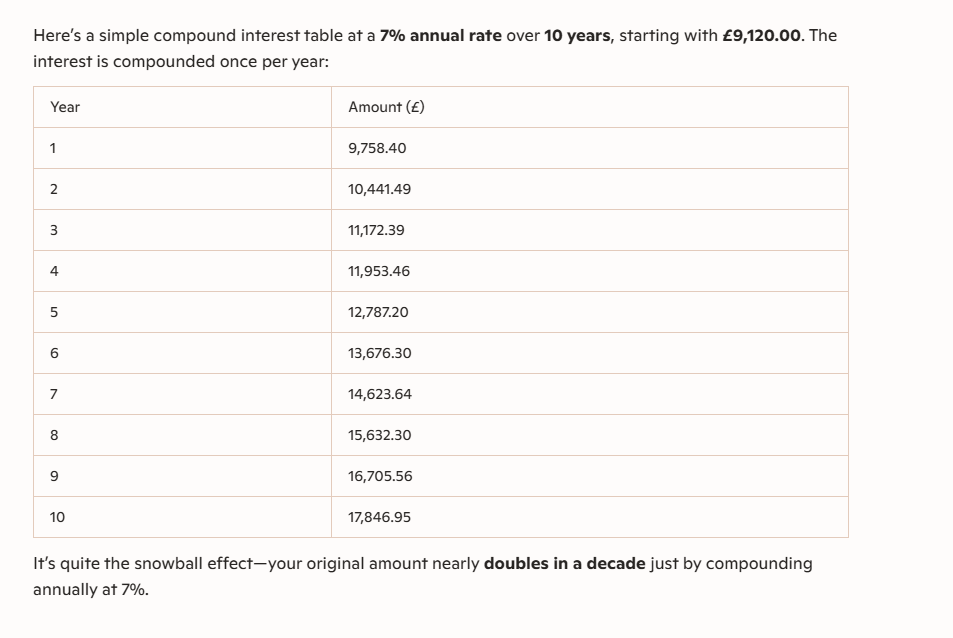
Compound interest takes time to make a difference to your portfolio but when markets sell off you will be getting more shares for your money and a better long term retirement. All eyes on the prize.
You’re reading a free article with opinions that may differ from The Motley Fool’s Premium Investing Services.
I’m a big fan of UK stocks – I think they offer a unique combination of strong businesses and low valuation multiples. But which ones can do well in 2026?
It’s impossible to say with certainty what the stock market will do in the next 12 months. But investors have some pretty clear signs they can pay attention to for clues.
Should you buy Supermarket Income REIT plc shares today?
Economic outlook
Different businesses are suited to different economic environments. So a lot of the question of which stocks will do well in 2026 comes down to what the economy will be like.
The early signs aren’t particularly positive – growth’s expected to be slow and unemployment’s set to rise. The good news though, is that inflation is forecast to fall as oil prices drop.
A lot can happen in the next 12 months. But the early indications suggest that businesses that can generate steady cash flows in a relatively tough environment should be attractive.
That points towards companies that don’t target discretionary spending. So promising sectors include consumer defensives, healthcare, real estate, and utilities.
Real estate
One stock that seems to fit the bill is Supermarket Income REIT (LSE:SUPR). The company is a FTSE 250real estate investment trust (REIT) that leases a portfolio of retail properties.
Supermarkets as an industry should be relatively resilient, even in a challenging economy. People might change where and how often they shop, but they’re unlikely to stop entirely.
With tenants including Aldi and Lidl, as well as Tesco and Sainsbury’s, this should be fine for Supermarket Income REIT. All that matters is that its tenants are able to pay their rent.
For investors, that means a 7.5% annual dividend. And that might be attractive – especially in a tough environment – so I think there’s a decent chance the stock could do well in 2026.
Please note that tax treatment depends on the individual circumstances of each client and may be subject to change in future. The content in this article is provided for information purposes only. It is not intended to be, neither does it constitute, any form of tax advice
Long-term investing
I think anyone looking for a UK stock that has a good chance to do well in 2026 should take a look at Supermarket Income REIT. But I’m less convinced when I look further ahead.
Almost two-thirds of the company’s leases have more than 10 years left. That’s good in terms of stability, but it means the chances of meaningful growth over the next decade are minimal.
Furthermore, 71% of the firm’s rent comes from Tesco and Sainsbury’s. This limits the risk of defaults, but it also means it isn’t in a strong position when it comes to negotiating extensions.
Both of these might be positives in an environment where economic growth across the board’s likely to be limited. But in a stronger economy, they’re likely to be obstacles.
Stocks for 2026
Different investors will – rightly – have different ambitions. And I think that means Supermarket Income REIT’s worth considering seriously for some and not others.
I expect the stock to do well in 2026 and provide steady income going forward. But for investors looking for long-term returns, I think there may be better opportunities available.
You’re reading a free article with opinions that may differ from The Motley Fool’s Premium Investing Services.
The hunt for good income shares in 2026 is already on. Yet, when trying to make a good second income, it’s not just about which stock has the highest dividend yield. That yield also needs to be sustainable and have a good track record. With a lot of factors at play, I turned to ChatGPT to see if it could offer any wisdom in this regard.
Revealing the pick
Interestingly, the AI chatbot decided to make a pick from across the pond in the US. It chose Johnson & Johnson (NYSE:JNJ) as the most reliable dividend stock right now. On the face of it, I can see why it made the choice. The company has a whopping 63 consecutive years of dividend increases. It has averaged an annual dividend growth rate of 5% for the past decade, with the share price up 44% in the last year.
In terms of reliability, it has a strong and diversified business model. This ranges from pharmaceuticals to everyday health products, with stable demand. As a result, the wide product spread reduces risk and makes earnings more predictable.
All of this sounds great, but ChatGPT missed one key point, namely the dividend yield. At the moment, the company’s yield is 2.51%. For comparison, the average yield of the FTSE 100 right now is 2.99%. If an investor could buy an FTSE 100 tracker that paid out the income from all the stocks in the index, why would they want to buy just one stock instead and get a 0.48% less annual yield in the process?
Of course, I’m not saying just go for super high-yielding stocks. But to pick a company with a low dividend yield just because it has been paying it for decades doesn’t seem like the best move.
The best of both worlds
Instead, I’d prefer to own a company with a strong track record and an above-average yield. For example, the Supermarket Income REIT (LSE:SUPR). It boasts seven years of consecutive dividend growth, with a current yield of 7.56%.
A plummeting share price isn’t causing the high yield. Instead, the stock has risen by 18% in the past year. The elevated yield is thanks to continued dividend-per-share increases, which is a good sign.
Please note that tax treatment depends on the individual circumstances of each client and may be subject to change in future. The content in this article is provided for information purposes only. It is not intended to be, neither does it constitute, any form of tax advice.
The latest full-year results presentation showed a 7.3% annual increase in the net rental income, showing demand is strong. Only last month, it announced a £98m acquisition of three UK supermarkets. This move should act to boost income almost straight away, with an anticipated initial yield of 5.5%.
Such details, along with the consistent performance of everyday operations, make it an appealing and reliable income stock. Of course, there are risks, such as the debt exposure it takes on to fund new projects. If interest rates stay higher for longer this year, servicing its debt might become more expensive. Yet even with this, I think it’s a better stock for investors to consider than the pick from ChatGPT!
The FTSE 100 hits 10k ! Here’s why the odds of a stock market crash have risen.
Jon Smith explains why a rising UK stock market might not marry up with the underlying situation in the UK, and talks about stock market crash scenarios.
You’re reading a free article with opinions that may differ from The Motley Fool’s Premium Investing Services.
On 2 January, the elite UK stock market index broke above 10,000 points for the first time. It’s a big milestone and cements the strong rally it’s been on since the tariff-induced falls back in April last year. Yet despite all the cheers, I think the odds of another stock market crash have risen. Here’s why.
Complacency creeps in
The pop over the past couple of weeks has come more from positive global risk sentiment. Even though this is good, I think the UK stock market is being carried by this, rather than by strong UK-specific factors. In fact, given the state of the economy, I believe some investors are becoming complacent.
The latest GDP figure for Q3 showed anaemic growth of 0.1%. In more recent data, the unemployment rate has risen to 5.1%, the highest level since 2021. There’s also growing chatter about a rise in struggling firms. This fuels worries about underlying economic weakness that could hit corporate earnings.
Yet for the moment, the stock market is being carried higher. This is fuelled in part by rising valuations for AI and tech companies in the US. If we see a correction in this area, it could pull the FTSE 100 lower. At that point, people might start to behave more as if the UK economy isn’t in the best shape, compounding the problems.
Given that the UK data has been deteriorating in recent months, along with the increase in US tech valuations, I think the odds of a crash have risen.
How to handle it
I don’t want to be seen as someone who’s completely doom and gloom. Despite my view that the odds of a big move lower are increasing, I still don’t believe we’re going to see a sharp fall immediately. However, I think it’s worth considering some defensive stocks at the moment to help protect a diversified portfolio.
For example, Associated British Foods (LSE:ABF) is a food company that owns famous brands, including Kingsmill bread and Ovaltine, as well as operating at the beginning of the supply chain via manufacturing and selling raw ingredients.
Over the past year, the share price is up 5%, with a dividend yield of 2.93%. This doesn’t make it a high-growth stock, but it has several qualities that make it a good defensive idea. For example, it generates revenue from multiple divisions, some of which are entirely unrelated to others. Furthermore, it owns brands that sell everyday groceries and staples. People buy these regardless of the economic cycle.
It’s a global company too. So even if the UK underperforms, it can offset any negative impact here from sales around the world.
And of course, we can’t ignore its Primark unit. It’s one of the biggest names in fast fashion and is continuing to expand in the UK, Europe and US.
As a risk, it’s exposed to commodity prices (such as wheat and sugar), which can be very volatile. This can mean that costs of production could increase without much warning. And Primark, while huge, has been rather sluggish of late. Despite this, I think it’s a good stock to consider if someone is worried about the chance of a crash.
You’re reading a free article with opinions that may differ from The Motley Fool’s Premium Investing Services.
Dividend stocks are a popular way for some investors to generate passive income. Owning the stock gives them the right to receive a cut of the company’s declared dividend. And this money can be reinvested back into the stock market, compounding the benefits. Here’s how the strategy could play out over time.
Putting the money to work
With £10k in savings, it provides a good initial pot of cash to put to work. To begin with, I’d look at what yield the investor is trying to target. After all, the £10k is likely only earning 2%-3% annual interest in a regular savings account. Therefore, the added risk of buying stocks (where the capital can fluctuate in value every day) must be offset by a higher reward.
The average dividend yield of the FTSE 100 is 2.99% so I don’t think it makes sense to invest in a tracker. Instead, an investor could actively pick a selection of stocks in the 6%-8% range. The potential income is high enough to warrant withdrawing funds from savings and investing them in the market.
The next factor is assessing how long it could take to reach the goal of £455 a month in dividends. If only the initial £10k were used and no further money were injected, it could take 30 years, with an average yield of 7%. That’s a long time! However, if an investor could supplement the lump sum with £250 each month, it could take just under 12 years.
Of course, there’s no guarantee on these timeframes. The hot income stock of today could struggle years down the line, cutting the dividend. That’s why it’s good to have a diversified portfolio, so at least if this does happen, the impact can be manageable.
Boosting dividend payments
Actively picking good dividend shares in the 6%-8% yield range needs some research. One example to consider that I’ve researched is Chesnara (LSE:CSN). It has a current dividend yield of 7.2%, with the share price up 30% in the last year.
The FTSE 250 company isn’t the most traditional insurance and pensions firm, as it focuses on buying and managing existing life insurance and pension policies. It earns fees from administering these policies and profits from managing the investments backing them.
Its CEO said in the interim results in August that it saw “cash generation up 26%, an increase in our solvency ratio and a further 3% increase in the interim dividend”. Further, in December, it got regulatory approval for the takeover of HSBC’s UK life insurance division. This has boosted investor sentiment already, but could help even further as more details about the extra £4bn of assets under administration and 454,000 policies come through.
Against this backdrop, the dividend per share has been rising for several consecutive years. I can see this continuing based on the momentum from last year. However, one risk is that the stock market underperforms this year, leading to volatility in the assets Chesnara manages. This could not only hurt earnings but also cause reputational damage for clients who have their money with the firm.
Overall though, I think it’s a good stock for investors to consider as part of an overall strategy.
When/if SUPR continues up to the broker’s target, as it’s just below resistance those that trade TR may take some or all of their profit.
When/if SUPR continues up to the broker’s target, as it’s just below resistance those that trade dividend re-investment may take some of their profit but continue to hold for the dividends.
Those that hold for the dividend to pay their bills may just continue to hold until the yield falls and they switch positions.