With stocks near historic highs and geopolitical tensions rising, here are three steps Ken Hall’s taking to prepare his portfolio for turbulent times ahead.
Posted by Ken Hall
Published 3 March
You’re reading a free article with opinions that may differ from The Motley Fool’s Premium Investing Services.
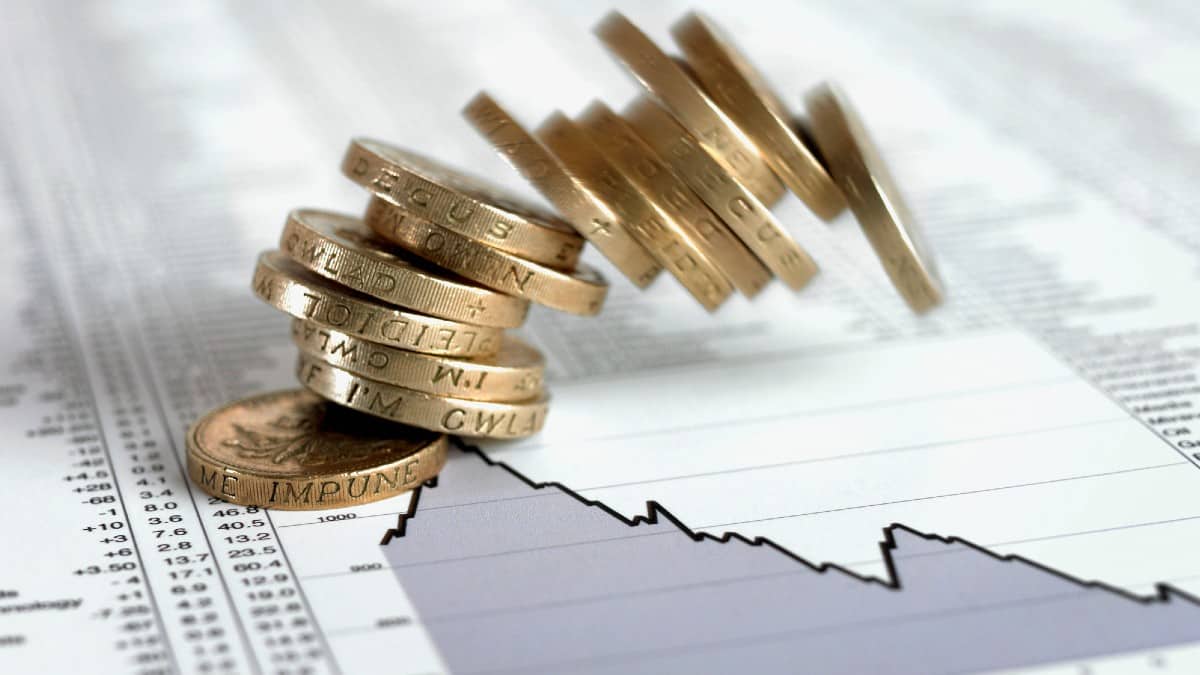
With stock valuations near historic highs, geopolitical tensions escalating, and uncertainty swirling around interest rates and inflation, fears of a stock market crash have increased.
Whether it’s conflict in the Middle East threatening oil supplies, unpredictable US tariff policies, or expensive equity markets, investors are on edge.

No one has a crystal ball to see the future. Instead, here are a few practical steps that I am taking to stay invested long term.
Keep calm and think long term

It is nearly impossible to prepare for a stock market crash. Investors only truly know in hindsight that a crash has occurred.
Trying to time the market by selling out before a fall and buying back in at the bottom is a strategy that consistently fails. Instead, reminding myself of my investment strategy is essential.
Investors who know their time horizon, their financial goals, and their risk tolerance are far better equipped to ride out volatility without making panic-driven decisions.
Maintain some liquidity
Of course, time in the market is more important than timing the market. That said, I personally like to hold some cash back to act as a defensive cushion when stocks are under pressure.
I find this helps me to have a bit of a defensive buffer, and provides optionality and peace of mind. That suits my individual risk tolerance, goals, and needs. Holding cash is a double-edged sword because I could miss out on further gains from being invested in stocks.
For investors like me who can find themselves losing sleep over market volatility, a small cash position could be the difference between staying invested and making rash decisions.
Diversify the portfolio
Diversification remains one of the most effective tools available to investors. Spreading investments across a range of sectors, geographies, and asset classes helps cushion the blow when specific areas of the market come under pressure.
A portfolio heavily concentrated in a single sector or a handful of stocks is far more vulnerable to sharp falls than one that is well balanced.
What’s caught my eye recently?
In times of uncertainty, I like to think about stocks in defensive sectors like defence group BAE Systems (LSE: BA).
The company has had strong order intake in recent quarters, with its order book reaching record levels above £74bn. Its trailing price-to-earnings (P/E) ratio sits around 31 times forward earnings as I write on 2 March, which isn’t cheap but reflects the quality and visibility of its earnings stream.
The business benefits from long-term government contracts across NATO allies, providing revenue stability that many cyclical stocks lack. Its dividend yield of approximately 1.7% isn’t spectacular, but the progressive dividend policy has seen payouts rise consistently.
Despite the seemingly obvious positives, there are big risks. Competition from US defence giants is a threat, as are programme delays or cost overruns. Of course, investors need to decide for themselves about the ethics of investing in the defence sector too.

Leave a Reply