2026 Market Outlook: Energy Will Lead The Way Down
Dec. 27, 2025

Summary
- The Dallas Federal Reserve’s Q4 survey shows industry activity shrinking for a second consecutive quarter.
- Persistent contraction in the energy sector signals potential for a broader market correction if not reversed soon.
- Low energy prices are self-correcting, but sustained weakness risks a repeat of 2022’s high prices.
- Executive commentary highlights policy uncertainty and administrative disconnect as key industry concerns.
- Even if the market corrects, it could still show a gain for the year.
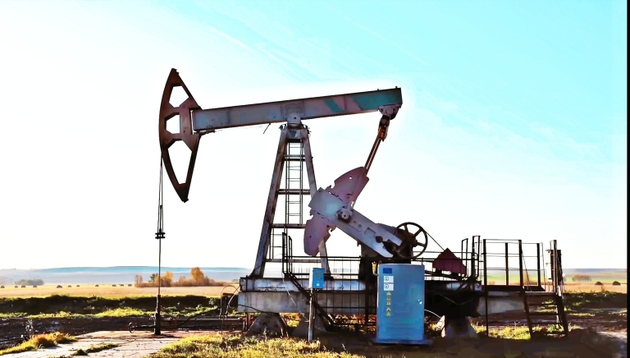
The Dallas Federal Reserve has collected the fourth quarter survey results and published those results here. If the results continue as they have all year, then the market is due for a correction because energy is a big part of the market. Not much can thrive if energy is not thriving. The reason is that the cure for low prices is low prices. The Dallas Federal Reserve shows industry activity shrinking for the second quarter in a row. That is something that needs to reverse if we do not want another 2022 with sky high energy prices.
The Dow Jones could drop roughly 10% from current levels to 44000 and other indexes like the S&P 500 (SP500) could post similar losses. That would mean that the S&P 500 closes around 6300 (give or take). However, timing is always uncertain as to whether they would finish the year at that level or sustain some sort of recovery by yearend.
Furthermore, the senior executive comments indicate an administration that does not understand the industry and does not want to understand the industry.
This continues an unconventional administrative strategy by the current president. The problem is when too many unconventional strategies are cobbled together, the risk of loss climbs considerably while the risk of a big win becomes infinitesimally small. That means that in plain English, this bull market is very likely to meet its end in the near future.
The way to succeed is to instead understand the established “rules” better than anyone else. Those rules can then be used in a way that no one else ever did (but the rules are not broken) to succeed in a way that no one else ever succeeded before. But that is very different from what is happening now.
It is therefore time to gradually raise some cash and take profits in anything that an investor does not want to hold during a downturn.
The Market
Currently many see low oil and gas prices as desirable. But early in the year, the Federal Reserve Of Dallas reported from its first quarter survey that oil prices in particular were below levels for many companies to drill profitability. Therefore, activity was slated to adjust downward and so were established budgets. That appears to be happening.
Furthermore, the uncertain outlook that continues in the fourth quarter survey should be reflected in conservative 2026 budgets. Now what may make this look not concerning is the climbing layoffs that have the attention of many. There could therefore be an assumption that energy prices are great and will continue to be great.
But energy has long been cyclical. No one drills to lose money. While the effects of low prices can be delayed by hedging and contractual obligations, sooner or later the market rules. Confusing a lot of voters is the delay in production declines from the start of an industry contraction. The reason for this is the decisions made by management to complete wells and begin production which often takes a few months. Production often climbs for new wells which often shows itself as increasing production even as idle rigs pile up. But if idle rigs continue to climb, then sooner or later, production will decline until the industry can profitably increase activity. That usually means a period of sky-high energy prices later.
There are more than a few industries that have similar situations. Beef prices, for example could hit new high points next year because it takes a few years for cattle herds to catch up with established demand.
The food outlook in general, is complicated by immigration issues. For as long as I have worked in the food industry, workers have crossed the border for decades and gone North to follow the work. They then circle back and follow the work South to end up back in Mexico. This whole arrangement worked great for decades until some interests noted that they could slip in some people as workers to then go elsewhere once they crossed the border. At that point, laws needed to change (probably starting about 20 years ago) and have not. So, we will likely see higher food prices next year as well because I am in farm country and the prevailing attitude is a lack of workers due to a lack of immigrants is causing a lot of food to rot in the fields.
If turns out California, where I live, has the largest Ag industry of all the states. What happens out here will have a material effect on food prices.
Just for the record, “crossing the border” does not mean making the headlines in Texas and Arizona. The industry needs a much more reliable way to cross the border. Therefore, far larger numbers of immigrants for years were brought into the country in many ways not obvious to most people and certainly not in a way to make the newspapers. The same goes for textile and some other related industries. Those headlines are likely less than 10% of the immigrant “problem” because industries need far more workers than what is in the headlines.
All of this and more points to a very rough year for the stock market. I would think that the market will decline very roughly 10%.
Now, there are some countercyclical businesses out there and gold is a possibility. But I suspect that at some point during fiscal year 2026, there will be a solid buying opportunity (because I hope things do not get worse than I expect).
Summary
I largely view the world from the energy industry. Generally, the energy industry outperforms most other industries in a downturn. But steel and other tariffs may well have changed the relationship enough for energy to lead the way down. Energy is already out of favor.
Companies like Exxon Mobil (XOM) are already on the long-term bargain table. A possible strategy with a company like this is to open a starter position and then decide later if you want to add depending upon how things go. Many of us average down in this industry all the time.
Midstream companies like Enterprise Products Partners (EPD) have a resistant business model to the business cycle. But the limited partner units will follow upstream to likewise (probably) provide a bargain buying opportunity later.
But since energy is routinely low visibility and volatile, again, many of us begin with a starter position and keep some cash in case better values happen.
There are some companies like Comstock Resources (CRK) that could well sail through the downturn because they have a new discovery that could remake company profitability. But that is far from assured. Timing of both the downturn and company progress is far from certain.
In total, it looks to me like the market overall will decline 10% at some point. Whether it ends the year that way is anyone’s guess. Because of the threat of a downturn, I would recommend industry leaders and a diversified portfolio of anything out of favor.
Because I think that tech is largely overpriced, I would avoid tech for the time being. I personally think other areas have as good or better prospects with much more reasonable pricing.

Risks
The economy could hit a home run (although I think the odds are increasingly against this outcome).
Voters could finally connect the “cure for low prices is low prices” with the higher prices that come later instead of blaming whoever is in office at the time for the high prices. That would materially smooth out cyclical cycles in the future.
Along with this should be the realization that the main inflation fighter is the Federal Reserve and not the administration. This likewise causes voter confusion.
Many prices such as food, oil and gas, are low visibility and volatile. A severe and sustained downturn could materially change the outlook of several sectors. On the other hand, some unforeseen event that causes decent prices for a few years in the future could have favorable impacts.
While I see a significant potential of a market correction, it could, if there is enough time and conditions are favorable enough, show a gain for the year on major indexes. It would not be the first time that happened.

What a great resource. I’ll be referring back to this often.
What a helpful and well-structured post. Thanks a lot!
Very relevant and timely content. Appreciate you sharing this.