Investment Trust Dividends

Author: admin (Page 60 of 377)

Across the pond

This “Bubble Fear” Is the Best Setup We’ve Had in Years. These 6%+ Divvies Are the Play

Brett Owens, Chief Investment Strategist
Updated: November 18, 2025

What a time to be a contrarian!

The economy is en fuego as AI boosts productivity (even if, yes, it’s cooling payrolls). Yet the mainstream crowd is hunkered down, terrified of an AI bubble.

That sets up some very attractive deals in 8%-paying closed-end funds (CEFs), many of which have gone on sale in the last few weeks.

2 “North Stars” Show Us What to Do Now

To get a feel for the setup in front of us, all we need to do is look at two things.

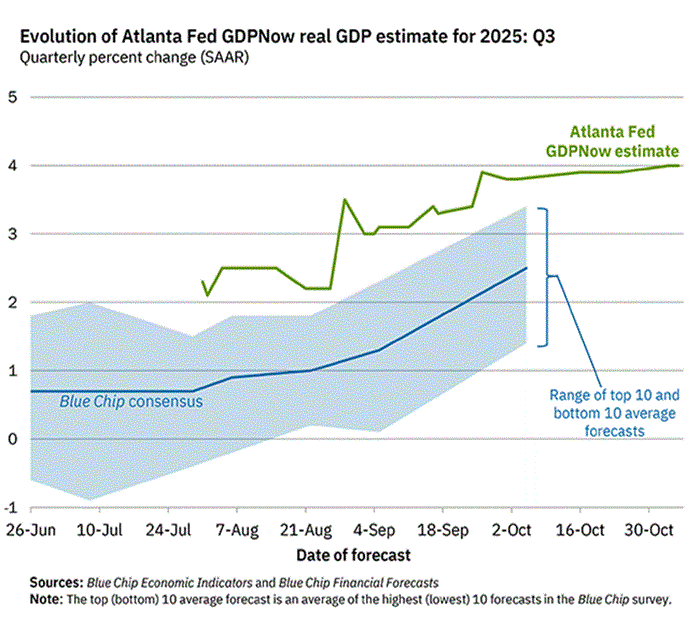
First, the Atlanta Fed’s GDPNow indicator, the most current economic “barometer” we have. In the recently completed third quarter, it’s telling us the economy grew a solid 4% annualized. Cooking!
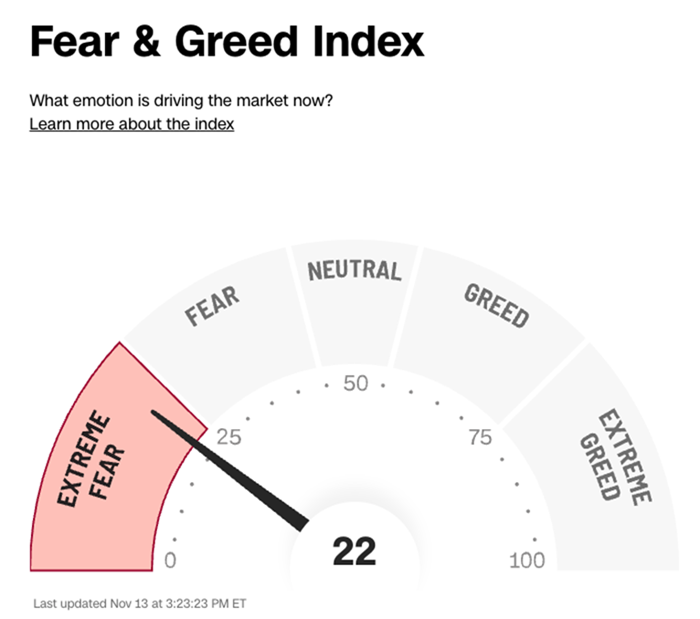
Meantime, the “dumb money” is in full panic mode. Consider the CNN Fear & Greed index, a fairly reliable “investor mood ring”:

Source: CNN.com

Look, I get the bubble fears. But here’s the thing: When you strip out tech and look at things on an equal-weight basis, the S&P 500 is only up about 7% this year. To put that in context, the index has returned around 10% annualized since 1957. So that 7.2% figure isn’t much of a worry.

This is why we want to steer clear of an index fund like the SPDR S&P 500 ETF (SPY) and go with a CEF instead: The latter are run by human managers who can “pick their spots” for bargains.

What’s more, as I wrote last week, CEFs are a “go-to” for us at times like these because these funds are a small market. That means CEF buyers tend to be individual investors—there’s just not enough cash in play here for the big guys to bother with.

But there’s plenty for us! Plus, without competition from institutional players (and their algorithms), we get more bargain opportunities. In addition, CEF investors tend to be conservative sorts, so when the needle moves to “fear” (or better yet “extreme fear,” where it is now), they’re much quicker to sell. And when they do, CEF discounts to net asset value (NAV) get wider. That’s our “in”!

Here are two CEFs paying 6%+ and sporting double-digit discounts today. The first is run by a well-known value-investing guru. The second is a young tech fund paying a huge 9.7% dividend that just delivered its first-ever payout hike.

CEF #1: A Top “Rinse-and-Repeat” Play for Double-Digit Gains

There are few managers better at “picking their spots” than Mario Gabelli. If you’ve been a member of my Contrarian Income Report service for a while, you’ll recall his Gabelli Dividend & Income Trust (GDV), which we’ve tapped for nice double-digit returns a couple times.

The first was from early October 2020 till February 2022, when we booked a solid 44% total return. Then we came back and dipped in for just three months, from October 2023 till January 2024, for another 10.8% return.

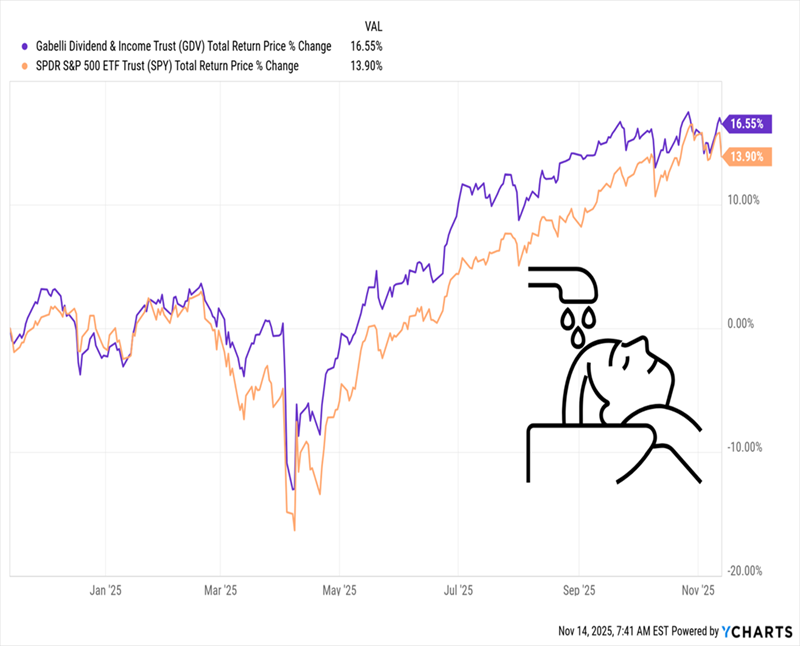
Now, as we near the end of 2025, I’m keeping an eye on GDV again. Why? Because our man Mario’s been putting on a clinic this year, racking up a 16.6% return on GDV’s market price, as of this writing, ahead of the S&P 500’s 13.9%.

“Rinse-and-Repeat” Play GDV Outruns the Market …
For that, you might think GDV would be trading close to par. Ha!

… And Gets Little Credit for It
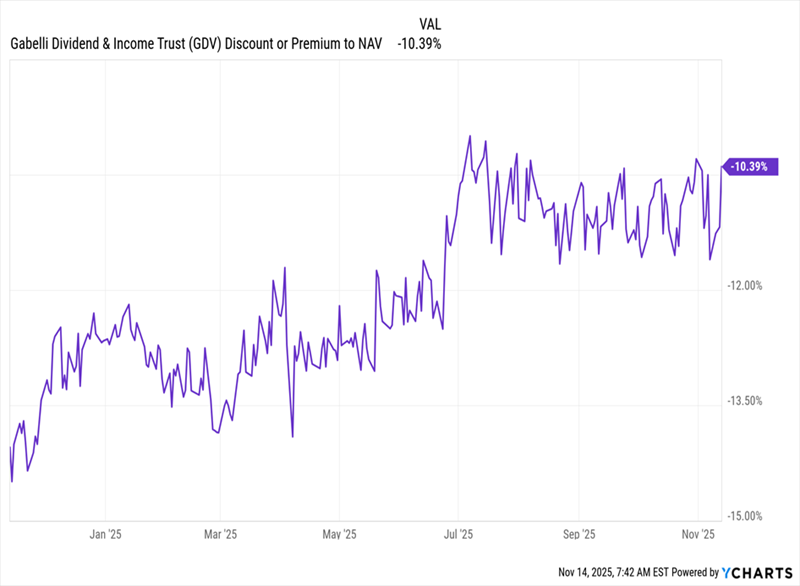
Sure, its discount has narrowed a bit, but 10.4% is still far too big for a fund performing this well. That’s an opportunity—as is the fact that GDV’s discount has momentum, showing that it’s getting on at least some CEF investors’ radar.

We also like the fact that Mario is looking to other sectors beyond tech, which matches up with our view that industries like finance will be next to streamline their businesses. As you can see below, only three of GDV’s top-1o holdings are AI plays—Microsoft (MSFT)Alphabet (GOOGL) and poster child NVIDIA (NVDA).
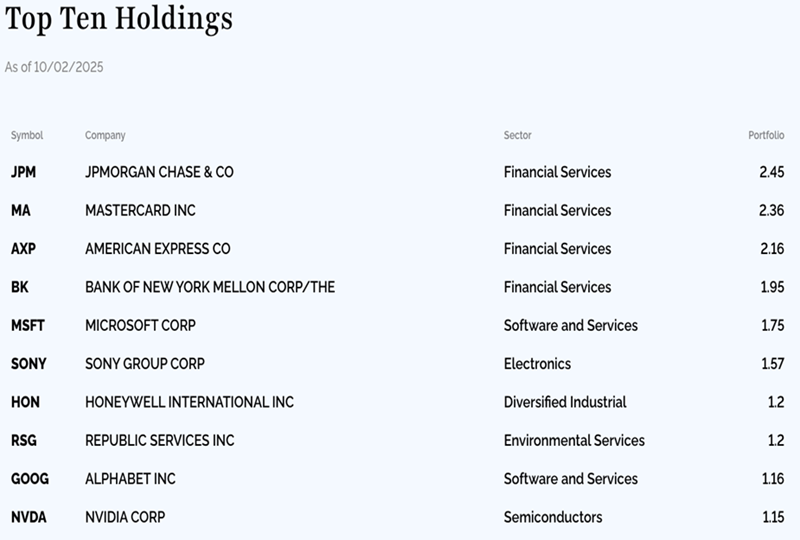

Source: gabelli.com

Now, far be it for us to turn up our noses at a 6.2% dividend, but Gabelli’s payout is a bit low for a CEF. However, we can look forward to upside from that closing discount and Mario’s stock picking to make up the difference.

Plus, the dividend—paid monthly—has been rising, so we can consider that 6.2% a “starter yield” on a buy today.

GDV Delivers the (Monthly) Dividend Cash

Source: Income Calendar

(Note that those dips in late 2021 and late 2022 are special dividends, not cuts!)

All of this makes now a good time to consider GDV—especially if you’re looking for a bargain-priced, high-yield way to diversify beyond tech.

CEF #2: A 9.7% Dividend That Just Jumped 

Now just because we’re leaning into GDV’s non-tech bent doesn’t mean we’re turning away from tech. But again, we’re picking our spots—and that’s where the Neuberger Berman Next Generation Connectivity Fund (NBXG) comes in.

NBXG goes in the opposite direction of GDV, holding the main tech names: Amazon.com (AMZN), Meta and Microsoft are all here, as are some more aggressive tickers, like Robinhood Markets (HOOD) and “adjacent” plays like AT&T (T).
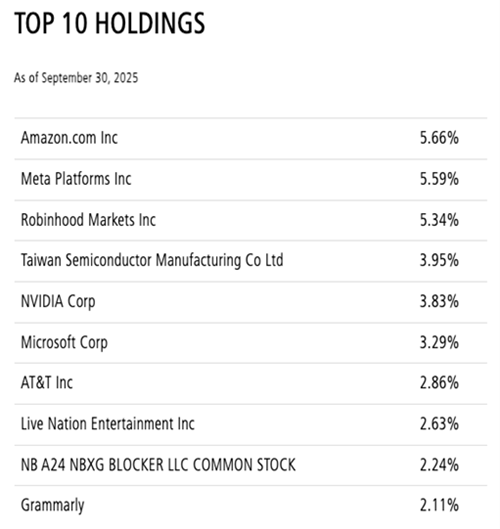

Source: nb.com

Plus, the fund is generous on the dividend front, with a 9.7% payout. And shareholders just bagged their first-ever dividend hike (NBXG hasn’t been around long, having launched in May 2021):


Source: Income Calendar

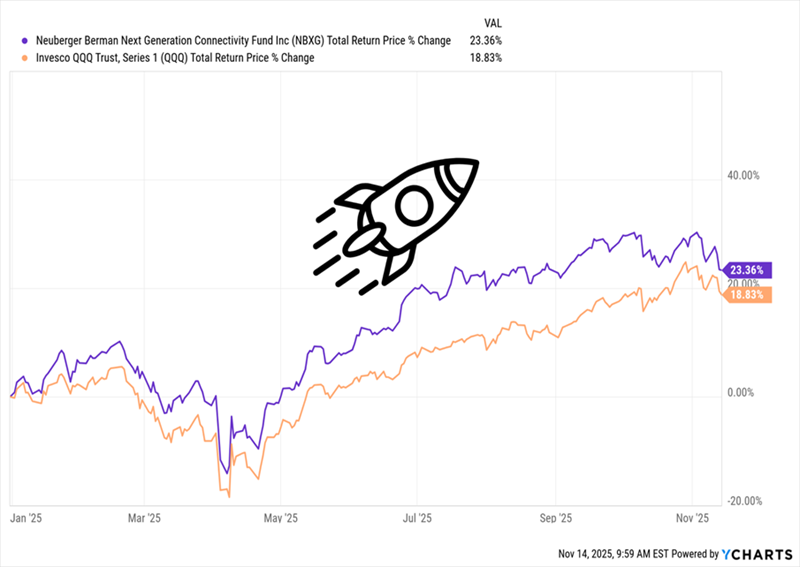
Moreover, the fund has outrun the NASDAQ on a total-return basis this year.

NBXG Crushes Its High-Flying Benchmark
Which brings us to the discount, which is a sweet deal at 12%. But as you can see below, the markdown has largely moved sideways this past year, despite the fund’s strong performance:

NBXG Is Cheap, But Will Likely Get Cheaper
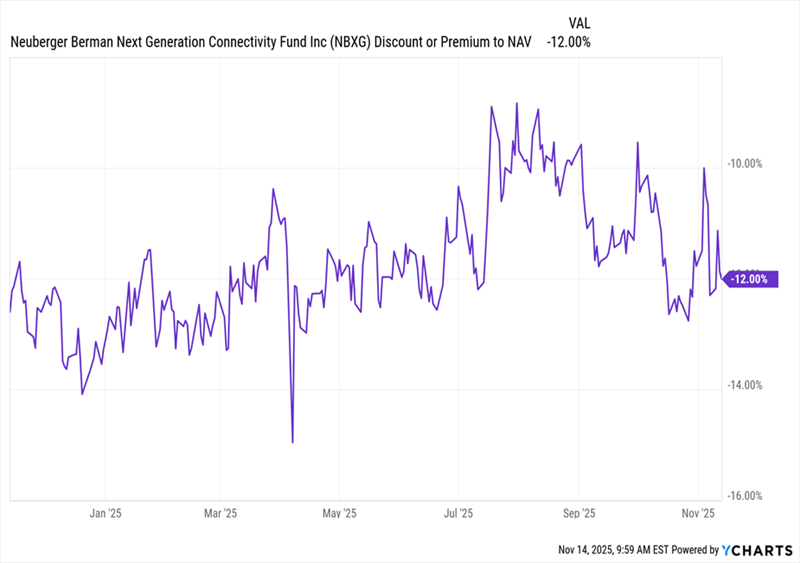
That means we can’t expect much upside from the closing discount, and will be looking to the fund’s portfolio to drive gains. That’s not a bad thing, but I’d wait till that markdown is below 13% before considering this one—and look to GDV till then.

This 11% (!) Divvie Got Tossed in the “Sale” Pile, Too (It Won’t Stay There)

My ULTIMATE buy on this pullback is an 11%-paying fund trading at a truly ridiculous discount.

The incredible 11% dividend this fund throws off also has a history of being hiked—and our top pick’s manager, a top name in the bond world, regularly drops special dividends, too!

This fund has been swept up in the pullback, but that won’t last. Because as rates fall (and they will, especially when Jay Powell’s term ends in May and he’s replaced by someone who will work with the administration to cut rates), this fund’s huge payout will likely be in high demand.

The time to grab a position is NOW, while today’s overdone fears have this 11% payer in the bargain bin.

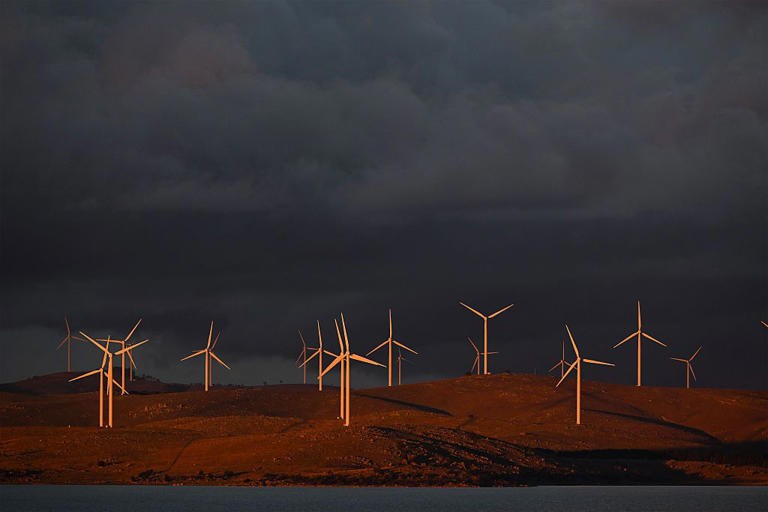
Why is the renewable energy trusts industry struggling ?

Story by Rupert Hargreaves

 More clouds gather over renewable energy trusts – is there any hope for the sector?

More clouds gather over renewable energy trusts – is there any hope for the sector?

Story by Rupert Hargreaves© Saeed Khan / AFP) (Photo by SAEED KHAN/AFP via Getty Images

Renewable energy trusts were already struggling before the government decided to kneecap them at the end of October. In a major shock, it has launched a consultation on changing the inflation linkage on the subsidies they receive from the retail price index (RPI) to the consumer price index (CPI) in April 2026, three years sooner than expected.

Even worse, the government has floated a second, complex option that would backdate the switch to 2002. This may have been thrown in mainly to make a April 2026 change sound like a concession, but if actually implemented could reduce the income received by generators by billions of pounds over the coming years. The market reacted accordingly and the sector as a whole lost about 5% of its market value on the day.

Feuding with renewable energy trust managers

It is regrettable that many managers were paid fees based on a percentage of NAV rather than performance. This became increasingly controversial once shares traded far below NAV. In the past year, many trusts have belatedly shifted to levying fees on a 50/50 mix of NAV and market value (or in UKW’s case, entirely on market value). Dealings with managers are becoming a common point of contention. Take Aquila European Renewables (LSE: AERI), which has agreed to sell assets to another fund advised by Aquila at a large discount to the current NAV, says Nicholls. How can the same manager assign two different values to the same assets? Or take a plan by Bluefield Solar Income Fund (LSE: BSIF) to merge with its manager, saying this would make it easier to invest in new projects. The trust has instead put itself up for sale after a backlash. Or just this week, TRIG has said it will merge with HICL Infrastructure (LSE: HICL), run by the same manager.

These developments show a lack of concern for investors, says Nicholls, which is clouding the real value of the assets. “If boards were more respectful of shareholders, the share prices would be a lot higher.”

It isn’t clear what it will take to shift sentiment towards the sector. The government’s consultation certainly won’t help. Still, there needs to be a substantial change in the way these trusts are run, with a primary focus on the interests of shareholders. Only then can investors begin to trust NAVs are what managers say they are.

The Snowball 2025

With the final shares in the Snowball declaring their dividends the total income for 2025 should be £11,930.00. There are announced dividends to paid next year of £682.00 as we start the journey again.

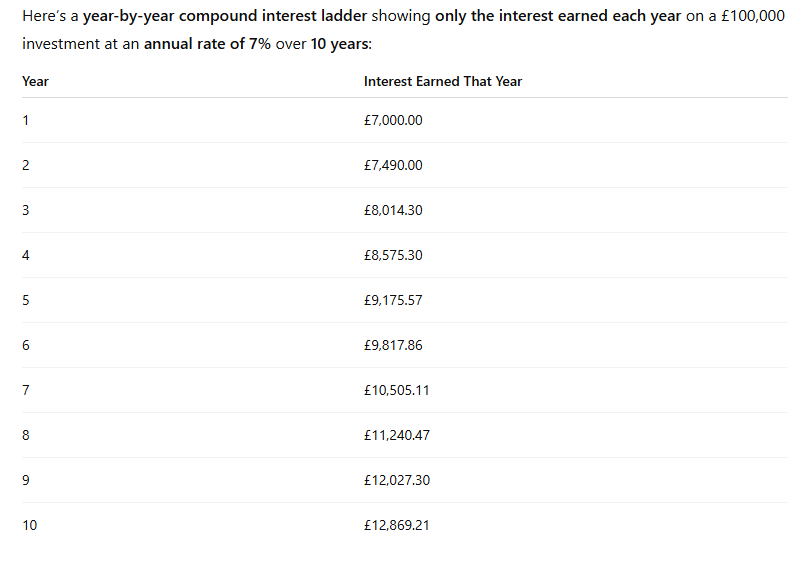
Income for 2025 of £9,175,57 has been exceeded and I will try to exceed next year’s target also.

One advantage the Snowball has on the above figures is that the interest in the table is compounded once a year, whilst the Snowball can add funds as they are received, normally monthly.

Current cash for re-investment £881, with further income to be received this year of £1,511.00.

Current quarterly income pencilled in of £2,479.00, which of course isn’t income until it sits in your account.

Rules for the Snowball

For any new readers, welcome. There are only 3 rules.

Rule one.

Buy Investment Trusts/Etf’s that pay a ‘secure dividend’ and re-invest those dividends into Investment Trusts/Etf’s that pay a ‘secure’ dividend.

Rule two.

Any share that drastically changes its dividend policy, must be sold, even at a loss.

Rule Three.

Remember the Rules.

It’s your duty, if you want to trade your Snowball to check the dividend announcements as they are made.

FSFL

Foresight Solar Fund Limited

(“Foresight Solar” or “the Company“)

Declaration of Dividend

Foresight Solar is pleased to announce the third interim dividend, for the period 1 July 2025 to 30 September 2025, of 2.025 pence per ordinary share. The shares will go ex-dividend on 29 January 2026 and the payment will be made on 20 February 2026 to shareholders on the register as at the close of business on 30 January 2026.

The Board confirms its annual dividend target of 8.10 pence per ordinary share for the 2025 financial year.

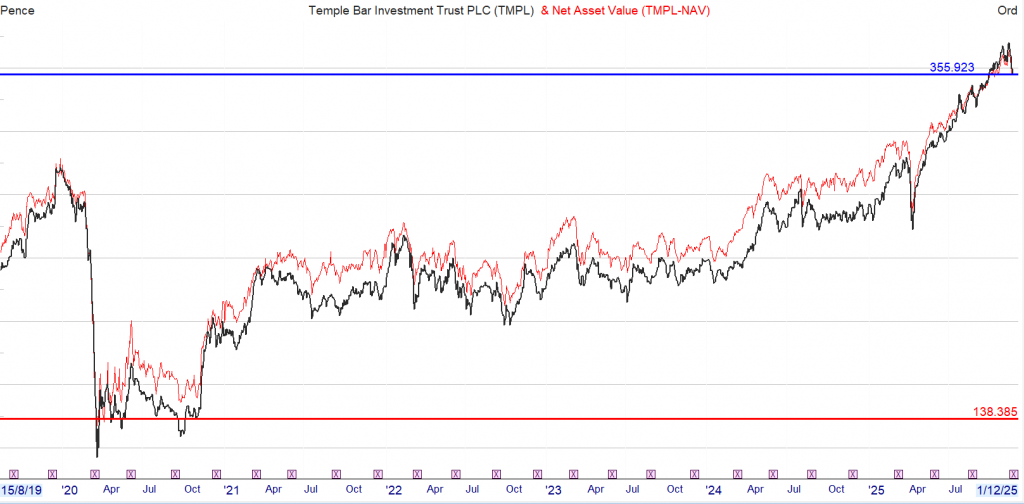
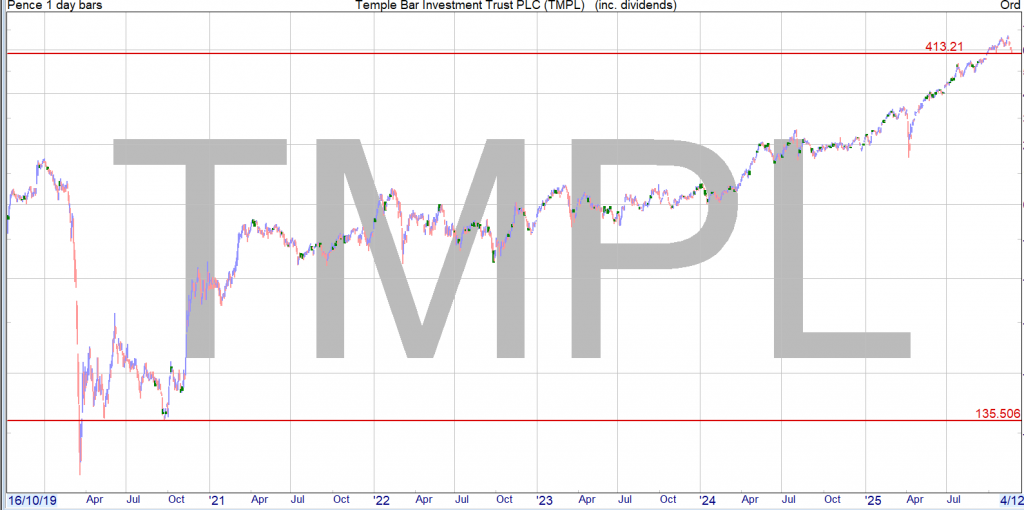
Case Study TMPL

Temple is the Snowball’s pair trade, where a Trust with a lower yield is traded with a Trust with a higher yield to maintain a yield of around 7%.

Buying a Trust to make a capital gain near or at the end a bull market is and always will be a gamble.

Maybe if there is a Santa rally, last years was a damp squib, the Trust could be sold at a profit. If not as the dividends are received, part will be invested into TMPl, so a falling market would be a positive.

The first dividend of £30 has been earned, many a mickle makes a muckle.

Historically anyone who bought has outperformed the market and the share may do again, having achieved the holy grail of investing in that you could take out your capital and invest into a higher yielder and retain the remaining shares and try to do it all over again.

Current yield 3.1%

Dividends included and re-invested into a higher yielder.

At the low the dividend yield was 7.5% and is currently 8% on buying price.

FSFL Foresight Solar Fund Limited


Foresight Solar Fund Limited

Trading Update for Q3 2025 and Unaudited Net Asset Value

Foresight Solar, the fund investing in solar and battery storage assets to build income and growth, announces that its unaudited net asset value (NAV) was £564.5 million at 30 September 2025 (30 June 2025: £603.8 million). This results in a NAV per Ordinary Share of 102.1 pence (30 June 2025: 108.5 pence per share).

Summary of key changes

Itemp/share movement
NAV on 30 June 2025108.5p
Interim dividends paid-2.0p
Time value2.1p
Power price forecasts0.1p
Project actuals-0.4p
REGO price forecasts-1.3p
Inflation0.5p
Portfolio discount rate adjustments-1.4p
Share buyback programme0.1p
Tax review adjustments-3.6p
Other movements-0.5p
NAV on 30 September 2025102.1p

Moderately higher power price forecasts across the middle and the long end of the UK curve, along with mostly flat curves in Spain and Australia led to an upside of 0.1 pence per share (pps) to NAV.

Unplanned distribution network operator (DNO) outages in the UK and curtailment in both Spain and Australia affected electricity production in the three months between July and September. Project actual performance, therefore, resulted in a negative impact to NAV of 0.4pps.

Updated pricing to reflect independent consultant’s forecasts for Renewable Energy Guarantees of Origin (REGO) certificates culminated in a 1.3pps downside.

Inflation assumptions have been updated, with the 2026 RPI forecast increasing to 3.5% from 3.0%, and 2025 CPI updated to 3.5% to bring it closer to actuals, making up the positive 0.5pps effect to NAV.

The discount rate applied to the Australian assets was raised by 165 basis points (bps) to reflect feedback from the recent sale process. This is indicative of values bidders are using when pricing standalone solar portfolios in what is currently a buyer’s market where no pure play solar deals have taken place for more than 12 months. This adjustment resulted in a negative impact to NAV of 1.3pps (included in the broader portfolio discount rate adjustments).

For the Spanish portfolio, discount rates were raised by 75bps to reflect inferred pricing from recent transactions. During the period, the investment manager adjusted the methodology for Spanish power price forecasts, incorporating a third consultant into the blend and aligning it with the process used for the UK. The net impact of these changes was 0.1pps (included in the broader portfolio discount rate adjustments).

The Company continued its buyback programme, repurchasing roughly 3 million shares, returning £2.8 million to shareholders, and adding 0.1pps to NAV in the third quarter of 2025. Since repurchases began, they have delivered a cumulative 2.9pps increase in NAV.

Foresight Solar, with the support of a leading tax advisor, has engaged with HM Revenue & Customs in respect of its group tax structure. This process has been productive in respect of achieving an agreed position for historic tax submissions and providing clarity for tax obligations going forward. Having reached this agreement, however, the current best estimate of tax forecasts indicates that future tax payments will need to be increased, leading to a 3.6pps downside adjustment to NAV. The board has opted to include this estimate in this quarter’s update, consistent with the Company’s transparent approach. To the extent required, the directors will announce any future updates to the market.

Other movements include working capital adjustments, foreign exchange fluctuations, minor adjustments to contract values, and a de minimis change to the valuation of Foresight Solar’s pre-construction battery storage project, Clayfords.

Commenting on the third quarter net asset value movements, Tony Roper, chair of Foresight Solar, said: “The valuation reductions and the tax review are disappointing for us and shareholders. This quarter’s challenging news compounds a difficult year for the renewable energy investment trust sector, with a difficult macro environment, a volatile regulatory landscape and frustrating share price performance.

“Operational performance year to date is in line with budget, giving us confidence in achieving our dividend cover target for this year.

“We continue to analyse options available to deliver the best potential outcome for investors. In the meantime, we are focused on addressing the share price discount to NAV. Divestment processes are ongoing, with the aim of unlocking capital, we continue to return cash to shareholders via one of the largest buybacks in the sector relative to NAV, and we are committed to paying down debt further.”

Trading update

Electricity production from the global portfolio was 6.3% below budget in the third quarter, despite irradiation 3.6% above base case.

In the UK, DNO outages hampered generation, which was 1.8% under budget, whilst irradiation was 6.9% higher than expected. Stripping out the effects of grid interruptions, production would have been in line with forecast.

Curtailment was a challenge in both Spain and Australia, with generation 17.9% and 4.4% under budget, respectively.

Divestment update

The process to sell the Australian assets has been paused. A small number of bids for the entire portfolio were received, but, upon thorough investigation, none were deemed deliverable. The directors have, therefore, decided to review whether the portfolio can be re-positioned before re-assessing with the investment manager and advisors when to restart the process. In the meantime, the investment manager is focused on refinancing the portfolio and progressing the two co-located BESS projects.

The investment manager is also overseeing sales processes currently underway for the additional 75MW of operational solar assets marked for disposal and the board will update investors in due course.

Gearing

The Gross Asset Value (GAV) on 30 September 2025 was £969.4 million (30 June 2025: £1,005.6 million), with total outstanding debt of £404.9 million representing 41.7% of GAV (30 June 2025: £401.8 million and 40.0%) – comfortably within the 50% limit.

At 30 September 2025, the RCF balance was £91.7 million drawn (30 June 2024: £75.9 million), reflecting working capital requirements and pending cash receipts from the portfolio after the summer. After post-period distributions from the projects, the revolving credit facility was repaid, and the drawn balance is currently £72.7 million.

ROC and FIT consultation

On Friday, 31 October 2025, the UK Department for Energy Security and Net Zero unveiled proposals to revise the inflation indexation of the Renewable Obligation (ROC) and Feed-in Tariff (FIT) schemes. These changes have the potential to impact future revenues for operating UK solar projects and dampen investor confidence in the country’s renewable energy sector.

The document outlines two approaches under consideration:

·    Option 1: An immediate revision to the date of the switch from Retail Price Index (RPI) to Consumer Price Index (CPI), bringing it forward to April 2026 from April 2030.

·    Option 2: A temporary freeze in indexation to allow for a gradual realignment with CPI. The retrospective calculation of indexation would mean a realignment only happens in the mid-2030s.

Modelling the potential impact of these changes on the Company’s latest Net Asset Value (NAV), option 1 would be equivalent to a downside impact of c.1.7 pence per share or 1.6%. In the more aggressive option 2, the effect is c.10.4pps or 10.2%. (Estimates are based on information currently available and may evolve as the consultation progresses.)

The board is disappointed in the proposals. The inflation linkage embedded in the ROC and FIT schemes is a core component of the investment case for many operational assets in the UK. The Board will urge the government to carefully assess the likely impact of these proposed changes on investor confidence. This is particularly important at a time when increased investment is essential to achieving growth targets and securing the necessary build-out of renewable generation to support energy security and affordability, and to meet net zero goals.

« Older posts Newer posts »

© 2026 Passive Income Live

Theme by Anders NorenUp ↑