TLT
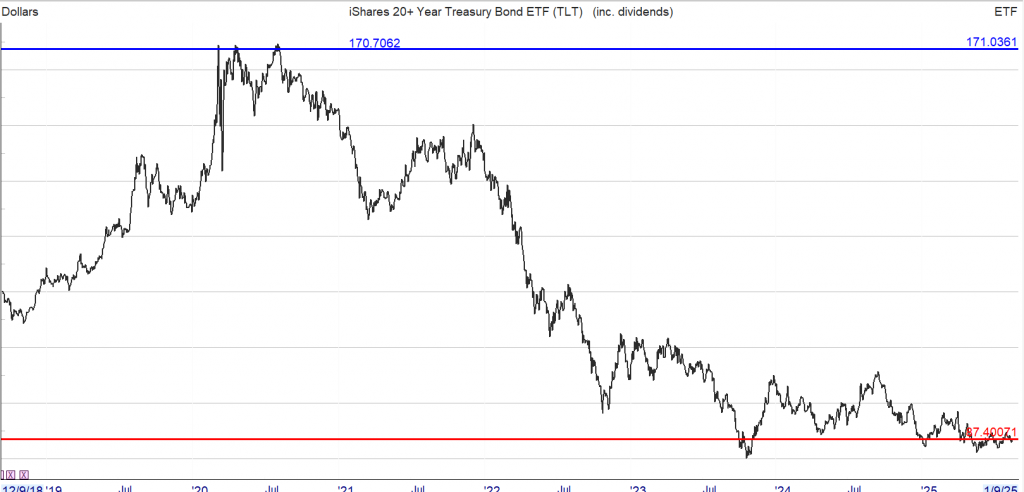
Despite all that you have read and therefore believe, bond funds can be very dangerous vehicles if you buy at the wrong time.
Investment Trust Dividends
TLT
Despite all that you have read and therefore believe, bond funds can be very dangerous vehicles if you buy at the wrong time.

Brett Owens, Chief Investment Strategist
Updated: August 20, 2025
Let’s talk about a terrific 12.2% dividend that is paid monthly.
The source of this income? Safe US Treasuries and a methodical scraping of option premiums for additional yield.
We’ll talk about this monthly payer—including fund name and ticker—in a moment. First, let’s get caught up on the Treasury market.
You may have tuned out Treasuries as a potential investment when DOGE austerity efforts gave way to the Big Beautiful Bill. Uncle Sam, already a $36 trillion debtor, dug himself deeper into financial quicksand.
Who wants to lend to that guy? Certainly not bond investors, who demand higher compensation—higher percentage payouts—to offset the credit risk posed by Sam’s ugly balance sheet.
The bond market specifically demands higher yields at the long-end of the bond curve, bonds that mature 10 or more years ahead. Traditionally the majority of US marketable debt (85%+) has consisted of these longer-dated bonds, which are purchased by pension funds and sovereigns.

Yet here we are today with the 10-year Treasury yielding just 4.3%. Yes, borrowers are lending to Uncle Sam and asking for a mere 4.3% per year over the next 10 years. In a perfectly free market this yield would likely be 5% or more but policymaker “wizardry” has secured a borrowing discount for ol’ Sam.
(Remember, bonds are loans from the buyer to the issuer. When the Treasury issues bonds, it’s essentially Uncle Sam asking for loans. No one is obligated to make these loans, however! So, Ol’ Sam has no choice but to pay whatever yield the market demands. Which is why the market has been, ahem, massaged in recent years.)
Who is the man behind the curtain pulling these strings? Currently it’s Treasury Secretary Scott Bessent, who took over the controls from predecessor Janet Yellen.
Yellen subtly influenced the bond market by issuing primarily short-term debt rather than long-dated Treasuries. This reduced long-term bond supply and suppressed long-term yields (demand exceeds supply and the issuer—the US government—can offer lower yields). I called this “Quiet QE” because it was not widely reported but it likely held long yields 0.5% lower than they would have been otherwise.
By 2024, Yellen had funded a whopping 75% of the deficit at the short end of the curve—up from just 15% five years earlier. Current Secretary Bessent publicly criticized this tactic but quietly continued it (“watch what I do, not what I say”), but at an astonishing 80% versus Yellen’s 75%!
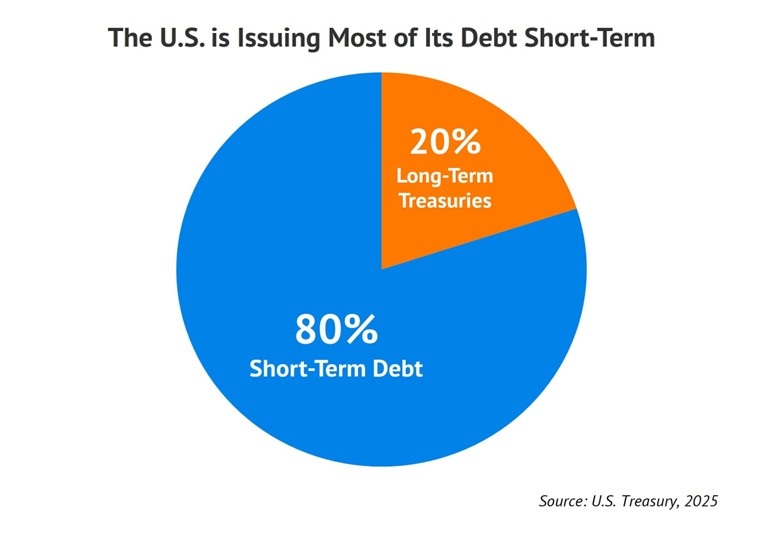
This stealthy switch to short-term debt puts a ceiling on long-term yields. Bessent clearly won’t tolerate a higher 10-year yield because it inflates interest payments on federal debt. He wants long-term rates capped, providing a sturdy floor beneath the bond market—and he’s doing it by limiting the supply of long-dated bonds. (Aside: mortgage rates follow the 10-year, and this administration will do anything to lower those!)
Bessent’s sleight of hand makes Treasury bond funds like the iShares 20+ Year Treasury Bond ETF (TLT) attractive. TLT currently yields 4.6%. Not bad.
TLT should hold its yield when the Federal Reserve eases. The Fed lowering rates will reduce yields on money market funds and short-term bonds instantly, but the “long end” of the curve won’t be directly affected.
So, vanilla investors assume that long-term yields will drop as the Fed lowers. We say, “not necessarily.”
When the Fed began cutting rates last September, it ironically sparked a serious rally in long yields! The 10-year rate soared from 3.6% to 4.8% within three months. That was a 33% move!
The Fed Cut, But Long Rates… Spiked?!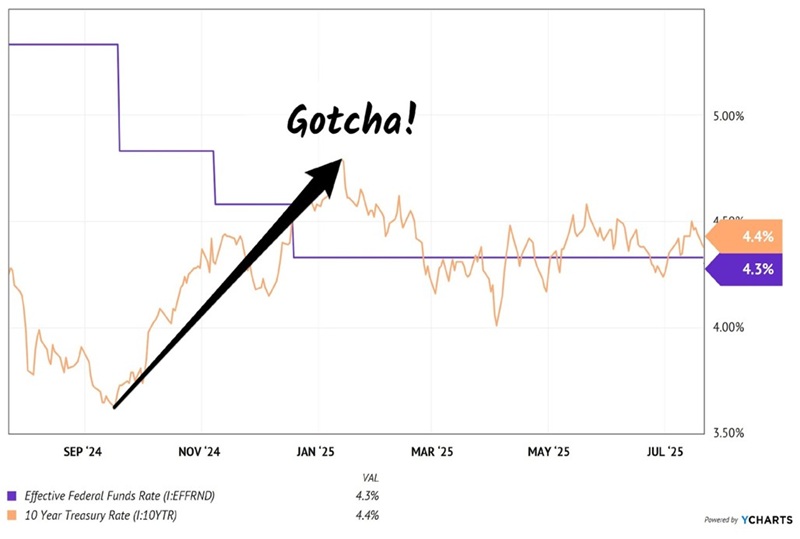
Long rates rose because inflation expectations increased. Bond buyers worried that Powell was cutting too fast, too soon. Investors bid up the yields on long bonds (which are more sensitive to inflation because of their length).
I don’t anticipate a long rate move as extreme this time around. But it is possible that long rates will slowly grind higher as the Fed lowers. Which will weigh on long-dated bond prices and funds such as TLT.
For a 4.6% yield we’re going to “pass” on TLT itself. Even a 1% or 2% price decline will crimp our returns. Given our “retire on dividends” mandate of 8% returns per year or better, we need some upside from here.
Or we can boost TLT’s yield to a terrific 12.2% and call it a day! And we can do this without having to fiddle with options such as selling puts or writing covered calls.
A newer ETF does this all for us.
iShares 20+ Year Treasury Bond BuyWrite Strategy ETF (TLTW) buys TLT and then enhances returns by selling covered calls. It generates a terrific 12.2% yield via a dividend that is paid monthly:
TLTW Pays a Big Monthly Dividend
Plunk $100,000 into TLT today and we clear $4,600 per year. Shift it into TLTW and that income vaults to $12,200.
TLTW holds 100% TLT shares and sells monthly covered call options. TLTW pockets the options income, plus a bit of potential appreciation (up to 2% per month) if TLT rallies.
The result? A dynamic monthly dividend currently annualizing to a terrific 12.2%.
Next time you see suits on TV hyperventilating about bonds, just sit back and smile. Their persistent worries only pump up TLTW’s premium income!
Whether you believe in Treasuries or want to stick with more traditional 8%+ monthly payers, the strategy is the same—let your portfolio replace your paycheck and cover your monthly bills.
Contrary to vanilla Wall Street opinion, it is possible to find elite 8% payouts that are delivered monthly

Paul Le Page, Interim Chairman of NextEnergy Solar Fund Limited, commented:
“NextEnergy Solar Fund’s high-quality asset base continued to demonstrate resilience in the period, despite a challenging macroeconomic backdrop and a fall in long-term UK power price assumptions that reduced the NAV. This quarter, the portfolio has delivered above budgeted electricity generation and benefitted from additional revenues as a result. The Board reaffirms its target dividend guidance of 8.43p per Ordinary Share for the financial year ending 31 March 2026 remains fully covered by operational cash flows.
As announced in June and in line with the Company’s long-term efforts to narrow the discount, the investment management fee was reduced, further aligning interests between the investment manager and shareholders. The Board is focused on protecting and enhancing shareholder returns, while reinforcing the strong foundation on which the Company continues to build. The Board remains committed to reviewing all options available to maximise value for shareholders.”
Ross Grier, Chief Investment Officer of NextEnergy Capital said:
“The primary driver for the reduction in NAV during the period was a material change to long-term projected UK power price assumptions provided by NextEnergy Solar Fund’s leading independent energy market consultants. This quarter benefitted from favourable generating conditions, which the NextEnergy Solar Fund portfolio was able to harness, leading to electricity generation in the UK at 7.6% 4 above-budget after DNO outages, providing an uplift to NAV per Ordinary Share of 0.5p.
NextEnergy Solar Fund continues to offer an attractive return for its shareholders and is proactively managing its portfolio to maximise revenues. The Board and the Investment Adviser continue to explore opportunities to add NAV growth to the platform, whilst also prioritising the reduction in both long-term and short-term debt.“
Dividend:
· Total dividends declared of 2.10p per Ordinary Share for the Q1 period ended 30 June 2025 (30 June 2024: 2.10p), in line with full-year dividend target.
· Full-year dividend target guidance for the year ending 31 March 2026 remains at 8.43p per Ordinary Share (31 March 2025: 8.43p).
· The full year dividend target per Ordinary Share is forecast to be covered in a range of 1.1x – 1.3x by earnings post-debt amortisation.
· Since inception the Company has declared total Ordinary Share dividends of £407m.
· As at 20 August 2025, the Company offers an attractive dividend yield of c.11%.

Think value investing, think Temple Bar.
Chairman’s Statement
Performance
The total return of the FTSE All-Share Index was +9.1% in the half-year. I am pleased to report that the Trust’s Net Asset Value (“NAV”) per share total return with debt at fair value was +14.2%, and that the share price total return was +19.9%. This reflects strong stock selection by your Portfolio Manager in market conditions that have been supportive of their value investing approach and a material reduction in the discount to NAV at which the Company’s shares trade.
Performance over one and three years has also been strong, both on a relative and absolute basis, with a NAV per share total return with debt at fair value over the periods of +21.5% and +61.7% and a share price total return of +29.1% and +66.1% compared to a total return from the FTSE All-Share Index of +11.6% and +35.5%. It is also pleasing to note that the Trust ranks first in terms of NAV total return performance in its UK Equity Income Trust peer group over these periods. Further details regarding the Trust’s performance can be found in the Portfolio Manager’s Report.
Discount
As at the half-year end the Trust’s share price stood at a 2.0% discount to the NAV per share with debt at fair value compared to a discount of 6.6% at the beginning of the period. We were again active buyers of our own shares early in the period under review, purchasing 2,160,900 shares into Treasury in the period at a cost of £2.2m. These buybacks address the short-term imbalance between supply and demand for the Trust’s shares, reduce the discount and hence share price volatility, and enhance the NAV per share for continuing shareholders.
Since the period end, due in part to the Trust’s strong performance and also its enhanced dividend yield, no shares have been repurchased and the Trust’s share price has moved to a 0.4% premium to its NAV per share with debt at fair value as at 18 August 2025. The Board will consider the issuance of new shares, at a premium to the prevailing cum income NAV per share with debt at fair value, if there is sufficient demand as part of its premium management strategy.
Dividend
The Trust’s strong revenue performance was again in evidence, with an increase in revenue earnings per share of c.12.3% compared to the first half of the previous financial year. This has enabled your Board to declare an increased second interim dividend of 3.75 pence per share (2024: second interim dividend of 2.75 pence per share). The second interim dividend will be payable on 26 September 2025 to shareholders on the register of members on 22 August 2025. The associated ex-dividend date is 21 August 2025. This follows the payment of a first interim dividend of 3.75 pence per share on 27 June 2025.
As explained in the Company’s most recent Annual Report and supported by shareholders at this year’s Annual General Meeting, the Company’s dividend has recently been altered to see the Company’s progressive revenue-covered dividend enhanced by the payment of an additional 0.75 pence per quarter funded from capital. This has raised the prospective dividend yield on the Company’s shares to c. 4.4%, higher than the average dividend yield of the FTSE All Share which at the time of writing is 3.4%.

Brett Owens, Chief Investment Strategist
Updated: August 19, 2025
Could the Fed cut rates—and actually cause interest rates to rise?
Absolutely. In fact, it’s a setup I see as very much in play. Today we’re going to talk about a 15%-yielding (!) stock that’s well-positioned to benefit.
Powell Vs. the 10-Year, Round 2
How would this “rate split” come about? To get at that, we need to bear in mind that the Fed only controls the effective Federal funds rate. That’s the “short” end of the yield curve—or the rate at which financial institutions lend to each other.
Meantime, the “long” end—pacesetter for consumer and business loans (including mortgages—more on those shortly) is tied to the 10-year Treasury yield—and has a mind of its own.
This wouldn’t be the first time the 10-year has called out Jay Powell. Last September, the Fed cut rates for the first time since 2020, after hiking to counter the 2022 inflation spike.
The bond market was having none of it. Even as the Fed cut, 10-year Treasury rates jumped, sending Powell a clear message: Slow your roll.
Powell Gives the “All-Clear.” Bond Market Says “Not So Fast”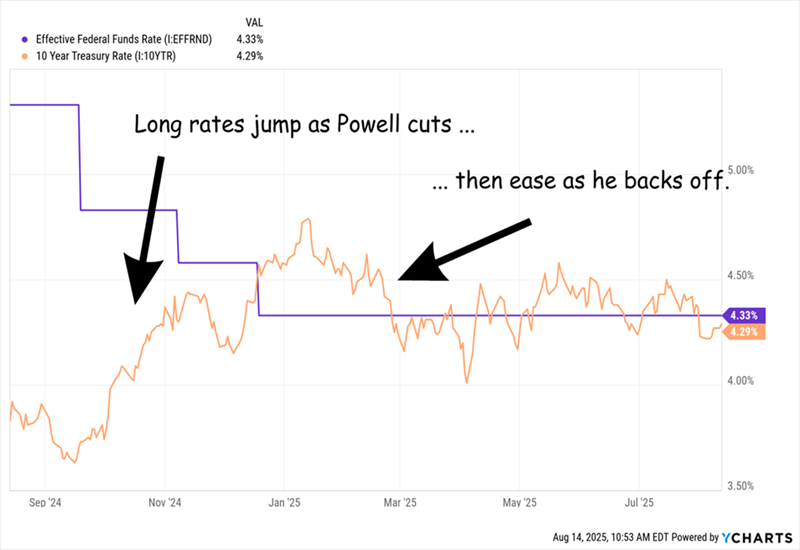
When the Fed cut rates, it ironically sparked a rally in long yields. Once Powell backed off, leaving the Fed’s rate where it is now, the 10-year yield steadied, too.
History doesn’t repeat, as the saying goes, but it does rhyme. As I write this, inflation is still above target. But even so, July’s CPI report came in below expectations. That’s another point in favor of a lower Fed rate—and a higher 10-year Treasury rate.
And yes, producer prices did jump in July, and tariffs likely played a role. But as we’ve written before, recent studies have found that tariffs are not inflationary, because rising prices depend on a hot economy. A trade war brings in the opposite, since tariffs are a short-term headwind on growth.
And don’t forget that Powell’s term ends in nine months, and whoever the administration appoints is likely to cut quickly—inflation or no.
Mortgage REITs Borrow “Short” and Lend “Long”
In my August 5 article, we looked at business development companies (BDCs) as contrarian plays on this “rate split.” But there are other options, like mortgage REITs (mREITs).
When most people think of REITs, they think of equity REITs—landlords of buildings, such as warehouses and apartments. mREITs deal in paper—buying mortgage loans and collecting the interest.
They make money by borrowing at short-term rates to buy mortgages that pay income tied to long-term rates. The profit is in the difference, so management always wants short-term rates to be lower than long-term ones (which they typically are).
Moreover, the value of these loans gets a nice bump when short-term rates decline and long-term rates hold steady or, better yet, move lower. That’s because lower rates mean mREITs’ mortgages—issued when rates were higher—yield more than newly issued ones, so they’re worth more.
That, in a nutshell, is the setup we’re looking at now. Look at this chart of 30-year mortgage rates. You can see they’re drifting lower now, but not quickly enough to encourage a wave of refinancing or prepayments. The sweet spot for mREITs!
30-Year Mortgages Edge Lower, Boosting mREITs’ Loan Values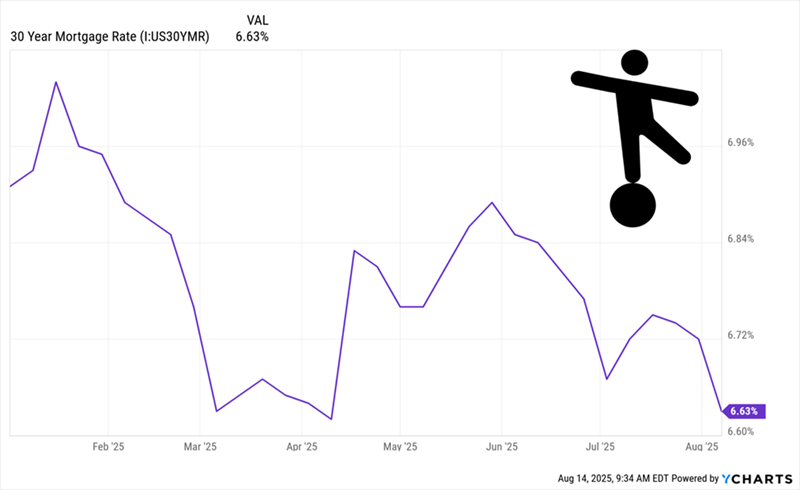
This comes at a time when mREITs, as measured by the iShares Mortgage Real Estate ETF (REM), in purple below, have lagged the REIT pack, as measured by the Vanguard Real Estate Index Fund (VNQ), in orange.
mREITs Lag the Field, Tee Up an Opportunity
However, as you can also see toward the left of the chart above, mREITs have outperformed for long stretches, such as during the low-rate 2010s. In the coming months, with the gap between mREITs and REITs as a whole still wide and the Fed set to lower rates, we’ve got a nice setup for another run of mREIT outperformance.
To add an extra layer of safety, we’re going to focus on an mREIT dealing in “agency” mortgage-backed securities (MBS)—those guaranteed by Fannie Mae, Freddie Mac and Ginnie Mae.
A 15% Dividend About to Get “Backup” From the Fed
That would be AGNC Investment Corp. (AGNC), which yields 15% now. It buys MBS (often through repurchase agreements) and profits off the spread between its loan cost and the yield these assets deliver. Its profits are easy to spot: In the second quarter, its average asset yield was 4.87%, while its average repo cost was 4.44%, down slightly from Q1.
Falling short-term rates would cut its repo costs almost immediately, further widening this spread (and boosting AGNC’s profits). The mREIT did post a modest loss in Q2, but we love the fact that management added to its assets at attractive prices as a result of the April “tariff terror”:
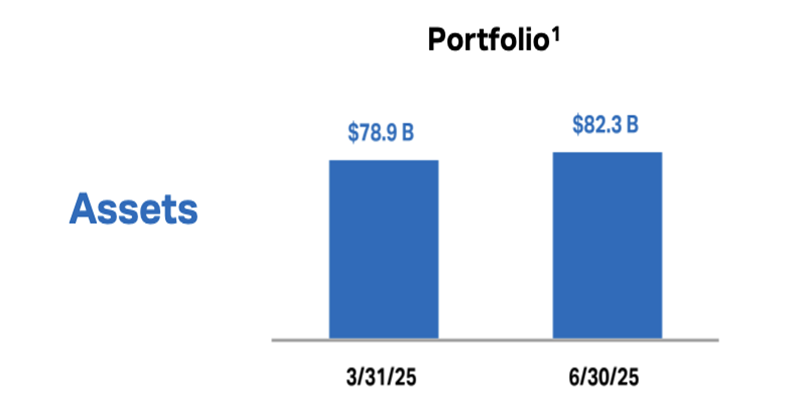
Source: AGNC Q2 2025 investor presentation
Now let’s talk about that 15% dividend. As you can see below, management cut the payout (in purple) when the Fed hiked rates (in orange) through to the end of 2019 and into the COVID lockdown period. We’d expect that, as rising rates boosted repo costs and COVID uncertainty—especially in the early days—put the real estate market on ice.
But look to the right and you’ll see that AGNC did hold the line on the dividend as the Fed drove rates higher in response to the inflation surge of 2022/2023. That’s a great sign—and shows the payout likely got an assist from the hedging programs AGNC uses to cut its rate risk:
Dividend Falls Heading Into COVID, But Holds Up in 2022 Dumpster Fire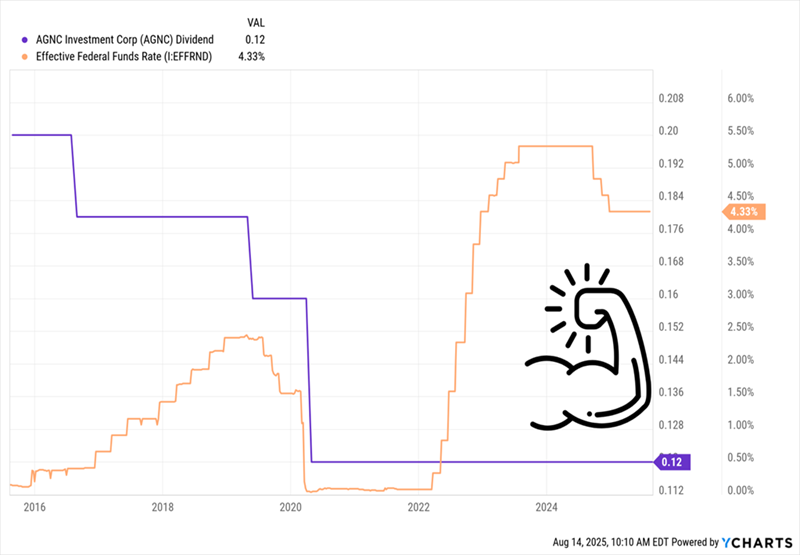
Now that the Fed looks to be headed back into cutting mode, the dividend should get some extra backup on lower borrowing costs. Going forward, analysts have the mREIT pegged for $1.60 per share in earnings for this fiscal year. The dividend—$0.12 per month for a total of $1.44 annually—accounts for 90% of that.
That is a bit high, but bear in mind that a falling Fed funds rate would add to profits and therefore reduce that number. It may even open the door to a dividend increase, especially if 10-year Treasury rates hold steady or gradually move lower, as I expect.
Finally, as I write this, AGNC trades at 1.1-times book value and six times forward earnings. A wider gap between the Fed rate and 10-year Treasury yield would boost both numbers—putting a lift under the share price as it does.
That 15% dividend is pretty sweet, but it’s one we do have to watch like a hawk. After all, rates can turn on a dime. When they do, they can knock down AGNC’s payout—and share price—without little warning.

This property company has significant potential, according to a team of City analysts. Graeme Evans looks at this ‘compelling opportunity for investors’.
19th August
by Graeme Evans from interactive investor

A “compelling opportunity” to buy 8% yielding Primary Health Properties
PHP was today flagged after a City firm examined prospects for the NHS landlord’s Assura AGR
merger.
Peel Hunt lifted its price target by 10p to 120p, highlighting the potential for sector-leading returns backed up by one of the most secure income streams.
The planned merger with the fellow FTSE 250-listed landlord is on track to form the UK’s eighth-largest real estate investment trust (REIT), with each portfolio currently valued at around £3 billion. PHP holds 517 assets compared with Assura’s 609.
Most of Primary’s facilities are GP surgeries, with other properties let to NHS organisations, HSE in Ireland, pharmacies and dentists.
This means about 89% of rent is funded by the UK and Irish governments, whereas the equivalent figure for Assura is 65% of the rent roll following a move into private healthcare.
Both estates benefit from high occupancy of 99% and have a combined weighted average unexpired lease term of 11 years.
Around a third of income is subject to inflation-linked uplifts, with the balance being open market reviews where rents are currently rising at about 3.6% per year.
PHP shares today stood at 92.5p, down from 103p in mid-June and 5% lower since last week’s disclosure that it has fended off private equity giant KKR in the battle for Assura.
The offer has been declared unconditional with acceptances totalling 63% of Assura’s register, while Peel Hunt is optimistic that the Competition and Markets Authority (CMA) clearance will mean full integration by the year end.
At a 12% discount to net asset value, the bank points out that a return to PHP’s historical valuation rating would imply a share price upside of 25-50%.
It adds that the valuation remains attractive in the current interest rate environment given that the spread between PHP’s earnings per share yield on current net asset value of about 7% and the five-year swap rate of 3.7% compares favourably to the long-term average.
Peel Hunt said PHP boasts a strong track record, having achieved 29 consecutive years of dividend increases and a compound total shareholder return of nearly 11% per year over the past 25 years.
It points out that the company has consistently outperformed the broader UK real estate index across most time frames, with superior property returns compared to Assura in seven of the past nine years.
The bank adds: “PHP’s share price has approached its 12-month low, despite the anticipated benefits of the Assura transaction. With the shares yielding 8% for 2026, this presents a compelling opportunity for investors in our view.”
Risks to the Buy recommendation include higher-than-expected interest rates, a lacklustre investment market that inhibits PHP’s ability to sell assets and potential action by the CMA.

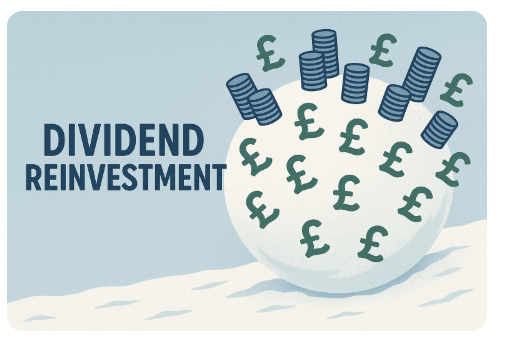
Current cash £356.00 and a further £1,161 of declared dividends which will be re-invested after they have been received.
Bluefield Solar Income Fund Limited
Unaudited NAV, Third Interim Dividend and Changes to Director Roles and Responsibilities
Bluefield Solar (LON: BSIF), the London listed UK income fund focused primarily on acquiring and managing solar energy assets, announces its net asset value (“NAV“) as at 30 June 2025, the Company’s third interim dividend for the financial year which ended on 30 June 2025 and changes to its Board and Committee composition, which will take effect following the approval and signing of the Company’s Annual Report and Financial Statements (the “Annual Report“). Unless otherwise noted herein, the information provided in this announcement is unaudited.
Unaudited Net Asset Value as of 30 June 2025
The NAV as at 30 June 2025 was £697.3 million, or 117.77 pence per Ordinary Share (‘pps’), compared to the unaudited NAV of 123.01 pps as at 31 March 2025. This equates to a movement in the quarter of -4.26% and a NAV total return for the quarter of -2.47%.
Actual Generation vs Forecast
Combined generation for the period was 4.4% above forecast. Whilst solar generation had a very strong quarter (+8.4%), poor generation across the wind assets (-23.8%) led to combined generation being lower than expected. Although irradiation was above forecast (+18.3%), solar generation was dampened during the period by DNO outages, with the most material being a 2 month outage at West Raynham (50MW). Whilst wind speeds improved during the quarter (+2.2%), availability was negatively impacted by several turbine outages.
Third Interim Dividend
The Third Interim Dividend of 2.20 pence per Ordinary Share (August 2024: 2.20 pence per Ordinary Share) will be payable to Shareholders on the register as at 29 August 2025, with an associated ex-dividend date of 28 August 2025 and a payment date on or around 19 September 2025.
Dividend Guidance Reaffirmed
The Board is pleased to reaffirm its guidance of a full year dividend of not less than 8.90 pence per Ordinary Share for the financial year ended 30 June 2025 (30 June 2024: 8.80 pence). This is expected to be covered by earnings and to be post debt amortisation.
Post-Period end, the Company has also continued to recycle capital and realise value from its project development activities by disposing of one co-located solar and battery storage project. The Fund received net proceeds above holding value and details will be included in the Annual Report.


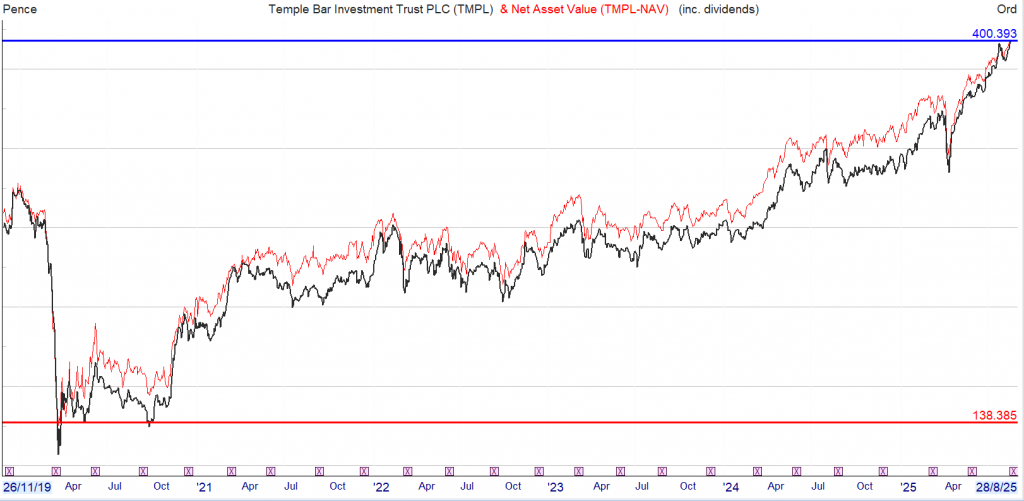
Here, dividends included in the graph but would be re-invested into the higher yielding shares in the Snowball. You would have achieved the Holy Grail of investing, that you could withdraw your stake, re-invest it back into your Snowball to earn more dividends to buy more shares.
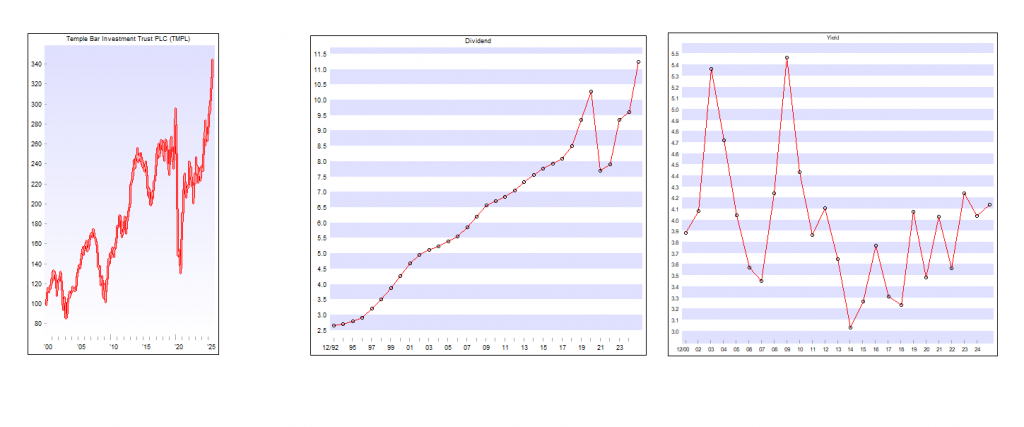


Waiting for the next market crash, to include in the Watch List.

Thursday 21 August
abrdn Asia Focus PLC ex-dividend date
JPMorgan UK Small Cap Growth & Income PLC ex-dividend date
Lindsell Train Investment Trust PLC ex-dividend date
Molten Ventures PLC ex-dividend date
Personal Assets Trust PLC ex-dividend date
Riverstone Credit Opportunities Income PLC ex-dividend date
Shaftesbury Capital PLC ex-dividend date
Temple Bar Investment Trust PLC ex-dividend date
© 2026 Passive Income Live
Theme by Anders Noren — Up ↑