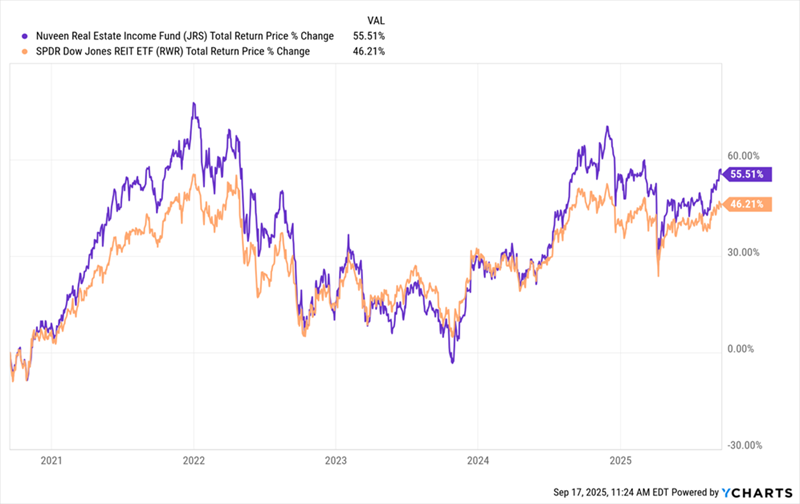
AEW fell during covid, one reason people were working from home and wouldn’t need a workplace.
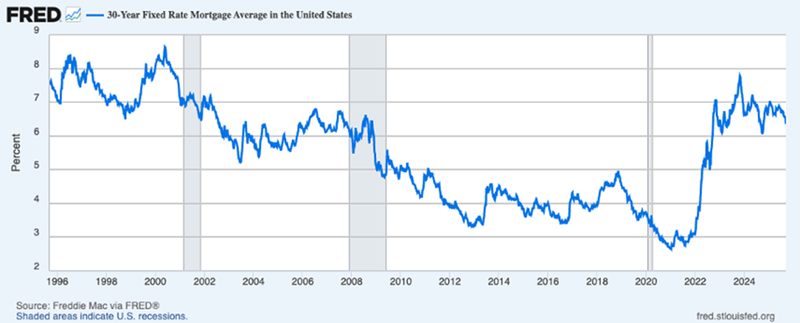
You will note the yields had been rising, due to the higher interest rates, as the price falls the yield should rise, it accelerated during covid.
Now you would have been hesitant to press the buy button as you didn’t know if the price would continue to fall , it’s always easy with hindsight, if only you could bottle it. But if you liked the yield, you might have bought.
Currently you could have taken out your stake and still receive a yield of around eleven per cent on your remaining shares, which sits in your account at zero, zilch, nothing.
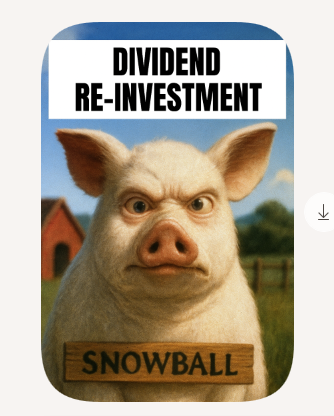
If you re-invested at say a yield of 9%, your running yield would be 20%
Remember all views of everyone in the market, including insiders, will appear in the chart first.
The holy grail of investing is to have an income producing share that pays you a regular income whilst it sits in your account at zero, zilch, nothing.
If you wait for a market crash, you will be rewarded, if you have cash to invest. Whilst you wait let’s look at SEIT.
The current yield is 13% so your cash will be returned in around 8 years, you will also have income from the dividends re-invested but let us ignore that for now.
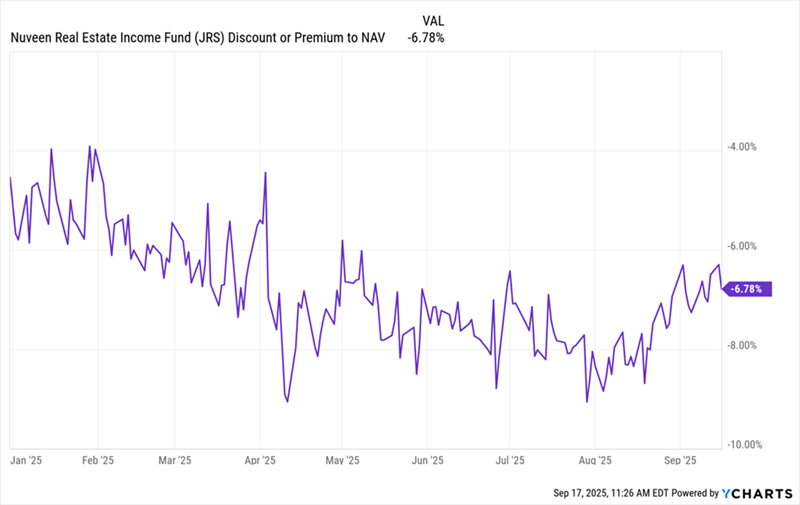
SEIT trades at a discount to NAV but that is no guarantee that the price will rise, especially if the quoted NAV falls in the future but we will also ignore that for now.
The first consideration is the dividend ‘secure’. The first check is to look is at its dividend history.
The second check is to see what the company says about it dividend.
Jonathan Maxwell, CEO of the Investment Manager, SDCL, said:
“SEEIT’s active management of the assets in its portfolio has delivered substantial income to the Company, in line with previous years. This stable performance ensures that we can cover the target dividend of 6.32p which represents a double-digit yield for investors at the current share price.
“We are confident that the portfolio is well positioned to maintain its performance and secure opportunities that are accretive to NAV. As the market challenges faced by SEEIT and its peers continue, our priority remains reducing the current discount to NAV. We are highly focused on preserving value and upside for shareholders, while at the same time considering ways to cut costs and find capital efficiencies at project and company level.”
Operational Update
During the Period, SEEIT’s operational performance has been generally in line with expectations, delivering the expected distributions to the Company:
Shareholder dividend
During the Period, the portfolio’s stable operational performance has supported distributions to SEEIT that have covered the target dividend of 6.32p per share, with a cash cover in line with the previous year.
If you invest, you must trust what the management say, until your trust is misplaced.
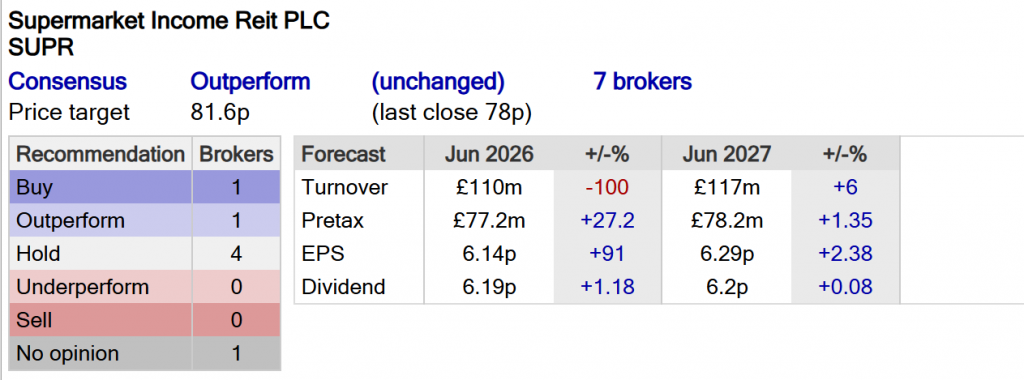
Check three, are there any positive broker comments.
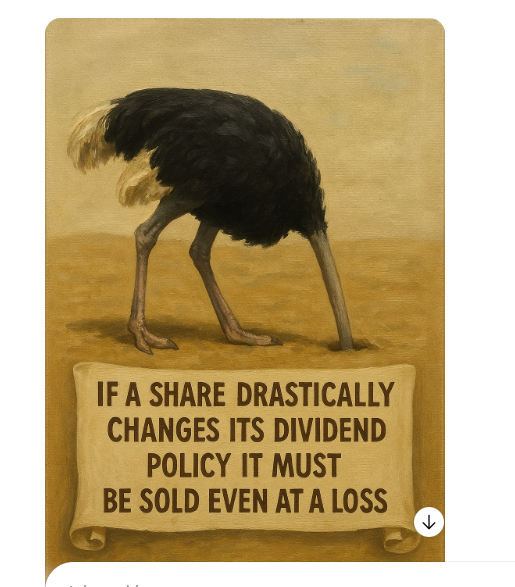
Your duty if you buy, is to check any news from the company about its next and future dividends and wait. The dividend could be cut and still be a valid reason to hold the share.
This dividend stock yields 14.15% and is potentially 52% undervalued
Jon Smith explains why the highest-yielding dividend stock in the FTSE 250 could offer him a good option to include in his portfolio.
Posted by Jon Smith
Published 10 June
Image source: Getty Images
When investing, your capital is at risk. The value of your investments can go down as well as up and you may get back less than you put in.
You’re reading a free article with opinions that may differ from The Motley Fool’s Premium Investing Services.
When it comes to dividend stocks, a double-digit percentage yield is impressive. Shares in this bucket draw a lot of attention, but should be treated carefully. Usually, stocks with a high dividend yield carry an elevated level of risk. So when I saw a company with a very generous yield but that could also be undervalued, I naturally needed to look closer.
Undervalued relative to assets
The stock I’m talking about is the SDCL Energy Efficiency Income Trust (LSE:SEIT). Its current dividend yield is 14.15%, making it the highest-yielding option in the FTSE 250.
A big question relates to how I reached the presumption of it being 52% undervalued. This metric was configured by comparing the net asset value (NAV) to the current share price. With trusts like SDCL,, company’s value is mostly based on the sum of the assets being held. In this case, the assets are energy efficiency and decentralised energy projects across the UK, Europe, North America, and Asia.
Based on the latest reported NAV value, the stock is at a 52% discount. Of course, in a few months, we should get an updated NAV figure, which could see the discount either increase or decrease. But with the stock down 35% in the past year and no major company updates suggesting the portfolio has been significantly hit in value, I don’t see the discount reducing.
Caution still needed
Without a large hit to the NAV, the discount tells me that the share price move is mostly due to negative sentiment. This could put off some investors. Some would flag up worries about renewable and energy-efficiency trusts, saying that the hype around them is dying down. It’s true that some companies are pivoting back to traditional fuels, with volatile commodity prices also to blame.
Another point to note is that the high dividend yield is primarily being driven by the falling share price. But the dividend per share has indeed been increasing each calendar year for several years now. Given that the dividend cover is above one, I’m not concerned about it being paid out. But the falling share price has pushed the yield higher, which is a bit of a red flag.
The bottom line
From where I’m standing, I don’t see any big problems that should justify the negative sentiment around the trust. Yet I appreciate that I may have missed something or that the sector might be heading for a multi-year downtrend before things change. So, I’m seriously considering putting some of my money to work here, but only a small amount. That way, I can still benefit from the high yield but am not going to be seriously impacted if the stock keeps dropping.
I’m going to make an opening purchase in TG26 of 2k. Remember if held outside a tax free wrapper you need a low coupon.
Cash left to invest £837 plus dividends for June of £1,329.00. Either 2k to be pair traded with the gilt or added to the gilt depending on markets at the end of this month.
Its like you learn my mind! You appear to know a lot approximately this, such as you wrote the e-book in it or something. I feel that you simply can do with a few p.c. to power the message home a little bit, however other than that, this is fantastic blog. A great read. I’ll definitely be back.
I’m considering writing a low cost e-book as a sort of work book/reference book.
When markets fell because of Covid the price low for AEW was
55p the dividend was 8p a yield of 14.5%
You would receive this dividend, as long as it wasn’t cut for as long as you owned the share. You would have also achieved the holy grail of investing
in that you could have taken out your stake and re-invested in another high yielder whilst receiving income at a zero, zilch cost.
Also you would be receiving income on the dividends re-invested.
The dividend has been paid at a rate of 8p per year since then.
The current yield: share price 103p dividend 8p a yield 7.7%
As nearly all shares fell at the same time, unless you decided to sell, which in hindsight is easy but in real time much more difficult, you wouldn’t have the funds to bag a ‘bargain’ Trust.
You need a rainy day fund, pair traded with a higher yielder to maintain a yield of 7%. So the Snowball will start a rainy day fund by investing 2k into a UK Government gilt, hoping that the market doesn’t crash until the amount squirreled away is a lot higher.
The Board of Directors of the Company has declared an interim dividend of 0.55 pence per share for the three-month period to 31 March 2025. The dividend will be paid on 17 July 2025 to shareholders on the register as at 20 June 2025. The ex-dividend date is 19 June 2025. The 0.55 pence per share dividend represents the net revenue return earned by the Company for the three-month period to 31 March 2025.
In future periods, the Company will move to annual distributions with the next dividend declaration likely to be announced in February 2026, then every year thereafter. The dividends will not be less than 85% of net revenue return of the period distributed, as previously disclosed.
DIY Investor Diary: how I’m aiming for £10,000 annual income from my ISA
Kyle Caldwell speaks to an investor aiming to use income from his ISA to help fund his retirement, including trips abroad to watch cricket.
24th April 2024
by Kyle Caldwell from interactive investor
In our DIY Investor Diary series, we speak to interactive investor customers.
For many investors thinking about using ISAs or SIPPs to help fund retirement, the aim will be to secure a reliable and regular income from their investments without inflicting too much harm on the capital.
This is the plan of the latest DIY Investor to feature in our series showcasing how interactive investor customers invest. The 61-year-old mining engineer is aiming to generate £10,000 of income from his ISA to help fund retirement, including trips abroad to watch cricket.
He also has a SIPP, which is currently a smaller pot than his ISA, and he will receive both a defined benefit pension and defined contribution pension on retirement.
He says: “I’m looking to generate £10,000 a year from the ISA, of which I have around £200,000 invested. I’m aiming to take just the natural yield, so I’m looking for the ISA to yield around 5%, which is what it’s delivering at the moment.”
Drawing only the income produced by funds or investment trusts’ underlying investments – the natural yield – is a prudent way to reduce risk during retirement. This is because in a scenario where stock markets fall sharply, it is more difficult for a retirement fund’s capital value to recover after if you are withdrawing more than the natural yield.
Our investor’s ISA has 11 holdings made up of 10 investment trusts and one fund. The investment trusts span a range of countries, sectors and asset classes to provide diversification, which helps to reduce risk.
account for a quarter of the ISA. Both trusts have yields of just over 5% and are solid income payers, with long track records of consistently increasing dividends year in, year out. City of London has increased payouts every year since 1966, while Merchants Trust has upped payouts for 41 years in a row.
Around 30% is held in three global equity income funds:
Murray International Ord MYI, Henderson International Income (LSE:HINT) and Bankers Ord BNKR
One thing to bear in mind with global income funds and trusts is that some have low yields, of below 3%, due to having a large exposure to the US stock market, which is more growth than income-focused. However, two of the three trusts held by this DIY investor, Murray International and Henderson International Income, buck the trend by being less wedded to the US. Both trusts have dividend yields of around 4.5%.
Our investor says: “Rather than picking countries or themes myself, I prefer to pick investment trusts that are ‘dividend heroes’, due to them having longstanding track records of growing their dividends every year.
“One area I do not have too much exposure to is the US. To me, everything seems a bit too rosy, and I am cautious on whether the US technology stocks can continue their strong run of performance.”
He adds that investment trusts’ ability to “retain money for rainy days is a good feature and I like the accountability to shareholders”, which is why he prefers trusts over funds.
Under the investment trust structure, 15% of income generated each year from the underlying investments can be held back to be used in future years. Due to this, 20 investment trusts have raised their dividends for more than 20 years. Incontrast, funds do not have this “get-out-of-jail-free card” and have to pay all the income generated back to investors each year. Therefore, when there’s an income shortfall, such as during the Covid-19 pandemic, a dividend cut is pretty much inevitable for funds.
The rest of the DIY Investor’s portfolio has exposure to property, bonds and infrastructure. This includes two defensive strategies: Capital Gearing Ord
and Royal London Short Term Money Market. As well as holding both to reduce risk, our DIY Investor views the duo as cash-like investments and, therefore, they will be the first to be sold if he needs to dip into his ISA ahead of retirement.
The SIPP’s smaller size may change in the coming years, as there is the option for the DIY investor to top it up if he takes the 25% tax-free lump sum from his pension. If it is topped up, he will also look to generate £10,000 a year from his SIPP.
Eleven investment trusts are in the SIPP, which he says are “a bit more riskier” overall due to his plan to take money out of the ISA first. This makes sense from an inheritance tax (IHT) perspective, as ISA money typical forms part of an individual’s estate for IHT. Whereas, pension assets aren’t usually subject to IHT. Another attraction is that pension money passed on from those who die before 75 is tax-free. For those who die at 75 or later, the beneficiaries will pay income tax on withdrawals.
While the focus is now on using the ISA and SIPP to help fund his retirement, he had previously invested to help fund property purchases. At this point, he invested in funds as he was not aware of investment trusts. However, he became more familiar of trusts from reading Money Observer magazine and interactive investor’s editorial content. One piece of particular interest is the yearly £10,000 investment trust income challenge.
He says: “As part of my research, I’m looking for ideas and pointers to narrow down the vast number of funds. I only invest in things I understand, which is why I wouldn’t invest in cryptocurrency.”
His top tips for fellow investors include doing your research, investing monthly and being patient.
He says: “Drip-feeding on a monthly basis means you haven’t had the money available to spend elsewhere, which means you learn to live without it. And if you do it for long enough, you’ll see the money grow.
“Being patient is also very important. After all, investing is for the long term – it is not a football accumulator. I’ve seen a few ‘bumps in the road’ since I’ve been investing. However, they usually present investing opportunities if you have a cash buffer to deploy.
“I would also add that it’s important to have a clear objective about what you are seeking to achieve from investing. Doing so, will make clear which types of investments to focus on.”
Note: since this article was published JLEN is now FGEN and HINT has ben rolled over into JGGI.
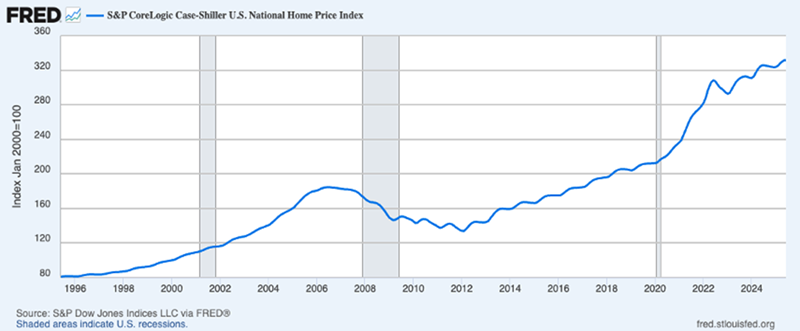
The average UK house price has surged by 74% or more than GBP150,000 over the past 20 years, according to the property website Zoopla. Across the past two decades, the typical property value has risen from GBP113,900 to GBP268,200, Zoopla said. London has seen average house prices more than double over the past 20 years. The south-east and eastern England have also seen a particularly big jump in house prices, with average property values rising by 87% in both regions over the past 20 years. By contrast, house prices in the north-east of England have risen by 39% during the period.