US stock market outlook 2026: about to get even more interesting
Donald Trump faces one of the biggest tests of his presidency in 2026 and must make decisions that will have a significant impact on investors. Analyst Rodney Hobson discusses next year’s big events.
22nd December 2025
by Rodney Hobson from interactive investor
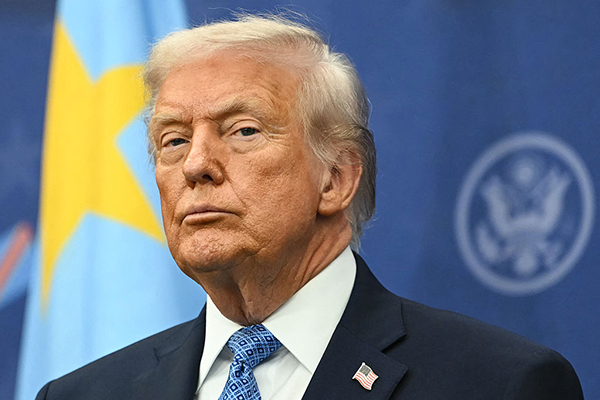
US President Donald Trump in Washington DC this month. Photo: ANDREW CABALLERO-REYNOLDS/AFP via Getty Images.
This is a very different Trump administration from the one that took power in the United States in 2017. Even 12 months in we are still learning how he will react to changes in circumstances, and indeed whether he will try to circumvent the Constitution and serve another term. It is very much a matter of conjecture and guesswork.
Eight years ago, Donald Trump had triumphed against all odds and expectations to take the crown as leader of the free world. He had nothing to prove and, despite a somewhat spiteful desire to dismantle anything that was part of the legacy of his predecessor Barack Obama, he managed to serve in a manner that was at least tolerable to his political enemies. Investors knew where they were up to.
This time round, Trump is out for vengeance. In line with his policy of never admit you are wrong, never admit you lost, he has spent 12 months lashing out in all directions. First came the tariff wars, where friend and foe suffered alike with threats of vastly raised import duties. Most of the threats unravelled when the likes of China and Canada called Trump’s bluff and bluster, but the US president persists with the myth that he is a master negotiator.
Perhaps it has been a good thing for the American economy that he then became distracted with his quest for the Nobel Peace Prize, which involved protracted negotiations with Russian President Vladimir Putin to end the war in Ukraine. Again, Trump got the worst of the negotiations, but it will be Ukraine that ultimately suffers with the loss of territory.
Another recurring theme this year has been President Trump’s attempt to bully the Federal Reserve Board into reducing interest rates. It is true that the Fed has often been criticised by politicians, economists and the media for being too slow to react to changing economic circumstances, raising and lowering interest rates after the horse has bolted, but the independence of the Fed has been a long-cherished symbol of American financial stability. It is one of the world’s most influential institutions and is considered to be a key player in the fight against inflation. It also played a lead role in seeing the US through the stock market collapse after the millennium and the financial crisis in 2007-08.
It is true that the UK managed perfectly well when interest rates were set by the Chancellor of the Exchequer but that was determined by the prevailing economic climate. What Trump has been advocating is a reduction of interest rates purely for political expediency. His campaign to force out the sitting Fed chair Jerome Powell has failed because Powell refuses to resign.
Trump has undermined Powell by publicly touting for a successor even though Powell’s term runs to next May. He is reported to be planning to appoint Kevin Hassett, director of the White House National Economic Council and a close adviser to President Trump, as the next Fed head. Hassett has enhanced his own prospects by declaring that if he were in the job, he would cut interest rates immediately, which is just what Trump has been campaigning for. Meanwhile, the Fed has started reducing interest rates but at a more measured pace.
Even if Hassett gets the nod there is no guarantee that he will please Trump once in office. After all, Powell was first appointed as Fed chair back in 2017 by none other than Donald Trump during Trump’s first stint as US president. The chances are that Hassett, if appointed, will play along before finally falling out of favour. He will not be the first best buddy to become Trump’s sworn enemy. Ask Elon Musk.
For the more immediate future, Trump may find next year that he does not have quite the grip on the American political scene that he has enjoyed since his election. Towards the end of 2025, it seemed that the first backlash against Trump could be developing. The death of the Democrats that was widely forecast 12 months ago proved to have been somewhat exaggerated as the party bounced back with several notable wins in individual states. The losing party in presidential elections, Democrat or Republican, is always immediately written off prematurely.
More ominously for the president, Republican senators and representatives are finally feeling sufficiently emboldened to defy the White House. Life could be about to get even more interesting in the US. It will begin slowly but gather momentum in a snowball effect as the midterm elections next November approach, and even more so if the Republicans lose ground and blame Trump. Any move back towards the consensus politics that characterised 20th-century America should lead to greater stability.
After all, some consensus is needed as has been shown in the repeated shutdowns of the US government apparatus as national debt limits are reached. With Trump’s policies of reduced taxation without a commensurate reduction in spending – the slash all departments policy that Musk was brought in to oversee was quickly abandoned – it is likely that debt levels will be exceeded again sooner rather than later.
The faster that interest rates are reduced, the greater the fear of inflation, which will undermine confidence in the dollar and stoke further inflation. Trump’s tariffs may help to protect American industry, but the rising cost of imported goods has pushed inflation to around 3% as opposed to the target of 2%.
However, it must be said that the American economy has come through the global economic turmoil in a healthy state, with growth in GDP bouncing back after the threat of increased tariffs sucked in imports in the first quarter. Unemployment has remained subdued.
All in all, therefore, the two stock markets based in New York will continue to provide an excellent basis for any overseas investment portfolio. Technology shares, with their inflated valuations, are for investors with an appetite for risk and also have attractions for short-term traders. Banks, housebuilders and utilities are for risk-averse investors who look to the long term.
Rodney Hobson is a freelance contributor and not a direct employee of interactive investor.

Leave a Reply