The Iran War Is Roiling Wall Street — but 86 Years of History Make Clear What Comes Next for Stocks
Perspective is powerful, even amid heightened uncertainty.
By Sean Williams
MotleyFool
Key Points
- Although the Dow Jones Industrial Average, S&P 500, and Nasdaq Composite have soared under President Trump, major geopolitical and historical events have led to periods of outsize volatility.
- The Iran war is raising concerns about higher energy prices, which may alter the Federal Reserve’s ongoing rate-easing cycle.
- However, a comprehensive analysis of 43 geopolitical and major historical events since 1940 points to the power of perspective and time on Wall Street.
When examined as a whole, the iconic Dow Jones Industrial Average (, benchmark S&P 500 , and growth-driven Nasdaq Composite have thrived with President Donald Trump in the White House. The Dow, S&P 500, and Nasdaq gained 57%, 70%, and 142%, respectively, during his first, non-consecutive term, and they’ve all rallied by double digits since his second term began in January 2025.
But these gains have also been accompanied by several roller-coaster rides on Wall Street. For instance, the five-week COVID-19 crash (February-March 2020) and Trump’s Liberation Day tariff and trade policy announcement in April 2025 both led to a broader market dive.
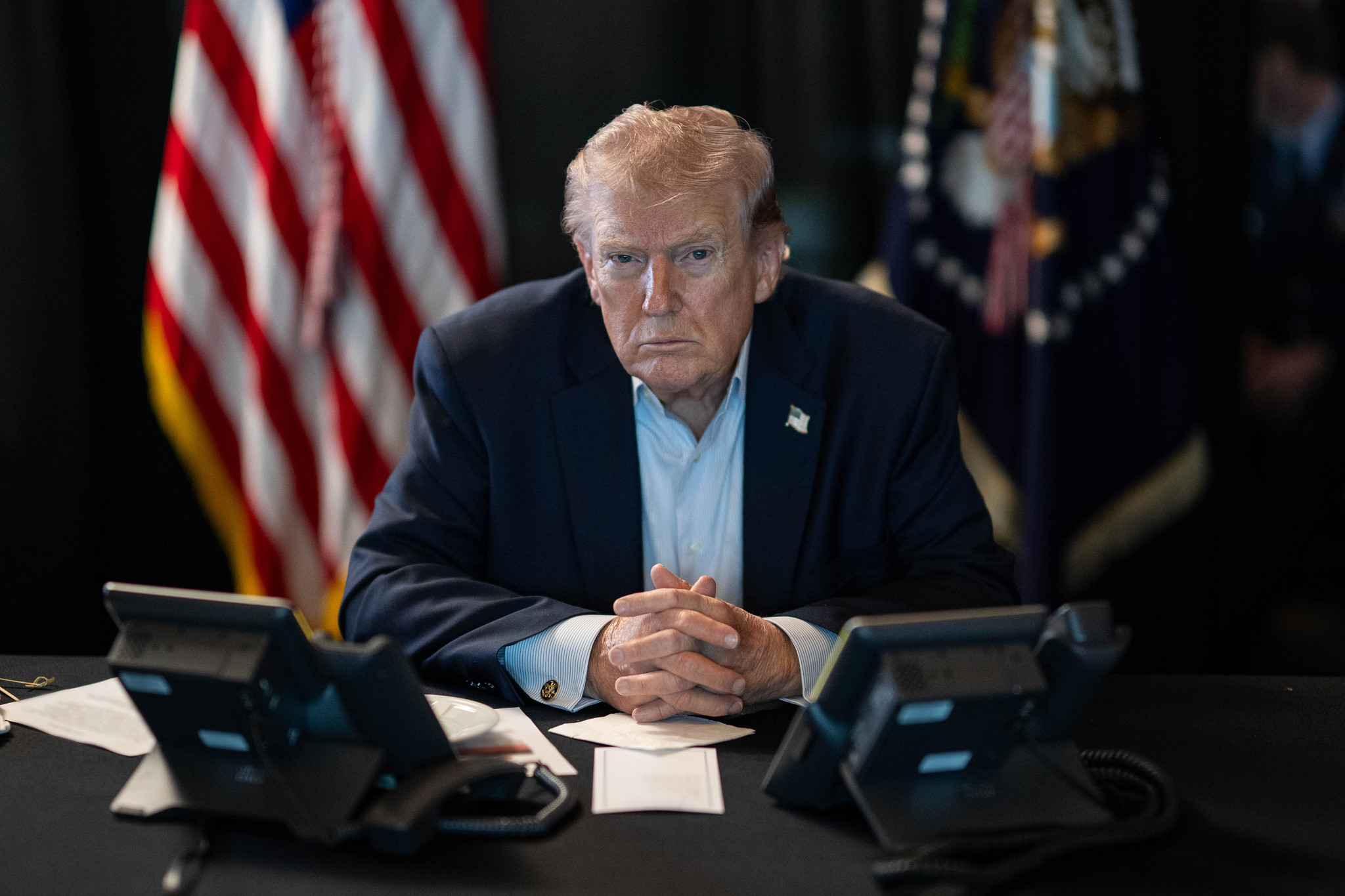
President Trump overseeing Operation Epic Fury. Image source: Official White House Photo by Daniel Torok.
The newest event, which has seen the U.S. and Israel conduct military operations against Iran, has investors on edge. However, 86 years of history, coupled with a hearty dose of perspective, make clear what comes next for stocks.
Why Wall Street fears the Iran war
Wars are tragic events that can cost lives and adversely impact families. But major geopolitical events, such as the Iran war, can also disrupt economies and stock markets far from where the fighting is taking place.
As an example, the spot price of crude oil has surged in the wake of this conflict. According to the U.S. Energy Information Administration, approximately 20 to 21 million barrels of oil, condensate, and petroleum products pass through the Strait of Hormuz daily, and Iran has largely halted exports since the war began. This represents around 20% of the world’s petroleum liquids consumption.
A shortage of petroleum products and/or higher prices can lead to a meaningful uptick in domestic and global inflation. It certainly throws a monkey wrench into investors’ expectations that the Federal Reserve will continue cutting interest rates.
S&P 500 Shiller PE Ratio hits 2nd highest level in history 🚨 The highest was the Dot Com Bubble 🤯 pic.twitter.com/Lx634H7xKa— Barchart (@Barchart) December 28, 2025
The Iran war can also increase short-term uncertainty at a time when the stock market is historically expensive. According to the S&P 500’s Shiller Price-to-Earnings Ratio, the stock market has been pricier only once in the last 155 years (the dot-com bubble).
History and perspective are investors’ greatest allies
Although no metric or correlated event can ever guarantee a short-term directional move in the Dow Jones Industrial Average, S&P 500, or Nasdaq Composite, historical precedent does have a way of calming nerves on Wall Street.

While major geopolitical events are known to increase short-term volatility, history shows that they rarely, if ever, have a lasting adverse impact on the U.S. economy or the stock market.
Carson Group’s Chief Market Strategist, Ryan Detrick, took a step back and widened the lens by examining the performance of the S&P 500 after major geopolitical and historical events over the last 86 years (since the start of 1940).
Here’s a list of major geopolitical events since WWII.
Up a median of 5% six months later. All of them felt really bad at the time. pic.twitter.com/Jb3QXL0L05— Ryan Detrick, CMT (@RyanDetrick) February 28, 2026
Out of these 43 major events (40 of which occurred over a year ago), the benchmark index was higher 65% of the time 12 months later by an average of 3%.
On the one hand, a 3% average one-year return following a major geopolitical or historical event is well below the S&P 500’s long-term annualized return. However, observed gains in roughly two-thirds of all instances confirm that geopolitical and major event uncertainty rarely has a lasting impact on businesses or the U.S. economy.
Perspective is powerful, even amid heightened uncertainty.
Leave a Reply