Perfect — let’s build you a clean, powerful, UK‑focused dividend‑income strategy using investment trusts, designed for monthly or quarterly cashflow, long‑term reliability, and discount‑driven upside.
This is not financial advice, but a structured framework you can use to think like an income‑focused portfolio architect.
Core idea: Blend reliable dividend growers, high‑yield credit/infrastructure, and discount‑opportunistic trusts to create a stable, rising income stream.
Below is the full blueprint.
🏛 1. Define the income style you want
There are three main “income personalities” in the UK trust universe:
A) Reliability First — “Never cut, always pay”
These are the Dividend Heroes and Next Generation Dividend Heroes — trusts with 20–50+ years of rising dividends.
Use these for:
- Stability
- Predictability
- Inflation‑beating dividend growth
B) High Yield — “Pay me now”
These are infrastructure, credit, property, and alternative‑income trusts. They pay 6–10% yields, but dividends may be flat or variable.
Use these for:
- High monthly/quarterly income
- Cashflow today
C) Discount Hunters — “Buy £1 for 70p”
Many UK trusts trade at 10–30% discounts. Buying at a discount boosts:
- Yield on cost
- Long‑term total return
- Potential discount narrowing gains
Use these for:
- Opportunistic value
- Long‑term compounding
🧱 2. Build the structure: The 40/40/20 Model
This is the most balanced UK income structure:
40% — Dividend Heroes (Stability Layer)
Purpose: Predictable, rising income Characteristics:
- 20–50 years of consecutive dividend increases
- Global equity exposure
- Lower volatility
This layer is your “income backbone”.
40% — High‑Yield Alternatives (Cashflow Layer)
Purpose: Boost yield to 6–8% overall Includes:
- Infrastructure
- Renewable energy
- Specialist credit
- Property income
- Asset‑backed lending
These trusts often pay quarterly or monthly.
20% — Discount Opportunities (Value Layer)
Purpose: Enhance long‑term returns Focus on:
- Trusts at unusually wide discounts
- Sectors out of favour
- Cyclical opportunities
This layer adds torque to the portfolio.
📅 3. Choose your income frequency
You can build:
Monthly income
Use:
- Infrastructure
- Credit
- Property
- Some specialist income trusts
Quarterly income
Most equity income trusts pay quarterly.
Blended monthly/quarterly
Stagger ex‑dividend dates to smooth cashflow.
📈 4. Target yield and growth
A strong UK income portfolio typically aims for:
- Target yield: 5–7%
- Dividend growth: 3–6% per year
- Volatility: Lower than pure equities
- Discount capture: 1–3% per year long‑term
This gives you high income today + rising income tomorrow.
🧮 5. Example structure (no specific tickers)
This is a model, not a recommendation:
40% Dividend Heroes
- Global equity income
- UK equity income
- Asia income
- Multi‑asset income
40% High‑Yield Alternatives
- Infrastructure
- Renewable energy
- Specialist credit
- Property income
20% Discount Opportunities
- Out‑of‑favour sectors
- Deep‑discount trusts
- Cyclical recovery plays
This gives you:
- Stability
- High yield
- Upside from discounts
🧩 6. How to maintain the strategy
Quarterly review checklist
- Are discounts widening or narrowing?
- Has dividend cover changed?
- Are yields sustainable?
- Is gearing rising too fast?
- Are NAV returns keeping up with benchmarks?
Annual rebalance
- Trim winners
- Add to wide‑discount opportunities
- Maintain your 40/40/20 structure
🔥 7. Optional: Build a Monthly Income Calendar
You can create a 12‑month income stream by staggering trusts with different payment months.
Example pattern:
- Group A pays Jan/Apr/Jul/Oct
- Group B pays Feb/May/Aug/Nov
- Group C pays Mar/Jun/Sep/Dec
This gives you income every month.
🎯 One question to tailor this to you
Do you want your Snowball to prioritise
(A) maximum yield
(B) maximum stability
(C) a balanced blend ?

40/40/20 structure, is not a recommendation as your Snowball should reflect and change depending on the number of years you have before you withdraw your dividends to pay your bills.
Quarterly review checklist
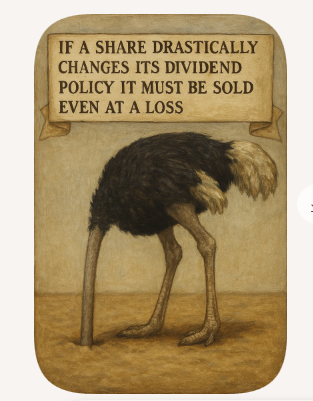
It’s your duty to check the next fcast dividend and
Leave a Reply