Investment Trust Dividends

Author: admin (Page 21 of 341)

BRAI part 2

The US president has pushed for lower interest rates, but the Federal Reserve has resisted, citing worries about inflation from tariffs. Threats to dismiss Fed board members and its chair could hurt confidence in US bonds. US inflation has been rising anyway.

Debt investors are also worried about the long-term impact of the One Big Beautiful Bill (OBBB), which is expected to add trillions to the US deficit. If government borrowing costs also rise, this could cause further issues.

Figure 2: US long-term government bond yields

Figure 3: US dollar trade-weighted index

Source: Bloomberg

Source: Bloomberg

These concerns have likely weakened the US dollar, which has dropped sharply from its February peak on a trade-weighted basis. The decline could continue if investors move more money out of US assets.

Figure 4: Value versus growth in US market

Source: Bloomberg (based on MSCI US value and growth total retu

For BRAI, the key issue is how value stocks perform compared to growth stocks. As Figure 4 shows, value stocks have lagged behind growth stocks over the past 20 years, mainly due to the long period of low US interest rates after the 2008 financial crisis.

In late 2021, expectations of rising interest rates sparked a rally in value stocks, but this peaked at the end of 2022. Since then, growth stocks have outperformed again, driven largely by the success of AI. Another potential value rally was cut short by Liberation Day.

The managers note that unpredictable US policy changes make their job more challenging but also create unusual investor behaviour, leading to more mispriced stocks.

The portfolio

New portfolio in place from 22 April 2025

The portfolio was fully realigned to the new strategy by 22 April 2025, with no cost to ongoing shareholders due to the manager’s contribution to expenses and the NAV uplift from the tender offer. Previously, almost 10% of BRAI’s portfolio was in non-US stocks, but it is now entirely invested in US stocks.

Marked shifts in sector and stock exposures

Figure 5 shows the portfolio breakdown by industry sector as at 30 September 2025, compared to the end of the last financial year (31 October 2024). There have been significant changes, with much higher exposure to financials and industrials, and lower exposure to healthcare and information technology. The net effect is that, on a sector basis, the portfolio now closely matches the benchmark, so most of the added value comes from choosing the right stocks.

Figure 5: BRAI asset allocation by sector as at 30 September 2025 (and as at 31 October 2024)

Source: BRAI

There is very little overlap between BRAI’s 10 largest holdings at the end of its last financial year (31 October 2024), before the new investment approach, and the top positions in the portfolio at the end of September 2025.

Figure 6: Top 10 holdings as at 30 September 2025

% as at 30/09/25% as at 31/10/24Change
JPMorgan ChaseFinancials3.23.2
Berkshire HathawayFinancials2.82.8
WalmartConsumer staples2.62.6
AmazonConsumer discretionary2.61.70.9
Bank of AmericaFinancials2.32.3
AlphabetCommunication services1.91.9
Morgan StanleyFinancials1.91.9
Johnson & JohnsonHealth Care1.81.8
Charles SchwabFinancials1.71.7
PfizerHealth Care1.61.6
Total22.3

Source: BRAI

Performance

Building a track record of outperformance

As mentioned earlier, we do not consider BRAI’s returns before the strategy change relevant here. Figure 7 shows BRAI’s share price and NAV performance compared to its benchmark and the S&P 500 Index.

The data indicate that BRAI has made a strong start, regularly outperforming its objective. The S&P 500’s gains have been driven by a few large AI-related companies, while BRAI’s benchmark is more diversified. Notably, BRAI has delivered solid returns over the past six months without heavily relying on the mega-cap AI trend.

It is still too soon to assess the volatility of these returns, but we will cover this in future reports.

Figure 7: Total return performance data for periods to end October 2025

Calendar year1 month (%)3 months (%)6 months (%)Since 22 April 2025 (%)
BRAI share price2.38.617.716.6
BRAI NAV3.68.117.221.4
Russell 1000 Value2.95.915.118.5
S&P 5004.99.025.632.3

Source: Bloomberg

Dividends

New enhanced dividend policy roughly 6% of NAV each year

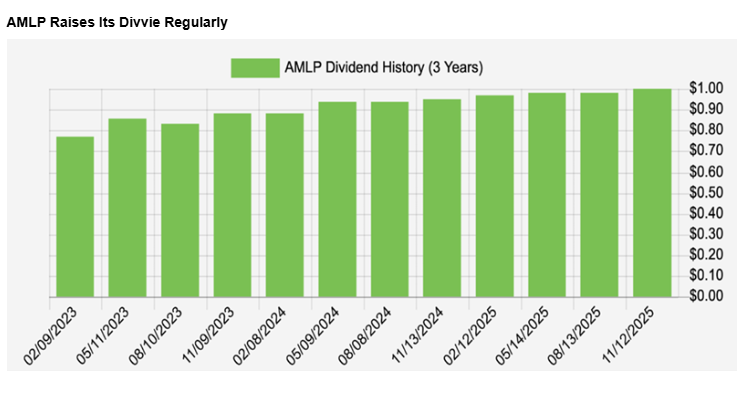
From 17 April 2025, BRAI began paying a quarterly dividend equal to 1.5% of its NAV, or about 6% per year. The chart’s x-axis shows past ex-dividend dates, and future payments are planned for April, July, October, and January.

Figure 8 highlights BRAI’s dividend history over five years, with the final column showing the impact of the higher dividend policy.

To support these higher dividends and potential share buybacks, BRAI had £105.7m in distributable reserves at the end of April 2025. Paying dividends above net revenue is not new for BRAI, as its dividends have not been covered by earnings since FY 2017. This approach allows BRAI to invest flexibly across the US market, aiming to maximise total returns without needing to focus on high-yielding stocks.

Figure 8: BRAI five-year dividend history for financial years ending in October

Source: BRAI, Marten & Co

Premium/(discount)

Over the 12 months to 31 October 2025, BRAI’s shares traded at a discount to NAV ranging from 11.9% to 1.0%, averaging 6.3%. As of 26 November 2025, the discount stood at 5.4%.

The discount increased during 2023 as markets were led by the Magnificent Seven and value stocks lagged. BRAI’s rating started to recover in October, helped by the expected tender offer, and is now at a more reasonable level. The board hopes investors will support the new strategy and help the trust grow again.

Conditional tender offers

If BRAI does not outperform its benchmark by at least 0.5% a year after fees over three-year periods (the first ending 30 April 2028), it will offer shareholders a 100% tender at a 2% discount to NAV after costs. This tender offer will also be made if the company’s net assets fall below £125m at the end of any of these periods.

Figure 9: BRAI’s premium/(discount) over the five years ended 31 October 2025

Source: Bloomberg, Marten & Co

Structure

Capital structure

BRAI has 95,361,305 ordinary shares, with 38,949,167 held in treasury, leaving 56,412,138 shares with voting rights. Its financial year ends on 31 October, with AGMs usually in March. The board plans to announce the next annual accounts in January 2026. Shareholders approved the company’s continuation at this year’s AGM, with the next vote set for 2028 and every three years after that.

Fees and costs

From 17 April 2025, BRAI’s management fee is tiered: 0.35% on the first £350m of NAV and 0.30% on any amount above that. There is no performance fee.

The ongoing charges ratio for the year ended 31 October 2024 was 1.06%, based on the previous 0.70% management fee. With the reduced fee, this ratio should be significantly lower in this and future years. The board has estimated that over a full 12-month period under the new fee, the ongoing charges ratio is expected to decrease to around 0.70%–0.80%.

With the new enhanced dividend policy, the Trust joins the Watch List.

LTI Case study

About LTI

Lindsell Train Investment Trust (The) PLC is a UK-based investment trust company. Its primary investment objective is to maximize long-term total returns with a minimum objective to maintain the real purchasing power of Sterling capital. The company’s investment policy is to invest in a wide range of financial assets including equities, unquoted equities, bonds, funds, cash and other financial investments globally with no limitations on the markets and sectors. It focuses on investing in a concentrated portfolio of securities with the number of equity investments averaging fifteen companies. The company holds a portfolio of equities across UK, USA, Japan, Europe.

Lindsell Train Investment Trust
Investment companies | Update | 24 September 2025
Durability in times of volatility


Market volatility at the start of 2025 – brought about by tariff uncertainty
and the release of the Chinese artificial intelligence (AI) model
DeepSeek – provided an interesting snapshot into the potential
performance of the companies that Lindsell Train Investment Trust (LTI)
and its manager, Lindsell Train Limited (LTL), invest in during times of
market stress. The durability and resilient cash flows, which are
hallmarks of LTL investments, proved popular with investors, with many
holdings recording large share price gains in the first few months of the
year – counter to the wider market.
Others did not do quite as well, but if markets were to undergo a
sustained period of volatility – with both the macroeconomic data and
geopolitical situation looking increasingly precarious – then sentiment
towards stocks with deep moats and predictable earnings growth would
likely improve. As tension in markets heighten, LTI may look cheap on
a 20.2% discount to net asset value (NAV).


Maximise returns over the long-term
LTI aims to maximise total returns over the long term, with the
minimum objective of maintaining the real purchasing power of
sterling capital. It invests in a concentrated portfolio of global
equities that it has identified as market-leading and that benefit
from high returns on equity. It also invests in a range of Lindsell
Train-managed funds and the unlisted security of its investment
manager, Lindsell Train Limited.

Current yield 6.1%

Current discount to NAV 21%

Note the holding in it’s own management company

Favour the tail not the dog.

Got it — let’s carefully break this down. You’re describing a situation where:

  • You start with £1,400 (your interest income).
  • You add £420 every year (like a yearly contribution).
  • The total grows with compound interest over 25 years.

To calculate this, we use the future value of an annuity plus the initial lump sum:

FV=P\cdot (1+r)^t+C\cdot \frac{(1+r)^t-1}{r}

Where:

  • P=1400 (initial lump sum)
  • C=420 (annual contribution)
  • r = annual interest rate (this is the missing piece!)
  • t=25 years

Example with 7% annual interest

  • Lump sum growth:

1400\cdot (1.07)^{25}\approx 7,600

  • Contributions growth:

420\cdot \frac{(1.07^{25}-1)}{0.07}\approx 26,900

  • Total after 25 years ≈ £34,500

From below you start with 20k of seed capital and re-invest the dividends and add 6k pa and re-invest those dividends also.

The above graph is AI generated and so may not be accurate but the overall growth story, without relying on lady luck, is indicative of what can be achieved.

As you intend to use your dividend stream as an ‘annuity’ the value of your pot is of no interest.

Want to turn £20k into a £33,286 second income ?

Here are 3 steps to get started

Discover some of the best strategies when choosing which stocks to buy — and how to target a long-term second income with dividends.

Posted by Royston Wild

Published 29 November

FCIT

British coins and bank notes scattered on a surface
Image source: Getty Images

You’re reading a free article with opinions that may differ from The Motley Fool’s Premium Investing Services.

I strongly believe the best way to source a long-term second income is with dividend-paying shares. I’ve put my money where my mouth is, too, by loading my portfolio with companies delivering stable — and in many cases, large and growing — cash rewards to their investors.

Picking the best stocks to buy comes with some work, though. Only those committed to carefully researching shares and devising a sensible investing strategy typically enjoy a robust income year after year.

Let’s get things started with three simple rules I use myself. I’m confident they could eventually turn a £20,000 lump sum investment into a regular £33,286 passive income.

1. ISA benefits

The first thing I’ve chosen to do is cut out HRMC. They’re after both my trading gains and dividends, and also have their eyes on my portfolio drawdowns.

This is why opening a Stocks and Shares ISA can be critical. These accounts prevent HMRC from charging income tax on any withdrawals you make. And by stopping capital gains tax and dividend tax, investors have more money working for them and compounding over time.

The good news is these products also have a healthy £20,000 annual allowance. This is more than enough for almost all Britons (only 7% of people max out their ISAs each year).

Please note that tax treatment depends on the individual circumstances of each client and may be subject to change in future. The content in this article is provided for information purposes only. It is not intended to be, neither does it constitute, any form of tax advice. Readers are responsible for carrying out their own due diligence and for obtaining professional advice before making any investment decisions.

2. Growth, value, dividends

When building one’s portfolio, it’s important to aim for a balanced range of growth, value, and dividend-paying stocks.

Growth shares can deliver strong capital gains over time as profits rise and share prices increase. Value shares can also enjoy stunning price appreciation, albeit in a different way. They can re-rate over time as investors realise their cheapness, benefitting early buyers.

Dividend stocks, meanwhile, can provide a steady flow of income that can be reinvested to boost compound returns. What’s more, dividend shares — unlike growth and value stocks — can help a portfolio deliver a positive return even during stock market downturns.

3. Diversify for strength

Equally critical is to build a portfolio that spans spanning different regions and sectors. Investment trusts like F&C Investment Trust (LSE:FCIT) can be simple yet highly effective ways to achieve this.

This FTSE 100 trust has delivered 54 straight years of dividend increases, illustrating the stability it offers. But that’s not all. Its share price has risen at an average annual rate of 6% over the past decade.

F&C manages roughly £6.6bn worth of assets, including more than 350 global equities. Holdings are as varied as Nvidia and Amazon, right through to HSBCSiemens, and Pfizer.

Like any stocks-focused trust, performance can suffer during broader stock market downturns. But as we’ve seen, its commitment to share investing also helps it tap into the lucrative long-term returns equities can bring.

Targeting a £33k income

With a diversified portfolio including trusts like this, I believe it’s quite possible to make an average yearly return of 8%. At this rate, someone investing £500 a month could come out with a healthy £475,513 after 25 years.

This could then be invested in 7%-yielding shares to target an annual second income of £33,286.

One small problem being, even allowing for inflation, would be to buy 20 different shares, Investment Trusts/ETFs paying a ‘secure’ 7%, if interest rates were very low, of course they could be higher.

Discount Delver

Biggest investment trust discount changes over the past week November 2025

We reveal the .

28th November 2025

by Dave Baxter from interactive investor

Discount Delver thumbnail

Investment trusts, due to their closed-ended structure, offer investors the chance of picking up a potential bargain. Such an opportunity arises when a trust’s share price is lower than the underlying investments held by the trust (the net asset value, or NAV). 

However, a trust trading on a discount to NAV is not necessarily a buying opportunity. There’s likely a good reason why the trust is cheap, such as subdued short- or long-term performance, or poor investor sentiment towards how it invests.   

In our weekly series, interactive investor highlights the 10 biggest investment trust discount moves over the past week. 

In total, nearly 400  investment trusts  have been screened, with the data sourced from Morningstar. Venture Capital Trusts (VCTs) have been excluded. We also strip out trusts with less than £30 million in assets and those that are not available on the interactive investor platform.

Please note that we had to run the data slightly early this week – from 18 November to 25 November. A few names that cropped up in last week’s list have continued to experience discount widening..

Note the presence of Hydrogen Capital Growth 

HGEN

5.79%

, a name that is in the process of winding down and saw the listing of its shares restored last week. The shares now trade on a discount of around 62%, although the oddities of a wind-down process can sometimes produce confusing numbers.

The woes of the Renewable Energy Infrastructure sector are plain to see once again, with five names from the space appearing in the table.

There’s Foresight Solar Ord 

FSFL

0.30%

, which, as noted last week, recently revealed an NAV fall in the third quarter of 2025 due to a variety of challenging factors, as well as its rivals NextEnergy Solar Ord 

NESF

0.20% and Bluefield Solar Income Fund BSIF0.70%. There’s also an appearance from Aquila Energy Efficiency Trust Ord AEET2.83%.

The sector might be struggling but there’s also the chance of corporate activity, providing investors with an exit at an uplift at least to recent prices.

Foresight Solar chair Tony Roper noted in the update earlier this month that the board “continue to analyse options available to deliver the best potential outcome for investors”, for example.

NextEnergy Solar, meanwhile, announced the appointment of a new chair, Tony Quinlan, this week, who has “deep expertise in corporate finance, mergers and acquisitions, and business transformation”.

The Bluefield fund announced earlier this month that it would initiate the process of putting itself up for sale.

Meanwhile, a troubled name in the process of winding down, Digital 9 Infrastructure Ord 

DGI9

0.00%

, saw its discount widen thanks to fresh bad news. The trust announced this week that minority shareholders in Arqiva Group, a holding representing 75% of Digital 9’s gross assets, want to sell down their stake.

However, the trust has judged this deal to be unsatisfactory, noting: “The board and [investment manager] InfraRed continues to judge that pursuing a divestment of its stake in Arqiva prior to the resolution of the key contractual and financing decisions noted above would be premature as it would not result in an acceptable outcome for realising shareholder value.”

A few names from different sectors also crop up in this week’s list, in the form of UK funds Aberforth Geared Value & Income Ord 

AGVI

0.61%

 and CT UK High Income Ord 

CHI

0.45%, as well as the hard-running gold play Golden Prospect Precious Metal Ord GPM3.41%.

There’s also Fair Oaks Income 2021 Ord 

FAIR

0.00%

, a niche debt trust that has tended to deliver enormous dividends. The shares traded on a 16.7% dividend yield at the time of writing.

Investment trustSectorCurrent discount (%)Discount/premium change over past week (pp)
Hydrogen Capital Growth HGEN5.79%Renewable Energy Infrastructure-62.4-6.9
Digital 9 Infrastructure Ord DGI90.00%Infrastructure-82.7-6.8
Foresight Solar Ord FSFL0.30%Renewable Energy Infrastructure-35.8-5.8
NextEnergy Solar Ord NESF0.20%Renewable Energy Infrastructure-45.6-5.6
Bluefield Solar Income Fund BSIF0.70%Renewable Energy Infrastructure-38.7-5.6
Aberforth Geared Value & Income Ord AGVI0.61%UK Smaller Companies-10.5-5.5
Fair Oaks Income 2021 Ord FAIR0.00%Debt – Structured Finance-5.9-5.2
Aquila Energy Efficiency Trust Ord AEET2.83%Renewable Energy Infrastructure-46.5-3.7
Golden Prospect Precious Metal Ord GPM3.41%Commodities & Natural Resources-13.9-3.4
CT UK High Income Ord CHI0.45%UK Equity Income-0.9-3.3

Source: Morningstar. Data from close of trading 19 November to 26 November 2025. 

FGEN

HY25 Results Highlights

28 November 2025

FORESIGHT ENVIRONMENTAL INFRASTRUCTURE LIMITED

(“FGEN” or the “Company”)

Half-year results for the six months ended 30 September 2025

FGEN, a leading investor in private environmental infrastructure assets across the UK and mainland Europe, is pleased to announce the Company’s interim results for the six months ended 30 September 2025.

Ed Warner, Chair of FGEN, said:

“FGEN has delivered another period of solid progress despite persistent sector headwinds. Our diversified portfolio continues to generate strong cash flows, providing a dependable foundation for dividend growth and long-term value creation.

We remain on track to meet our full-year dividend target, supported by proactive portfolio management and disciplined follow-on investments that unlock further value. While the market backdrop has been challenging, our strategy positions FGEN to deliver sustainable income and NAV growth without reliance on new fundraising.

“Looking ahead, we are confident in our portfolio’s combined ability to deliver long-term predictable income for investors alongside attractive upside potential from our growth assets. We remain optimistic about the structural drivers underpinning the green economy.

“We continue to be fully committed, alongside our Investment Manager, to closing the discount to NAV and ensuring that FGEN’s share price more accurately reflects the intrinsic value of its portfolio.”

Summary of results:

Resilient Earnings and NAV :

•   NAV per share of 104.7 pence, delivering positive NAV total return for the period of 2.0% after payment of dividends.

•   Annualised NAV total return of 7.2% since IPO.

•   Company remains on track to deliver the full year dividend target of 7.96 pence, representing a yield of 12% on the share price at the date of this report.

Strong operational performance:

•   Strong operational performance with assets generating dividend cover of 1.22x in the period, after amortisation of project-level debt facilities.

•   Company remains on track to maintain or improve operational performance over the remainder of the financial year.

•   Generation +0.5% over budget¹, with anaerobic digestion facilities continuing to perform particularly well.

Growth assets already delivering NAV uplift:

•   CNG Fuels growing truck numbers and maintaining profitability.

•   Rjukan aquaculture now fully operational, after successfully delivering its first trout harvest in the period.

•   The Glasshouse continues to onboard new customers and targets being cash flow breakeven later this year.

1.  After accounting for the anticipated recovery of downtime from operator guarantees and insurances

Trust in Trusts

Top 10 most-popular funds in October 2025

Fund IA sectorChange on last monthOne-year return (%)Three-year return (%)
Royal London Short Term Money Market (Accumulating)Short Term Money MarketNo change4.515
Vanguard LifeStrategy 80% EquityMixed investment 40%-85% sharesNo change17.345
L&G Global Technology Index TrustTechnologyUp one38.5160.5
Artemis Global Income I AccGlobal Equity IncomeDown one44.693
Vanguard FTSE Global All Cap IndexGlobalUp one19.854
HSBC FTSE All-World Index C AccGlobalDown one20.458.1
Vanguard LifeStrategy 60% EquityMixed investment 40%-85% sharesUp one14.235.6
Vanguard LifeStrategy 100% Equity A AccGlobalDown one20.554.7
Fidelity Index WorldGlobalNo change20.360.3
Jupiter Gold & Silver I GBP AccSpecialistNew entry87172.4

Source: interactive investor. Performance data to 3 November 2025. Note: the top 10 is based on the number of “buys” during the month of October. Past performance is not a guide to future performance.

Top 10 most-popular trusts in October 2025

RankingInvestment trustChange from SeptemberOne-year return to 31 October (%)Three-year return to 31 October (%)
1Scottish Mortgage Ord (LSE:SMT)Unchanged35.763.2
2Polar Capital Technology Ord (LSE:PCT)Up 253.4151.6
3Greencoat UK Wind (LSE:UKW)Down 1-13.2-9.8
4City of London Ord (LSE:CTY)Down 126.949.4
5Temple Bar Ord (LSE:TMPL)Unchanged46.596.3
6Golden Prospect Precious Metal Ord (LSE:GPM)New96.1187.7
7Henderson Far East Income Ord (LSE:HFEL)New2038.4
8Fidelity China Special Situations Ord (LSE:FCSS)Down 25596
9NextEnergy Solar Ord (LSE:NESF)New-7.5-24.4
10JPMorgan Global Growth & Income Ord (LSE:JGGI)Down 36.954.8

Source: FE Analytics. Performance data to 31 October 2025. Note: the top 10 is based on the number of “buys” during the month of October. Past performance is not a guide to future performance.

« Older posts Newer posts »

© 2026 Passive Income Live

Theme by Anders NorenUp ↑