Investment Trust Dividends

Author: admin (Page 281 of 374)

Dividend Hunter

Ian Cowie: this investment trust sector has plenty of bargains

Our columnist explains why he’s confident about the outlook for trusts tapping into a long-term trend. While the sector has seen short-term pain over the past year, he says valuations are cheap and investors can plug into above-average income yields.

by Ian Cowie from interactive investor
Ian Cowie 600

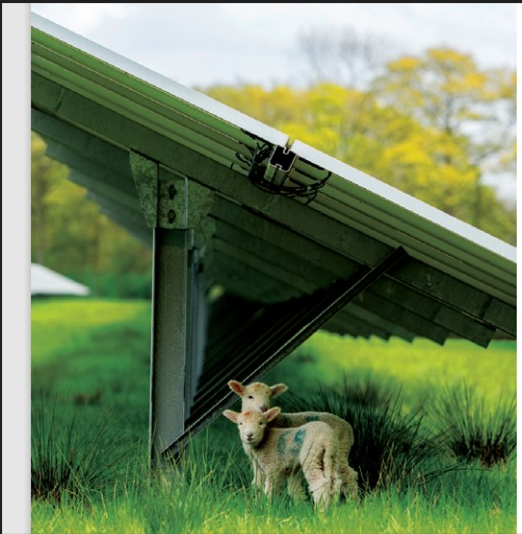
Wind power became Britain’s biggest source of electricity last year, according to National Grid data published by Imperial College London this week. But many investors remain frozen in the fossil fuels era. Is it time for investment trusts to help blow the warm winds of change through your portfolio?

Winter gales helped wind farms generate 32% of Britain’s electricity, compared to 31% from gas, said Iain Staffell of Imperial, who added: “Britain has become only the sixth country in the world where wind farms are the top source of electricity.”

Demand for electricity is likely to double in the next few years, according to the International Energy Agency (IEA), which should support share prices of businesses that generate this form of power. Demand is being driven by the rise of heavy new consumers including artificial intelligence (AI), data centres and electric vehicles. 

The IEA predicts that a total of 1,000 terawatt hours of power (with a terawatt equalling a trillion watts) will be needed globally by 2026, compared to 430 terawatts in 2022. The spokesperson added: “This is roughly equivalent to the electricity consumption of Japan, which has a population of 125 million people.”

Closer to home, for one hour last month, Britain’s National Grid hummed happily along almost free from fossil fuels. Between 12.30pm and 1.30pm on 15 April, coal and gas power plants provided just 2.4% of the country’s electricity supply, a record low.

Across Britain, homes and businesses were running almost entirely on electricity generated by wind turbines, solar panels, nuclear reactors, biomass, plus cables from France and Norway. The UK government has pledged to create a zero-carbon electricity grid by 2035. Labour aims to reach that target by 2030.

Here and now, investment trusts that provide professionally managed exposure to renewable energy can enable individual investors to fund and benefit from these trends, generating capital growth and above average dividend income. These trusts had a hard time when energy prices were falling and interest rates were rising, making their high yields relatively less attractive, but they are now recovering.

For example, Greencoat UK Wind  UKW

 is the top-performing fund among more than 20 rivals in the Association of Investment Companies (AIC) “Renewable Energy Infrastructure” sector. Over the last decade, five years and one-year periods, UKW’s total assets of more than £4.7 billion delivered total returns of 138%, 37% and  -0.4%. It currently yields just over 7% dividend income that has risen by an annual average of 8.15% over the last five years.

It is important to beware that the past is not necessarily a guide to the future and that dividends can be cut or cancelled without notice. However, if UKW succeeds in sustaining its current rate of raising shareholders’ income in future, this would double in less than nine years.

Bluefield Solar Income Fund  BSIF

a £1.4 billion fund, came second over the last decade with a total return of 94%, followed by 10% over the last five years and -17% over the last year. Disappointing recent capital returns were offset to some extent by BSIF’s high yield of 8.4% dividend income, rising by nearly 3% per annum over the last five years.

Renewables Infrastructure Grp  TRIG

a £3.3 billion fund, came third over the decade with total returns of 72% followed by 8% and -11% over the medium and short term. Once again, a high yield of 7.4% rising by just over 2% per annum delivered dividend comfort to offset capital disappointment.

However, potential investors should beware so-called value traps, where the price of a high income today can be low or no capital growth in future. Alternatively, too high a yield can sometimes signify capital destruction in the past.

For example, the industrial-scale batteries specialist Gore Street Energy Storage Fund Ord GSF

 yields nearly 11.5% dividend income but destroyed 31% of shareholders’ capital last year after a positive return of 9% over the last five years. As it launched in 2018, GSF lacks a 10-year track record.

Investors willing to accept lower initial income can gain more diversified exposure to rising demand for electricity. For example, Ecofin Global Utilities & Infra Ord EGL

 is a £271 million fund where America is the single biggest country weighting, followed by Italy, Britain and France.

0.35% and National Grid NG.11.50%. Founded in 2016, it delivered total returns of 70% over the last five years and minus -5% over the last year. EGL’s current dividend yield of 4.3% increased by an annual average of just over 4%.

All these funds remain out of fashion and their shares are priced below their net asset values (NAVs) to reflect that fact. For example, UKW trades -10% below its NAV; BSIF has a -22% discount; TRIG is -20% and EGL is -12%.

While there is no guarantee that discounts will narrow – and they could widen – all those valuations might look like bargains if demand for electricity continues to rise, as the IEA predicts. Buyers today could enjoy capital growth and plug into above-average income yields. Or am I just whistling in the wind?

Ian Cowie is a freelance contributor and not a direct employee of interactive investor.

Ian Cowie is a shareholder in Ecofin Global Utilities and Infrastructure (EGL) and Greencoat UK Wind (UKW) as part of a globally diversified portfolio of investment trusts and other shares.

Passive Income Empire

I’d take the Warren Buffett approach to building a passive income empire

Story by Christopher Ruane

Warren Buffett at a Berkshire Hathaway AGM

Warren Buffett at a Berkshire Hathaway AGM© Provided by The Motley Fool

When it comes to passive income, we can all learn a thing or two from Warren Buffett.

The billionaire investor earns millions of dollars every week on average in passive income. How does he do it? Simple: dividends from companies whose shares he owns.

Some companies pay big dividends

While some businesses do not pay any dividends, others have small ones as a percentage of their current share price (what is known as the dividend yield) and some pay a large yield.

Take Phoenix (LSE: PHNX) as an example.

With a dividend yield of just over 10%, buying its shares could mean that I get £10 of passive income per year in future for each £100 I put into Phoenix shares now.

But in reality things may be more complicated. Dividends are never guaranteed, so the current yield of any company does not necessarily give me an indication of what I will actually earn from it in future.

How to hunt for dividends

So, how has Warren Buffett managed to build such sizeable passive income streams?

Of course the amount he is investing and the long timeframe of his stock market career both help. But a critical factor has been his approach to finding companies in which to invest. He looks for industries he expects to benefit from strong future customer demand.

Within them he looks for firms that have some sort of competitive advantage he reckons can help them do well in future.

Whether or not Phoenix is up Buffett’s street I do not know. He does not own shares in it.

But financial services and specifically insurance have long been favourite investment areas for him.

With a large customer base of insurance and pensions clients, I expect Phoenix could do well in future. It can benefit from owning well-known brands, including Standard Life.

Then again, the company faces risks. For example, its book of mortgages involves certain assumptions about property prices. If they tumble unexpectedly, that could hurt profits at Phoenix – and my passive income expectations if I buy its shares.

Taking a smart approach to investment

Like Warren Buffett, therefore, I always keep my portfolio diversified across a range of companies.

My first move would be setting up a share-dealing account or Stocks and Shares ISA today.

I would then put some money into it, or start drip-feeding some cash regularly. At that point I would start my search for passive income superstar shares, using some of what I have learned from Warren Buffett.

The Motley Fool

TRIG

TRIG – Renewables Infrastructure Group

Kepler Disclaimer
Disclosure – Non-Independent Marketing Communication

This is a non-independent marketing communication commissioned by TRIG – Renewables Infrastructure Group. The report has not been prepared in accordance with legal requirements designed to promote the independence of investment research and is not subject to any prohibition on the dealing ahead of the dissemination of investment research.

Overview
TRIG’s portfolio continues to evolve, despite equity capital markets being closed…
Overview
The Renewables Infrastructure Group (TRIG) is one of the ‘haves’ in the renewable energy infrastructure universe, with mature assets generating significant cash alongside a decent development pipeline. It has scale, which has allowed it to assemble a high quality, institutional portfolio. This puts it in a good position relative to smaller, more nascent peers.

Whilst the board is prioritising the repayment of more expensive short-term borrowings with surplus cash and capital, the portfolio is not standing still by any means. Wind and solar assets continue to make up the bulk of the portfolio by value, but batteries (or ‘flexible capacity’) now increasingly feature. We discuss TRIG’s recent acquisition of Fig Power, a specialist developer of battery assets in the UK, in more detail in the Portfolio section. Portfolio diversification leads to significantly smoother cash flows from which to pay the Dividend than might otherwise be the case.

TRIG’s approach to borrowings insulates shareholders from changes in interest rates, and given each project is also paying down debt every year, in time reduced asset level gearing will allow the managers to regear, meaning TRIG will have cash to reinvest and further build the portfolio. Elsewhere in the portfolio, the managers have been selectively selling assets, which enables TRIG to pay down the more expensive floating-rate debt, but at the same time enhance the overall portfolio construction and performance.

One significant initiative the team are working on is enhancing the ability of existing wind farms to generate power through retrofitting enhancements to wind turbine blades. RES’s trials at two of TRIG’s sites demonstrated an energy yield uplift of up to 5%, which has now been fully deployed at one site. The team are progressing well with a phased installation on four more sites, and an appraisal of a further three sites is underway.

Analyst’s View
TRIG’s manager, InfraRed Capital Partners, has a background in traditional infrastructure, which in our view has had an important influence on how the portfolio has been assembled. TRIG’s managers aim to minimise risks across the portfolio, by spreading investments across six European countries (including the UK). This means that revenues are diversified across different political regimes and across weather systems.

In absolute terms, TRIG’s prospective total returns are attractive, in line with long-term total returns from equities. Taking the weighted average discount rate of 8.1%, deducting ongoing charges of c. 1% per annum (see Charges) to get a simple estimate of NAV total returns going forward, investors stand to achieve NAV total returns of c. 7.1% per annum on a simplistic basis. As we have discussed in the Portfolio section, these returns should correlate with inflation , meaning that a good proportion of these returns can be considered real. The risks investors are taking to achieve these returns are minimised through diversification, and currently there is a potential for tailwinds to these returns from interest rates falling, with valuations already having taken the hit from inflation falling.

Sentiment towards TRIG and the renewable energy infrastructure peer group has waned, leading to a disconnect between the NAV and the share price. In our view, this serves to highlight the potential opportunity, especially given the attractive long-term income profile of TRIG, and the potential for capital growth with Fig Power and the trust’s development activities. TRIG remains a quality offering amongst the peer group. Any narrowing of the discount would serve as an accelerant to shareholder returns, over and above the NAV returns generated.

Bull
A high yield of 7.4%, with the potential for NAV growth from reinvestment of surplus cash
Has a pure exposure to diversified assets, technologies and subsidy regimes, which are uncorrelated to equity markets, and scores well on ESG matters
Inflation-link has been positive, building on the historical stability of TRIG’s cash flows


Bear
Discount to NAV may persist for some time
Dividend cover not as high as that of funds which are not amortising, i.e. paying down debt
Macro uncertainty (e.g. lower power price forecasts and high interest rates) have provided a headwind to the NAV, and may persist

My 5 Trading topics

One. Make a plan and stick to it thru thick and thin, as there will be plenty of thin.

Two. Set a figure and write it down and how u intend to get to the figure.

Three. Accept that the amount invested may fall as u re-invest your dividends.

Four. Have some cash in your ‘safest’ position as u wait for the next market crash.

Five. Watch for the news from your Trust about their next dividend and their forecast for the next year.

One. To buy a portfolio of higher yielding Investment Trusts to provide a yield of 7% as this doubles your income in ten years.

Two. The income after ten years will be 14-16k on a starting portfolio of 100k. The amount is not in question although depending on the market the time scale could slip.

Three. As u don’t want to kill the goose that lays the golden eggs* u never intend to sell any of your Trusts. Over time the amount invested will start to rise as compound interest starts to make a big difference to your portfolio.

Four. It may mean having an investment in a Government gilt pair traded with a higher yielder to maintain a blended yield of 7%.

Five. If one of your Trusts drastically changes their dividend policy, the Trust must be sold.

* In an emergency one of your Trusts could be sold the equivalent of withdrawing x amount of dividends years in advance.

Zero to hero

Young Caucasian woman holding up four fingers

Young Caucasian woman holding up four fingers© Provided by The Motley Fool

How I built £4,000 of passive income starting with £0

Story by Tom Rodgers

I started investing late in life, but I’ve still managed to develop thousands of pounds in passive income.

And I think it’s easier than most people believe. Like a lot of readers, I also started with next to nothing.

I had the money I made from freelance writing

But without passive income, I had no safety net to simply enjoy my leisure time.

So this is how I started.

Zero to hero

Depositing small, regular amounts into a tax-advantaged account like a Stocks and Shares ISA or SIPP is a great way to get up and running.

Please note that tax treatment depends on the individual circumstances of each client and may be subject to change in future. The content in this article is provided for information purposes only. It is not intended to be, neither does it constitute, any form of tax advice. Readers are responsible for carrying out their own due diligence and for obtaining professional advice before making any investment decisions.

It soon grows into a decent stake without you really noticing. Today I’m 42 years old and I have about £4,000 of passive income banked.

Almost exactly half of this comes from share price increases in the growth stocks I own.

The rest is from regular dividend payments from income stocks.

But not all companies pay dividends.

Thirst for growth

It can be frustrating to find a stock you like, and see it doesn’t pay dividends. However, it’s not always a binary choice between dividends or growth forever.

For example: one of my best investments did not pay a dividend when I first bought the shares.

However, it will start sending me free dividend cash this year.

This is the £200m market cap viral medicine testing company Hvivo (LSE:HVO).

It trades on the AIM market.

Buying shares in what was then an unknown 12p-per-share penny stock was quite scary. But I did a huge amount of research before buying in.

Hvivo’s sales shot up from £3.3m in 2019 to £55.5m in 2023.

From losing £5m a year, the company is now raking in £8m a year in profits.

It is vastly more cost-effective for big pharma companies to use Hvivo’s models than any other method. That’s why Hvivo’s pay-up-front clinic model has seen such explosive growth.

So I’ll hold this alongside my other dividend-paying shares.

I’ll use compound growth to my advantage here: reinvesting any dividend payments into buying more shares. For me, that includes 7.5% dividend renewables fund Greencoat UK Wind and the low-cost 13.8% dividend yield metals producer Sylvania Platinum.

Building passive income is a way I’ve used to make my money work for me, rather than the other way around. Given my results to date, I can’t see myself stopping any time soon.

The Snowball

Cash for re-investment £1,122.17, maybe not today though.

The emotional benefits of dividend re-investment.
In fact: with this investment strategy you can actually welcome falling share prices.

There seems to be some perverse human characteristic that likes to make easy things difficult.
WB

« Older posts Newer posts »

© 2026 Passive Income Live

Theme by Anders NorenUp ↑