Investment Trust Dividends

Category: Uncategorized (Page 270 of 344)

Investing

If your pot of money has grown by compounding, u may be more interested in preserving your wealth by taking less risks with your money.

Above is a portfolio IT’s at the lower end of the risk spectrum, no share is entirely risk free but if u want a dividend to pay your bills or to re-invest, CTY have paid a gently increasing dividend for 52 years, so are unlikely to change their criteria, especially as they have reserves built up to pay their dividends when markets crash. LWDB could be a buy if/when the next market crash happens.

But as it’s your hard earned it’s always best to DYOR.

Portfolio Rules

For any new readers, the portfolio rules there are only 2.

One. Buy Investment Trusts that pay a ‘secure’ dividend to buy more Investment Trusts that pay a secure dividend.

Two. Any Trust that drastically changes it dividend policy must be sold even at a loss.

The target for the portfolio is to pay a ‘pension’ of 14% within ten years, better if u have longer.

The target is not in doubt, although depending on the market the time scale may slip.

Dividend investing, the only strategy where u can welcome falling prices because as the price falls the yield rises.

I forgot to mention, u keep all your capital against buying an annuity at around 7% and gifting all your capital to a pension provider.

BSIF Part 2

Construction and development pipeline

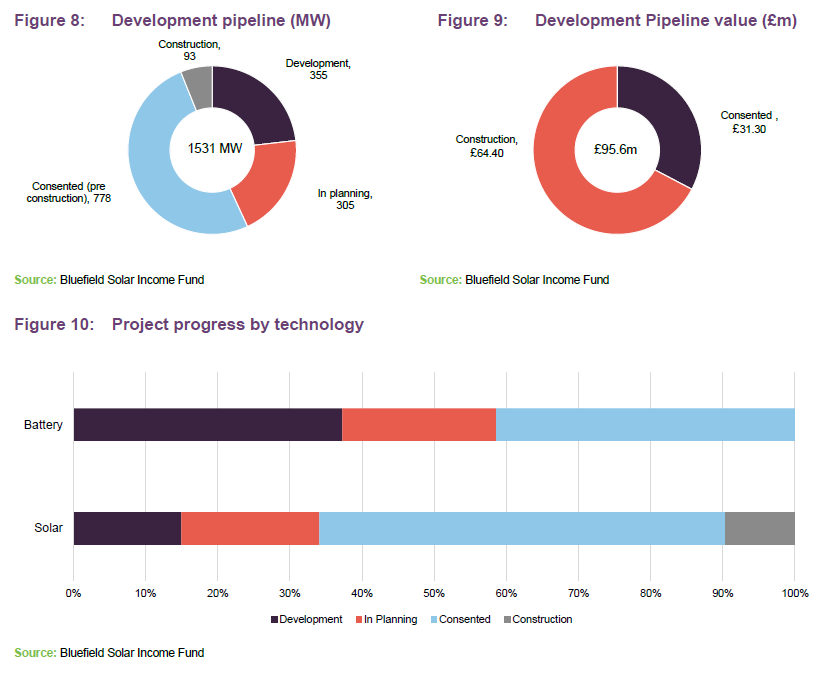
The manager says that BSIF also maintains a sizeable pipeline of assets. As of 31 December 2023, this stood at a total of 1,531MW, made up of 968MW of solar and 563MW of battery storage. As Figure 8 shows, this is broken down into various stages of development, noting that BSIF has a 5% investment limit in pre-construction development stage activities, of which less than 1% is currently committed.

Figure 9 highlights the current value of the construction projects and consented projects in the BSIF valuation. Currently, no value is attributed to projects without planning consent. The manager says that once developments receive planning consent and move from the development stage to pre-construction, the investment adviser believes it is appropriate to reflect this change in the company valuation. It says that at this point in their lifecycle, the projects will have received all the necessary planning consents, land rights and valid grid connection offers and so, it says, have discernible value beyond the direct costs of development.

Development pipeline (MW), Development Pipeline value (£m) and Project progress by technology

Performance

The manager notes that of all the AIC investment trust sectors, renewable energy infrastructure has been one of the hardest-hit by the economic challenges faced by the UK over the last few years. In many cases, it says, a degree of repricing was justified given the extent of the inflation surge and the ensuing tightening of monetary policy which took place over 2022 and 2023. It says that many companies in the sector reliant on debt financing and without sufficient cashflows have seen their share prices fall dramatically, with median sector discounts at one point falling through 30%.

The manager says that for the most part, BSIF had managed to steer clear of the carnage, operating throughout this period with one of the narrowest discounts in the entire sector. It says this was a reflection of the resilience of the portfolio and the ability of its advisors to navigate what it says has been one of the most challenging and uncertain periods of the company’s 11-year history.

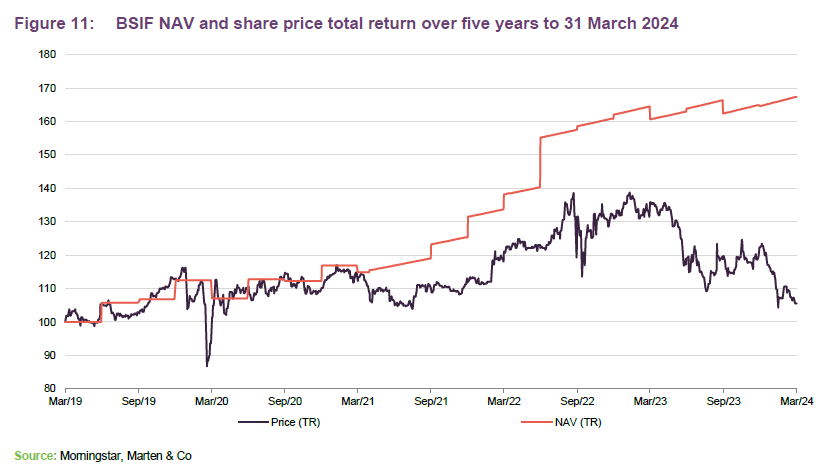
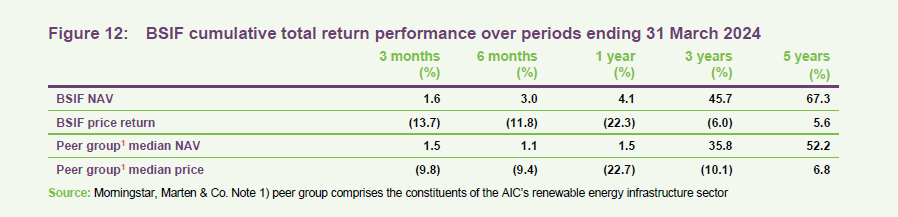
The manager adds that little has changed in that regard and says that the trust’s fundamentals have remained just as good as ever. Despite this, the manager notes that the discount has continued to widen, particularly since the end of 2023. Unfortunately, it says, there does not appear to be a particular catalyst driving the recent selloff. As shown in Figure 12, the company has outperformed its peer group median over the past 12 months, which the manager says suggests that the recent fall is driven more by market sentiment than any fundamental weakness.

BSIF NAV and share price total return over five years to 31 March 2024
BSIF cumulative total return performance over periods ending 31 March 2024

Peer group comparison

You can access up-to-date information on BSIF and its peers on the QuotedData website.

There are now 22 companies that make up the AIC’s renewable energy sector, although we have removed the Asia Energy Impact Trust (formerly Thomas Lloyd Energy Impact) from our analysis, given that its shares were suspended for much of the past year.

The manager notes that of these companies, most are focused on solar or wind or some combination of the two; however, it says, there are several more-targeted funds which provide a different risk profile to BSIF. Three focus exclusively on battery storage assets. Three funds are focused on energy efficiency projects. Two funds invest exclusively in US projects, which it says tend to have long-term PPAs. One invests in hydrogen-related assets and has more of a capital growth focus.

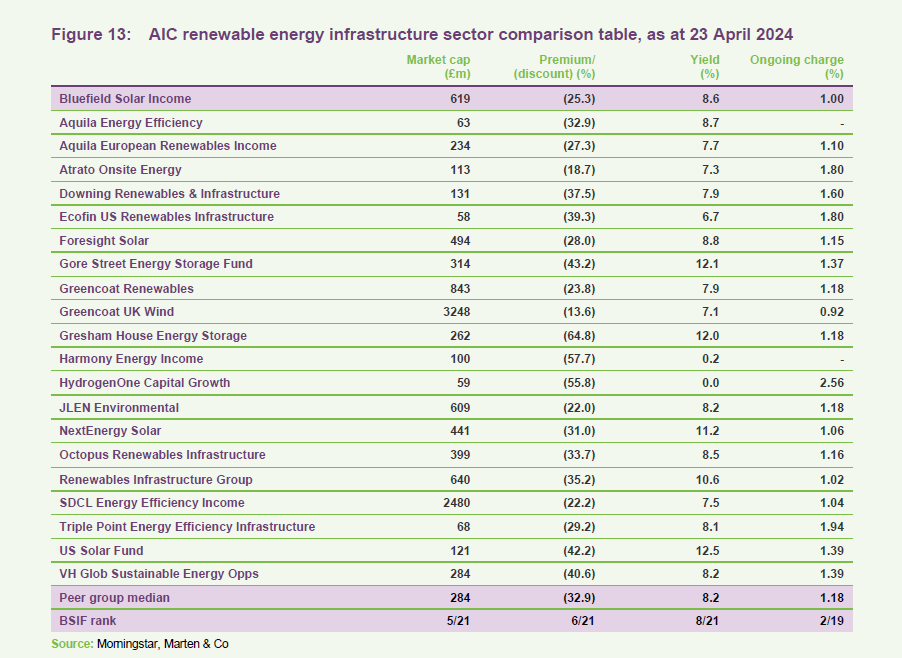
AIC renewable energy infrastructure sector comparison table

The manager highlights that BSIF is a large, liquid fund, offering an attractive yield, adding that it has one of the most competitive ongoing charges ratios within the peer group.

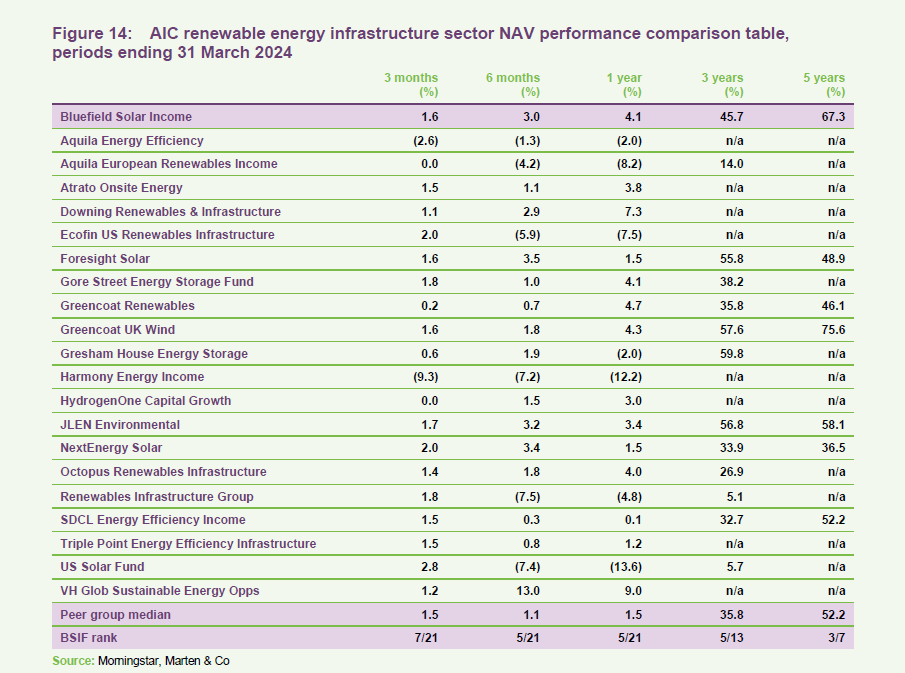
AIC renewable energy infrastructure sector NAV performance comparison table, periods ending 31 March 2024

The manager notes that BSIF has remained one of the most consistent performers in terms of NAV growth across the entire sector, both long-term and more recently. Notably, it says, the NAV performance has been steady despite the selloff in the company’s shares over the last 12 months, with the discount compounded by the 4.1% NAV return.

Dividend

BSIF pays quarterly dividends. For a given financial year, the first interim dividend is paid in February, with the second, third and fourth interims paid in May, August and October/November respectively (dividends are usually declared the month before payment).

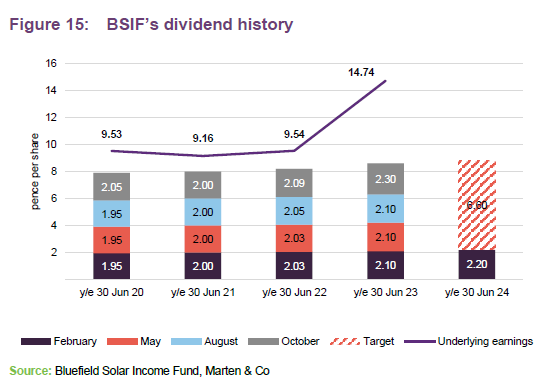
BSIF’s dividend history

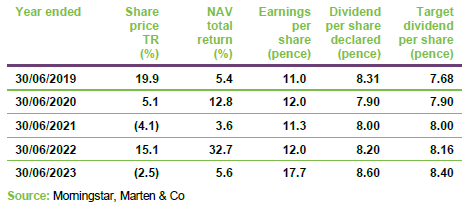
In the 2023 financial year, BSIF paid a total of 8.6p, 0.2p ahead of the target dividend following a jump in its underlying earnings. The manager says that within its peer group, BSIF has consistently delivered the highest dividend on a pence per share basis (or euro equivalent).

The target dividend for FY24 has been set at not less than 8.8p, an increase of 2.3% on the total dividend for FY23. The manager notes that whilst this may look like a small uplift in the context of recent adjustments, the existing dividend remains one of the highest in the sector. In addition, it says, given current challenges present in funding markets, there are obvious long-term benefit to shareholders if BSIF balances underlying and carried earnings between dividend payouts and other uses of capital such as the development of its pipeline. The manager adds that the nature of the current discount presents an opportunity to buyback shares.

Premium/(discount)

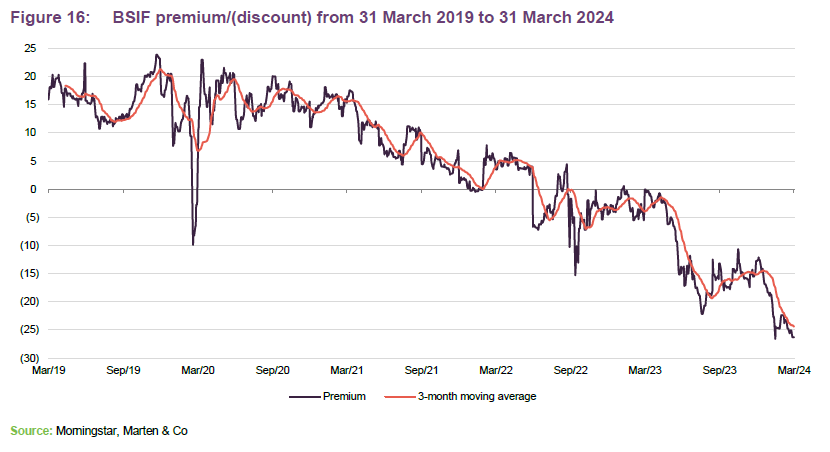
The manager notes that this is the first period in the company’s history where it has traded at a sustained discount. Early in 2023, it says, a period of positive performance saw shares trade close to par before a sharp decline over the next 12 months resulted in the discount widening to 27% at the time of publishing. The manager says that the sell-off became particularly steep at the beginning of 2024. It says there is no clear fundamental justification for this move, which has gone well past the mechanical impact of rising rates.

The manager says that whilst this remains unfortunate for both the advisors and investors, it is not uncommon for markets to overshoot in either direction. It believes that given the ongoing execution of the trust, and the efforts of the advisory team to ensure the long-term health of its portfolio through strategies including the new GLIL partnership, investors should remain confident. that BSIF’s fortunes will improve.

BSIF premium/(discount) from 31 March 2019 to 31 March 2024

Buybacks

The manager notes that the recent sell-off has prompted the BSIF board to announce a share buyback programme, to which an initial £20m has been allocated. This commenced following the publication of the company’s interim report on 28 February 2024. Going forward, the manager says that BSIF’s capital allocation policy is under regular review, with the marginal benefit of buybacks evaluated against the merits of further investment in its existing assets, pipeline, and debt repayment. For the moment, it says that buybacks remain an effective use of capital given current discounts.

Balance sheet

The manager notes that since its 2013 IPO, BSIF has focused on a simple and deliberate strategy of ensuring, outside of its revolving credit facility, that all debt within the structure is secured at portfolio level with fixed interest rates on fully amortising terms. As of 31 December 2023, the current average cost of debt is c.3.5% on £410m of long-term borrowings, which the manager says highlights that the company continues to be well insulated from today’s higher-interest-rate environment. Notably, it says, whilst BSIF has a modest amount of index-linked debt, it also has significant levels of RPI-linked revenues, leaving the company a net beneficiary of inflation.

At the group balance sheet level, BSIF has access to a £210m revolving credit facility and an uncommitted accordion feature that allows for a further £30m of borrowing. This facility matures in May 2025 and is provided by Lloyds Bank, RBS International, and Santander UK. The cost of this is 190bps over SONIA. As at 31 December 2023, the company had drawn £167m from its RCF. This is a reduction of £10m from our last note, which was published in October 2023 following a repayment stemming from the GLIL partnership.

Fund profile

BSIF is a Guernsey-domiciled sterling fund, with a premium main market listing on the London Stock Exchange (LSE). At launch on 12 July 2013, it focused primarily on acquiring and managing a diversified portfolio of large-scale (utility-scale) UK-based solar energy assets, to generate renewable energy for periods of typically 25 years or longer. BSIF owns and operates one of the UK’s largest diversified portfolios of solar assets, with a combined installed power capacity of 813MWp.

In July 2020, shareholders approved proposals to expand the remit and BSIF began making investments in onshore wind and energy storage projects soon after.

BSIF is designed for investors looking for a high level of income with regular distributions.
Further information regarding BSIF can be found at: www.bluefieldsif.com

BSIF’s primary objective is to deliver to its shareholders stable, long-term sterling income via quarterly dividends. The majority of the group’s revenue streams are regulated and non-correlated to the UK energy market.

The underlying investments are held in SPVs which, in turn, are held through BSIF’s wholly-owned and UK-domiciled portfolio holding company, Bluefield Renewables 1 Ltd (BR1).

BSIF Part 1

Bluefield Solar Income Fund – Fundamentals shine despite discount

  • 24 April 2024
  • QuotedData
  • Andrew Courtney
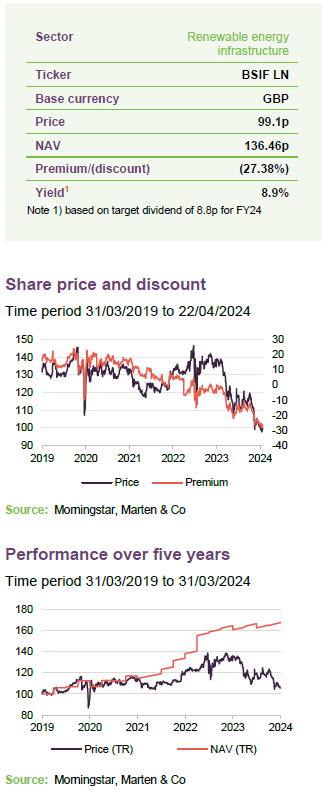
Share price and premium/(discount) and Performance over five years

Bluefield Solar Income Fund

Investment companies | Update | 24 April 2024 

Fundamentals shine despite discount

The manger comments that, in common with the other trusts in the renewable energy sector, the last six months have continued what has been a challenging period for the Bluefield Solar Income Fund (BSIF). It adds that the trust’s ongoing fundamental performance has failed to reverse a steady slide in its share price which began back in May 2023. Despite this, it says the company has continued to deliver solid NAV growth and market-leading shareholder distributions thanks to a range of contractual arrangements that underpin its assets.

Positively, the manager notes, the falling share price does not appear to be a reflection on the trust itself, but rather broader macro-economic conditions and negative sentiment surrounding UK companies and renewable energy infrastructure in particular. It says that the board has signalled its dissatisfaction with the situation by authorising a £20m share buyback, which is currently underway. The manager adds that with growth accelerating and a recently announced strategic partnership providing an avenue for the ongoing development of its pipeline, the outlook for the trust remains attractive, as does a well-covered dividend yield approaching 9%.

Focus on value accretive renewable investments

BSIF aims to pay shareholders an attractive return, principally in the form of regular sector-leading income distributions, by being invested primarily in solar energy assets located in the UK.

annual returns

Market Background

BSIF’s share price may be reflecting broader macro-economic conditions and negative sentiment surrounding UK companies and renewable energy infrastructure in particular

The manager says that the renewable energy sector has been a victim of the rapid rise in global interest rates that began back in 2022. At its peak, risk-free returns from government debt climbed above 5%, which it says impacted on the appeal of renewable energy assets. The manager added that compounding the issue was the rise in discount rates and financing costs, which weighed on the ability to drive capital returns. It says that these dynamics have added to the pain caused by the general underperformance of the entire UK equity market, which it says has suffered from slowing growth, stubborn inflation, and a lame duck government. This led to suggestions that the economy may be staring down the barrel of stagflation, it adds.

Improving outlook for the UK

The manager says that for the moment, the fortunes of the renewable energy sector appear tied to those of the broader economy and that given the challenges faced over the last 12 months, it was difficult to see where a positive catalyst might emerge from. However, in recent months it says we have seen some signs of improvement.

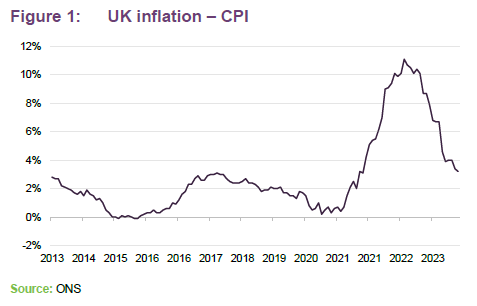
The positive news is headlined by February’s inflation data, which was down sharply, falling to 3.4% from 4.2% the month prior

The manager notes that the positive news was headlined by continued progress on inflation which, after a steep decline in February, fell to 3.2% in March. The reading marking the slowest annual rate since September 2021. Promisingly, it says, the data shows many of the underlying components of the CPI index are also falling including the service sector figure which it says typically reflects domestic rather than imported pricing pressures.

UK inflation - CPI

Promisingly, the manager highlights that steady wage growth suggests that we are beginning to see some stability in the labour market, and it says that sustained real earnings should provide a much-needed boost for GDP.

Even so, the manager believes economic growth remains a concern, and with the ECB still at the terminal, it says there appears to be considerable headroom to lower interest rates.

The manager says that with the renewable energy sector one of the worst-affected by the previous rise in rates, it was hoped that any easing of financial conditions would result in a sustained uplift. However, despite gilt yields falling by almost 50 basis points from their peak, the share prices of both BSIF and the broader sector have continued to deteriorate. Because of this, the manager suggests that there may remain other factors at play.

Power Prices

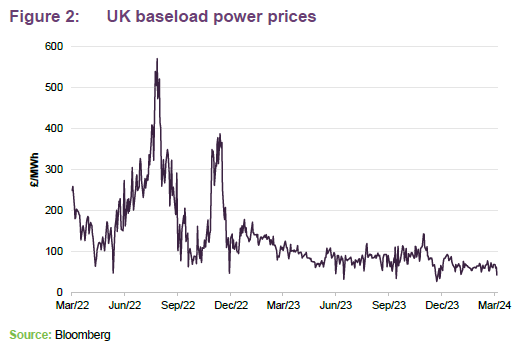
One possible explanation, it says, is falling power prices. According to the manager, despite appearing to undergo a structural resight higher post-COVID, these have retreated from their highs, which has impacted on NAVs as medium to longer-term forecasts are reduced as shown in Figure 2.

UK baseload power prices

However, the manager says that BSIF has maintained strategies that greatly limit the impact of any power price volatility.

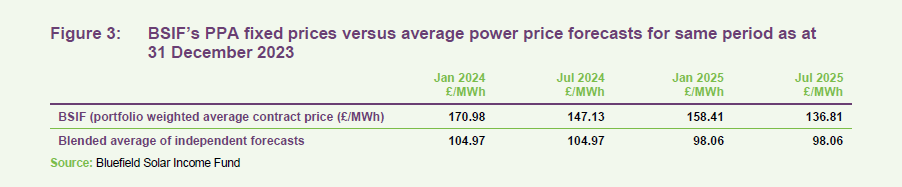
The manager highlights that BSIF’s strategy is to lock in power sale contracts for individual assets not covered by long-term contracts for periods between 12 and 36 months. It says that this helps to mitigate much of the volatility inherent in energy markets, which it comments has become particularly elevated in recent years due to escalating geopolitical tensions and ongoing supply disruptions. Entering into 2024, the company had more than 78% of its merchant revenue sold forward to March 2025, with the strategy securing power price fixes at levels that are materially higher than the latest industry forecaster expectations, as highlighted in Figure 3 below:

BSIF’s PPA fixed prices versus average power price forecasts for same period as at 31 December 2023

The manager says that in addition to its power price management, BSIF also benefits from a range of inflation-linked contracts, which account for almost two-thirds of the company’s revenues. It says that this means that increases in RPI have the effect of boosting both earnings and the valuation of BSIF’s assets. In combination with the company’s price-fixing strategy, the manager comments that the structure provides both the advisors and investors with excellent visibility over BSIF’s medium-term revenues. It says this also provides a hedge against an increasingly uncertain interest rate environment.

The manager says the success of these strategies is highlighted in the company’s recent interim results with strong revenue growth and dividend cover well in excess of 2x. This, it adds, consolidates BSIF’s position as arguably one of the more reliable income options for investors in the UK.

The manager observes that another potential overhang is the ongoing issues surrounding investment trust cost disclosures. The manager says there is currently a campaign to reform these regulations, which, it is hoped, will help improve sentiment towards the entire investment trust sector.

The manager thinks that with the UK’s economic outlook steadily improving, and BSIF continuing to execute on its fundamental performance, current discounts could provide a very attractive entry point for a trust.

Interim results

The manager highlights that BSIF has continued to generate solid returns despite its falling share price, saying the fundamentals of the portfolio are as good as they have ever been in the 10-plus years that the fund has been operating. The manager adds that the company’s recent interim results, released on February 28 for the six-month period ending 31 December 2023, show no signs of this momentum slowing, with a number of record returns and a full-year outlook, which it says has continued to improve.

BSIF’s headline revenue return was 91.6m, a 17% year on year increase and more than double that of the equivalent period in 2021.

The manager continues that despite irradiation levels some 13% below those experienced in the second half of calendar 2022, the company’s headline revenue return was £91.6m, a 17% year on year increase and more than double that of the equivalent period in 2021. Total funds available for distribution reached a record high of 70.2m and, as noted, dividend cover is now well in excess of 2x with a total dividend of almost 9%, one of the highest in the sector.

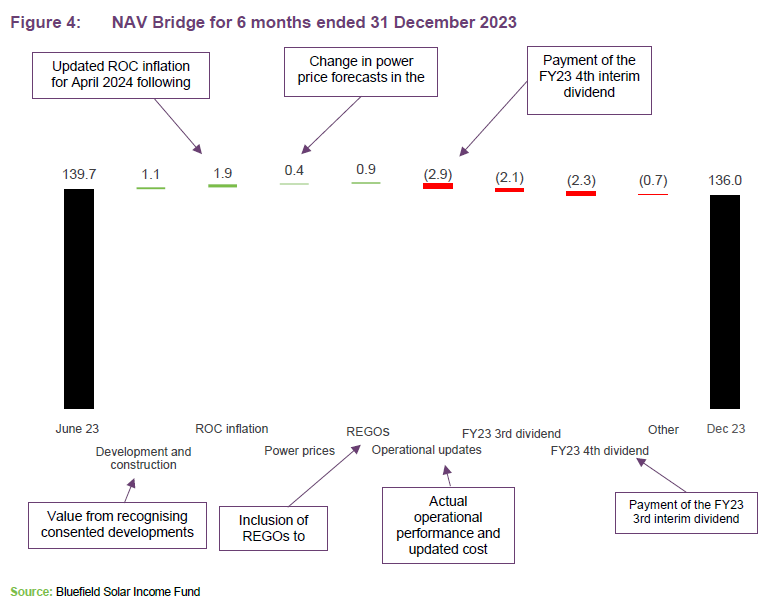
BSIF’s NAV over the six-month period fell slightly from 139.7p at 30 June 2023 to 136.0p at 31 December 2023 with the positive impact of inflation and power price forecasting offset by dividend payments, highlighted in Figure 4.

NAV Bridge for 6 months ended 31 December 2023

Development pipeline

The manager says that the company has also maintained its focus on the build out of its development pipeline, the extent and value of which it says is significantly underappreciated by the market. During the second half of 2023, the company secured planning consents on 137MW of solar projects and 90MW of battery projects, while post period end one project of 50MW solar received consent. The wider pipeline grew to approximately 968MW of solar and 563MW of battery storage (with a full breakdown available on page 9 of this report). Of these developments, over 600MW are consented solar sites, with a significant share of this capacity holding valuable 15-year CPI indexed linked contracts.

The manager notes that these investments not only establish a significant growth ramp for BSIF, but also provide the portfolio with what it says is considerable financial flexibility. It adds that in the event that funding markets remain closed in the near term due to the company’s stubborn discount and broader economic challenges, BSIF has the option to sell some of this pipeline to third parties. The manager says that with these assets predominantly held at consented value, such a strategy could provide an immediate boost to NAV while generating additional liquidity for the portfolio to either refocus on other developments or pay down debt.

GLIL Infrastructure strategic partnership

The manager outlines that given the challenges present in the current market, the board has been evaluating how best to continue this development programme while maximising value for its shareholders over the long term. It says that having explored various options, BSIF has announced a Strategic Partnership with GLIL Infrastructure in December 2023. GLIL is a partnership of UK pension funds that invests into core UK infrastructure and has a £3bn portfolio of infrastructure assets.

It says that the partnership is a significant development and allows BSIF to deliver on a number of key areas. Primarily, it allows the company to maintain its investment momentum in what continues to be a difficult time for public infrastructure funds, it adds. The manager continues that the deal also increases the diversification of the company’s revenue base, provides external validation of its assets, reduces debt, and creates additional liquidity for the fund.

It says the partnership can be broken down into three main phases, the first of which occurred post-period-end in January 2024, with BSIF investing £20m alongside £200m from GLIL to acquire a 247MW portfolio of UK solar assets from Lightsource bp. BSIF’s ownership stake in the portfolio is 9%.

BSIF announced a Strategic Partnership with GLIL Infrastructure in December 2023

The Lightsource bp portfolio is predominantly diversified across southern and central England and comprises 58 operating sites: 184MW backed by feed in tariff subsidies, 15MW by renewable obligation certificates and two subsidy-free projects totalling 48MW. It says that through the period 2023 to 2035, the proportion of fixed and regulated revenues from the portfolio is projected to be approximately 80%. The acquisition raises the level of regulated revenues in the BSIF portfolio whilst also increasing the proportion of FiT income. The deal also facilitated a £10m repayment of BSIF’s revolving credit facility, which is discussed on page 15.

The manager continues that phase 2 comprises a provisional agreement for GLIL to acquire a 50% stake in a portfolio of more than 100MW of BSIF’s existing solar assets, at a price which is in line with the company’s existing valuation. It says the proceeds of this partial sale will be used in part to fund BSIF’s participation in the rollout of its development pipeline and, as appropriate, to reduce debt. This phase is expected to be completed in the first half of 2024.

The manager says that in phase 3, Bluefield Solar and GLIL intend via the strategic partnership to commit capital jointly to a selection of the company’s development pipeline, assuming market conditions are supportive. It says the identified development assets are expected to be grid-connected over the next two to three years.

Altogether, the manager believes the relationship shapes as an important development at a crucial juncture for BSIF. It says that in an ideal world, the company would have the financial flexibility to develop some of these assets under its own steam. However, the manager notes that this is unrealistic given current conditions and the agreement appears to be the next best alternative, given the time pressures attached to some of the existing consents in BSIF’s pipeline. It says the deal also removes some of the development risk associated with the pipeline at a time when the industry has been faced with dramatic cost blowouts. The manager also adds that the added financial flexibility should allow the company to achieve keen pricing on any future projects given discounts across the rest of the sector.

Portfolio

BSIF operational portfolio as of 31 December 2023, consisted of 812.6MW, which was made up of 754.2MW solar and 58.4MW onshore wind. This encompasses 129 solar PV projects (87 large-scale sites, 39 micro-sites and three rooftop sites), six wind farms and 109 single-stick wind turbines, spread across England, Wales, Scotland and Northern Ireland.

During the period to 31 December 2023, the combined solar and wind portfolio generated an aggregated total of 376.05GWh (31 December 2022: 391.8GWh), representing a generation yield of 462.8 MWh/MW (31 December 2022: 511.4MWh/MW)

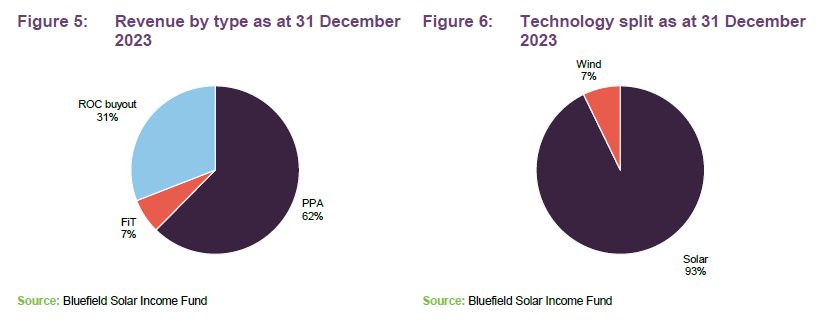
Revenue by type as at 31 December 2023 and Technology split as at 31 December 2023
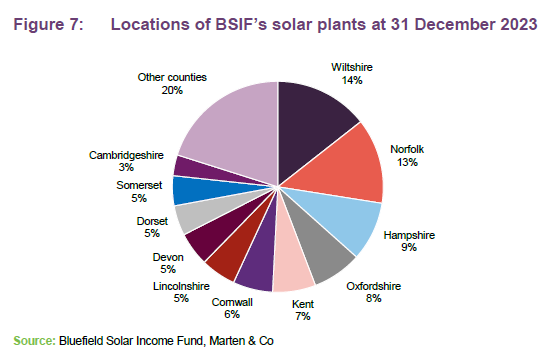
Locations of BSIF’s solar plants at 31 December 2023

Dividends sanity, TR vanity.

Here’s how I’d aim for a ton of passive income from £20k in an ISA

Here’s how I’d aim for a ton of passive income from £20k in an ISA

© Provided by The Motley Fool

It’s spring, and investors’ thoughts are turning to passive income. And what better way than with our new ISA contribution limit of £20,000 ?

We could go for a Cash ISA, and some of those pay around 5% these days. And it’s guaranteed, at least for the duration of the deal.

Risk and reward

As with so many things in life, we have to balance risk and reward.

Over the long term, the UK stock market has beaten other forms of investment. But it’s had bad spells, like the past decade.

There are ways we can reduce risk though.

One way is what I think of as playing the percentage shots. Using a term from sport, if we play the shots that are more likely to be modestly successful rather than going for the riskier glory chances, we can stand a better chance of coming out ahead in the long term.

Let’s compare a couple of UK stocks.

Big dividend

Vodafone (LSE: VOD) has been paying some of the FTSE 100‘s biggest dividends. We’re talking serious money here, with yields above 10%. And if that’s not a great route to passive income, what is?

What’s the point of big dividends if we lose the bulk of our initial stake?

Oh, and Vodafone will slash its dividend in 2025, though shareholders should get one final 10% for 2024.

Still, it’s part of Vodafone’s refocus, and I do think the stock could have a good future now. But back to my point…

Steady income

Let’s compare that with a stock I rate as possibly the most reliable dividend payer in the FTSE 100. I’m talking of National Grid (LSE: NG.),with a forecast 5.4% dividend for 2024.

That’s not big growth. But it’s a few points ahead of the Footsie, which I think is fine in the decade we’ve had.

National Grid faces a reduction in gas distribution. And it’s in a regulated industry where minimum investment is often mandated. So it’s not without risk, and the dividend is far from guaranteed.

Percentage shot

But I rate it as the percentage shot, while Vodafone was the glory shot.

Still, I reckon we can do better than a 5.4% return. But we do need to lift the risk a bit. By spreading my ISA cash across a diversified range of dividend stocks, I expect I could snag 7% per year.

A whole ISA allowance invested at that rate could compound to more than£75,000 in 20 years. And then that could pay £6,800 a year in passive income.

Or someone who can stash away the full £20k each year could build more than £850k, for a £60k annual passive income.

Do you like the idea of dividend income?

The prospect of investing in a company just once, then sitting back and watching as it potentially pays a dividend out over and over?

Chart of the day

Trading

If u had any basic trading system u would have made more of a profit with SSON, trading because they don’t pay a dividend.

Investing

If u wanted to GRS by re-investing your dividends the FTSE would have been your best long term investment. Well on the way to doubling your money with a low risk strategy.

Trusts for DYOR

Best investment trusts for your pension: Tips for your portfolio throughout your financial life
By This Is Money

When it comes to building your pension pot or investing it for retirement income, finding a reliable investment matters.

Returns are never guaranteed – and investments go down as well as up – but there are some characteristics that make some stand out.

Many investment trusts have built remarkable track records for raising dividends, making them a popular option for people drawing down an income in retirement.

But financial advisers have also come up with some top picks from the world of investment trusts for those still building up a pension too.

The Association of Investment Companies has compiled expert recommendations for what is known in financial jargon as the ‘accumulation’ phase of a saver’s life, and for those needing an income in the ‘decumulation’ stage in retirement.
Investment trusts are listed companies with shares that trade on the stock market.

They are known as closed-ended, because investors can buy or sell shares to join or leave, but new money outside this pool cannot be raised without issuing new shares.

That is unlike open-ended investment funds where money is pooled to invest in shares, bonds or other funds.

Investment trusts can be riskier than funds because their shares can trade at a premium or discount to the value of the assets they hold – see below for more on how this works.

Although the list below has been picked by four professional financial advisers, remember that this is not individual financial advice and you should always check if an individual investment is right for you. If in doubt, seek independent financial advice.

Saving: ‘I’m still building up a pension’
Paul Chilver, financial planning manager at Birkett Long

With the seemingly ever-increasing state pension age and the forthcoming increase to the age an individual can access their pension, investing into a pension is for the long term.

With this in mind investment trusts, many of which are trading close to record discounts, could be an excellent option.

Discounts are particularly attractive on UK-focused investment trusts and one suggestion for the accumulation stage of investment is the Mercantile Investment Trust managed by JPMorgan which has been at a double-digit discount for many months despite very good short-term performance.

Mercantile Investment Trust (Ongoing charge: 1.41 per cent)

What is an ongoing charge?
The ongoing charge is the investing industry’s standard measure of fund or trust running costs.

The bigger it is, the costlier the fund is to run.

Philippa Maffioli, senior investment manager at Blyth-Richmond Investment Managers

During the accumulation phase when growth and diversification are essential, I recommend Worldwide Healthcare Trust.

This global trust gives investors the opportunity to gain exposure to pharmaceutical, biotechnology, and other related healthcare companies all within an actively managed portfolio.

These range from large multinational pharmaceuticals to unquoted emerging biotechnology companies. The fund is managed by OrbiMed Capital which was founded in 1989 and has become the largest healthcare investment firm in the world.

The team are actively looking at nearly 1,000 companies and the team works to identify sources of outperformance as well as those with underappreciated products in the pipeline with high quality management teams and strong financial resources.

Worldwide Healthcare Trust (Ongoing charge: 0.83per cent)

I am very keen for my clients to gain exposure to the management style of Spencer Adair and Malcolm MacColl of The Monks Investment Trust during the accumulation phase of a Sipp.

Their aim is to focus on global companies from a range of profiles with above average earnings growth which they expect to hold for around five years.

That said, they are known for addressing issues head on and aren’t afraid to take a critical look at their portfolio when necessary, which I believe is very compelling.

I believe that Monks is well positioned to capitalise on the continuous shift to a more digitalised world and must be included in a portfolio where growth is required.

Monks Investment Trust (Ongoing charge: 0.69 per cent)

What is net asset value?
A trust’s shares can trade at a premium or discount to the value of the assets it holds, known as the net asset value.

NAV is calculated by dividing the total value of a trust’s assets (what it owns) minus liabilities (what it owes) by the amount of shares existing.

A trust’s share price can fall below the total value of its holdings if it is unpopular and people do not want to invest but do want to sell. This pushes down demand and drives up the supply of its units for sale.

This gives new investors the opportunity to buy in at a discount, but means existing investors’ holdings are worth less than they should be.

An investment trust trading at a discount to NAV may be regarded as cheap because the shares cost less than its overall value – although there might be good reasons why, such as investors being justifiably pessimistic about its prospects.

When a trust trades at a premium to NAV it is more expensive than its net worth.

Doug Brodie, founder and chief executive of Chancery Lane

In building pensions investors should take note that trusts like Lowland, Murray International and City of London have all handsomely outperformed the FTSE All Share over the last 20 years.

Investment trusts may not have the sales and marketing budgets of pension companies so investors have to look a bit harder.

A quick look at the long-term returns will show folk there’s a good reason that institutional investors are big investors in trusts.

Lowland (Ongoing charge: 1.03 per cent)

Murray International (Ongoing charge: 0.78 per cent)

City of London (Ongoing charge: 0.65 per cent)

Neil Mumford, chartered financial planner at Milestone Wealth Management

For those looking for growth, I’d recommend JPMorgan Global Growth and Income Trust. This is one of the few investment trusts to be trading at a premium, but this should not concern long-term investors.

It places a high emphasis on the world’s largest stock market the US, accounting for two-thirds of the portfolio. It is a high conviction portfolio with 50 to 90 holdings, with the top ten making up more than 40% of the portfolio.

This has allowed it to outperform by some margin with a 305 per cent return over the last ten years.

There will be times when there may be swings in the portfolio value but for the patient investor this will hopefully pay off. If there was concern about the premium, this trust would also be ideal for regular monthly investments.

JPMorgan Global Growth and Income (Ongoing charge: 0.66 per cent)

Drawdown: I need to invest for income
Neil Mumford of Milestone Wealth Management

The Scottish American Investment Company is my choice for someone looking at building either an income or growth portfolio and is a top five holding in my own Sipp.

I am still accumulating but it will stay once I am drawing down. It is a truly diversified equity portfolio, spread equally between the US and Europe at around 35 per cent each of the portfolio.

Neil Mumford: The Scottish American Investment Company is a top five holding in my own Sipp

Although it doesn’t have the highest yield at 2.9 per cent, this dividend hero has increased its payouts by an average of 4.2 per cent a year over the past five years and this dividend increase has not hampered its ability to grow capital – a total return of more than 170% over the last ten years should please any investor.

The price is currently a complete bargain when you consider that it is trading at an extremely attractive discount to net assets of around 10 per cent when historically it has been trading at near NAV or at a premium.

Scottish American Investment Company (Ongoing charge: 1.01 per cent)

Philippa Maffioli of Blyth-Richmond Investment Managers

During the decumulation phase when capital growth is not as important and the emphasis can shift towards capital preservation, Personal Assets Trust has an important place in many retirees’ portfolios.

The manager’s approach is reassuringly conservative and is focused on looking at the risk of losing money rather than the risk of volatility.

Even though this is the case, it offers global diversification across four asset classes and is a bedrock for lower risk and/or decumulating portfolios.

It is managed by Sebastian Lyon who is assisted by Charlotte Yonge and their policy is to protect and increase (in that order) the value of shareholders’ funds over the long term.

Personal Assets Trust (Ongoing charge: 0.67 per cent)

Ruffer Investment Company is another trust which concentrates on capital preservation and has a very successful track record in achieving this.

The objective is to maintain a diverse strategy incorporating short-dated bonds, credit and derivative strategies and precious metals, plus a diverse spread of international equities.

The investment strategy and asset allocation are set by Henry Maxey and Neil McLeish, Co-Chief Investment Officers, supported by a team of senior fund managers and research analysts.

Paul Chilver: Investment trusts can smooth their income payments, meaning some income can be retained in case it is needed in future

Ruffer seeks to preserve capital using a very disciplined approach with the prime objective of maintaining value over a one-year period and growing capital over the longer term. This means they would perceive a loss in line with the market as a failure.

Ruffer Investment Company (Ongoing charge: 1.07 per cent)

Paul Chilver of Birkett Long

When you come to draw an income from your pension investment trusts are an excellent choice.

In part this is because they can smooth their income payments, meaning some income can be retained in the trust in case it is needed in future when stock markets may be more volatile.

There are many investment trusts paying an attractive dividend and my first suggestion is a UK-focused investment trust, Edinburgh Investment Trust.

This is a long-standing investment trust and is now managed by Liontrust following their acquisition of Majedie.

A second suggestion would be a global investment trust, JPMorgan Global Growth and Income.

This trust has its greatest weighting to US equities and is currently paying a yield of 3.4 per cent per annum.

Edinburgh Investment Trust (Ongoing charge: 0.53 per cent)

JPMorgan Global Growth and Income – also see above (Ongoing charge: 0.66 per cent)

VPC

INVESTMENT MANAGER’S REPORT

REVIEW OF 2023 PERFORMANCE

Last year was another year of economic uncertainty and geopolitical turmoil with the war in Ukraine, tensions between China and the US, and conflict that erupted once more in the Middle East. Supply chains remained under pressure, and consumers in many countries had to contend with a continued cost-of-living crisis, in large part precipitated by persistently high inflation. In response to inflationary pressures, key central banks continued to raise interest rates. The US Federal Reserve increased the federal funds rate four times over the year, from 4.25%-4.5% to 5.25%-5.5%, although it refrained from further rate hikes after July. This pause in further rate hikes gave rise to hopes that rates might be cut in 2024, although statements from Federal Reserve officials have somewhat dampened optimism.

With financing options harder to come by in an environment of higher interest rates, venture capital (“VC”) markets have been subdued, and VC investors have been cautious. The excitement over generative artificial intelligence meant that other technology-focused companies struggled to secure funding. Moreover, the collapse of Silicon Valley Bank and the poor post-flotation performance of several high-profile technology companies added to VC investors’ wariness. Crunchbase reports that VC funding fell to its lowest level for five years in 2023, with a 38% decline from the previous year. Meanwhile, mergers and

acquisitions (“M&A”) fell to their lowest level for a decade.

Similar to 2022, VPC’s strong performance of its asset-backed lending investments was outweighed by weakness in the equity portion of the portfolio in 2023. By year-end, the Company’s asset-backed lending investments represented approximately 73.0% of the total investment portfolio. Here, the Company benefitted from continued increases in short-term interest rates during the year, which underscore the power of variable-rate loans. The remainder of the investment portfolio comprises the Company’s equity interests.

The Company completed the year with a NAV total return of -9.45%, a gross revenue return of +13.93% and a gross capital return of -18.34%. The Company’s revenue return remained in line with expectations, providing a full cash coverage of the 8.00p per share dividend for Shareholders during the year as set out in the IPO Prospectus (the “Target Dividend”). In February 2024, the Company declared its 24th consecutive quarterly dividend payment of 2.00p per share for the three months to 31 December

2023, and the dividend was paid to Shareholders in March 2024.

Although capital returns were negative, the FinTech portfolio continued to produce consistently positive revenue returns. Since the agreement to realise the Company’s assets at the General Meeting held in June 2023, the Investment Manager has achieved the repayment of several asset-backed FinTech investments. These include the positions in Applied Data Finance, LLC, and, after the year-end, Elevate Credit, Inc., and Koalafi (formerly known as West Creek Financial, LLC). In the FinTech equity portfolio, the reduction in unrealised capital returns generally stemmed from marking these investments to year-end exit values, in light of near-to-medium-term exit opportunities and the depressed VC and M&A environment.

For the Company’s eCommerce assets, the ongoing depression of revenue growth and margins in the overall industry played a significant role in the adjustment of the fair market value of equity holdings. This arose as consumers came under pressure from the cost-of-living crisis, and companies had to cope with further disruptions to their supply chains. In certain cases, individual portfolio holdings underperformed expectations, leading to additional adjustments. The Investment Manager is actively working to mitigate the risks associated with this sector of the portfolio, including exploring strategic combinations, among other options. Please see the Subsequent Events section below for additional details on specific strategic combinations. VPC continues to work with its eCommerce Portfolio Companies as they strengthen their balance sheets and evaluate additional strategic combinations in an effort to maximise Shareholder value.

The Company’s positions in legal finance have continued to perform well, and the Investment Manager continues to evaluate exit opportunities for these investments.

At the year-end, the Company accrued ECL reserves of £6.4 million (£16.4 million at 31 December 2022). During the year, certain asset-backed lending investment maturities were extended to reflect changes in the circumstances of the particular investment or the prevailing market conditions. In each case, these extensions were made to preserve value for the Shareholders, as disclosed in the General Meeting Circular.

During the realisation process, VPC will continue to draw on its longstanding reputation and relationships with management teams, industry professionals and experts to determine the most cost-effective distribution mechanisms for maximizing Shareholder value.

« Older posts Newer posts »

© 2026 Passive Income Live

Theme by Anders NorenUp ↑