
Energy: Tensions are rising in the oil markets. Brent gained nearly 10% this week to reach about $101 per barrel, while WTI, which is less sensitive to geopolitical friction, rose 6% to around $95. The continued blockage of the Strait of Hormuz obviously explains this price increase. Producers in the Persian Gulf can no longer export their crude oil normally, and their storage infrastructure is filling up rapidly. To deal with this lack of space, several countries are reducing production. This is the case for Iraq, Kuwait, the United Arab Emirates and also Saudi Arabia. Faced with this supply tension, governments are deploying emergency measures. The International Energy Agency announced the release of a record volume of 400 million barrels from strategic reserves. At the same time, the U.S. government suspended certain economic sanctions targeting Russian oil for 30 days, until April 11. It should nevertheless be noted that these measures, while temporarily easing the markets, do not solve the root problem. The use of strategic reserves is a short-term measure. A lasting decline in crude oil prices depends on one condition only: the reopening of the Strait of Hormuz. The market will keep prices elevated as long as crude flows do not resume through this area.
MarketWatch
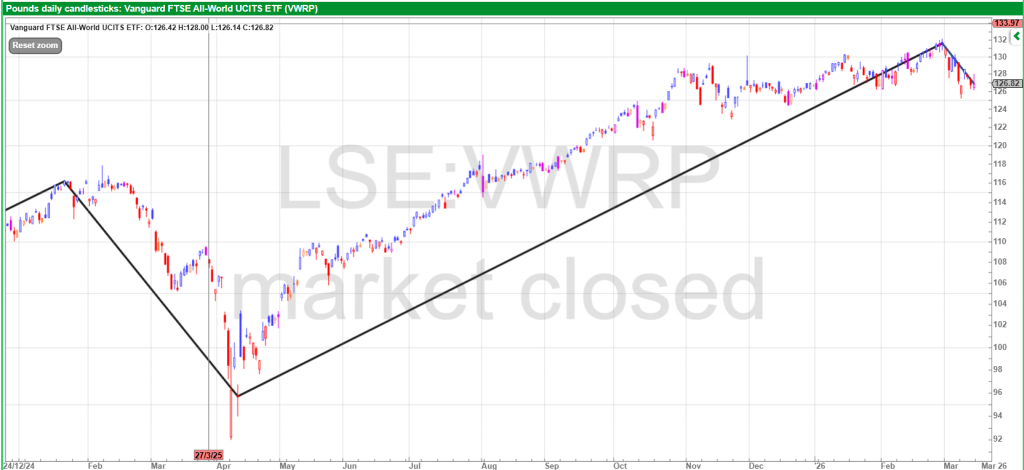
VWRP is the comparison share for the SNOWBALL.
The current fcast for the next tax year starting in April for the SNOWBALL is £10,500
The current comparison value for VWRP is £151,899, not too shabby.
The comparison is to use the 4% rule, where it is recommended that you have 3 years of cash reserves to use when markets enter a periods of a known unknown. Total income would be of around £5,500
This is after a period of market out performance and although various market commentators think there may be another up leg, that is after the oil price stabilises, there are still a lot of unknowns in the market.

Leave a Reply