Passive Income Live

Investment Trust Dividends

Page 109 of 385

Aim for £10,000 a month in passive income?

How much do you need in an ISA to aim for £10,000 a month in passive income?

Millions of us invest for passive income. Here, Dr James Fox explains how much money an investor would need in an ISA to make £120k a year.

Posted byDr. James Fox

Published 10 August

SMT

Black woman using smartphone at home, watching stock charts.
Image source: Getty Images

When investing, your capital is at risk. The value of your investments can go down as well as up and you may get back less than you put in.

Earning £10,000 a month in passive income is a financial milestone that many UK investors aspire to. Whether it’s to fund an early retirement, achieve financial independence, or simply provide peace of mind, reaching this level of income is possible.

However, it requires careful planning and a well executed strategy. And, of course, it makes sense to do this through a tax-efficient Stocks and Shares ISA.

With its exemption from income and capital gains tax, the ISA’s a powerful tool for UK investors. But generating £120,000 a year in passive income from an ISA alone is a tall order. To reach that level of cash flow without drawing down capital would need a substantial portfolio. What’s more, investors would need an asset allocation designed to yield reliably.

Please note that tax treatment depends on the individual circumstances of each client and may be subject to change in future. The content in this article is provided for information purposes only. It is not intended to be, neither does it constitute, any form of tax advice. Readers are responsible for carrying out their own due diligence and for obtaining professional advice before making any investment decisions.

So how much?

So how much is “substantial”? The answer depends on several variables. Chief among them is the average yield of the investments held within the ISA.

A portfolio yielding 4% annually would require a value of £3m to produce £120,000 a year in income. At a 6% yield, the required capital falls to £2m. Of course, higher yields often come with greater risks, including income volatility as well as capital erosion.

Now, many readers may have zoned out at £2m or £3m. However, for those starting early enough, reaching these figures is very possible.

Take the case of investing £500 a month over 40 years with 10% annualised returns. In the first decade, progress can feel modest. After 10 years, the portfolio’s worth just over £100,000.

Source: thecalculatorsite.com

But compounding begins to accelerate. By year 20, the balance grows to around £380,000, and by year 30 it passes £1.1m. In the final 10 years, growth becomes dramatic: the portfolio adds over £2m, ending above £3.1m by year 40.

Despite contributing just £240,000 in total, over £2.9m comes purely from reinvested gains. This is the exponential nature of compounding. It starts slow, then surges.

Of course, it’s not all plain sailing. There are risks involved with investing, and we can lose as well as gain money. What’s more, 10% may prove to be a challenging target for some investors.

An investment for the long run?

Investors typically want to strive for diversification. One way to do that is by investing in 20-30 individual stocks, another is to focus on in a handful of investment trusts or funds.

Scottish Mortgage Investment Trust (LSE:SMT) offers investors exposure to a high-conviction portfolio of innovative, growth-oriented global companies. Its top holdings include SpaceX (7.4%), Mercadolibre (6.5%), AmazonMeta, and Nvidia.

These are firms at the forefront of e-commerce, artificial intelligence (AI), and digital infrastructure. The trust actively targets transformational businesses, often before they’re fully recognised by the wider market, and includes private companies such as Bytedance.

However, this strategy comes with risks. The trust employs gearing (borrowing) to enhance returns, which can magnify losses during market downturns. Moreover, its growth bias can lead to volatility, particularly in rising interest rate environments.

For long-term investors with a decent tolerance for risk, it remains an opportunity worth considering. It has a place across my own portfolios.

Should you invest, the value of your investment may rise or fall and your capital is at risk. Before investing, your individual circumstances should be assessed. Consider taking independent financial advice.

James Fox has positions in Nvidia and Scottish Mortgage Investment Trust Plc. The Motley Fool UK has recommended Amazon, MercadoLibre, Meta Platforms, and Nvidia. Views expressed on the companies mentioned in this article are those of the writer and therefore may differ from the official recommendations we make in our subscription services such as Share Advisor, Hidden Winners and Pro. Here at The Motley Fool we believe that considering a diverse range of insights makes us better investors.

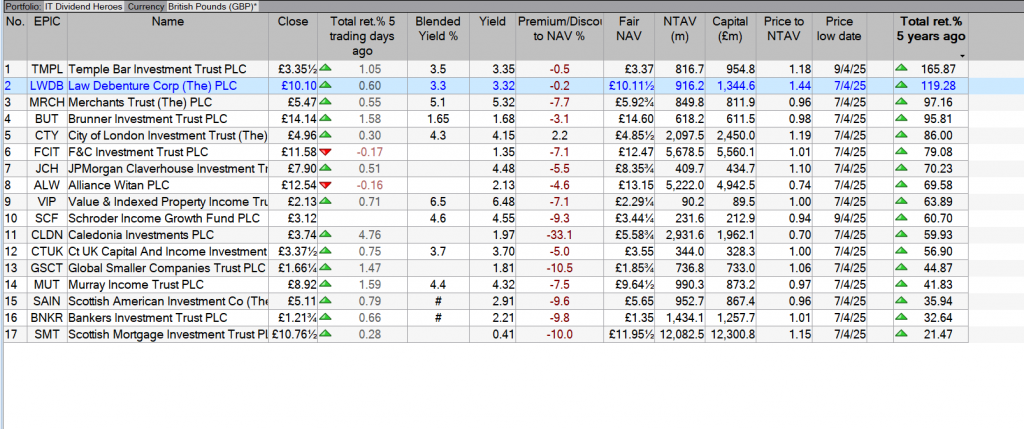
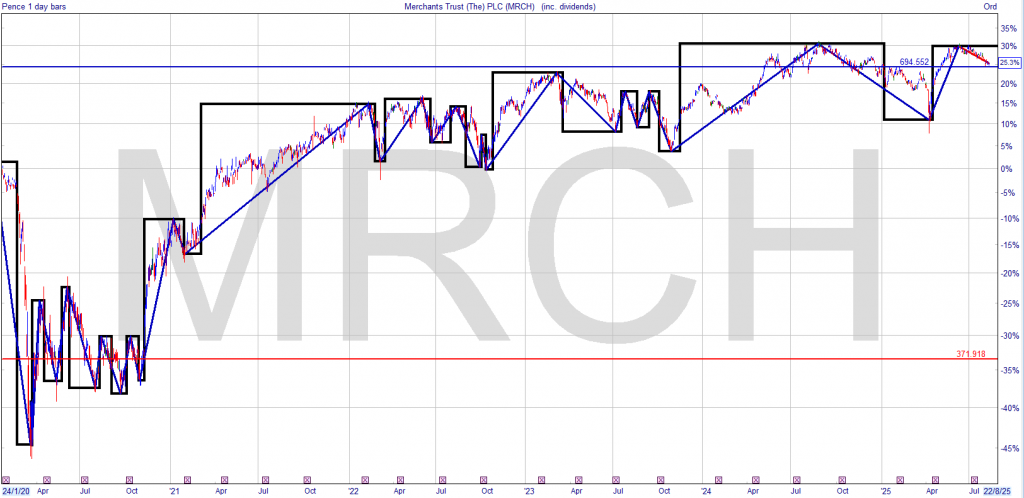
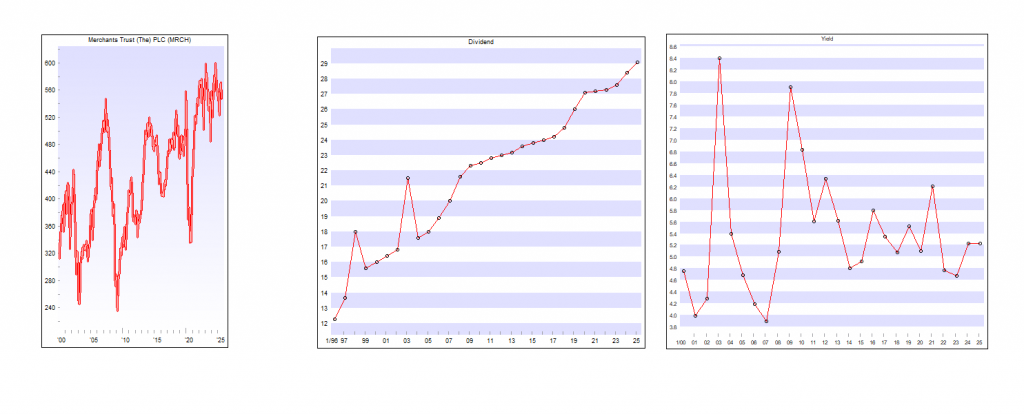
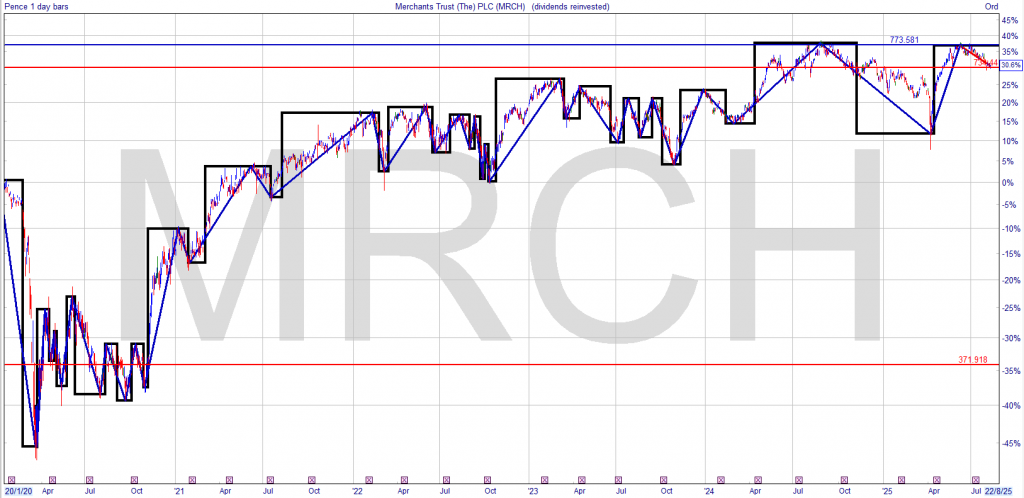
MRCH

You do not need to take big risks with your Snowball to increase your income but it does help if you are ready to buy after a market downturn.

If you had just simply re-invested your dividends, you would have achieved the holy grail of investing in that you could take out your stake and MRCH would be producing income at a zero, zilch, nothing cost. If you had then re-invested the capital in a long term gilt you could achieve a blended yield of ten percent, with little or nor risk to your hard earned. You would then have 20k of capital invested producing around 1k of income to add to your Snowball.

Passive Income

Here’s how you could target a £3,725 passive income in a Stocks & Shares ISA

A £10k lump sum in this dividend share portfolio could help Stocks and Shares ISA investors enjoy a large long-term income.

Posted by Royston Wild

Published 10 August

MRCH

ISA Individual Savings Account
Image source: Getty Images

When investing, your capital is at risk. The value of your investments can go down as well as up and you may get back less than you put in.

You’re reading a free article with opinions that may differ from The Motley Fool’s Premium Investing Services.

Key Points

  • FTSE 100 and FTSE 250 shares offer stability, high yields and dividend growth.
  • Building a diversified portfolio is critical for long-term Stocks and Shares ISA income.
  • Investment trusts can be core holdings for dividend investors.

Pleasingly for local income investors, the UK stock market has a strong culture when it comes to paying dividends. This means people holding products like a Stocks and Shares ISA have a wide range of shares to choose from when targeting a robust and reliable passive income.

The FTSE 100 and FTSE 250 are loaded with companies boasting market-leading positions, diverse revenue streams, and rich balance sheets. Many of these operate in mature industries with limited growth potential, too: this means they’re more likely to return surplus cash to shareholders than invest it for future growth.

This rich selection means investors can create income-generating portfolios that are closely tailored to their specific investment goals and appetite for risk. It also allows for terrific diversification that can generate a strong second income at all points of the economic cycle.

A mini-portfolio

Here’s what a well-diversified ISA portfolio could look like today:

Dividend shareSectorYears of continued dividend growthForward dividend yield
BAE SystemsDefence211.8%
Legal & General GroupFinancial services48.4%
Coca-Cola HBCConsumer staples122.5%
Sirius Real EstateReal estate115%
Rio TintoMining06.2%
Bloomsbury PublishingMedia25+3.3%
Merchants Trust (LSE:MRCH)Investment trusts25+5.3%
Foresight Solar FundRenewable energy109.3%
HSBCBanking45.3%
Primary Health PropertiesReal estate investment trusts

(REITs)
25+7.4%

As you can see, this selection of Footsie and FTSE 250 shares covers a range of cyclical and non-cyclical industries. It also includes companies with long records of annual dividend growth. These businesses have helped investors protect their income from inflation by providing consistent, growing payouts year after year.

Finally, many of the dividend stocks here have long histories of paying dividends above the UK share average. For this year, the average dividend yield for this grouping is 5.5%.

Top trust

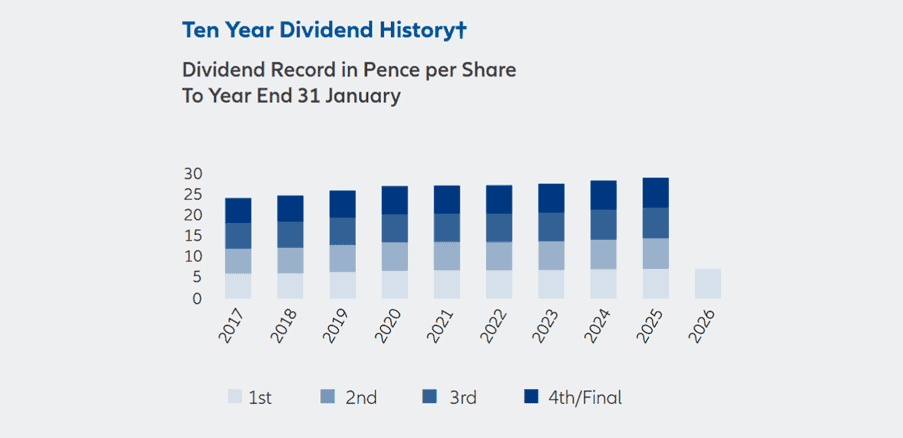
Let me explain why investment trusts like Merchants Trust can be powerful tools for targeting passive income. This particular one has grown annual payouts for 43 straight years, and provides a dividend yield far ahead of the FTSE 350 average of 3.3%.

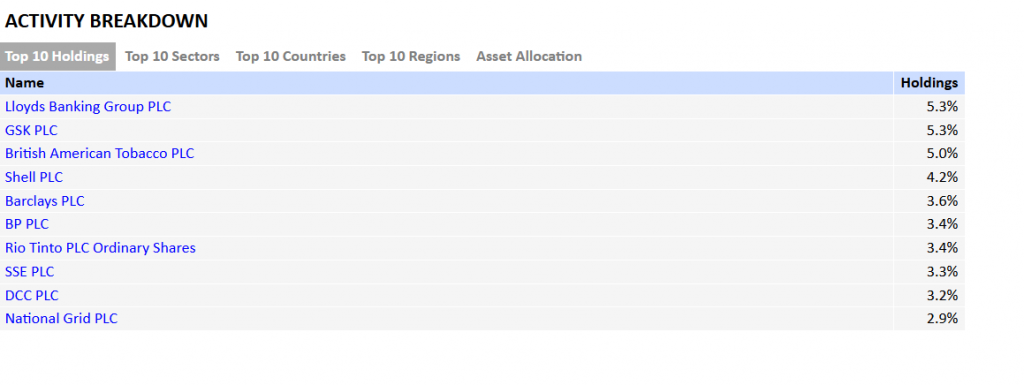
These financial vehicles own a basket of assets, which provides investors’ portfolios with even better diversification. This Allianz-owned one holds shares in 52 different companies, ranging from banking stock Lloyds and pharmaceuticals developer GSK, through to utilities company National Grid.

Merchants Trust is also focused on the more robust companies found on the FTSE 100 and FTSE 250 as well. This provides it with added strength that supports strong and consistent dividend growth.

Merchants Trust has been a top dividend growth share for Stocks and Shares ISA investors
Source: Allianz

A focus on UK shares leaves the trust more exposed to regional difficulties than more geographically diversified ones. However, this could also pay off over time if the recent rotation into British stocks from US shares continues.

Targeting a large ISA income

Based on this year’s 5.5% forward dividend yield, our mini ISA portfolio of shares could deliver a £1,100 passive income this year on a £20,000 lump sum investment.

What’s more, if their dividends grow by an average 5% a year over the next 25 years, it could provide a second income of £3,725 at the end of the period.

Dividends are never guaranteed, even with a diversified portfolio. But I’m confident this set of shares could deliver a robust long-term passive income.

Long-term passive income

2 investment trusts I’d consider for long-term passive income

Story by Royston Wild

House models and one with REIT - standing for real estate investment trust - written on it.

House models and one with REIT – standing for real estate investment trust – written on it.© Provided by The Motley Fool

For my money, the best way to source a long-term second income is to invest in dividend-paying assets. I own a variety of stocks, investment trusts and exchange-traded funds (ETFs) that have a history of paying a large and growing income over time.

Growth and income potential

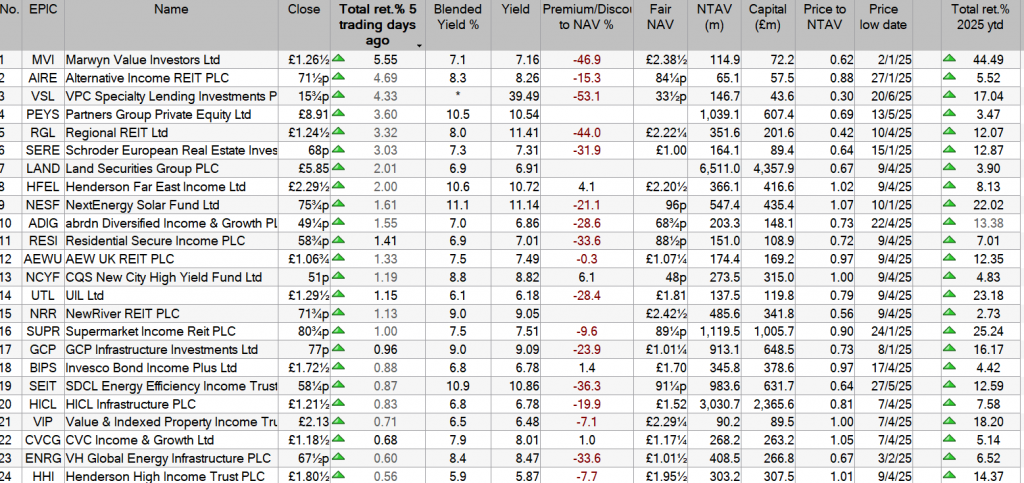
At 11%, Henderson Far East Income (LSE:HFEL) has one of the highest forward dividend yields on the London stock market. This reflects in large part significant share price weakness in recent years that’s inflated the yield.

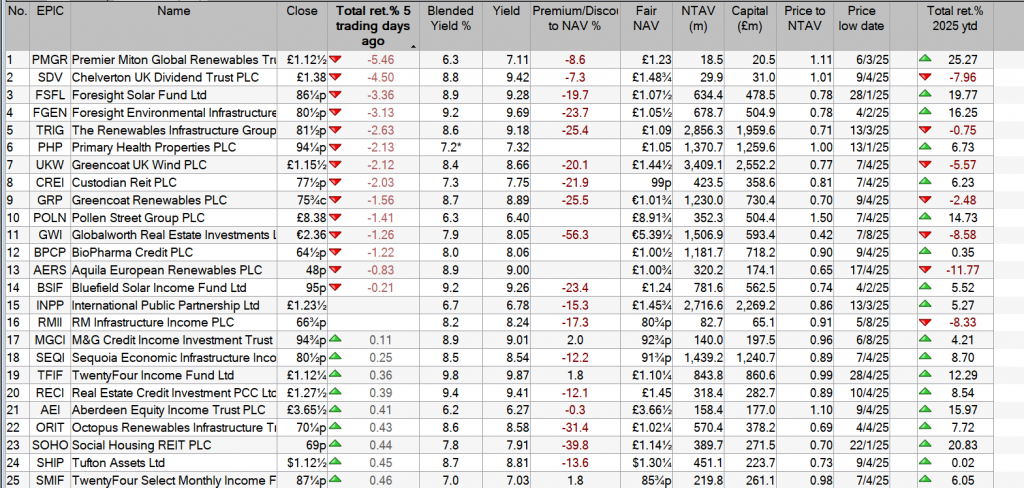
As its name implies, it provides significant exposure to China and the surrounding regions. Around 27% of its capital is tied up in Chinese equities alone. So amid signs of severe economic cooling there, it’s no shock to see it fall in value.

The trust’s regained much ground in 2025, thanks to signs of improvement in China’s economy. Yet with trade tensions simmering, it’s possible the share price could turn lower again.

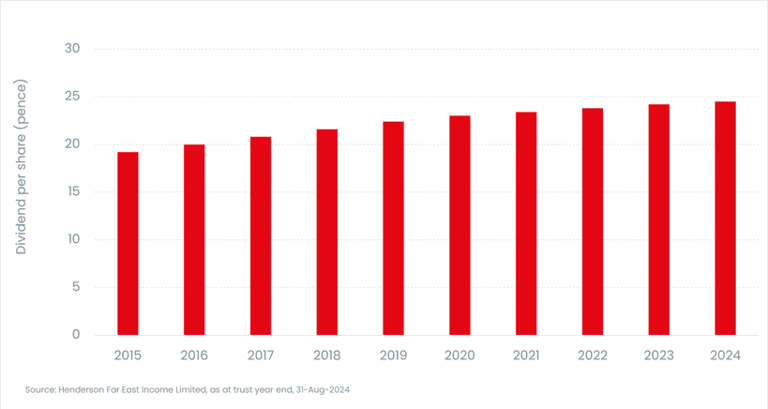
The make-up of its portfolio also allows it to weather individual dividend shocks and pay a large and growing dividend. As well Source: Janus Henderson

Source: Janus Henderson

As you can see, annual dividends have kept steadily rising, even in spite of troubles in the key Chinese market. In fact, they’ve grown for 17 years on the bounce.

Another top trust

TR Property Investment Trust (LSE:TRY) doesn’t have such a knockout near-term dividend yield. For 2025, it sits at a still-market-beating (but not double-digit) figure of 5%.

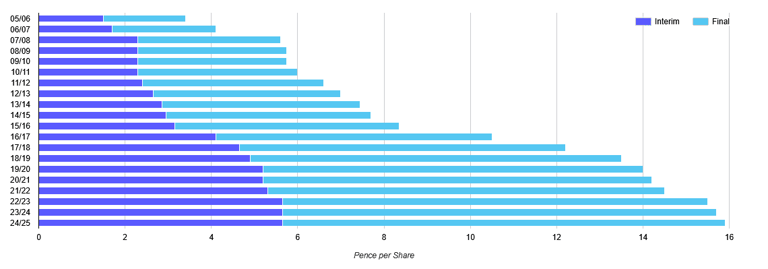
What it does have however, is a similarly excellent record of unbroken dividend growth. Shareholder rewards have risen almost each year for around 20 years.Source: TR Property

Source: TR Property

Many of these trusts focus on cyclical sectors like retail, leisure and industrials. And so rental collection and building occupancy are highly sensitive to economic conditions.

But strong diversification across sectors helps limit such damage on overall returns. Healthcare, residential and food retail are also among the industries it has exposure to through the 48 REITs it holds.

Today, the trust trades an a near-8% discount to its net asset value (NAV) per share of 352p. Combined with that large dividend yield, I think it’s a great value investment trust to consider.

The post 2 investment trusts I’d consider for long-term passive income appeared first on The Motley Fool UK.

UKW

Greencoat UK Wind on the rise as institutions clamour for renewables

Last updated:  02 Aug 2025

Snapshot

  • Greencoat UK Wind posts resilient H1 2025 results – ICYMI
  • Greencoat UK Wind seals position as leading pure-play British wind power provider
  • UK wind sector buoyed by best performance in six years
  • Greencoat UK Wind half-year results and key market insights
wind farms

About the company

Greencoat UK Wind PLC is the leading listed renewable infrastructure fund, invested in operating UK wind farms.

The fund is a constituent of the FTSE 250 and has a market capitalisation of approximately c.£3.2bn.

How it is doing

02 Aug 2025

Greencoat UK Wind PLC’s (LSE:UKW) Matt Ridley talked with Proactive about the company’s interim results and strategic direction in a challenging macro environment.

Ridley highlighted that this marks the twelfth consecutive year of paying an RPI-linked progressive dividend, amounting to £1.3 billion in total distributions. “We generated about £1 billion of cash to reinvest in the business,” he noted, emphasising the importance of maintaining net asset value in real terms.

Despite facing some of the lowest wind speeds in the first half of the year, Greencoat UK Wind still achieved a 1.4x dividend cover. Ridley said this demonstrates the resilience of the portfolio. However, net asset value declined, impacted by lower-than-expected generation and softer power prices.

To support capital allocation efforts, the company has now completed £222 million in asset disposals over eight months, including four new disposals announced with the interim results. These were completed at prevailing NAV, reinforcing the disconnect between the share price and private market valuations.

Greencoat UK Wind PLC (LSE:UKW) has agreed to sell partial stakes in three of its wind farms, raising a total of £181 million and bringing its cumulative disposals over the past year to £222 million.

The London-listed renewables investment group said on Wednesday that it will dispose of 32.65% interests in each of the Andershaw and Bishopthorpe onshore wind farms for £42.6 million.

GRS

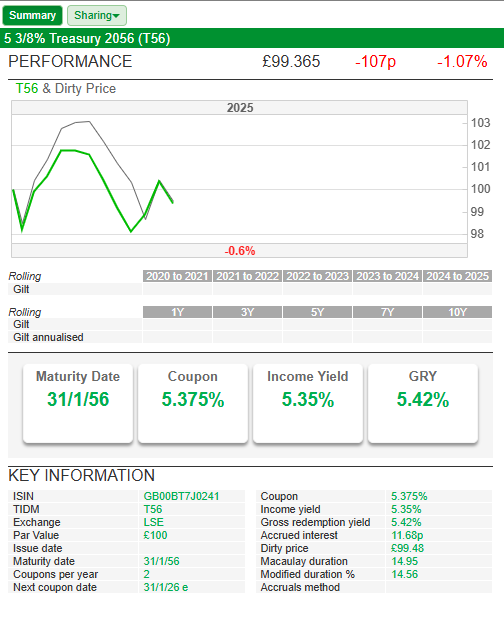
The income yield is 5.35%, the gross redemption yield is 5.42% but we will not dwell on that for long as the redemption date is 2056. Next income payment date 31 Jan.

If you have twenty years to retirement you will receive all you capital back as income. If you have thirty years to retirement you will achieve the holy grail of investing in that for ten years you will have in your Snowball a position that pays you income at zero, zilch, nothing cost.

Now 5.35% isn’t 7%, so you could pair trade it with a higher yielder.

If not, as you re-invest the income the blended yield will grow to above 7%.

On a 10k investment, after twenty years you will receive income of £535.00

The income re-invested at 7% would produce income of £700.00.

A blended yield of 12.35%

If you are lucky enough to have thirty years to invest, you can work out the return you will receive in the last ten years. Also if/when interest rates rise again you may be able to re-invest your income back into the gilt at a better rate. Income is taxable, so best if held in a tax free wrapper.

You have to allow for inflation and also that you could/will make a capital loss until the maturity date.

IF ?

Let’s look ahead using 100k of capital, you will most probably haven’t got 100k but it’s easier to make a pro rata comparison.

Option one: A Snowball which invested in a portfolio of Investment Trusts/Etfs compounding at 7%

Option two buy a passive tracker we will use VWRP that fluctuates with the market but compounds at 7%.

After ten years

Snowball Income 14k

Tracker using the 4% rule 8k

After twenty years

Snowball Income 28k

Tracker using the 4% Rule 16k

If you are lucky enough to have 30 years

Snowball Income 56k

Tracker 32k

So what looked liked the high risk strategy wasn’t at all.

Rudyard Kipling

If

If you can keep your head when all about you are losing theirs and blaming it on you:

If you can trust yourself when all men doubt you:

But make allowance for their doubting too:

If you can wait and not be tired by waiting:

GL

« Older posts Newer posts »

© 2026 Passive Income Live

Theme by Anders NorenUp ↑