Amount 8.10c U$
Xd date 20/03
Paid 28/03
Investment Trust Dividends
Amount 8.10c U$
Xd date 20/03
Paid 28/03
These European and UK investment trusts are on sale right now. Could they be great buys as investor confidence in US shares falls?
Posted by Royston Wild

When investing, your capital is at risk. The value of your investments can go down as well as up and you may get back less than you put in.
You’re reading a free article with opinions that may differ from The Motley Fool’s Premium Investing Services.
Could we be embarking on a golden age for UK and European shares, funds and investment trusts? It’s early days. But a client survey from Hargreaves Lansdown suggests it may be a possibility, as economic policy from the Trump administration turns off investors.
According to the trading platform, investor confidence in North America has sunk 17% in March, as its customers “baulked at the impact that some of the new president’s policies appear to be having on markets“.
The company’s survey, on the other hand, showed confidence in the UK spiked 16% this month. The improvement in Europe was even greater, up 48%.
For Europe, Hargreaves said that “after some difficult months, [our] investors seem to have faith that the political situation is settling down“. It added that confidence in the UK economy has also surged in recent weeks.
It commented that “investors continue to favour global funds,” but added that its clients “are now starting to look at European and UK funds too“.
It’s important to say that confidence in Britain and Mainland Europe is rising from a low base. And what’s more, the US stock market still carries considerable opportunities for investors, which means interest is unlikely to fall off a cliff.
But for individuals looking to buy more local assets today, here are two top investment trusts I think are worth consideration.
Years of underperformance means Schroder European Real Estate Investment Trust (LSE:SERE) trades at a 35.2% discount to its estimated net asset value (NAV) per share.
This could provide further scope for it to rise following recent gains. It was recently trading at at 67.8p per share.
Schroder’s trust owns assets in what it describes as “winning cities” like Paris and Berlin. We’re talking locations with good infrastructure, differentiated economies, wealthy populations and excellent retail and leisure facilities.
It’s an approach that — despite persistent interest rate risks — could deliver excellent long-term returns.
This investment trust may be an especially attractive pick for dividend investors.
For this financial year (to September) its dividend yield is a whopping 7.5%.
Please note that tax treatment depends on the individual circumstances of each client and may be subject to change in future. The content in this article is provided for information purposes only. It is not intended to be, neither does it constitute, any form of tax advice.
Supermarket Income REIT‘s (LSE:SUPR) another property trust trading extremely cheaply today. At 73.8p per share, it’s dealing at a 17% discount to its NAV per share. An 8.3% dividend yield provides further appeal for value investors.
As with other REITs, it’s vulnerable to a spike in interest rates. It also faces a more specific threat in the steady growth of online retail.
But on the whole, Supermarket REIT’s a rock-solid trust, in my eyes. Its focus on the highly stable food retail market provides excellent earnings and dividend visibility. It also lets its properties to industry heavyweights like Tesco and Sainsbury’s, further mitigating the threat of occupancy issues and missed rent collections.
I think it could be a great long-term investment as the UK’s increasing population drives food retail growth.
To figure out how much dividends are needed for a lucrative passive income stream, investors must understand which strategies get the highest returns.
Posted by Mark Hartley

When investing, your capital is at risk. The value of your investments can go down as well as up and you may get back less than you put in.Read More
You’re reading a free article with opinions that may differ from The Motley Fool’s Premium Investing Services.
Many people dream of earning passive income while sleeping but few understand the specific strategies to reach that goal.
There’s actually a wide range of options, some that are fairly easy and others extremely difficult. Setting up a business, for example, can be lucrative, but it’s risky and takes a lot of initial time and effort.
Investing in dividend stocks is much easier but still involves time, money and a side order of risk.
Right now, the UK market looks like a great place to get started. For a rare moment in history, the FTSE 100 is outperforming the S&P 500 over a 12-month period.
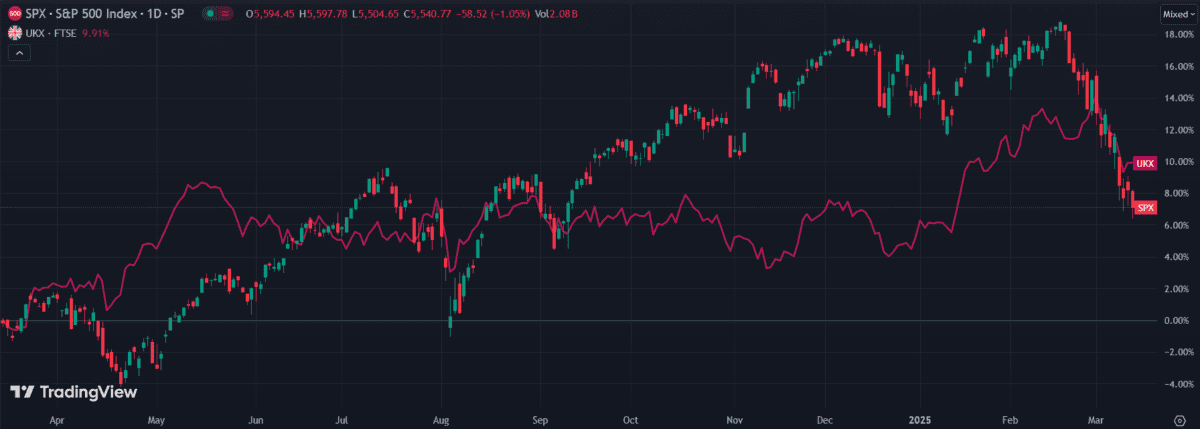
Yet there are still many high-yield dividend stocks selling at discount prices.
Ok, so £15,000 a year — that’s a hefty chunk of passive income. How many dividend stocks are needed to achieve that? Well, dividends differ from stock to stock but we can get an idea of their value from the yield. This is the percentage each one pays on the share price.
A £100 share with a 7% yield pays out £7 each year and a portfolio of shares worth £20,000 with a 7% yield pays out £1,400.
A few quick calculations tell me that about £214,000 is needed to return £15,000 a year.
That’s a lot of dividend stocks!
In my portfolio, I try to aim for stocks with yields between 5% and 9% so that my average yield is around 7%. I think this is a realistic target for the average investor.
Take Legal & General, for example, with its 9% yield. It’s quite possibly the most popular dividend stock in the UK — and for good reason. It has a very long history of proving its dedication to shareholders by consistently increasing dividends.
For income investors, this is usually the most important factor. When a company cuts or reduces dividends, it can devastate a passive income strategy. L&G never misses a beat, raising dividends by around 5% to 20% every year.
Yes, it has some risks (as do they all). For example, as an asset manager, it’s heavily exposed to market movements — if asset prices slump, so could its share price.
To help counter this, it regularly buys back its own shares to boost the stock’s value. Currently, it’s planning a further £500m on top of a previous £1bn.
But it’s just one stock worth considering. Other good examples include Aviva, HSBC and Imperial Brands. Building a portfolio of 10 to 20 similar high-quality dividend stocks is the first step in this strategy.
That’s the slow part. To reach that goal requires regular investment, patience and compounding returns.
Say an investor puts £300 a month in a 7% portfolio with moderate 4% price appreciation. Even with dividends reinvested, it’s going to take over 20 years to reach £214k.
But as they say — time is money. So get started as soon as possible and who knows, maybe one day both time and money will be available in abundance!
Here at The Motley Fool we’re always exploring new and exciting ways for investors to achieve their passive income dreams.
This FTSE 100 company has been a reliable income generator over the years and still pays a handsome dividend. Analyst Robert Stephens believes investors shouldn’t be put off by a recent cut.
by Robert Stephens from interactive investor

Dividend cuts can prompt significant disappointment among income investors. After all, shareholders of a company that reduces its dividend will receive a lower income than they did previously. This can have a negative impact on their financial circumstances.
Of course, long-term income investors who hold a variety of dividend stocks are likely to experience a reduction in shareholder payouts from at least one of their holdings at some point in time. The risk of this occurring may presently be elevated, given the uncertain near-term economic outlook and its potential impact on company earnings.
Income investors, though, should resist the initial temptation to immediately sell any stock that has reduced its shareholder payouts. Instead, they should first seek to understand why its dividend has been cut. Indeed, it is important to deduce whether the reduction represents a temporary measure that is likely to be followed by a return to dividend growth in future, or if it is the start of a period of sustained cutbacks in shareholder payouts.
For example, a company that has been forced to cut dividends due to it having bloated debt levels may struggle to grow shareholder payouts in future. Certainly, interest rates have fallen by 75 basis points over the past seven months and are expected to continue this trend in the coming years, thereby reducing debt-servicing costs for many firms. However, with inflation forecast to reach 3.7% this year, according to the Bank of England, interest payments may remain high for some time yet.
Similarly, a firm that has recorded a sharp fall in profitability due to a weak competitive position may be unable to raise dividends at an inflation-beating pace in future. Ultimately, its weak market position could equate to lacklustre profit growth even during upbeat operating conditions. And with dividends being paid from profits over the long run, there may be better opportunities for investors to obtain a growing income available elsewhere


Source: Refinitiv as at 12 March 2025. Bond yields are distribution yields of selected Royal London active bond funds (as at 31 January 2025), except global infrastructure bond which is 12-month trailing yield for iShares Global Infras ETF USD Dist as at 10 March. SONIA reflects the average of interest rates that banks pay to borrow sterling overnight from each other (7 Mar). *Data prior to May is based on 3-month GBP LIBOR. Best accounts by moneyfactscompare.co.uk refer to Annual Equivalent Rate (AER) as at 12 March.
Of course, some companies are more prone to dividend cuts than others. Firms operating in industries that are inherently cyclical, for example, are likely to experience greater variance in their financial performance, and therefore dividend payments, than companies in defensive sectors.
Mining companies, for instance, are highly dependent on the world economy’s performance due to its impact on commodity prices. Investors in such stocks may therefore wish to obtain a margin of safety at the time of purchase that compensates them for the greater likelihood of a dividend cut.
This is likely to be achieved via a higher dividend yield than that available across much of the wider stock market. It means that even if dividends are temporarily cut due to weak market conditions, investors in the firm are likely to still receive a generous income return relative to that available elsewhere in the stock market.
In addition, companies with modest payout ratios may be less likely to cut dividends than those firms which pay a higher proportion of profits to shareholders. Such firms may be able to maintain dividends without compromising their capacity to reinvest for future growth and strengthen their balance sheet, even amid a temporary decline in their profits.
As ever, diversifying across a wide range of companies can lessen the impact of dividend cuts on an investor’s overall income. Although this will not eliminate the threat of dividend reductions, it means that investors who are reliant on their holdings to provide an income stream, are likely to enjoy more stable payments vis-à-vis their peers who have a relatively concentrated portfolio.
FTSE 100-listed Rio Tinto Registered Shares
RIO recently cut its dividend. The mining company reduced shareholder payouts by 8% in the 2024 financial year. This mirrored a decline of the same amount in its earnings per share that was largely due to a lower iron ore price. The firm’s reduction in shareholder payouts means that it now has a dividend yield of 6.4%, which is 300 basis points higher than the FTSE 100 index’s income return. As a result, it appears to offer a margin of safety in case there are further dividend cuts ahead.
In the short run, the company’s shareholder payouts could come under further pressure due to an uncertain global economic outlook. Rising inflation across developed economies including the US, UK and the eurozone means that the pace of monetary policy easing may slow.
This could lead to a moderation in growth expectations that prompts reduced demand for a range of commodities. In turn, this may reduce their prices and hold back Rio Tinto’s financial performance, thereby prompting a further decline in its dividend. And with China, which is the world’s largest importer of iron ore, facing an uncertain near-term outlook, it would be unsurprising if the firm’s bottom line comes under further pressure in the near term.
In addition, the company has a dividend policy whereby it aims to pay between 40% and 60% of earnings to shareholders. Its payout ratio remained at the upper limit last year for the ninth year in succession, which suggests that there is little scope for a reduction in dividend cover in the near term. This means that shareholder payouts are likely to closely track profits for the time being.
Of course, the company’s solid fundamentals mean that it is in a strong position to overcome an uncertain period for the global economy. Its net debt-to-equity ratio, for example, is just 9%, while net interest costs were covered 66 times by operating profits during the latest financial year. A solid balance sheet provides the firm with the financial capacity to further diversify its operations, thereby gradually reducing its longstanding reliance on iron ore, through continued reinvestment and M&A activity.
This could act as a catalyst on its bottom line and dividend growth prospects. The firm’s increasing exposure to a variety of future-facing commodities, such as copper and lithium, means that it is well placed to capitalise on growing demand as the world continues on its path towards net zero. And with the long-term prospects for the global economy being upbeat, with further interest rate cuts ultimately likely to be implemented, the company’s financial performance is set to improve. This should allow it to grow dividends over the coming years.
Trading on a price/earnings ratio of 9.4, Rio Tinto appears to offer a wide margin of safety. This suggests it has scope for significant capital gains after falling by 2% over the past year. Indeed, it is down by 6% since first being discussed in this column during April last year.
While its recent share price performance, as well as its dividend cut, are undoubtedly disappointing, the company’s income potential remains relatively upbeat. Its solid fundamentals, sound strategy and the prospect of an ultimate improvement in its operating conditions, suggest that the stock is still a worthwhile long-term income opportunity.
Robert Stephens is a freelance contributor and not a direct employee of interactive investor.

Care REIT leaves the watch list after the agreed bid.


VWRP
Current value would be £125,441
Using the 4% rule that would give an income of £5,017.00 versus the Snowball fcast income of £9,120.00.

| Why It’s (Almost) Time to Buy This 15.6% Yielder by Michael Foster, Investment Strategist There are two things I need to bring to your attention right now, especially if you’re an income investor. One is my outlook for the market, as volatility really hits home. The other is a 15.6%-yielding(!) fund that just changed its name and ticker – and really grabbed contrarians” attention in the process. Let’s start with what’s really going on with this wild market. The NASDAQ is now down more than 10% from its peak price, and stocks on the whole are down for the year. I don’t expect this to last very long. My take: 2025 is likely to be a year of volatility rather than a year of decline. Even so, the volatility we’ve seen so far is relatively new. It was only the middle of last month that stocks started making a clear reversal from their long climb, and the NASDAQ 100 is still up 12.6% annualized over the last three years as I write this, while the S&P 500 is up an annualized 9.6%. Short-Term Dips Against a Long-Term Bull Backdrop Just a quick look at the chart tells you that buying the dip during this period has been a winning strategy. It also tells us that both indices are setting up for another dip-buying opportunity, where stocks will fall to a point where they become irresistible. COVID Has Reduced the Odds We’ll See Another 2008 During volatile markets, however, the psychological pressures are tough, with sharp declines and trillions of dollars of wealth seemingly vanishing in a matter of days. This has always been a problem for markets, but I think it’s less of a problem now, for one reason: COVID-19. This might sound a bit strange, so let me explain. At the start of the pandemic, trillions of dollars disappeared in hours. People were literally prohibited from economic activity, as they were forced to stay in their homes. Oil prices actually went negative. And yet stocks recovered, both because of monetary policy (the Fed swooped in with emergency rate cuts and massive buys of government bonds – so-called “quantitative easing”) and, after that, technological progress (including changes in infrastructure responding to the pandemic, such as new supply chains; new medical technologies; and, of course, AI). In other words, investors have already seen the worst and it’s fresh in their minds, so even if we face a recession over the next year or two, stocks are unlikely to collapse like they did in 2020 or 2008. So, in a sense, this time is different, but not in the way one might think: People are less likely to give in to total fear (or 2020-like despair!) as the business cycle weakens. Which means that while stocks are likely to fall, they’re not likely to collapse. Buying the Dip In such a situation, a smart play is to buy the dip slowly, steadily and strategically. Since fear is unpredictable, we can’t wait for the market to bottom and swoop in to buy everything, but we can start buying when there’s a correction, buy a little more as it worsens, and buy even more when it becomes a full-on bear market. And we can essentially double our “dip-buying discount” by purchasing stocks within a closed-end fund (CEF) trading at an attractive discount to net asset value (NAV, or the value of its underlying portfolio). That’s where the BlackRock Technology and Private Equity Term Trust (BTX), payer of that outsized (to say the least) 15.6% dividend. BTX is the fund’s newest ticker, which BlackRock changed from BIGZ last month. It also changed the name from the old monicker: the BlackRock Innovation and Growth Term Trust. As the name now says, the fund invests part of its portfolio in private equity, which can have bigger returns than public stocks in the long run, while the “term” refers to the fact that the fund will come to maturity in 12 years. (Although there is fine print stating that the fund can convert to a perpetual fund, and I fully expect this to happen, so I don’t pay much attention to the “term” in the name here). The most important thing here (besides the huge dividend, of course) is the discount, which has been narrowing lately: BTX’s Fading Discount Since the melodramatic fear-induced selloff of 2022, BTX’s discount has narrowed as investors realized that a 20%-off sale on the fund’s tech-stock holdings, including Marvell Technology (MRVL) and NVIDIA (NVDA), was a sweet deal. BlackRock, the fund’s management firm, even realized this and started a stock-buyback program in early 2024. There’s just one problem (or at least there was): BTX (under its former incarnation, BIGZ) lagged other BlackRock tech CEFs. But these days the fund is worth your attention (even though it’s a bit too speculative for us to add to our CEF Insider portfolio). From BIGZ to “Bigger X” The changes to this fund run much deeper than a rebrand. BlackRock also made major revisions to its mandate, letting it invest even more in tech stocks. Now, at least 80% of its assets will be in public and private tech companies, instead of the previous focus on small- and mid-cap growth stocks. That mandate didn’t work because small-cap stocks have underperformed other types of stocks for years, as you can see in the benchmark index fund for small caps, in blue below, compared to the NASDAQ (in orange) and the S&P 500 (in purple). Small Caps = Small Profits This wasn’t always the case, and the reason why small caps underperform more now than they used to is another article unto itself. In short, this was one of the reasons why I was wary of BTX when it was BIGZ. Ironically, BIGZ wasn’t as “big-focused” as it should have been. That has changed, along with BTX’s fund managers, with the fund now being run by Tony Kim and Reid Menge. This is great news because Tony and Reid also manage the BlackRock Technology Opportunities Fund (BGSAX), which has run the table on the indices, including the NASDAQ (seen by the performance of its benchmark index fund in orange below), a particularly tough one to beat. Tony and Reid Are Master Fund Managers – and They’re Coming to BTX This kind of outperformance deserves a premium, which BTX will likely get eventually. Until then, the fund remains attractive when it trades at a discount, as it is now. 5 Urgent Monthly Dividend Buys to Grab on This Dip (With Steady 10% Yields) Make no mistake: Times like these, when fear is high and volatility is rampant, are when fortunes are made – especially for income investors like us. Because when stock (and CEF!) prices go down, dividend yields go up. And we’re here to “lock in” those rich payouts! BTX is interesting here, but it’s still pretty speculative – and so best for the short-term, not the long. But not to worry, because I’ve been busy lining up other opportunities for us to lock in big payouts set to last us a lifetime. Like the 10%-yielding monthly dividend CEFs I want to show you today. Each of these 5 stout monthly payers is cheap now. Taken together, they instantly diversify our cash across the best US and international stocks, real estate investment trusts (REITs), corporate bonds and more. I know I don’t have to tell you that dividends that big are a lifesaver in choppy markets like these, since they keep our bills paid, letting us rest easy till things settle down again. Don’t miss your chance to buy these 5 reliable income plays now, while they’re cheap. Click here and I’ll tell you more about these 10%-yielding monthly payers and give you a free Special Report revealing their names and tickers. |
Richard Williams
| Best performing funds in price terms | (%) |
|---|---|
| IWG | 15.8 |
| Schroder REIT | 11.2 |
| Assura Group | 10.3 |
| Urban Logistics REIT | 5.5 |
| Supermarket Income REIT | 4.7 |
| Value & Indexed Property | 4.3 |
| First Property Group | 4.0 |
| PRS REIT | 4.0 |
| Helical | 3.3 |
| Warehouse REIT | 2.5 |
Source: Bloomberg, Marten & Co
| Worst performing funds in price terms | (%) |
|---|---|
| NewRiver REIT | (9.8) |
| Care REIT | (8.4) |
| Harworth Group | (8.0) |
| Workspace Group | (8.0) |
| Grit Real Estate Income Group | (7.1) |
| Custodian Property Income REIT | (6.4) |
| Derwent London | (6.2) |
| Great Portland Estates | (5.2) |
| Regional REIT | (4.9) |
| Ground Rents Income Fund | (4.6) |
Source: Bloomberg, Marten & Co
Macroeconomic uncertainty continues to weigh on the performance of the listed real estate sector, as the potential for a slower than anticipated interest rate cutting cycle grows with inflationary pressures expected from both domestic and international policy. The sector was down 1.7% on average in February, despite a raft of positive results indicating a turn in the valuation outlook (see page 2). Flexible workspace behemoth IWG saw impressive gains during the month and is now up just over 25% in 2025. Schroder REIT returned to positive territory having fallen in January, after posting a quarterly NAV uplift (see page 2). Over 12 months, its share price has risen almost 25%. Assura’s share price increased off the back of news of a bid for the company (see page 3 for details), while PRS REIT’s shares continue to make gains as a sale of the company moves a step closer (see page 3). Urban Logistics REIT’s positive start to 2025 continued after it reported a flurry of letting deals (see page 4). Its share price is up 12.9% in the year to date. Shareholders responded positively to Value & Indexed Property announcing a move to the UK REIT regime that it expects will boost its dividend and liquidity in its shares.
There was an eclectic mix of property companies whose share price returns over February made the list of worst performing, reflecting investors’ broad-brush attitude towards the sector. Retail specialist NewRiver REIT lost almost 10% in value during the month, even after reporting the successful integration of the Capital & Regional portfolio and a strong Christmas trading period. Care home provider Care REIT also saw a sizable fall in its share price despite strong occupational drivers giving it confidence to up its dividend target for 2025. Another company to report a positive trading update but frustratingly end the month in negative territory was Custodian Property Income REIT. Weak economic growth may be weighing on the London office developers. However, they are bullish about the core market given the complete lack of supply and robust demand for best-in-class offices. Regional REIT’s struggles continue after reporting a further write down in the value of its portfolio, with its share price now down 17.7% over 12 months. Having seen its share price bounce following a number of bids for the company, Ground Rents Income Fund fell back 4.6% in February after its suitor stepped away from talks.

| Company | Sector | NAV move (%) | Period | Comments |
|---|---|---|---|---|
| Schroder REIT | Diversified | 2.5 | Quarter to 31 Dec 24 | Value of portfolio rose 1.5% to £473.9m |
| Target Healthcare REIT | Healthcare | 0.9 | Quarter to 31 Dec 24 | Like-for-like valuation increase of 0.6% to £924.7m |
| Custodian Property Income REIT | Diversified | 0.9 | Quarter to 31 Dec 24 | Portfolio value up 0.5% on like-for-like basis to £586.4m |
| Alternative Income REIT | Diversified | 0.8 | Quarter to 31 Dec 24 | Portfolio valuation increase of 0.6% to £106.2m |
| Grit Real Estate Income Group | Rest of world | (12.4) | Half year to 31 Dec 24 | Portfolio value dropped 2.3%. NAV fall mainly due to increased finance costs |
| Unite Group | Student accom. | 5.7 | Full year to 31 Dec 24 | 4.8% like-for-like portfolio valuation increase to £6.0bn |
| Shaftesbury Capital | Retail | 5.2 | Full year to 31 Dec 24 | Portfolio valuation increased by 4.5% on a like-for-like basis to £5.0bn |
| Tritax Big Box REIT | Logistics | 4.7 | Full year to 31 Dec 24 | Portfolio value of £6.55bn, up 3.7% on like-for-like basis |
| Derwent London | Offices | 0.6 | Full year to 31 Dec 24 | Portfolio valuation growth of 0.2% in 2024 to £5.0bn |
| SEGRO | Logistics | 0.0 | Full year to 31 Dec 24 | Portfolio value increased 1.1% to £17.8bn |
| Primary Health Properties | Healthcare | (2.8) | Full year to 31 Dec 24 | Investment portfolio valuation down 1.4% to £2.75bn |
| Hammerson | Retail | (27.2) | Full year to 31 Dec 24 | Valuations stable, NAV fall due to sale of outlet village business at a substantial loss |
Source: Marten & Co

Assura Group rejected a bid for the company from a consortium comprising Universities Superannuation Scheme (USS) and US private equity giant KKR valuing it at £1.562bn. The most recent proposal at 48.0p per share was a 28.2% premium to the share price, but a 2.8% discount to its last reported NAV. USS has backed away from any further potential offers, while KKR said it was considering a further bid. It has until 14 March to announce its intentions.
An activist investment company – Achilles – was launched, raising £54m from investors. Its focus will be on companies in the property, infrastructure, and renewables sector, where it aims to work with boards to realise value for shareholders. It is managed by Harwood Capital Management and led by its chief executive Chris Mills, with Robert Naylor on the board of directors. The pair worked together to achieve an exit for investors at Hipgnosis Songs Fund and more recently is working with PRS REIT on a strategic review.
The sale of PRS REIT moved a step closer, with the board announcing that it has received several non-binding proposals to acquire the company. The majority of these proposals were pitched within a price range representing a premium to the current share price and a discount to the latest published NAV. The board said that it intends to invite a subsection of parties to enter into a due diligence process, which is expected to be completed no later than March 2025.
Home REIT received a number of non-binding offers for the full portfolio from “credible parties” that have been selected to proceed to the next stage of the process. It had put its portfolio of 862 properties up for sale seeking £175m.

A firm offer for Ground Rents Income Fund did not materialise after the board rejected several approaches from Victoria Property and time lapsed on the offer period. GRIO said it was fully committed to implementing the realisation strategy approved by shareholder in November 2024.
Helical and its joint venture partner Transport for London entered into a development financing arrangement with HSBC to provide £125m to fund the construction of 10 King William Street, the over-station development at Bank underground station, in the City of London.
Warehouse REIT agreed to change its investment management agreement, with the basis of its fee calculation switching from NAV to the lower of NAV and market capitalisation, effective from 1 April 2025. This would result in an annual saving of around £2.1m and a boost in earnings of 0.5p per share. There will be a transition period to this new fee arrangement, with the fee in the first financial year only (ending 31 March 2026) being subject to a floor of no lower than 70% of EPRA NAV.
Supermarket Income REIT has acquired nine Carrefour supermarkets in France for €36.7m and sold a Tesco store in the UK for £63.5m. The company now has 26 Carrefour stores in France, representing around 5% of its gross assets.
Primary Health Properties acquired a health & wellbeing clinic with urgent care and diagnostic facilities in Cork, Ireland, for €22m, at a yield of 7.1%. The company’s portfolio in Ireland now represents 9% of the total portfolio.
In a lettings update, Urban Logistics REIT announced that it completed new lettings on five units, totalling 301,000 sq ft of space and £3.0m of annual rent, since 30 September 2024. Portfolio vacancy reduced from 8.1% to 6.2%.
Great Portland Estates made four new lettings for ‘fully managed’ office space at its Piccadilly Estate, in London’s West End. The space was let 13.7% ahead of ERV, securing £1.6m of annual rent at an average of £240 per sq ft, representing a net premium of 98% to traditional leases.
Sirius Real Estate acquired a business park in Reinsberg in Saxony, Germany, for €20.4m and a 6% net initial yield, and the Earl Mill business park in Oldham, for £5.7m and net initial yield of 13.9%.
Schroder European REIT sold its 50% interest in a distressed shopping centre in Seville, Spain. The asset had been marked down in SERE’s book at nil value and the sale reflects this, with the outstanding debt transferring to the purchaser. This strengthens the company’s balance sheet by reducing its net loan-to-value (LTV) ratio from 25% to 21%.
Life Science REIT let 17,200 sq ft at Building 1020 at its Cambourne Park Science & Technology Campus in Cambridge, to 42 Technology Limited, a product design and innovation consultancy. The company signed a 10-year lease, and is paying a rent of £25.50 per sq ft, ahead of the June 2024 ERV.
Henry Boot secured outline planning permission on appeal for 112 homes on a freehold site in Yalding, Maidstone, Kent, after a lengthy planning battle with the local council.


If you are searching for the next takeover target, the risk is lower if you have a higher yield to keep you warm as you wait to be proved right or wrong.
Note: the yields in the table are the yields available last week before this week’s bids.
© 2026 Passive Income Live
Theme by Anders Noren — Up ↑