Stay calm in a crazy world – and have a financial plan you can stick to says Ruth Sunderland
Story by Ruth Sunderland

We live in a mad old world, with financial markets to match. Manifestations are everywhere. The mania for AI is increasingly funded by debt rather than cash flow among the hyperscalers.
It’s become hard to tell sci-fi from reality. In Shanghai, shares in Unitree, a Chinese maker of humanoid robots, went up by more than 600 per cent at one point on the first day of trading.
Tech billionaires say people will commute to work on the Moon within a decade. (Have they tried getting WFH – addicted British civil servants back to the office?) The US national debt has hit $40 trillion, a number so large that it defies contemplation.
Observing such things, one hedge fund tycoon confided his belief that a ‘great reckoning’ is on its way to my colleague Alex Brummer, who advises investors to take heed and plan accordingly. I agree.
The problem for earthbound, non-billionaire private investors is: plan how?
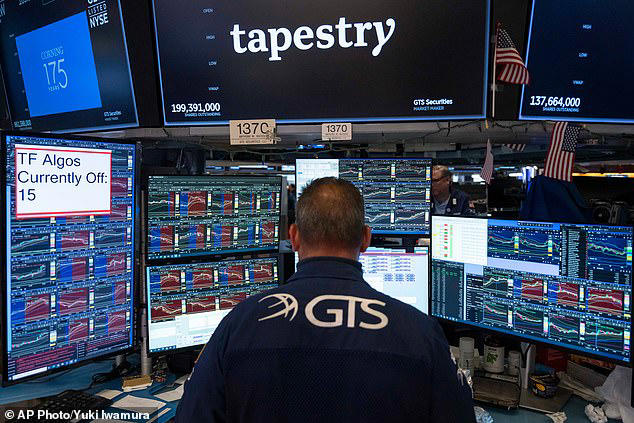
Keep calm: History tells us shares recover and investing in them is the best hope for building real wealth that keeps its purchasing power, writes Ruth Sunderland
With the Shiller CAPE ratio flashing red alert on Wall Street, the obvious route might seem to be to sell shares and pile into ‘safe’ havens such as cash or bonds – though recent upheavals on bond markets in the US and here tell us investors see increasing risks attached to the latter.
Research this month by financial services firm Morningstar pointed to what it calls the ‘investor return gap’, whereby investors receive returns lower than those generated by the funds they own.
The gap is caused in part by poor decision-making driven by emotions such as greed or, as now, fear.
Morningstar says this rubbed out roughly 12 per cent of the funds’ aggregate total return over ten years.
In money terms, it adds up to $3.8trillion that has slipped through investors’ fingers through ‘timing-related effects’.
My conclusion: timing the market is an elusive skill beyond many of us, even the most brilliant professionals.
Anyone can predict a crash will happen, but hardly anyone foresees when. Investors therefore sell too soon and miss out on gains, or too late and crystallise nasty losses.
Stay put and with patience – sometimes a lot of patience – history tells us shares recover and that investing in them is the best hope for building real wealth that keeps its purchasing power.
Keep money in cash and there is not merely a risk but a near-certainty it will lose value through inflation.
Bear markets are inevitable. There is no fail-safe method of avoiding the pain, but there are ways of minimising it.
Have a reserve of cash, so there is no need to sell shares at a low point, and you have money to buy in at bargain prices.
Invest small, regular sums rather than big chunks: this purchases more shares for the same money in a market dip.
Diversify geographically and by type of business. Retirees should draw up a schedule for withdrawals and stick to it.

With a dividend re-investment plan, you can welcome falling markets because as prices fall, yields rise. You just need some dividends to re-invest back into the market.
Leave a Reply