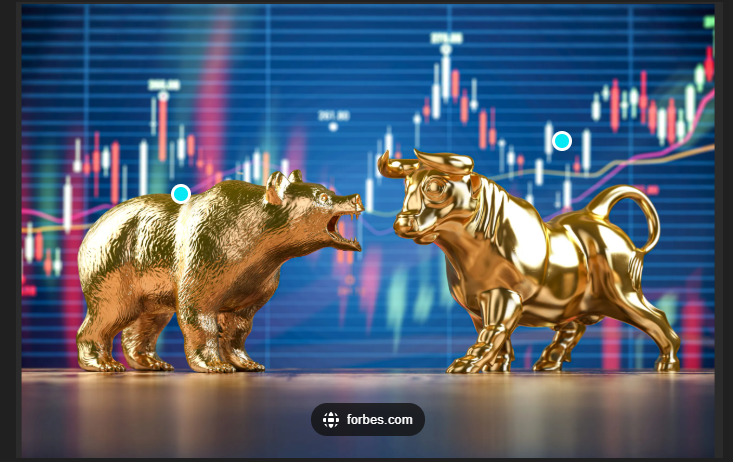
Ben Carlson: Long Term Investing Still Wins – Even When It Feels Wrong
Apr 22, 2026 ETOWL, OPENAI, MSFT, GOOG, GOOGL, ANTHRO, SPACE, GOOG:CA, MSFT:CA, ZGOO:CA, ZMSF:CA, SP500, NDAQ, QQQ, SPY, TSLA
Summary
- Portfolio Manager, Author, Podcaster Ben Carlson on why markets are fascinating and increasingly driven by rapid cycles, emotional psychology, and evolving investor behavior, requiring adaptive long-term strategies.
- Private credit’s risks differ from 2008; asset-liability mismatches and illiquidity highlight the need for defined time horizons and disciplined capital allocation.
- Retail investors have improved resilience, but rising complacency pose risks if true crisis emerges; monitoring consumer spending and job losses remains critical.
- AI-driven capex in tech is reshaping margin profiles and valuations, with investors shifting focus from picking winners to identifying potential losers amid sector disruption.
Portfolio Manager, Author, Podcaster Ben Carlson on why markets are fascinating (0:30) Private credit, banking sectors (4:40) Market cycles speeding up (8:00) Economy vs stock market (12:20) Gold and safe havens (22:50) Dividend stocks, yield, income investing and ETFs (24:30) Earnings season: Listen to how CEOs talk about consumers (28:00) AI evolution (31:20)
Transcript
Rena Sherbill: Very happy to welcome to Investing Experts, Mr. Ben Carlson. I’m sure many of you have heard him or heard of him at the very least. You are with Ritholtz Wealth Management. You manage institutions there. You have a very fabulous podcast, the Animal Spirits Podcast. You are an author too.
To wit, we are here today for the most part to talk about your newest book, Risk and Reward: How to handle market volatility and build long-term wealth. Really, really happy to have you on the show. Been listening to you, reading you for a long time. So thanks for coming on the show.
Ben Carlson: Thanks for having me.
Rena Sherbill: Talk to us. I’d be interested to hear first off, if you could share with listeners how you spend your day, how you spend your day looking at the markets, understanding them, how you digest them and then what led you to write this specific book at this specific moment.
Ben Carlson: I start my day reading the horoscope just to make sure I know what’s going on there. Listen to the stars.
Rena Sherbill: Perfect
Ben Carlson: I do a lot of writing and the best way for me to do that is by doing a lot of reading. So I’m doing a lot of reading about what’s going on. I pay attention to a lot of numbers and data.
And I personally think the markets are just fascinating. I know that there’s some people outside of finance who think like this stuff is just it’s boring numbers mumbo jumbo. I think that like the interplay between numbers and feelings and emotions in human psychology.
I think that the markets are just this like giant laboratory for studying human beings. I think it’s like one of the best places to look at the different emotions that human beings have. Fear, greed, panic, euphoria, all these different things that the markets could bring about.
And so I really enjoy just following the market. So that’s why like talking about them. I like writing about them.
Rena Sherbill: Why you called your podcast Animal Spirits, perhaps.
Ben Carlson: Yeah. On a daily basis, that’s a lot of what I’m doing. I’m talking to our financial advisors at my wealth management firm. I’m talking to clients to get a better understanding of what they’re doing.
I’m creating content. And actually, a lot of that stuff, dealing with clients and hearing their concerns and worries and what the problems they’re trying to solve, that’s really good for me in terms of producing content because that’s the stuff that I’m trying to think about.
What are people actually worried about these days? are like regular people outside of finance? What are they worried about?
So I’ve been writing my blog for a little over 10 years now. And the whole point of me writing a blog in the first place, I kind of got into a little trepidation. was right when financial blogs were kind of taking off in like the early 2010s.
So I was reading Josh Brown and Barry Ritholtz, who I’m now working with. They were some of the early blog people. And I just thought that there was a lot of negativity in the world coming out of the great financial crisis. And there was a lot of pessimism and I guess rightly so in a lot of ways because we had two huge stock market crashes and two recessions in the span of 10 years. There was a lost decade for the stock market.
People were really nervous, like, oh my gosh, the financial system almost ended. All these 100-plus-year-old firms went out of business, and the government is backstopping and saving places. I think there was a lot of people who just lacked faith and trust in the financial system. I was getting all these questions from my friends and family about, you’re the finance guy. Explain this to us. What’s going on here? That’s why I started writing my blog.
I’m always kind of glass half full kind of guy. I look for the more optimistic and I look for the good side in most things. And I just thought that there’s a lot of pessimism. That was the idea for the blog.
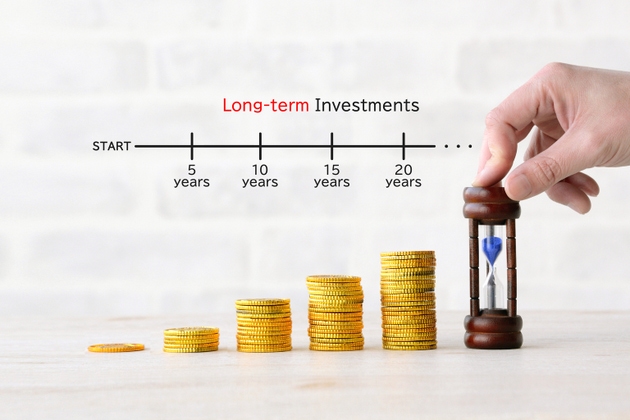
The book is, I’ve received a lot of pushback over the years. There’s a lot of people who’ve taken on like this whole idea of like long-term investing and thinking and acting for the long term. But I get all these people who look for exceptions. Well, what about this? Well, what do you think about this? Wasn’t this a terrible experience?
And I think for a lot of people, the whole idea of long-term investing is just it doesn’t make sense in this world. And I’m trying to prove that no, even if we open the kimono and show all the bad stuff, right? Like, let’s play devil’s advocate to my own investing philosophy.
I’m to go through point by point and show everything bad that’s happened in last 100 years and why this form of investing still makes sense. And so that was the idea just to, I look at like the risk and reward as like the yin and yang. I say that they’re attached to the hip. That’s what I wanted to show that like, despite all the nasty risks out there, like the reward is still worth it for long-term investors.
Rena Sherbill: We’ve been talking a lot recently on this podcast about the private credit sector and how it’s coming up against the banking sector. And you just talked about the great financial crisis. You talk about it in the book also, a lot of comparisons being made to what’s happening in the private credit sector to the great financial crisis.
We had Samuel Smith on talking last week about how that very much is not the case. He’s a big bullish guy on Blue Owl (OWL) specifically, and he was laying the case for why the banking establishment or banking institutions or those that run banking institutions are so down on the private credit space.
Any thoughts to share about that discussion and also I guess, bear markets and great big bear markets and where bearishness has you most worried?
Ben Carlson: It is interesting that the whole private credit space seems to be an outcropping of the financial crisis, right? A lot of the banks pulled back from that type of lending, so the private managers stepped in, and now they’re doing it.
I think the biggest difference between what happened in 2008 and now is just these loans are long, these loans are not, it’s not like an event, it’s more of a process. Let’s say that the people who are worried about the credit quality of these loans, and I can’t really speak to the credit quality, because that’s just not my expertise.
And these loans are a little harder to understand, right? But let’s say that the credit quality does go bad. It’s not like these things on one day are all going to go under, right? And all these companies are going go bankrupt.
It would be more like a death by a thousand cuts. So that’s where I think the analogy goes. Even if you thought the worst of these investments. I tend to think that these private managers have so much money and they have so much incentive to make sure that this stuff works out.
It’s hard to see this being this sort of car crash scenario. That’s kind of where I fall on it.
Obviously, I think the biggest thing if I’m like tying it back into my book, is that the biggest mismatch we’ve seen and why you’re having all of these people pull money out and look to redeem is like an asset liability mismatch. the whole,
I think my whole point of my book, one of them I hope people get from it is just the fact that when you make an investment, one of the most important things you can do is define your time horizon.
And obviously there were a lot of advisors who put clients into these funds who did not do that because all this money came rushing in and at the first sign of trouble and some bad headlines, all the redemption requests started, right?
And frankly, I think a lot of the advisors should be like kind of ashamed that they did that because these should be five, seven, 10 year holding periods for these types of funds, right? These should not be something you jump into and out of every time you worry, like they’re illiquid for a reason.
And so that asset liability in this match, I think is like the biggest problem with these funds that these are loans are meant to be held, right? They have to kind of mark them to market and provide an NAV and tell clients how they’re doing.
But because of the nature of these funds, they’re private, these are loans that are meant to be held to maturity, right? And I think that’s the thing that people got in trouble to here.
And why there were so many people freaking out is just that they didn’t have that mindset going in.
Rena Sherbill: Because you manage the institutional side at Ritholtz, but I imagine you’re also very much in touch with the retail investing side.
What would you say are the two things I guess you hear or the things that you hear from each of those groups? During this time when there’s a lot of volatility and it’s kind of hard to understand, and also maybe when it’s like very bullish and exuberant.
Ben Carlson: One of the things that I will say in doing this for a couple decades now is that I think just being part of this industry, retail investors used to get a bad rap. mom and pop used to be like this derogatory term, like, the mom and pop investors, they don’t know what they’re doing.
And I think it’s absolutely true that the retail DIY investing crowd has gotten better at what they do. I think that people beating them over the head for the past 20 or 30 years about the don’t run out of the burning building when the stock market goes down.
I think people have gotten better. And you’ve seen that in all the bear markets this decade. When things go haywire, people are buying. The flows show that the money is going in, not out, which is kind of funny because a lot of it means that the professional investors are probably selling. So I do think that retail investors have gotten better.
We have people coming to us who are DIY investors who have been very successful investing their money. They come to us not because they necessarily need help investing money. They need financial planning help. They need help with estate planning, insurance, and taxes, and all these other things.
I think a lot of people have gotten the message that we don’t freak out and panic anymore when this stuff happens. And I think that’s one of the reasons the market didn’t go down more, because I think there’s a lot of people who are beating their head against the wall going, I don’t get this. There’s a war in the Middle East.
Oil prices went crazy. The trade off for moves is closed. Like oil markets are in disarray right now. Supply and demand, it’s all over the place. Why is the market only down? Why did the market only go down like nine percent? I think there’s a lot of people who like rightfully are questioning like this doesn’t make any sense.
I think 20 years ago the stock market maybe would have fallen a lot more. But I think investors have learned and become a condition to not panic as much anymore.
And I guess the second part of your question is, what do I worry about? I guess the one concern there, even though people have gotten better at, people used to say the stock market is the only store that goes on sale and people run out of the door, right? The fact that people don’t do it as much anymore, my biggest concern would be that there is eventually some sort of complacency.
When there is a real risk, a real sort of financial crisis moment, not just a boy who cried wolf thing, are investors too complacent. Do they think that it’s going to snap back right away when in that case where we have like a more prolonged bear market and it’s more painful than people think? That’d be my one concern right now.
Rena Sherbill: So what do you say to that? What do you say to that concern? Is there something that assuages you or is there something that furthers your concern as you look to how investors, because it does very much seem that almost everything is priced into this market. Or even the more volatile, the more priced in it is.
Ben Carlson: I think this is one of the hard parts, too, is that markets are just happening faster and faster than ever. These cycles are speeding up. And I think it’s really hard to wrap your mind around how far like the I think it really started in the pandemic when the stock market kind of looked over this valley of like we shut the economy off.
And I remember when the stock market first started rallying like October or April and May of that year. And everyone said this is a dead cat bounce. There’s no way that that was it.
This thing is not getting better. There was no vaccine yet at this point. was, mean, people were, you know, the economy was still in tatter. People were at home and the stock market kind of looked over this and saw like the trillions of dollars government spending and said, all right, fine, we’re off to the races.
And I think a lot of people were just like in a state of disbelief. And I think that seems to be a lot of the case in a lot of these downturns is like disbelief that it could happen this fast and the market could move so quickly and decide to be more forward looking.
But I think the other side of that could be that we could have, because we have these impulses to move faster, you could see more flash crashes in the market, where you have these huge air pockets where things go down faster.
The COVID one was, I think, the fastest 30 % bear market from all time highs in history. That was a whatever, black swan, one-off event kind of deal. But I think those moves the other way could happen as well.
Rena Sherbill: What are your thoughts about how the economy is moving on its own and then maybe along with the market or how those are influencing each other?
Ben Carlson: I think one of the things I talk about in the book, I did a whole chapter about the stock market versus the economy. And one of the things that I’ve learned is that there are so many people who are smart and well-rounded about what’s going on in the economy.
And basically, none of them can predict what’s going to happen with it. There are more ways to slice and dice economic data than ever before. It’s not just the headline number anymore.
You can get so granular on economic data of this specific, what goes into this number, all the different variables that go up into this number and what groups it’s impacting. And it’s kind of insane how much access to economic data we have now.
And everyone’s still got it wrong in 2022 about like the fact that there’s going to be a recession. And so the way that I look at the economy now, it’s so the US economy is so big and dynamic, it’s I don’t know, 30 plus trillion dollars that it’s kind of like turning a battleship that people think that it’s going to be like a stock market where all of a sudden one day it’s just going to fall.
And I don’t think the economy really works like that. Unless there’s some exogenous event, like a pandemic or some crazy financial crisis, it seems like the economy slows in stages and grows in stages. It doesn’t just happen in one fell swoop. And I think that’s the problem most investors have is they try to equate the economy and the stock market and think all of sudden, OK, here we go.
This one data point shows me that this is happening and there’s just been so many headfakes. If you think about it, the COVID recession was technically one or two months and it wasn’t a real recession because we threw so many trillions of dollars at it. know, people lost their jobs were in some cases paid more to stay home than they were to go to the job.
Small businesses were given loans. Everyone was kind of made whole at that point. So we haven’t had a real recession. And if you can’t be on it, that ended in 2009. That’s like 17 years since we’ve had a real recession, which is kind of amazing coming out of the financial crisis when everyone thought they were going to happen all the time.
So you wonder, are the risks building or is it just that these things are happening so few and far between because government intervention is so much more prevalent than it was in the past.
Leave a Reply