As I get older, I get very enthusiastic about passive income — the earnings I accrue outside of paid work.
I have many options for grabbing these earnings, but find some rather unappealing. Here are five leading forms of extra income that I’m currently considering.
Savings interest
Perhaps the most straightforward and widely used passive income. I simply deposit money in a high-yield savings accounts and collect the interest. With the Bank of England’s base rate at 5.25%, table-topping savings accounts pay 5%+ a year, before tax.
However, I’ve met very few people who got rich solely by keeping their money in banks. Also, the taxman takes a chunk of my savings interest, so I’m not mad keen on this route.
Bonds
My second option could be to buy bonds — IOUs issued by governments, companies and other organisations. These pay me interest in the form of ‘coupons’, then later return my initial investment when they mature.
However, some bonds (say UK Gilts and US Treasurys) are safer than others, while struggling companies sometimes default on their bond payments. Perhaps I’d be better off investing in a broad-based, diversified bond fund ? This is something I’m actively considering right now.
Property
My third choice might be to become a buy-to-let (BTL) landlord, buying houses or flats and then renting them out to tenants. In my experience as a former tenant, this can be hard work at times. Hence, I’m reluctant to become a ‘BTL baron’ later in life.
An easier alternative is the government’s ‘Rent a Room Scheme’, which lets me earn up to £7,500 tax-free each tax year by letting out a room in my own home. However, I’m sure my wife wouldn’t agree to this, so I’ll also reject this.
Pensions
In 37 years of work, I have amassed a jumbled collection of various personal, company and state pensions. As I have reached 55, I could access these pots for income or lump sums. But I think it’s too early for me to do this yet, so I will leave them alone for now.
Share dividends
Cash dividends from stocks and shares are by far my favourite form of passive income. Though these payments are not guaranteed, dividends are my family’s second-largest income (after paid work).
For example, my wife and I own shares in FTSE 100 firm Legal & General Group (LSE: LGEN) as part of our family portfolio. While previously working in the insurance and investment world for many years, I became an admirer of this long-established company, its sound business model and solid management.
At the current share price of 242.8p, L&G is valued at £14.5bn, making it a Footsie stalwart. However, its shares are down 2.5% over one year and 12.4% over five, excluding dividends.
Share-price falls have lifted L&G’s dividend yield to a tidy 8.4% a year — almost twice the FTSE 100’s yearly cash yield of 4%. This high (and steadily rising) income is my #1 reason for owning this stock.
Then again, with £1.3trn of client assets under management, L&G shares can and do fall when share prices drop, as happened in Covid-hit 2020. And like all stock, its price can be volatile. Still, we are holding these shares for the long run!
The post 5 ideas for passive income while I sleep appeared first on The Motley Fool UK.
Do you like the idea of dividend income?
The prospect of investing in a company just once, then sitting back and watching as it potentially pays a dividend out over and over?
If you’re excited by the thought of regular passive income payments, as well as the potential for significant growth on your initial investment…
Cliff D’Arcy has an economic interest in Legal & General Group shares. The Motley Fool UK has no position in any of the shares mentioned. Views expressed on the companies mentioned in this article are those of the writer and therefore may differ from the official recommendations we make in our subscription services such as Share Advisor, Hidden Winners and Pro. Here at The Motley Fool we believe that considering a diverse range of insights makes us better investors.
££££££££££££££££
Warren Buffett’s famous quote is: “If you don’t find a way to make money while you sleep, you will work until you die.” This emphasizes the importance of creating passive income streams to achieve financial freedom. Buffett believes that investing in assets that generate income on their own, such as stocks or real estate, is the key to building wealth over time.
Property, if you don’t have enough funds to for a buy to let property deposit another alternative is to buy Investment Trust REIT’s, with less hassle but more risk.
One Trust that owned rental properties was PRS Reit, which is up for sale but still trades at a discount to NAV but as always best to DYOR.
A simple strategy would be to re-invest your dividends back into the Trust.
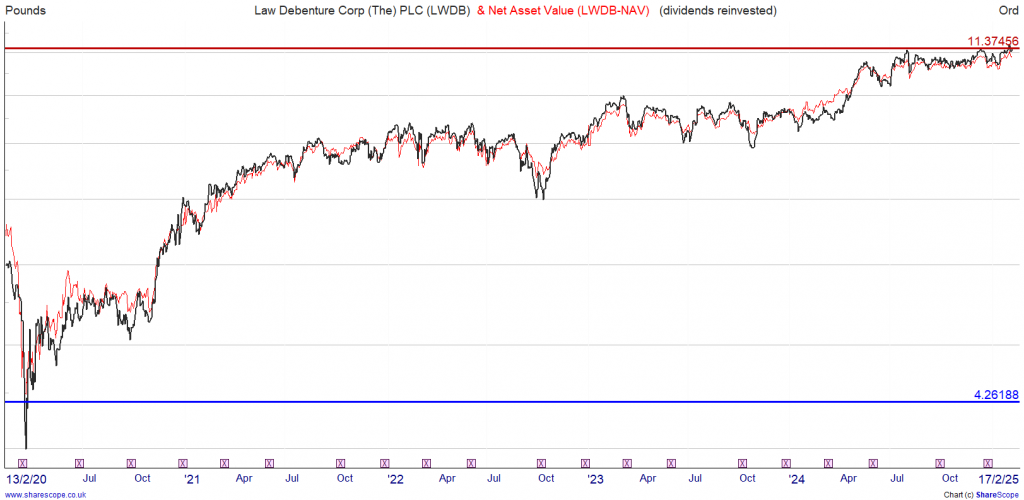
When you have achieved the holy grail of investing in that you double your money, you take out your stake and re-invest in another high yielder.
I will use NESF as the working example but as always best to DYOR, a blended yield of 17%, an investment of 10k would be yielding 17% on your initial stake, (£1,700 plus) which you should receive as long as the Trusts stay in business or don’t change their dividend policy. All you need to do to monitor your Snowball, is to check the latest dividend announcement from the company. There are various web sites that allow you to do this, if you don’t have your own share monitor.
You do not need to take big risks to secure a healthy retirement.
If you had done your own research and bought when everyone else was selling, the worst that could have happened was that you earned enhanced dividends to re-invest at great prices. The next market crash is just around the next corner, it’s a given, although when the corner will be is the unknown. One trading strategy would be invest part of your dividend stream in a cash fund or a gilt, so u have funds when it happens. You may not buy at the bottom but if you are happy with the yield, it lessens the risk.
Note 8 funds have nearly achieved the holy grail of investing, where you can take out your stake, have an investment that pays you a dividend at zero, zilch, cost.
Remember compound interest takes time to build, you should make more money in you last few years of investing than in all the early years, that’s why life-styling is such a bad idea.
The worst aspect of a dividend investment plan is that you start to wish you life away as you await the next dividend to re-invest it, of course that aspect disappears when you start to spend your hard earned.
NextEnergy Solar Fund, a leading specialist investor in solar energy and energy storage, is pleased to announce its third interim dividend of 2.11 pence per Ordinary Share for the quarter ended 31 December 2024.
The third interim dividend of 2.11 pence per Ordinary Share will be paid on 31 March 2025 to Ordinary Shareholders on the register as at the close of business on 14 February 2025. The ex-dividend date is 13 February 2025.
The Board is pleased to reaffirm its full-year dividend target guidance of 8.43 pence per Ordinary Share for the financial year ending 31 March 2025, where the full-year dividend target is forecast to be covered in a range of 1.1x – 1.3x by earnings post-debt amortisation.
NET ASSET VALUE, DIVIDEND DECLARATION AND PORTFOLIO VALUATION UPDATE
TO 31 DECEMBER 2024
Declares an interim dividend of1.55 pence per share (“pps”) for the quarter ended 31 December2024
The target annual dividend remains at 6.2pps for the year ending 30 June 2025†, an increase of 5.1% on the prior year’s target of 5.9pps
Dividend cover of 110.3% for the quarter
Unaudited NAV total return for the quarter of 2.7%
Resilient portfolio well-placed to continue to provide secure, index-linked income with the potential for capital growth
The Board of Directors of Alternative Income REIT PLC (ticker: AIRE), the owner of a diversified portfolio of UK commercial property assets, predominantly let on long leases with index-linked rent reviews, provides a trading and business update and declares an interim dividend for the quarter ended 31 December 2024.
Simon Bennett, Non-Executive Chair of Alternative Income REIT plc, comments:
“The Company continues to pay a fully covered dividend in line with the 2025 annual dividend target of 6.2pps†. The dividend cover for the quarter was 110.3%. The annual dividend target of 6.2pps is an increase of 5.1% over the previous year’s dividend of 5.9pps. The target is subject to the continued collection of rent from the Group’s portfolio as it falls due.
At 31 December 2024, the Group’s unaudited NAV was £66.0 million, 81.9pps, representing a 0.8% increase over the previous quarter. When combined with the 1.55pps dividend paid in the quarter, this produces an unaudited NAV total return for the quarter of 2.7%.
The Group’s portfolio remains relatively insulated from market fluctuations, benefiting from being 100% let, achieving 100% collection of rent due, and a 91.5% index-linked rent review profile.
The Group’s track record demonstrates a secure and increasing income stream. The valuation of the portfolio has risen this quarter by £0.6 million or 1% on a like-for-like basis. The Group continues to benefit from low borrowing costs until October 2025, when the current Canada Life senior loan matures. The Board has appointed a debt adviser to assist with the refinancing and is confident that the requisite financing will be achieved prior to October 2025,albeit at an increased interest rate as compared to the current rate. I look forward to reporting on AIRE’s continued progress in the coming months.”
You do not need to take big risks to increase your Snowball if you do some basic research to improve your knowledge.
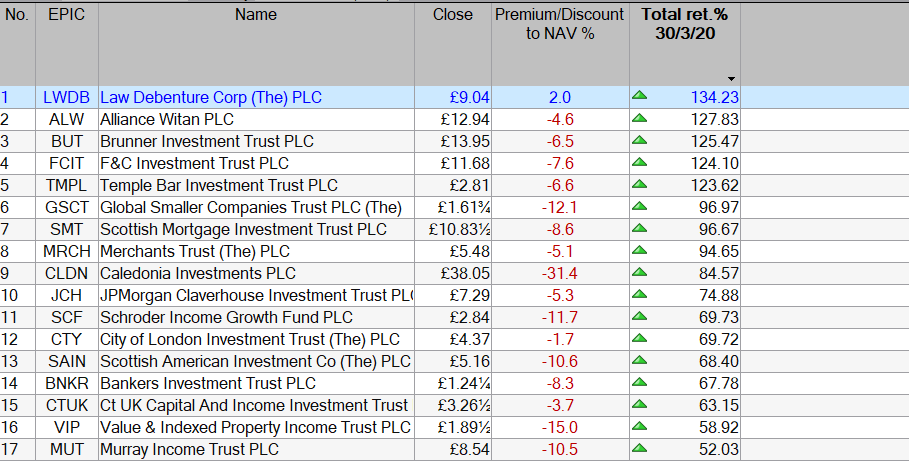
You knew that CTY was a dividend hero, having paid an increased or level dividend for around 50 years.
You watched it fall and waited until it started to go back up and you bought at 322p, the plan being to re-invest the dividend.
You are well on the way of achieving the holy grail of investing, where you take out your stake and earn a dividend on a Trust that cost you nothing, zilch,zero.
You then buy another Trust and try do it all over again. GRS.
The buying yield was around 6%, the current yield 4.75%.
Kyle Caldwell constructs a hypothetical portfolio of funds aiming to achieve £10,000 of income this year.
4th February 2025
by Kyle Caldwell from interactive investor
A year ago, I selected 12 funds with the aim of achieving £10,000 of annual income in 2024.
Collectively the hypothetical portfolio yielded 4.55%, meaning that a sum of £230,000 was required to attempt to hit the target.
While income is the priority, I’m also keen to try and strike the right balance from a total return perspective.
The income target was achieved, with £10,152 of income generated. Overall, when combining both capital and income returns, the portfolio increased to £252,924, which works out as a percentage total return (with dividends reinvested) of 10%.
Before revealing the line-up for the £10,000 income challenge in 2025, let’s look at how last year’s constituents fared.
How the 2024 portfolio fared
Seven of the 12 funds delivered total returns above 10% in 2024.
The mixed-asset fund, Artemis Monthly Distribution, delivered the highest return of 15.7%. This fund typically holds 60% in shares and 40% in bonds. Throughout 2024, its equity exposure had the greatest influence in terms of overall returns. However, various bond holdings also benefited from interest-rate cuts, which cause bond prices to rise and yields to fall.
Artemis Income generated a 15.1% return. This fund aims to provide a steady and growing income along with capital growth. Among the biggest contributors to returns in 2024 were 3i Group Ord
III
and Wolters Kluwer NV
WKL
as well as more “value-oriented” names such as the UK domestic banks and Imperial Brands IMB0.04%.
Guinness Asian Equity Income was third in terms of the highest returns, up 14.9%. Performance was led by banks, insurers and technology companies, specifically those related to the artificial intelligence (AI) theme.
The other funds in the double-digit returns’ club were Fidelity Global Dividend (up 13.5%); Vanguard FTSE UK Equity Income Index (up 12.6%); Man Income (up 11.8%) and Vanguard FTSE AllWld HiDivYld ETF USDAcc GBP
VHYG
(up 11.4%).
At the other end of the table, Jupiter Strategic Bond posted a small loss (-0.2%). In a recent video interview with interactive investor, co-manager Harry Richards said its “long duration positioning” to government bonds – those with long lifespans – had been “a drag on performance”.
The two other holdings involving bonds had a solid year, with total return gains of 5.3% and 9.7% respectively for Royal London Short Term Money Market and Royal London Global Bond Opportunities.
Finally, towards the bottom of the table, with gains of 3.8% each, were Janus Henderson UK Responsible Income and FTF ClearBridge Global Infrastructure Income.
Group/InvestmentStarting value (£)Total return (GBP)Value at end (£)12-month yield (31/12/2024)Estimated Income (£)01/01/2024 to 31/12/2024UK Equity IncomeArtemis Income £11,50015.11%£13,2383.65%£419.75Vanguard FTSE UK Equity Income £23,00012.63%£25,9055.07%£1,166.10Man Income £11,50011.77%£12,8545.17%£594.55Janus Henderson UK Responsible Income £23,0003.82%£23,8794.04%£929.20Global/Overseas Income Fidelity Global Dividend £23,00013.51%£26,1072.65%£609.50Vanguard FTSE All World High Dividend Yield ETF £23,00011.35%£25,6113.08%£708.40Guinness Asian Equity Income £11,50014.86%£13,2093.68%£423.20Mixed Asset Artemis Monthly Distribution £34,50015.69%£39,9134.26%£1,469.70Bonds Jupiter Strategic Bond £23,000-0.24%£22,9455.67%£1,304.10Royal London Global Bond Opportunities £23,0009.67%£25,2245.80%£1,334.00Royal London Short Term Money Market £11,5005.28%£12,1075.65%£649.75SpecialistFTF ClearBridge Global Infrastructure Income £11,5003.77%£11,9344.73%£543.95Total £230,0009.97%£252,9244.41%£10,152.20
Source: Morningstar. Total return figures are one year to 31 December 2024. 12-month yield as at 31 December, used to estimate income from initial value. Past performance is not a guide to future performance.
Purpose of the portfolio
The hypothetical portfolio aims to show DIY investors how they can build their own diversified income portfolios alongside wider research.
The funds are chosen on the basis that over the medium to long term they would be expected to grow both capital and income. However, there are no guarantees these aims will be achieved.
Moreover, it’s important to be mindful of the fact that overall total returns (capital and income combined) can decline, especially in the short term.
Bear in mind that funds must distribute all the income generated each year by the fund. Therefore, when income dries up, as it did in 2020 when the Covid-19 pandemic emerged, a dividend cut is pretty much inevitable.
Investment trusts, on the other hand, can hold back up to 15% of dividends received each year, which means they can build up a reserve to bolster payouts in leaner years.
The line-up for the 2025 portfolio
As I’ve picked each fund for the medium to long term, I’m inclined to avoid making changes each year. However, there are certain things I consider, for example, fund manager changes, short- and long-term performance, and whether I can simplify the portfolio.
For 2025, I’ve decided to reduce the number of holdings from 12 to 10.
The two that stood out to me to eliminate were Janus Henderson UK Responsible Income and FTF ClearBridge Global Infrastructure Income.
Janus Henderson UK Responsible Income is one of interactive investor’s ACE 40 funds, which is a filtered selection from the sustainable investment universe. It’s been managed by Andrew Jones since the start of 2012. Returns have been strong during his tenure (up 206% vs 151% for the sector average),but over one, three and five years, it has underperformed the average UK equity income fund.
In a recent commentary piece issued by the fund, it was noted that the expectation is for domestic stocks to perform better in 2025. This, of course, may well play out. But there’s also the risk of economic growth being lacklustre, with the prospect of inflation surprising on the upside.
The fund, which has a blend of internationally exposed companies and domestic stocks, could profit from a recovery in domestic stocks in 2025, but, for this portfolio, I would sooner focus on the two other active funds I have higher conviction in; Artemis Income and Man Income.
The other change I’ve made is removing FTF ClearBridge Global Infrastructure Income. It made a small loss of -2.6% in 2023, and a small gain of 3.8% in 2024.
The exposure to infrastructure provides additional diversification in the portfolio, which has been one of the reasons for choosing this fund, which is one of interactive investor’s Super 60 investment ideas. On the whole, infrastructure has predictable cash flows (many of which are linked to inflation), giving the considerable defensive qualities of the asset class. However, listed infrastructure is an equity. Therefore, it’s correlated to the ups and downs of stock markets.
The main reason for removing the fund, though, is down to the eye-catching yields on bonds and the prospective price returns for bonds (when interest rates are cut). I would sooner seek out greater bond exposure, particularly given that yields of around 4.5% to 5% can be obtained on the lowest-risk areas of the bond market, such as gilts and money market funds. When interest rates were low, which made bonds less appealing, there was more incentive to invest in alternative income assets, such as infrastructure.
Portfolio weightings
The 2025 portfolio requires £235,000 for the £10,000 income challenge (a portfolio yield of 4.26%). All yield figures were sourced in late January, but bear in mind that yield figures are not static.
For 2025, I’ve increased the bond exposure from around 30% to close to 40%. As my colleague Sam Benstead says, now is a great time to consider bonds, due to the high level of income on offer and the prospect of interest rate cuts, which will boost bond prices. Even if there are fewer rate cuts than expected, the income level that bonds are generating acts as a buffer and can still generate a positive return for investors.
The bond exposure is derived from Artemis Monthly Distribution (which owns 60% in shares and 40% in bonds), Jupiter Strategic Bond, Royal London Global Bond Opportunities and Royal London Short Term Money Market.
While Jupiter Strategic Bond made a small loss in 2024, I like its flexible approach and ability to invest anywhere across the bond market. In the event of interest rate cuts, its long-duration bond positions (which hurt performance in 2024) should pay off. Its fund managers think the market is under-pricing the amount of rate cuts in 2025 and that inflation has become less of a problem. Time will tell.
Royal London Global Bond Opportunities invests in under-researched parts of the market, including unrated bonds. It’s been a solid performer across multiple time periods.
Royal London Short Term Money Market owns a diversified basket of safe bonds that are due to mature soon, normally within just a couple of months, meaning that investors can earn an income on their cash with minimal risk. It has an excellent long-term track record, low drawdowns and is competitively priced with a yearly ongoing charge of 0.10%.
For equities, some exposure comes through Artemis Monthly Distribution, with the rest split 25% each between UK equity income and global/overseas income funds.
The UK choices are Artemis Income, Vanguard FTSE UK Equity Income and Man Income.
Artemis Income is not wedded to one investment style, such as value or growth. It has around 50 holdings. In a video interview with interactive investor, co-manager Nick Shenton said the focus was on “free cash flow first, dividends second”.
Vanguard FTSE UK Equity Income, a tracker fund, physically invests in the constituents of the FTSE UK Equity Income index, which consists of shares “that are expected to pay dividends that are generally higher than average”. Therefore, performance and income generation is heavily influenced by the largest companies in the FTSE 100 index that pay high income.
Man GLG Income undertakes a value-driven approach to provide a yield well in excess of the FTSE-All Share. Henry Dixon has managed the fund since inception in November 2013, when he joined Man GLG.
For global/overseas income, I’ve stuck to the same three funds as last year: Fidelity Global Dividend, Vanguard FTSE All World High Dividend Yield ETF, and Guinness Asian Equity Income.
Fidelity Global Dividend has a low yield of 2.4%. However, its role in the portfolio is to provide a greater balance of returns, as the fund aims to generate both income and growth, while limiting downside risks. Fund manager Daniel Roberts has been at the helm since launch in January 2012.
Vanguard FTSE All World High Dividend Yield ETF, a tracker fund, follows the ups and downs of the FTSE All-World High Yield Index, which comprises more than 2,000 large and mid-cap stocks with higher-than-average dividend yields. It has exposure to stocks listed in developed and emerging markets.
Finally, there’s Guinness Asian Equity Income. This fund’s equally weighted approach of 36 stocks helps to reduce stock-specific risk. Edmund Harriss, who oversees Guinness Asian Equity Income, says the focus is on “companies [with] sustainable competitive advantages, that are making things or providing services that people want to buy, and doing it better than their peers”. Harriss has managed the fund since inception in 2006.
The main reason I invest is to build my second income. Further down the line when I’m thinking about retirement, I want to have a stream of income that I can rely on to help me enjoy life more. That’s the dream, isn’t it?
How to invest
Before I started to think about how much I wanted to invest, the first step I’d take would be to open a Stocks and Shares ISA. That’s because I wouldn’t be taxed on any profit I made. From the dividend shares I’d be buying, I’d also be able to keep all of the passive income I received from dividend payments.
Please note that tax treatment depends on the individual circumstances of each client and may be subject to change in future. The content in this article is provided for information purposes only. It is not intended to be, neither does it constitute, any form of tax advice. Readers are responsible for carrying out their own due diligence and for obtaining professional advice before making any investment decisions.
Starting out
So, I’ve decided I’m going to invest with my ISA. That’s the best way for me to set myself up for success. But what’s next? Well, now comes the most important part. It’s about getting started no matter how much money I have to invest.
But that’s far from the case. How we start doesn’t matter. What’s imperative is that we start as early as possible and over the long run let the stock market work its magic. I think £100 a week is a sensible starting amount.
Phoenix Group Holdings
Let me show an example of just how powerful this can be. The stock I’m going to use is Phoenix Group Holdings (LSE: PHNX). It’s an insurance company and a leader in the sector.
Its share price is down 1.8% so far this year. But a falling share price isn’t always a negative. For savvy investors, it means they can snap up bargains while the rest of the market overlooks it.
At its current share price, it has a dividend yield of 10.1%, way above the FTSE 100 average (3.6%). I like Phoenix Holdings because it has a strong balance sheet with plenty of cash spare as well as a rising dividend payout.
Money to be made
Taking my £100 a week and applying it to Phoenix Group’s 10.1% yield ought to see me make slightly over £525 a year in passive income. Not bad.
However, the longer I leave my money in the market, the better chance I have of building my wealth. If I adopt a 30-year investment timeframe and reinvest all the dividend payments I receive, at the end of that I’d be making £10,168 a year in second income. I’d have a nest egg worth £106,269.
Investing always comes with risks and the stock market is volatile. There’s no guarantee that Phoenix Group’s yield will stay the same. It could rise or fall. Nevertheless, what this shows is that even investors starting from scratch are able to build a sizeable pot if they give it time.