
One of the most dangerous phrases in investing is: “This time is different.”
Usually, it isn’t.
Governments tell themselves deficits don’t matter until bond markets disagree.
Politicians convince themselves voters will tolerate higher taxes until they don’t.
Businesses spend years following regulatory incentives only to discover customers want something entirely different.
And investors regularly convince themselves that cycles have been abolished right before they come roaring back.
Reality has a habit of winning eventually.
This week’s essays all explore different versions of that same theme. From defence stocks and government spending to Net Zero policy, taxation, and the future of British politics, each story asks the same question:
What happens when theory collides with reality?
Investor’s daily
No Hiding from the Boom/Bust Cycle
25 May 2026
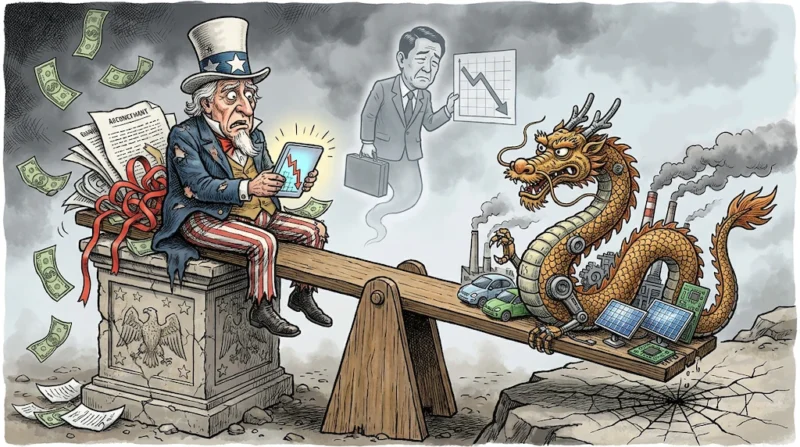
Publisher’s Note: British investors should resist the temptation to read this essay purely as an American story about Trump, Congress, or China.
The more important issue is much broader than that.
For decades, much of the Western world, Britain included, operated under the assumption that finance, consumption, and asset inflation could substitute for genuine industrial strength. We outsourced manufacturing, neglected energy security, hollowed out domestic production, and assumed globalisation would keep costs low forever.
Now that model is beginning to fracture.
Governments across the world are rediscovering industrial policy, strategic resources, tariffs, subsidies, and state intervention. China embraced that approach years ago. The United States is increasingly moving in the same direction. Europe and Britain are trying to catch up after years spent believing such things no longer mattered.
That does not necessarily mean China “wins” or America “loses.” History is rarely that tidy.
But it does suggest we are entering a world where physical production, energy, commodities, industrial capacity, and national resilience matter far more than they did during the era of cheap money and frictionless globalisation.
For investors, that shift could prove enormously important over the next decade.
Leave a Reply