Supermarket Income REIT (SUPR) is the only LSE-listed company dedicated to investing in grocery properties, which are an essential part of national food infrastructure. The company focuses on grocery stores, which are predominantly omnichannel, fulfilling online and in-person sales, and are let to leading supermarket operators in the UK and Europe. Its objective is to provide shareholders with an attractive level of income, alongside the potential for capital growth over the longer term.
We highlight the five key points in SUPR’s investment case.
1. Robust and visible income growth.
SUPR provides property that supports the essential distribution of groceries, predominantly let to leading operators like Tesco and Sainsbury’s in the UK and Carrefour in France. The grocery sector is large and consistently growing and, being largely non-discretionary, it has proven resilient through a range of economic conditions. Online grocery shopping is the fastest-growing channel and most of this is fulfilled through the sort of large-format omnichannel stores that SUPR targets. SUPR does not benefit directly from operator sales growth, but indirectly it supports sustainable rent growth and underpins capital values. Strong income visibility is provided by a long average lease length of c 12 years, upward-only, mostly inflation-linked leases, full occupancy for grocery stores and consistent 100% rent collection.
2. A low-cost and scalable platform.
Through a combination of increased scale and internalisation of its previously outsourced management, SUPR has built a lean, shareholder-aligned operating structure, with one of the lowest cost ratios in the UK real estate investment trust sector. Management internalisation was not simply a cost-cutting exercise; it also gave the management team greater flexibility to execute strategy and has coincided with changes to the group’s listing arrangements intended to broaden its appeal to a wider pool of investors. Together, these measures mean a greater share of future income growth should flow through to shareholders rather than being absorbed by overheads or structural constraints.
3. Specialist, active management.
SUPR is not simply a passive investor in grocery property; it combines specialist grocery-property knowledge with institutional real estate and capital-markets expertise. It assesses store trading, rent affordability, local competition, omnichannel relevance and alternative-use potential to identify strategically important assets rather than relying only on tenant covenant or lease length. After acquisition, SUPR creates value through rent reviews, lease extensions, reletting and tenant improvements, with the aim of increasing income, extending leases, strengthening asset quality and optimising shareholder returns.
4. Strong growth opportunities.
SUPR sees strong opportunities to leverage its cost-efficient platform and deep grocery real estate knowledge and has an ambition to increase the portfolio size from more than £2.2bn currently to c £4bn over time. Recent growth has been funded by a successful £100m equity offering and the creation of a joint venture with Blue Owl Capital, a global asset manager, providing access to third-party capital and validating the group’s investment approach. The joint venture also provides an additional, recurring source of management fee income.
5. Dividend growth set to accelerate.
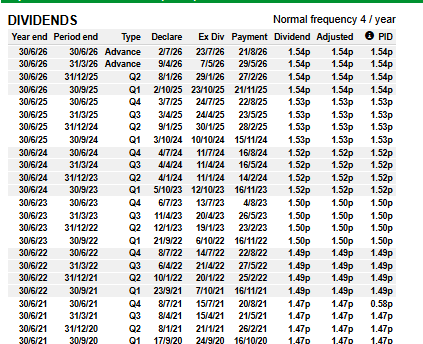
Backed by consistent growth in rental income, SUPR has increased its dividend every year since it listed in 2017. However, growth has been modest, primarily held back by the rising cost of debt. The drag from finance costs has now receded and management has signalled its intention to accelerate dividend growth from next year as recent investment activity and lower administrative costs feed through to earnings. Combined with the group’s inflation-linked income base, this points to a dividend that should continue to grow on a durable, well-supported footing.
Published 21 August 2026
Edison
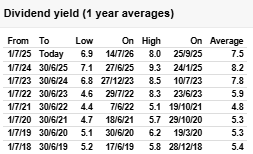
Dividend yield (1 year averages)
Leave a Reply