Investment Trust Dividends

Author: admin (Page 104 of 448)

AI Bubble ?

The AI Bubble Is Overblown (But This 10.6% Dividend Wins Either Way)

Michael Foster, Investment Strategist

Is 2026 going to be the year the AI “bubble” finally bursts?

Maybe my use of quotes there tipped you off to my true opinion: Worries about an AI bubble are vastly overdone.

And today we’re going to grab a 10.6%-paying closed-end fund (CEF) that wins either way: If I’m wrong and there is an AI bubble (that pops), cash will flow into it. If not, that’s fine: We’ll happily collect its growing 10.6% payout.

From Silicon Valley to Wall Street

Of course, the AI CEOs agree with me that there is no AI bubble: Sam Altman, Elon Musk and the heads of Microsoft (MSFT)Meta Platforms (META)Alphabet (GOOGL) and Oracle (ORCL) are all bullish and willing to spend trillions on the tech.

But another group also agrees that AI-bubble fears are overdone: a cadre of hedge funds and institutional investors that regularly hold tech titans like Musk, Zuckerberg and friends accountable—and know the “plumbing” of the tech world even better than the billionaire set does.

You can see what I’m talking about here in the fight between Elon Musk and institutional investors over the latter group short-selling stocks like Tesla (TSLA). Musk has complained about this repeatedly, but this short selling does give companies an incentive to do better, so their stocks don’t end up shorted. A kind of accountability emerges as a result.

Coatue and the Tech Hedge Fund World

All of this brings me to Coatue Management. It’s a tech hedge fund that began during the dot-com bubble and not only survived but grew from $45 million in assets at its launch to about $70 billion today.

Over that time, Coatue has shorted many tech stocks, so it has experience in keeping corporate managers from getting tied up in indulgent behaviors that lose money for investors. Coatue also has plenty of experience with bubbles.

So when Coatue dismisses talk of an AI bubble, we should listen. And that’s exactly what it did late last month, when it posted this chart:
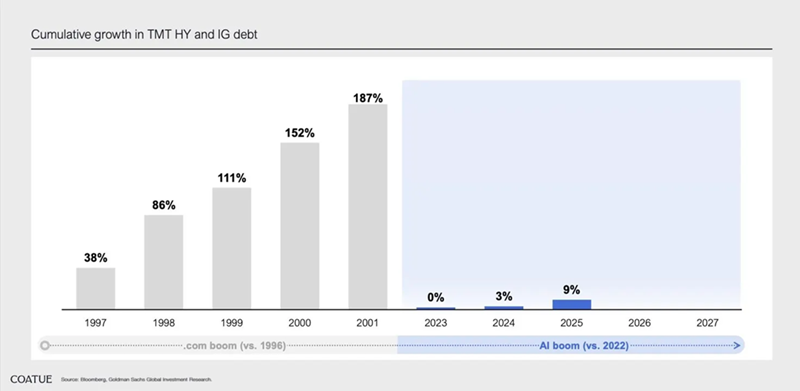
Here we see that over the last three years, there has been surprisingly little growth in the amount of money invested in corporate bonds issued to fund the tech, media and telecom sectors. (That’s the “TMT” in the title—those are the companies like Google, Microsoft, Meta and Oracle.)

The 0%, 3% and 9% gain in total debt issuances from 2023 to 2025 in these sectors suggest the bond market is not overly exposed to AI, and that there’s still a lot of room for debt to grow. Also, the comparison with the dot-com boom’s surging debt growth (on the left side of the chart) tells us the current situation is likely not a bubble—at least not yet.

To be sure, private debt and creative financing of some AI projects means a lot of AI borrowing isn’t shown on this chart. But that was also true of the dot-com era. And estimates of both again show we’re far from a bubble today.

But even if we were, the fact remains that corporate bonds are not overly exposed to AI. Moreover, bond holders tend to demand more discipline around costs.

The AI Hedge Move

If the corporate-bond market isn’t overly exposed to AI, then any volatility prompted by AI-bubble worries will likely drive cash from stocks to corporate bonds. That makes the corporate-bond market the perfect hedge for anyone worried about a selloff.

There’s just one thing: AI bubble fears are fading and have been since they peaked in November, at least according to internet search traffic.

AI Bubble Fears on the Backburner—for Now

I know what you’re thinking. “Markets are calm. AI bubble fears are fading, so why worry about this now?” The low fear means the market is not pricing in the potential of investors looking to hedge against AI in the future. That’s left corporate bonds cheaper than they should be.

In other words, we can buy into bonds now that the market isn’t hedging, wait for any stock volatility to boost demand for said bonds, then sell those bonds to investors.

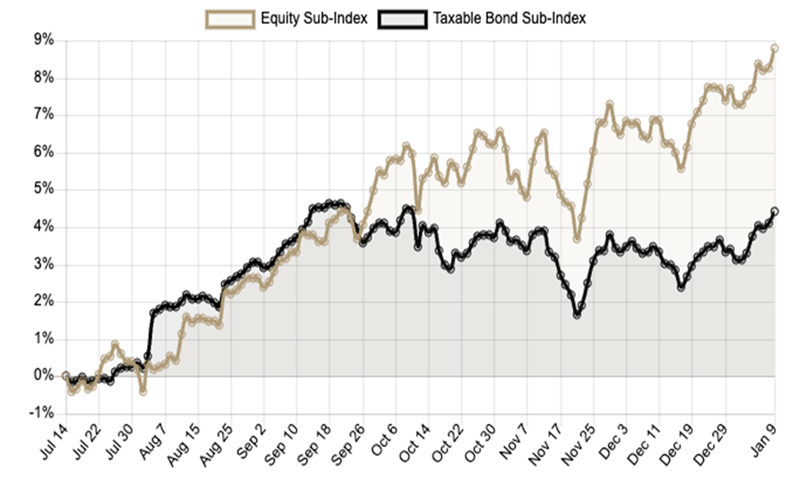
Take a look at this chart.

Bond CEF Underperformance Highlights Our Opportunity
Source: CEF Insider

I started 2025 bullish on corporate bond CEFs until September, when we sold three of these funds from our CEF Insider portfolio.

The reason is in the chart above: September was when CEF Insider’s corporate-bond-fund subindex (in black) began lagging its equity-fund subindex (in brown). So CEF Insider focused more on equity funds, which have outperformed since.

Now that bond funds are on sale, and stand to gain on any short-term worries over an AI bubble, it’s time to cycle back to some of them. But how? Through a CEF, of course!

Buying corporate bonds individually is difficult, and bond ETFs typically underperform. But a CEF like the BlackRock Corporate High Yield Fund (HYT) is a great way to buy in, both now and over the next few weeks.

HYT Clobbers Its Benchmark
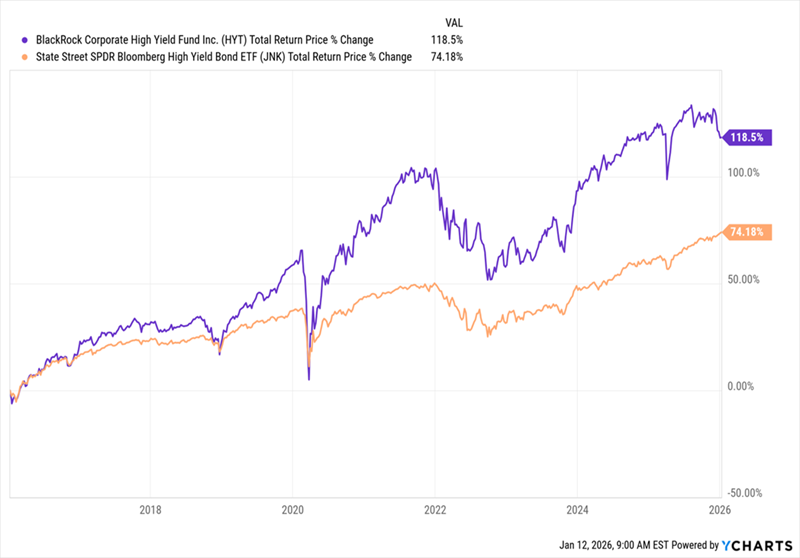
HYT yields 10.6% today and has raised its payout around 11% in the last decade. That’s in contrast to the corporate-bond benchmark SPDR Bloomberg High Yield Bond ETF (JNK), which has actually seen payouts fall a bit. Even better, HYT (in purple above) has outperformed JNK (in orange).

An even better reason to buy HYT is that today’s low bond demand means the CEF is especially cheap:

A Sudden Discount Appears
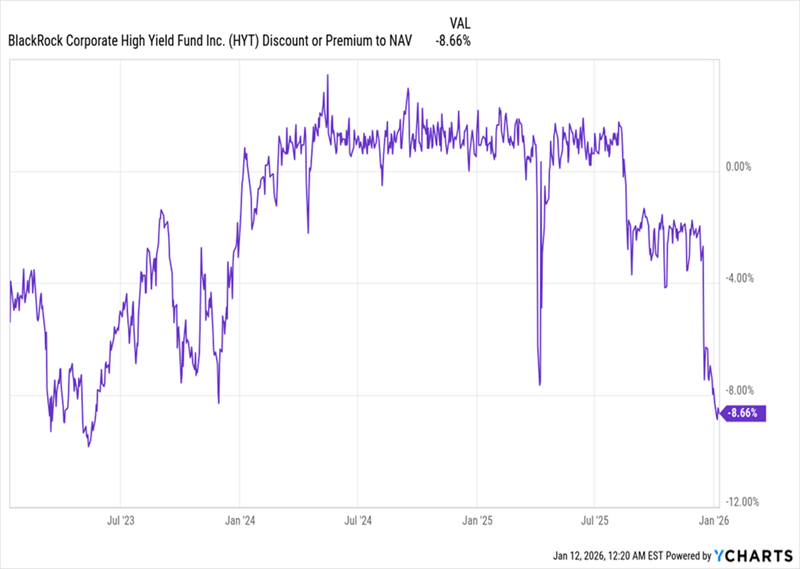
In the last six months, HYT’s discount to net asset value (NAV) has dropped to levels not seen since 2022 and 2023, after a long period of trading around par. This is an opportunity for us, putting short-term upside on the table if the fund’s discount evaporates again, like it did at the end of 2023.

With that in mind, buying HYT now is a solid value play, with demand for a hedge against an AI bubble waiting in the wings. And then, of course, there’s the 10.6% dividend.

Contrarian Investor

This Life-Changing 11%

Dividend Is About to

Drop Its Next Big Payout

Dear Reader,

Imagine what an 11% dividend could do for you in this volatile market…

That’s $917 every month on a $100k investment …

$22,000 in yearly dividends on $200k …

Invest half a million and you’re looking at $55,000 per year.

That’s a decent middle-class income in many parts of the US!

Got more? Great!

A $1-million buy-in would land you $110,000+ in dividends every single year!

You can see where this is going …

No more grinding down your principal by withdrawing some “magic” percentage year after year …

No more worrying about running out of money in retirement …

No more sleepless nights wondering which way the market winds will blow next.

Across the pond

From 12% Yields, 14% Gains to the Next Dividend Train Leaving the Station

Brett Owens, Chief Investment Strategist
Updated: January 21, 2026

When we buy dividend stocks, we’re looking for more than just the dividend. Price gains are preferred as well.

Greedy? Nah. Not if we time our buys right. It is possible to have our payouts and watch our stocks go up, too.

Two months ago, we recommended Annaly Capital (NLY) in these pages. Annaly dished a safe 12.9% dividend, well-funded by income. And the mortgage REIT (mREIT) had upside potential to boot.

Vanilla investors were worried about a recession, missing a time-tested maxim of income investing: As rates fall, REITs rise. This “rate-REIT seesaw” was about to tip and catapult Annaly’s price higher.

Here’s why. Annaly is a “financial landlord” which owns government-backed mortgages that rise in value as long-term rates fall. Those mortgage bonds that are essentially locked in at higher rates. So, as mortgage rates drop, the mREIT’s stash turns into a lucrative collector’s edition.

The stock was an interest rate trade rolled up in a tasty 12.9% payout wrapper. And rates drop anytime investors merely worry about a recession. It doesn’t matter if the slowdown comes to fruition or not!

I liked the trade so much that we doubled down a couple of weeks later, this time highlighting Annaly peer mREIT Dynex Capital (DX) as an additional play. Dynex paid 14.7% at the time and its management team was salivating over historically high mortgage spreads.

Since then, mortgage rates have dropped because the administration wants them lower to boost affordability and housing economic activity. With each tick down, Annaly and Dynex portfolio gained in value—exactly as we discussed.

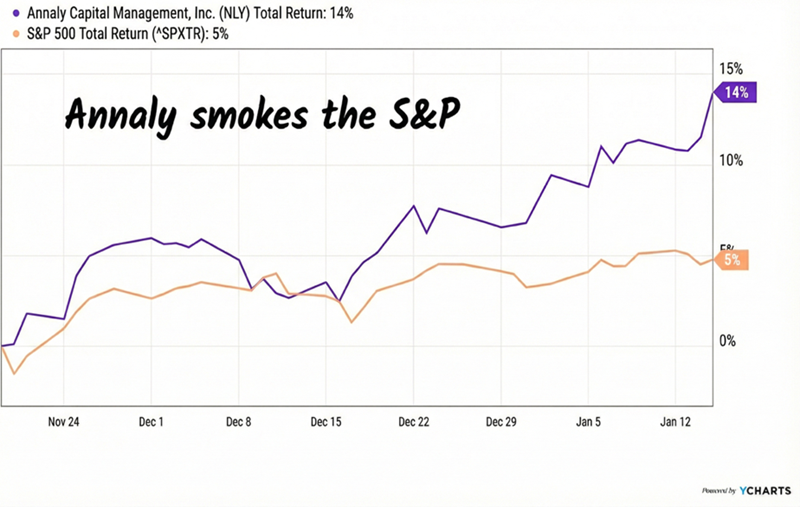
Annaly has returned 14% in two months (115% annualized!) since its feature here in Contrarian Outlook:

Annaly Rallies 14% in 2 Months

Dynex has been solid too, rewarding investors with 5% gains (56% annualized) since we doubled down on mREITs.

If you bought these stocks, congratulations! If you missed them, rather than “chase” while they’re hot, let’s talk about the next income play.

We hear about AI nonstop. Chips. Models. Software.

But AI’s real constraint isn’t code. It’s electricity.

Every prompt, model update, and shiny new app runs on racks of servers in data centers. They don’t sip power. They chug it, huffing and puffing 24/7. And demand is rising far faster than supply.

Now Washington is stepping in.

Last week, the Trump administration and several Northeastern governors agreed on an unprecedented plan: force tech giants to fund new power plants themselves. The idea is simple. If Amazon, Microsoft and Alphabet want massive data centers, they’ll sign 15-year contracts to pay for the electricity—whether they use it or not.

That does two critical things for investors.

First, it sends the message that regular Americans won’t foot the bill for AI’s power binge. Data centers usually mean higher rates for residential and business users around them.

Second—and more important for us—the power proposal would create long-term, contract-backed revenue for power generators, grid infrastructure and utilities. This is exactly the kind of predictable cash flow income investors crave.

The proposal would support roughly $15 billion in new power plant construction, backed by guaranteed revenue contracts. This means utilities can borrow (usually at favorable rates) to build the additional electricity generated to keep rates down. Which boosts utility profits.

Reaves Utility Income Fund (UTG) gives us a diversified basket of these power companies to play this, with a nice payout! UTG is a closed-end fund built for income investors like us. We buy it, collect a 6.3% dividend paid monthly and don’t need to sweat individual utility earnings events thanks to the diversified portfolio.

A Steady 6.3% Dividend, Paid Monthly

The timing for UTG is ideal from a rates standpoint, too. Its utility holdings are bond proxies, which means they trade inverse to interest rates. As rates continue to decline, this group will rally as investors move cash from money market funds into it, likely boosting UTG’s price, adding to the total return.

AI chips need juice. UTG owns the power brokers that provide it. It’s the next “dividend train” about to leave the station. Don’t miss it.

Comparison Share 2026

The Snowball has a comparison share VWRP, with the same starting date of the Snowball, current value £152,766.00

Not too shabby performance, so although the ETF pays a dividend, VWRP is an accumulation Trust but the dividend is minimal but could be an option for part of your portfolio when the market sells off.

The current comparison.

VWRP using the 4% rule would provide a ‘pension’ of £6,110

The Snowball returned income for 2025 of £11,914.00 and the 2026 target is 10k.

What’s your plan for retirement?

You’re ten years from retirement: how to retire comfortably

Story by Marc Shoffman

Retirement planning is important for all ages but as costs rise, having a financial strategy in place can be all the more important as you get closer to your golden years.

Ten years is typically the recommended time to start laying the groundwork for retirement and considering how you will access your hard-earned pension savings.Get Started Today - CPD Accredited Training

A retiree would need a gross income of £52,000 to obtain that figure, according to Fidelity International and the asset manager suggests this would require a pension pot of around £700,000 at age 65.

That figure may rise if you are 10 years off retiring but it is worth considering how much you need to save into a pension to get to this pot size in the first place.

According to Fidelity’s projections, someone starting at age 25 would need to save £459 each month to reach that goal by 65, based on annual returns of 5%.

A 35-year-old would need to save £841 monthly, while a 45-year-old would need £1,703 a month – almost four times the commitment required at 25.

Start at age 55 and you would need to contribute £4,508 per month

Ed Monk, associate director at Fidelity International, said: “Our research figures show that many people are taking positive steps towards improving their retirement prospects – whether that’s increasing contributions or planning to retire early. But intention alone isn’t enough.

“With the cost of retirement rising and expectations shifting, it’s vital that savers understand what kind of lifestyle their savings can realistically support.”

Those figures may look scary but there are steps you can take to stay on track for a comfortable retirement.

We share a retirement checklist for those planning to leave the workforce in 10 years’ time.

1. Check your state pension forecast

The full state pension – currently at £11,973 per year – will help cover some of your expenses but the amount may depend on the future of the triple lock.

You can check your state pension forecast at Gov.uk and see if there are any gaps in your national insurance record that you could fill by purchasing extra credits to boost your payments.Annuities For Income

However, the state pension age is on the rise and is set to increase from 66 to 67 in 2026 so you may have to wait longer for the money depending on when you retire

2. Get to grips with your pension pots

The 10-year point is a good time to consolidate your pension pot and boost your pension contributions to maximise those final years of saving.

Monk said: “The decade before retirement often coincides with peak earning years, use this time to maximise pension contributions and make full use of ISA allowances.

“Consolidating older pensions may also help reduce fees.”

Ross Lacey, director at Fairview Financial Planning says a good starting point is to track current expenditure, factoring in what will be different by the time you retire.

more

“The next steps are working out what you’ll need your pensions, investments and cash to look like, and to do for you, in order to make that plan viable

“Naturally, a professional financial planner does this with clients day-in-day-out.”

3. Reassess your investment strategy

Monk warns against de-risking too early but at some point you will need to consider moving out of risky equity products to get some security such as through bonds.

He suggests that five years is a good time to consider how you will access your funds such as through an annuitydrawdown or both, and whether you will still be able to afford your desired lifestyle.

Philly Ponniah, chartered wealth manager at Philly Financial, added: “This isn’t about moving everything into cash, but shifting the balance. You may want to reduce risk slightly while keeping enough growth assets to stay ahead of inflation.”

Once you are two years away from retirement, Monk suggests deciding how and when to draw different pots, and secure essential expenses with guaranteed income.

He said: “Check that your expected costs align with your lifestyle goals. Don’t forget to factor in inflation and any remaining debts.”

Many retirees follow the 4% withdrawal rule to ensure their pension pot doesn’t run out of cash.

At this point in your life, when you plan to retire in two years, Monk suggests updating your documents, such as reviewing your will, setting up powers of attorney and planning for long-term care.

4. Beyond pensions

A pension may be just one asset you use to fund your retirement and other routes include running a buy-to-let portfolio.

Kundan Bhaduri, from property developer The Kushman Group, suggests the 10-year point is a good time to stress test your property portfolio.

He said: “Will your rentals still deliver net income if rates stay high or tenants become scarce? Prioritise reducing debt on the properties you plan to hold.”

OR you could have a dividend re-investment plan and guess what you keep all your capital as well !!

Especially if you don’t think you will have a retirement pot of £700,000 at age 65.

On the seed capital of 100k it would provide a pension of 17%, the Snowball started on the 09/09/2022. The current target yield for this year is 10%.

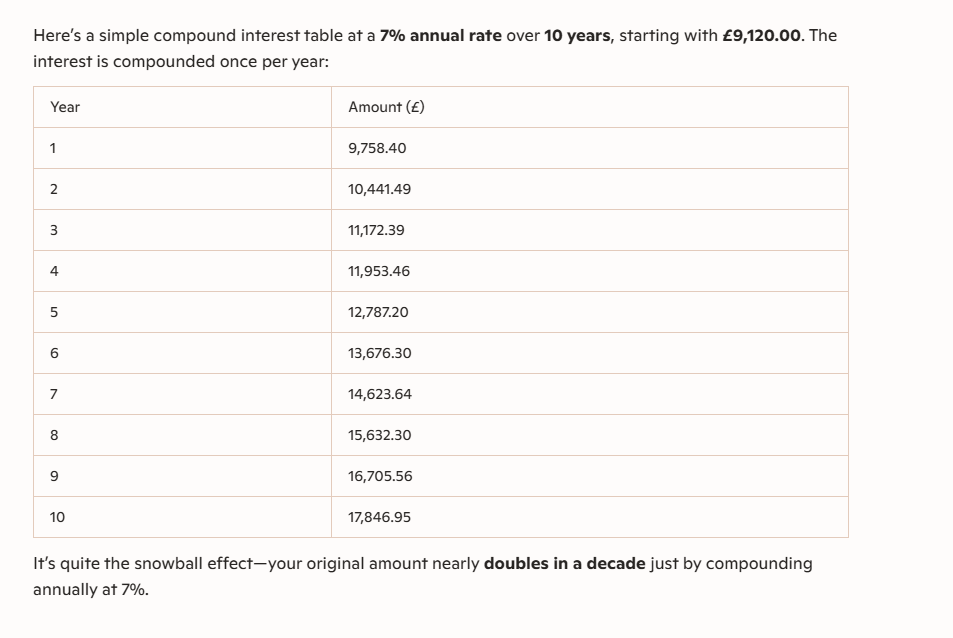
Remember with compound growth you stand to make more in the last few years of saving for retirement, than in all the early years.

Across the pond

This Cheap Dividend Just Jumped 13.6% (and We’re Buying)

Brett Owens, Chief Investment Strategist
Updated: January 20, 2026

As contrarians, we love it when a solid dividend grower drops on headline-driven fear.

And I see the recent decline in shares of Visa (V)—a Hidden Yields holding that hikes its payout double-digits yearly—as our next opportunity to cash in as the mainstream crowd frets.

You probably know that the stock fell on President Trump’s talk of limiting credit-card interest rates to 10% for one year. Investors, in typical “knee jerk” fashion, swiftly sold off this reliable payment toll booth.

That’s too bad for them—but it’s great for us. We now have a chance to buy a stout dividend grower at a bargain.

Visa’s Misunderstood Business Model

Investors often confuse Visa with a bank or other lender, but it’s not: Visa—and “duopoly” partner Mastercard (MA)—do not make loans to cardholders.

Instead, the company operates the payment “plumbing”:  Visa’s network is active in 220 countries and processed 329 billion transactions in the year ended September 30.

That’s why we recommend the stock in Hidden Yields: It collects a “toll” on each of those 329 billion (and growing) swipes, taps and clicks. It’s a resilient business if there ever was one. That alone helps hedge it from any fight over card rates.

Visa Is Already a Bargain

Rate-cap talk aside, this stock is already cheap by two key measures.

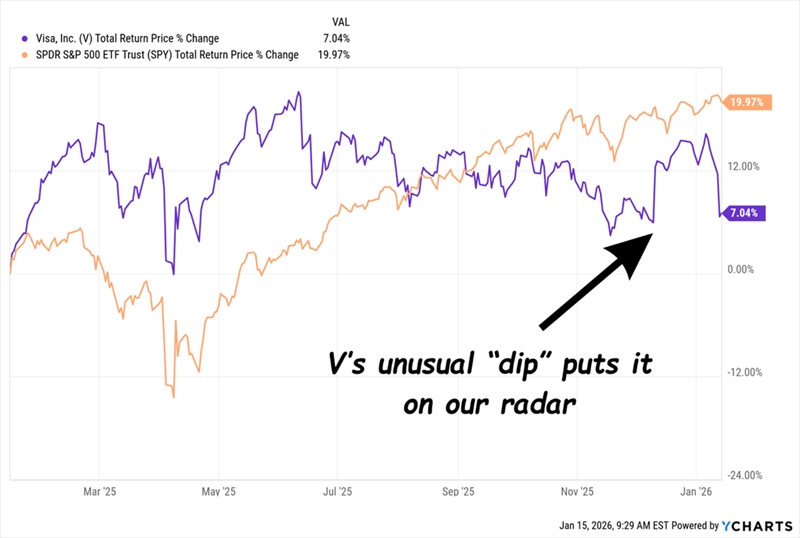
Bargain Signal #1: Visa Lags the Market

As you can see in purple above, Visa stock has lagged the S&P 500 in the past year, up just over 7%, compared to the market’s 20%. That’s unusual for a stock that’s outperformed the S&P 500 over the last decade.

This recent lag alone will make V stand out to investors—particularly those looking to rotate out of pricey tech stocks.

Then there’s the fact that the company’s share price is lagging its (surging!) dividend:

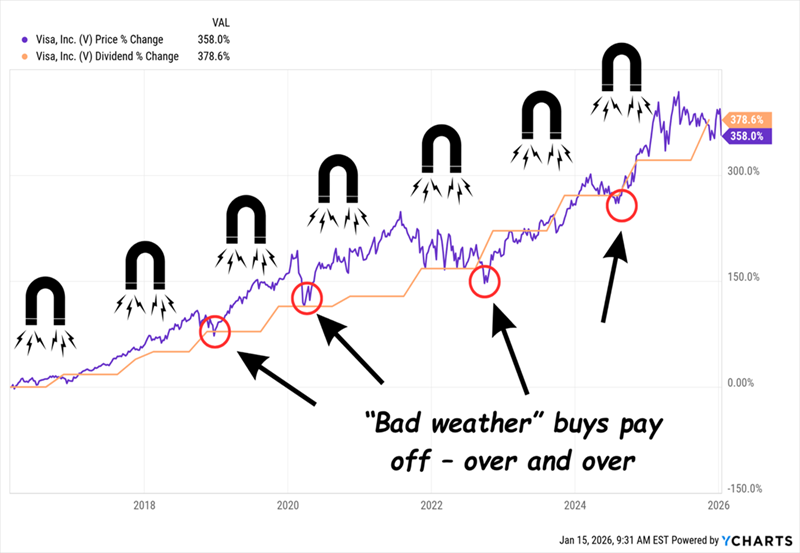
Bargain Signal #2: Visa Lags Its Payout Growth

The “Dividend Magnet” effect is clear here. Those big hikes—the last one, paid December 1, was 13.6%—are why Visa’s current yield is always around 0.5%. Every time management hikes the payout, investors bid up the stock in response.

You can also see that anyone who bought “bad weather moments” like this (times when Visa’s share price fell behind its dividend growth, in other words) did very well indeed.

And this stock still has plenty of upside, starting with American consumers.

Despite the gloomy headlines, they’re still spending. In November, retail sales jumped 0.6%, topping expectations. And even though it’s down 25% from a year ago, the University of Michigan’s consumer-sentiment indicator rose for the second straight month in January.

Both point to more transactions, and more “tolls,” for Visa in 2026.

“Stablecoins” the Next Big Growth Driver

As we discussed last month, Visa is also setting up to profit from the growth of “stablecoins.” Unlike other cryptocurrencies, stablecoins are pegged to the US dollar.

That’s key because it makes them ideal for international transactions, as they get around pokey, high-fee wire transfers.

By moving into stablecoins, Visa is essentially building the bridge between traditional payments and regulated stablecoin settlements in USD.

In December, the company launched stablecoin settlement in the US—this is behind-the-scenes, bank-to-bank money movement (subject to Visa’s fee, of course!) that happens after you tap your card.

This business is growing quickly. As of November 30, Visa’s monthly stablecoin settlement volume had already reached a $3.5 billion annualized run rate. The “digital dollar” pipes are live in the US. Now that they work, volume can scale fast. The tolls are now being collected.

As more banks and fintech companies issue stablecoins, this number will only grow. Think of a stablecoin like a casino chip, except it’s digital. Inside the “casino” (the stablecoin network), it behaves like money. It’s fast, secure and easy to move. But you still have to get in (swap dollars for stablecoins) and get out (convert back to bank money) when you want to spend in the normal world.

Visa is positioning itself as the cashier’s cage. It’s the bridge that makes these digital dollars usable everywhere.

Management Knows This Stock Is Cheap

Fear of a recession has kept Visa stock capped in the last year, and the latest selloff has added to our opportunity.

Management knows this. In 2025, they dropped $18.2 billion into share buybacks, and they’ve repurchased 9% of the company’s float in the last five years. Buybacks enhance earnings per share (by extension supporting the share price) and boost the dividend, leaving fewer shares on which Visa has to pay out.

A “Fortress” Balance Sheet 

Finally, even if Visa were a lender, its strong balance sheet, with $23.2 billion in cash and investments, just a tad shy of its $25.9-billion debt, gives it a strong cushion here.

So on a net-net basis, Visa is essentially debt-free. That gives it plenty of room to weather any storm and keep its dividends (and buybacks) growing. Let’s buy now, before the crowd figures out the true value of this payout-popping “toll booth.”

Top 10 funds and trusts in ISAs

Company NamePlace change 
1Artemis Global Income I AccUnchanged
2Royal London Short Term Money Mkt Y AccUnchanged
3Vanguard LifeStrategy 80% Equity A AccUp 2
4Seraphim Space Investment Trust Ord SSIT6.72%Down 1
5Vanguard FTSE Global All Cp Idx £ AccUp 4
6Scottish Mortgage Ord SMT0.76%Unchanged
7HSBC FTSE All-World Index C AccUp 3
8Greencoat UK Wind UKW1.44%Down 4
9BlackRock World Mining Trust Ord BRWM0.21%New
10Artemis SmartGARP European Eq I Acc GBPDown 2

BlackRock World Mining Trust Ord  BRWM

has returned to our ISA bestseller list as geopolitical tensions spur the gold price to a series of fresh highs.

With President Donald Trump agitating further to take over Greenland and threatening a fresh round of tariffs in the process, the gold price exceeded $4,690 an ounce this morning, a new record. Gold, silver and copper had already hit fresh highs in the last week.

Investors have duly piled into the BlackRock trust, which had sat in 14th place the week before and has almost 40% of its portfolio in the shares of mining companies focused on gold. The fund also has a 19% exposure to copper but a minimal allocation to the silver sector. Jupiter Gold & Silver I GBP Acc sits just outside this week’s table in 11th place.

On a related note, Seraphim Space Investment Trust Ord  SSIT

whose holdings are benefiting from a rise in defence spending and whose shares traded on a premium of around 22% to net asset value on the back of strong demand, dropped down slightly to fourth place.

Artemis Global Income I Acc spends its second week in the top spot, with Royal London Short Term Money Mkt Y Acc again just below it.

The usual host of global tracker funds appear in the table, as does investment trust stalwart Scottish Mortgage Ord  SMT

 and high-yielding renewables play Greencoat UK Wind UKW

We also still see Artemis SmartGARP European Eq I Acc GBP in the list.

How to turn £120K Traitors’ prize money into £2.1m

If you walked away with the maximum jackpot from the hit TV show, would you spend, save or invest it? We uncloak some flabbergasting figures and a valuable shield.

20th January 2026

by Nina Kelly from interactive investor

Traitors red cloaked figure

Imagine being driven away victorious from the Traitors’ castle in the Scottish Highlands with the £120,000 prize pot in your hands. No more Missions or dark glamour from the fantastically fringed Claudia Winkleman, and an end to lying and treachery (maybe).

Bar any pressing short-term needs, the winner might splash out on holidays, or perhaps exercise some restraint and save it. How many prizewinners would prove to be a 100% Investing Faithfuls though and put it all into the stock market?

    Hard data demonstrates that this is the shrewdest move, as despite the inevitable bad years for shares, history tells us that investing over the long term outstrips inflation and returns on cash savings, meaning greater wealth. Despite the evidence, there are still plenty of Britons holding long-term savings in cash. In the words of Winkleman, “what are they not seeing” about the value of investing?

    So, while no one can predict what future returns from the stock market will be, our calculations reveal how investing the Traitors’ prize pot of £120,000 over 10 years could see it more than quadruple in size, leaving the winner with more than £500,000.

    Let’s gather at the investing round table for some number crunching…

    In the round: the numbers

    BlackRock, the world’s largest asset manager, has just published a list of average annual returns for different asset classes over the past 10 years, and an annualised return of 14.5% for US equities looks pretty exceptional.

    According to consultancy firm McKinsey, the S&P 500 has delivered annualised total returns of a still impressive 9% over 25 years (1996 to 2022), but we’re using BlackRock’s figures to generate potential returns for all assets over the next 10 years. However, it’s worth reminding readers that these are historic returns, and markets may not replicate this boom period for stock markets and many other assets over the next decade. 

    Why 10 years? Well, investing is very much a long-term game since the stock market is vulnerable to periods of volatility, and leaving your money to compound (where investment returns generate their own returns) for 10 years, means there’s plenty of time for it to grow.

    So, according to our calculations, if you invested the £120,000 prize pot in US equities for 10 years, it could potentially grow to more than four times the original sum, hitting £507,147. That’s quite a nest egg for a little delayed gratification.

    In comparison, £120,000 kept in cash for the next 10 years would see it grow by only £29,499, reaching a total of £149,499.

    Compounding in plain sight

    Asset classAnnualised return over 10 years from 2016-2025Projected potential sum after investing £120,000 for 10 years
    US equities14.50%£507,147
    FTSE 1008.83%*£289,240
    European equities8.50%£279,917
    Commodities7.40%£250,941
    High-yield bonds5.70%£211,905
    Cash2.20%£149,499

    Source: BlackRock Asset Return Map. Annual index total returns (income or dividends reinvested) in US dollars. *Total returns data from Morningstar and in GBP. Calculations assume annualised returns remain consistent for the next 10 years. Past performance is not a guide to future performance. Costs have not been taken into consideration.

    Keep more of the Traitors’ money with this tax shield

    If you opt to keep your £120,000 Traitors’ prize in savings accounts, you’d pay income tax on your interest. If you are a basic-rate taxpayer (paying 20% income tax), you have a personal savings allowance of £1,000, meaning you can earn £1,000 of interest before paying any tax on it. For higher-rate taxpayers (40% income tax), the sum falls to £500. So, if your Traitors’ winnings are in savings accounts, you’re going to lose a big chunk to the taxman. Ouch.

    ISAs, whether cash or the stocks & shares version, would keep the taxman’s hands off your windfall, but each adult only has a £20,000 annual allowance, meaning you’d still need an alternative home for a big chunk of your winnings.

    However, providing you can manage without the money until your late 50s, you could invest it in a self-invested personal pension (SIPP). Current rules allow you to access a SIPP at 55, rising to 57 in 2028. Investments in a SIPP are sheltered from tax as they grow, just like an ISA. With a SIPP, you have the freedom to choose your own investments, and you can open one alongside a workplace pension.

    You can pay the lower of £60,000 or 100% of earnings a year into a pension, but then there’s carry forward rules to potentially take advantage of too. These allow you to utilise any unused pension allowance from the previous three tax years. So, depending on your level of pension contributions over the past few years, you could potentially shovel the remaining £60,000 into your SIPP too. In addition, pension contributions attract upfront tax relief at the individual’s marginal rate, so your winnings would get an additional boost.

    If you did put the money into a pension, depending on your age, it’s possible that the money would be invested for much longer than 10 years.

    Here’s the projected returns across different assets classes over 20 years:

    Asset classAnnualised return over 10 years from 2016-2025Projected potential sum after investing £120,000 for 20 years
    US equities14.50%£2,143,318
    FTSE 1008.83%*£697,168
    European equities8.50%£652,949
    Commodities7.40%£524,763
    High-yield bonds5.70%£374,200
    Cash2.20%£186,249

    Source: BlackRock Asset Return Map. Annual index total returns (income or dividends reinvested) in US dollars. *Total returns data from Morningstar and in GBP. Calculations assume annualised returns remain consistent for the next 20 years. Past performance is not a guide to future performance. Costs have not been taken into consideration.

    Banish the cash account?

    The point of all this Traitors’ fantasizing has been to illustrate the value of investing over keeping your money in cash savings. However, it’s not about completely banishing cash. Sometimes, keeping money in cash makes sense, for instance as an emergency fund – typically three to six months’ salary – to cover problems such as broken white goods.

    While the sum in this piece happens to be £120,000, you don’t need such a large amount – or anything like it – to start investing.

    If you’re new to investing or perhaps haven’t started yet, you may fear losing hard-won savings, so-called loss aversion. But there are sources of information to help you:

    But, even when global markets fell to their lowest point during the Covid pandemic in March 2020, I didn’t lose all my money (possibly the ultimate fear for those still in cash), and by November, my investment (in a diversified low-cost fund) had recovered.

    This year, it’ll be seven years since I started investing. I’m now a dyed-in-the-wool Investing Faithful.

    Warren Buffett

    The emotional benefits of dividend re-investment.
    In fact, with this investment strategy you can actually welcome falling share prices.

    There seems to be some perverse human characteristic that likes to make easy things difficult.
    WB

    Warren Buffett just collected another $204 million from Coca-Cola — a reminder that some of the most powerful returns on Wall Street come from patience, dividends, and owning the right business for decades.

    Here’s how that payout breaks down, why Coca-Cola keeps funding Berkshire’s war chest, and what this kind of compounding looks like in real dollars.

    Coca-Cola has been one of Warren Buffett’s signature bets since the late 1980s, and it’s still paying like clockwork.

    Berkshire Hathaway owns 400 million shares, and Coca-Cola’s $0.51 quarterly dividend just delivered a $204 million payout. Sometimes the biggest wins aren’t dramatic. They’re automatic.

    Coca-Cola dividends now bring Berkshire over $800 million a year, far beyond the original $1.3 billion cost. Coca-Cola may have its “secret” headlines, but Buffett only cares about one secret: the dividend arriving every quarter.

    Why Coca-Cola Still Matters
    Coca-Cola isn’t just a dividend machine, it’s still a modern profit engine.

    With a market cap around $289 billion and gross margins above 61%, the company keeps doing what it does best: defend pricing power, stay everywhere, and find small ways to sell more. Mini cans. Convenience-store pushes. Product tweaks that look boring up close, but scale fast when you’re global.

    That durability is why some Wall Street analysts still see upside, with price targets reaching $80. This implies that Coca-Cola is still being priced as a cash machine with staying power. And for Berkshire, that’s the whole point. No hype. No chasing trends. Just owning a durable cash machine, year after year, and letting dividends and compounding do the heavy lifting.

    This is where most investors get caught. They chase the hot stock, the pop, the quick win, and end up trading emotions instead of building wealth.

    Buffett plays a different game. He doesn’t need to react to every headline. He owns businesses that pay him, then lets time and dividends do the work.

    The difference isn’t access to information. It’s behavior, and the traders who last tend to rely on rules, not emotion, like stop-loss and take-profit orders

    Why This Dividend Story Matters
    That $204 million payout is more than a headline number. It’s what long-term investing looks like when the business is durable and the cash flow is real.

    While plenty of investors chase the next spike, Buffett’s Coca-Cola stake shows the quieter path: own a high-quality company, let the dividend stack up, and give compounding time to do its job. You don’t need to love soda to take the point, you just need to respect what consistent payouts can build over decades.

    If you want to be a Warren Buffett mini me.

    The 2026 Snowball

    The current first quarter income estimate is £3,435.00.

    The Snowball gathered some dividends at the end of last year, hoping for a Santa Rally and was lucky not only with the earned dividends but also with some capital gains.

    Do not scale to reach a year end figure but it’s a solid foundation for this years target of £10k.

    Targets are for beating but that is not a given.

    « Older posts Newer posts »

    © 2026 Passive Income Live

    Theme by Anders NorenUp ↑