Passive Income Live

Investment Trust Dividends

Page 241 of 437

Warren Buffett mini-me

Warren Buffett Could Make Over $3 Billion in Dividend Income in 2025 From These 5 Stocks

By Keith Speights – Jan 25, 2025

Key Points

  • Berkshire’s top income producers this year will almost certainly be Bank of America, Coca-Cola, and Chevron.
  • American Express and Apple should also generate significant dividend income for Buffett’s company.

Chevron

Chevron Stock Quote

The late Senator Everett Dirksen once reportedly said, “A billion here, a billion there, and pretty soon you’re talking about real money.” With that quote in mind, Warren Buffett’s dividend income this year will be real money.

Technically, the dividend income will belong to Berkshire Hathaway. But for many, Buffett and Berkshire are practically synonymous. And they could make over $3 billion in dividend income in 2025 from these five stocks.

Bank of America

Buffett seems to have soured somewhat on Bank of America (BAC 1.34%). He significantly reduced Berkshire’s stake in the big bank last year. However, Bank of America (BofA) still contributes a lot of cash to the conglomerate’s coffers.

NYSE: BAC

Bank of America

As of Sept. 30, 2024, Berkshire owned 766,305,462 shares of BofA. With the company’s forward dividend of $1.04, that translates to nearly $797 million in dividend income this year. Of course, if Buffett sells more of this stock, the amount of dividends received will be lower.

  1. The Coca-Cola Company

The Coca-Cola Company (KO 0.38%) is one of Buffett’s “forever stocks.” He’s held it the longest of any other stock in Berkshire’s portfolio. In his 2022 letter to Berkshire Hathaway shareholders, Buffett wrote, “The cash dividend we received from Coke in 1994 was $75 million. By 2022, the dividend had increased to $704 million.” That total should be even greater this year.

Berkshire has owned 400 million shares of Coca-Cola for a long time. Coke pays a forward dividend of $1.94. If Buffett doesn’t sell any shares (which seems to be a safe assumption), Berkshire will rake in at least $776 million in dividend income from the big food and beverage company this year. The amount will likely be higher, though. Coca-Cola is a Dividend King with 62 consecutive years of dividend increases. I fully expect the company will keep that streak going in 2025.

  1. Chevron

Chevron (CVX -0.71%) is a more recent addition to Berkshire’s portfolio. Buffett initiated a stake in the giant oil and gas producer in 2020 when its shares were beaten down due to the impact of the COVID-19 pandemic.

NYSE: CVX

Chevron

Berkshire owned 118,610,534 shares of Chevron at the end of the third quarter of 2024. With the company’s dividend of $6.52, the conglomerate should make at least $773.3 million in dividend income this year. Again, though, the actual total will likely be higher. Chevron has increased its dividend for 37 consecutive years and could boost its payout soon.

  1. American Express

Buffett wrote to Berkshire Hathaway shareholders last year that American Express (AXP -0.12%) would “almost certainly” increase its dividends in 2024 by around 16%. He was close. Amex increased its dividend payout by nearly 17%.

The legendary investor also wrote that Berkshire would “most certainly leave our holdings untouched throughout the year.” I suspect it will do the same in 2025. If so, Berkshire’s 151,610,700 shares of American Express with the financial services company’s dividend of $2.80 will add up to at least $424.5 million in dividend income this year.

  1. Apple

Apple (AAPL 0.32%) isn’t the apple of Buffett’s eye that it once was. His position in the consumer tech giant is much lower now than it was a couple of years ago. However, Apple remains Berkshire’s largest holding. It’s also still an important source of dividend income.

NASDAQ: AAPL

Apple

The math with Apple is easy. Berkshire owned 300 million shares as of Sept. 30, 2024. With a dividend of $1 per share, that translates to $300 million in dividend income for Buffett and his company in 2025. This amount will change if Apple increases its dividend (which is likely) or Buffett sells more of the stock (which could happen).

Which is the best stock of the five for income investors?

The expected dividend income for Buffett and Berkshire from these five stocks in 2025 totals $3.07 billion. Which is the best pick for income investors?

I think income investors who aren’t billionaires will find several of Buffett’s major income producers attractive picks. Coca-Cola offers an especially impressive dividend track record along with a solid forward dividend yield of 3.14%.

However, my vote goes to Chevron as the best stock of the five for income investors. The oil and gas company has the highest dividend yield of the group (4.17%). It has also reliably increased its dividend.

£££££££££££££££

Remember compounding dividends takes a while to start to build but the sooner you start the nearer you will be to your finish.

TRIG

The Renewables Infrastructure Group Limited

Interim Dividend

The Renewables Infrastructure Group Limited (the “Company”) is pleased to announce the fourth quarterly interim dividend in respect of the three month period to 31 December 2024 of 1.8675 pence per ordinary share (the “Q4 Dividend”).  The shares will go ex-dividend on 13 February 2025 and the Q4 Dividend will be paid on 31 March 2025 to shareholders on the register as at the close of business on 14 February 2025.

In accordance with the terms and conditions of the Scrip Dividend Alternative and the Directors’ power to cancel the Scrip Dividend Alternative where a change in market conditions might, in the reasonable opinion of the Directors, render the Scrip Dividend Alternative materially detrimental to those Shareholders electing for it, the Board has decided to cancel the Scrip Dividend Alternative in respect of the Q4 Dividend due to the Company’s Ordinary Shares currently trading at a larger than  10% discount to the published Net Asset Value (“NAV”). Accordingly, Shareholders will receive the Q4 Dividend in cash and, should they so wish, can choose to apply the cash dividend in acquiring Ordinary Shares in the secondary market.

 5 ideas for passive income while I sleep

Young black colleagues high-fiving each other at work

Young black colleagues high-fiving each other at work© Provided by The Motley Fool

Cliff D’Arcy

As I get older, I get very enthusiastic about passive income — the earnings I accrue outside of paid work.

I have many options for grabbing these earnings, but find some rather unappealing. Here are five leading forms of extra income that I’m currently considering.

  1. Savings interest

Perhaps the most straightforward and widely used passive income. I simply deposit money in a high-yield savings accounts and collect the interest. With the Bank of England’s base rate at 5.25%, table-topping savings accounts pay 5%+ a year, before tax.

However, I’ve met very few people who got rich solely by keeping their money in banks. Also, the taxman takes a chunk of my savings interest, so I’m not mad keen on this route.

  1. Bonds

My second option could be to buy bonds — IOUs issued by governments, companies and other organisations. These pay me interest in the form of ‘coupons’, then later return my initial investment when they mature.

However, some bonds (say UK Gilts and US Treasurys) are safer than others, while struggling companies sometimes default on their bond payments. Perhaps I’d be better off investing in a broad-based, diversified bond fund ? This is something I’m actively considering right now.

  1. Property

My third choice might be to become a buy-to-let (BTL) landlord, buying houses or flats and then renting them out to tenants. In my experience as a former tenant, this can be hard work at times. Hence, I’m reluctant to become a ‘BTL baron’ later in life.

An easier alternative is the government’s ‘Rent a Room Scheme’, which lets me earn up to £7,500 tax-free each tax year by letting out a room in my own home. However, I’m sure my wife wouldn’t agree to this, so I’ll also reject this.

  1. Pensions

In 37 years of work, I have amassed a jumbled collection of various personal, company and state pensions. As I have reached 55, I could access these pots for income or lump sums. But I think it’s too early for me to do this yet, so I will leave them alone for now.

  1. Share dividends

Cash dividends from stocks and shares are by far my favourite form of passive income. Though these payments are not guaranteed, dividends are my family’s second-largest income (after paid work).

For example, my wife and I own shares in FTSE 100 firm Legal & General Group (LSE: LGEN) as part of our family portfolio. While previously working in the insurance and investment world for many years, I became an admirer of this long-established company, its sound business model and solid management.

At the current share price of 242.8p, L&G is valued at £14.5bn, making it a Footsie stalwart. However, its shares are down 2.5% over one year and 12.4% over five, excluding dividends.

Share-price falls have lifted L&G’s dividend yield to a tidy 8.4% a year — almost twice the FTSE 100’s yearly cash yield of 4%. This high (and steadily rising) income is my #1 reason for owning this stock.

Then again, with £1.3trn of client assets under management, L&G shares can and do fall when share prices drop, as happened in Covid-hit 2020. And like all stock, its price can be volatile. Still, we are holding these shares for the long run!

The post 5 ideas for passive income while I sleep appeared first on The Motley Fool UK.

Do you like the idea of dividend income?

The prospect of investing in a company just once, then sitting back and watching as it potentially pays a dividend out over and over?

If you’re excited by the thought of regular passive income payments, as well as the potential for significant growth on your initial investment…

Cliff D’Arcy has an economic interest in Legal & General Group shares. The Motley Fool UK has no position in any of the shares mentioned. Views expressed on the companies mentioned in this article are those of the writer and therefore may differ from the official recommendations we make in our subscription services such as Share Advisor, Hidden Winners and Pro. Here at The Motley Fool we believe that considering a diverse range of insights makes us better investors.

££££££££££££££££

Warren Buffett’s famous quote is: “If you don’t find a way to make money while you sleep, you will work until you die.” This emphasizes the importance of creating passive income streams to achieve financial freedom. Buffett believes that investing in assets that generate income on their own, such as stocks or real estate, is the key to building wealth over time.

Property, if you don’t have enough funds to for a buy to let property deposit another alternative is to buy Investment Trust REIT’s, with less hassle but more risk.

One Trust that owned rental properties was PRS Reit, which is up for sale but still trades at a discount to NAV but as always best to DYOR.

LWDB: In search of the holy grail

A simple strategy would be to re-invest your dividends back into the Trust.

When you have achieved the holy grail of investing in that you double your money, you take out your stake and re-invest in another high yielder.

I will use NESF as the working example but as always best to DYOR, a blended yield of 17%, an investment of 10k would be yielding 17% on your initial stake, (£1,700 plus) which you should receive as long as the Trusts stay in business or don’t change their dividend policy. All you need to do to monitor your Snowball, is to check the latest dividend announcement from the company. There are various web sites that allow you to do this, if you don’t have your own share monitor.

Divided Hero’s

You do not need to take big risks to secure a healthy retirement.

If you had done your own research and bought when everyone else was selling, the worst that could have happened was that you earned enhanced dividends to re-invest at great prices. The next market crash is just around the next corner, it’s a given, although when the corner will be is the unknown. One trading strategy would be invest part of your dividend stream in a cash fund or a gilt, so u have funds when it happens. You may not buy at the bottom but if you are happy with the yield, it lessens the risk.

Note 8 funds have nearly achieved the holy grail of investing, where you can take out your stake, have an investment that pays you a dividend at zero, zilch, cost.

Remember compound interest takes time to build, you should make more money in you last few years of investing than in all the early years, that’s why life-styling is such a bad idea.

The worst aspect of a dividend investment plan is that you start to wish you life away as you await the next dividend to re-invest it, of course that aspect disappears when you start to spend your hard earned.

Stick to your task until it sticks to you.

NESF

NextEnergy Solar Fund Limited

(“NESF” or the “Company”)

Third Interim Dividend Declaration

NextEnergy Solar Fund, a leading specialist investor in solar energy and energy storage, is pleased to announce its third interim dividend of 2.11 pence per Ordinary Share for the quarter ended 31 December 2024.

The third interim dividend of 2.11 pence per Ordinary Share will be paid on 31 March 2025 to Ordinary Shareholders on the register as at the close of business on 14 February 2025.  The ex-dividend date is 13 February 2025.

The Board is pleased to reaffirm its full-year dividend target guidance of 8.43 pence per Ordinary Share for the financial year ending 31 March 2025, where the full-year dividend target is forecast to be covered in a range of 1.1x – 1.3x by earnings post-debt amortisation. 

Co pilot

Here are some of the top dividend investment trusts based on their yields and popularity:

  1. Crystal Amber Fund – Yield: 70.31%
  2. Fair Oaks Income – Yield: 18.43%
  3. Honeycomb Pollen Street – Yield: 14.19%
  4. Greencoat UK Wind – Yield: 7.9%
  5. Scottish Mortgage (LSE:SMT) – Yield: 7.9%
  6. JPMorgan Global Growth & Income (LSE:JGGI) – Yield: 7.9%
  7. Alliance Witan (LSE:ALW) – Yield: 7.9%
  8. City of London (LSE:CTY) – Yield: 7.9%
  9. Alliance Trust (LSE:ATST) – Yield: 7.9%
  10. F&C Investment Trust (LSE:FCIT) – Yield: 7.9%

£££££££££££££

Remember always to DYOR as most of the above yields are wrong,

SMT dividend for 23/24 was 4.24p a yield of around 0.5%.

AIRE

Alternative Income REIT PLC

(the “Company” or “Group” or “AIRE“)

NET ASSET VALUE, DIVIDEND DECLARATION AND PORTFOLIO VALUATION UPDATE

TO 31 DECEMBER 2024

Declares an interim dividend of 1.55 pence per share (“pps”) for the quarter ended 31 December 2024

The target annual dividend remains at 6.2pps for the year ending 30 June 2025, an increase of 5.1% on the prior year’s target of 5.9pps

Dividend cover of 110.3% for the quarter

Unaudited NAV total return for the quarter of 2.7%

Resilient portfolio well-placed to continue to provide secure, index-linked income with the potential for capital growth

The Board of Directors of Alternative Income REIT PLC (ticker: AIRE), the owner of a diversified portfolio of UK commercial property assets, predominantly let on long leases with index-linked rent reviews, provides a trading and business update and declares an interim dividend for the quarter ended 31 December 2024.

Simon Bennett, Non-Executive Chair of Alternative Income REIT plc, comments:

“The Company continues to pay a fully covered dividend in line with the 2025 annual dividend target of 6.2pps†. The dividend cover for the quarter was 110.3%. The annual dividend target of 6.2pps is an increase of 5.1% over the previous year’s dividend of 5.9pps. The target is subject to the continued collection of rent from the Group’s portfolio as it falls due.

At 31 December 2024, the Group’s unaudited NAV was £66.0 million, 81.9pps, representing a 0.8% increase over the previous quarter. When combined with the 1.55pps dividend paid in the quarter, this produces an unaudited NAV total return for the quarter of 2.7%.

The Group’s portfolio remains relatively insulated from market fluctuations, benefiting from being 100% let, achieving 100% collection of rent due, and a 91.5% index-linked rent review profile.

The Group’s track record demonstrates a secure and increasing income stream. The valuation of the portfolio has risen this quarter by £0.6 million or 1% on a like-for-like basis. The Group continues to benefit from low borrowing costs until October 2025, when the current Canada Life senior loan matures. The Board has appointed a debt adviser to assist with the refinancing and is confident that the requisite financing will be achieved prior to October 2025,albeit at an increased interest rate as compared to the current rate. I look forward to reporting on AIRE’s continued progress in the coming months.”

A Dividend Hero

You do not need to take big risks to increase your Snowball if you do some basic research to improve your knowledge.

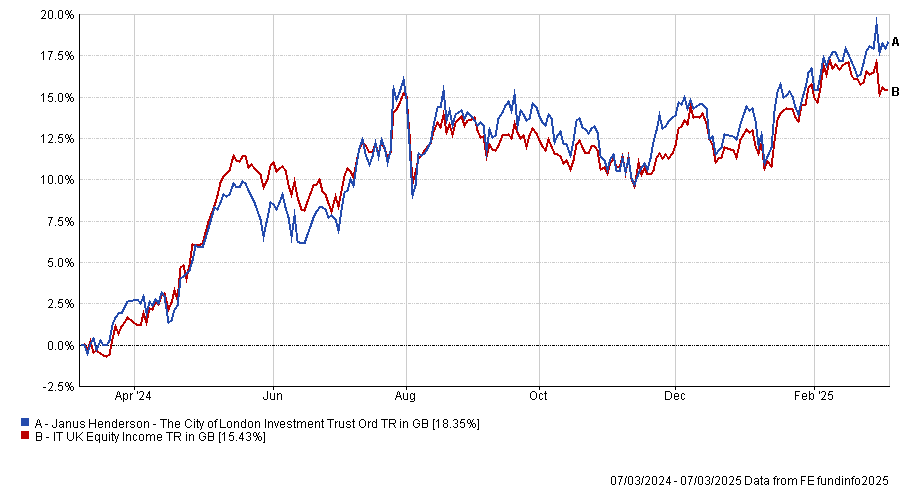
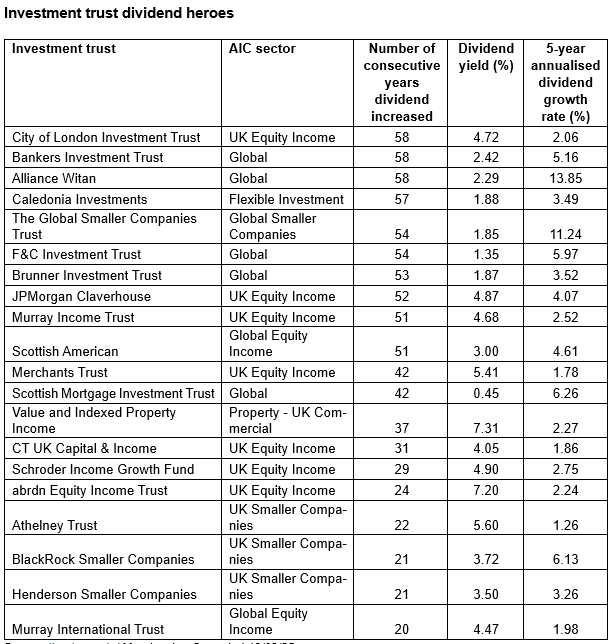
You knew that CTY was a dividend hero, having paid an increased or level dividend for around 50 years.

You watched it fall and waited until it started to go back up and you bought at 322p, the plan being to re-invest the dividend.

You are well on the way of achieving the holy grail of investing, where you take out your stake and earn a dividend on a Trust that cost you nothing, zilch,zero.

You then buy another Trust and try do it all over again. GRS.

The buying yield was around 6%, the current yield 4.75%.

Be ready for the next market crash.

« Older posts Newer posts »

© 2026 Passive Income Live

Theme by Anders NorenUp ↑