Dividend Powerhouses: Top 5 Stocks With Yields Over 4%

Jun. 28, 2025 CTRE, ALEX, ADC, BMY, PLOW
Steven Cress, Quant Team
SA Quant Strategist
Summary
- The S&P 500 has staged a remarkable rebound from near bear market lows in April to a new record Friday.
- Two Fed governors have called for an early rate cut due to encouraging inflation data. Fed Chair Jerome Powell has advocated for a wait-and-see approach.
- The current market enthusiasm faces multiple risks, including upcoming tariff deadlines and Q2 earnings, which may reveal tariff impacts that could reignite market turbulence.
- Given the potential for renewed volatility, investors should consider a barbell approach, pairing growth assets with stable dividend-paying stocks.
- Using the Seeking Alpha Stock Screener, I’ve identified five “Strong Buy” stocks with solid Quant factor and dividend grades, averaging a FWD yield greater than 4%.

A New High for the S&P 500
Market activity in early summer has been a tug of war between optimism and uncertainty. In May 2025, markets staged an impressive comeback following the April sell-off. The S&P 500 posted its strongest monthly gain since late 2023, driven by strong tech earnings, easing trade tensions, and improving inflation data. However, volatility soon followed.
The S&P 500 experienced consecutive losses (June 18 and 20) as escalating conflict between Israel and Iran drove oil prices to their highest point since January. The market has since recovered in the wake of a ceasefire, and the S&P 500 reached a new high after being on the cusp of a bear market just two months ago.
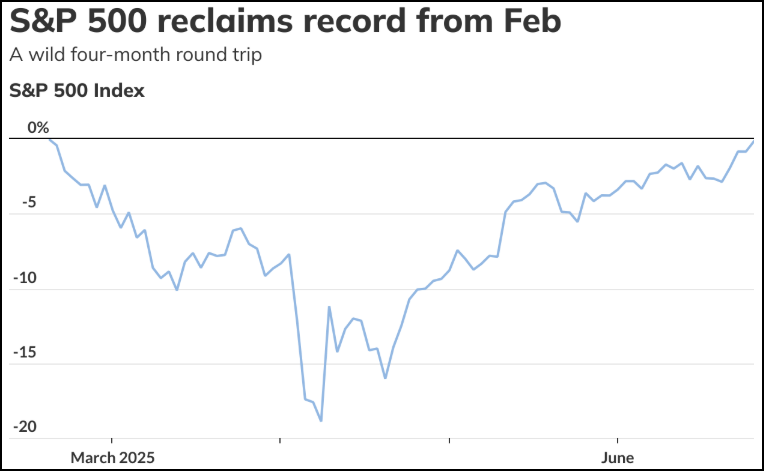
Key factors driving the rebound include President Donald Trump reaching a trade truce with China and resilient economic data. However, the rapid turnaround has also perplexed many investors, given the number of catalysts for volatility on the horizon.
Rate Cut Speculation
Another push-pull factor for equity markets has been chatter around rate cut expectations. Both Federal Reserve Governors Michelle Bowman and Christopher Waller suggested that the Fed could consider cutting rates as soon as July. Bowman and Waller cited encouraging inflation data, the minimal impact of tariffs, and growing concerns about potential weakness in the labor market as justification for the cut. However, earlier this week, Fed Chair Jerome Powell countered that the central bank still needs more time to assess the impact of new tariffs on inflation before considering any rate reductions.
21% of Traders are Pricing in a Rate Cut for July
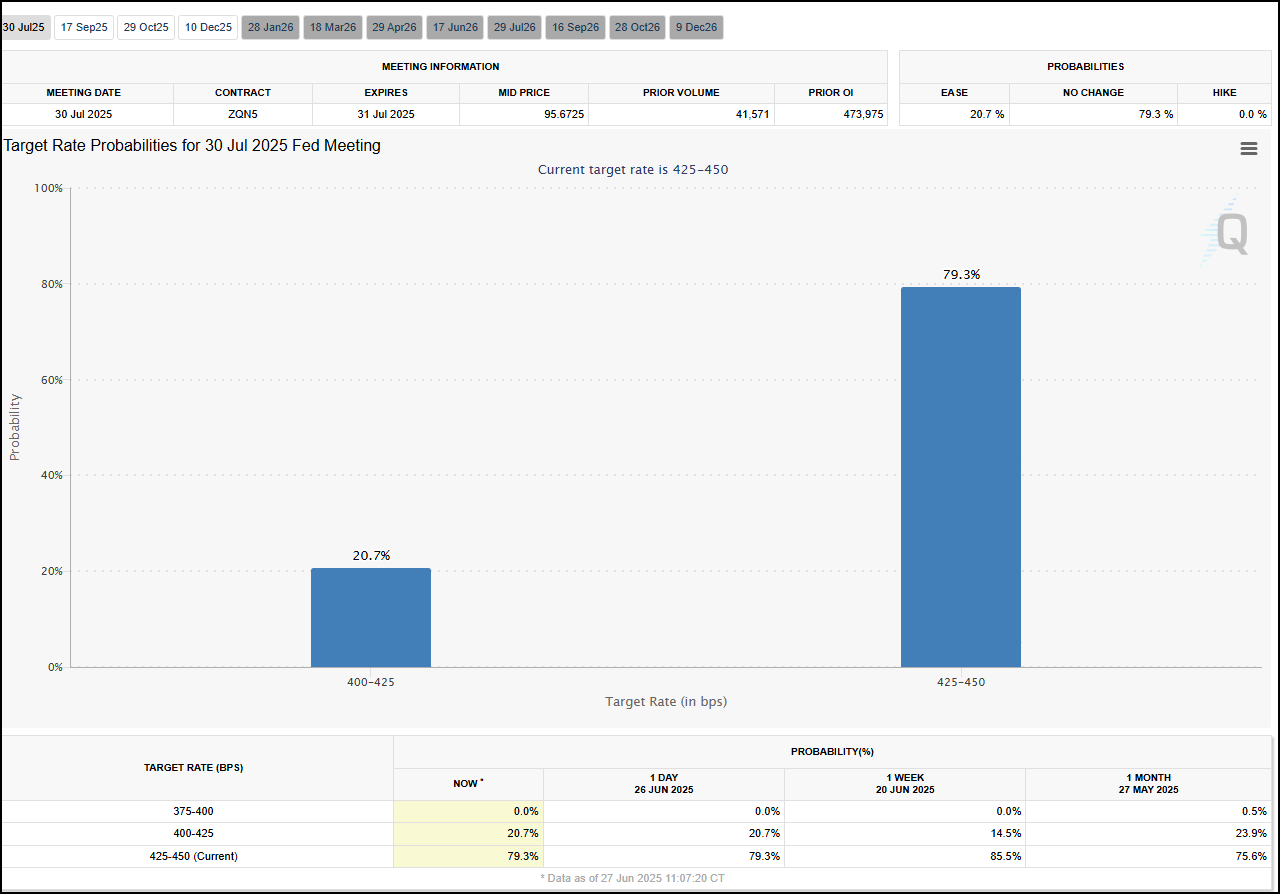
Source Link: CME FedWatch
At the start of the year, the Fed was expected to deliver two 25 bps cuts in 2025, with a potential third cut based on economic conditions. Yet, no rate cuts have taken place year-to-date. The July FOMC decision will likely depend heavily on labor market data, which could trigger volatility in the interim if it surprises to the negative.
Mortgage Rates Fall on Fed Debate
Mortgage rates in the U.S. have recently experienced a slight decline, with the average 30-year fixed-rate mortgage now hovering around 6.8%. All eyes will be focused on the Fed at the end of July to see where the trend is heading. Lower mortgage rates could be a welcome reprieve for the softening real estate market, which has seen inventories rise to a three-year-high.
… And What about Tariffs?
Tariffs and their impact on corporate earnings remain a huge question mark in the second half 2025. Reciprocal tariffs, the same levies that caused the market to plunge more than 10% in two days in early April, are scheduled to be revisited on July 8 when the 90-day pause is set to expire. Unless further modified, higher rates for countries identified in the original announcement will automatically resume, which will likely have ramifications for the market. This will also coincide with the start of Q2 earnings season, where the impacts of existing tariffs will likely show up in earnings announcements. Both of these factors will be huge determinants of whether the market recovery can sustain itself.
Time to Stack your Barbell
What do all these disparate market narratives mean for investors? While the market is displaying relative optimism, several events on the horizon could reignite the market volatility, and investors need to be prepared. I started advocating for the barbell approach when market turbulence first surfaced back in February. Investors can get ahead of potential volatility by complementing their growth assets with lower-risk, income-generating assets. High-quality dividend stocks offer reliable income and portfolio stability when uncertainty persists. Dividend stocks can provide the potential for capital appreciation and hedging against inflation through their payouts.
Top 5 Dividend Powerhouses with Yields Over 4%
SA Quant has explored its universe of top dividend stocks and selected five options for investors based on their exceptional Quant factor and dividend grades. Typically, yields are less of a consideration for me as I prioritize dividend safety and growth. However, leveraging Seeking Alpha’s stock screener, I realized I could achieve a nice balance of solid dividend and factor grades with a minimum FWD yield of 4%.
To find these securities, I selected “Top Quant Dividend Stocks” from the pre-existing Seeking Alpha Screens.
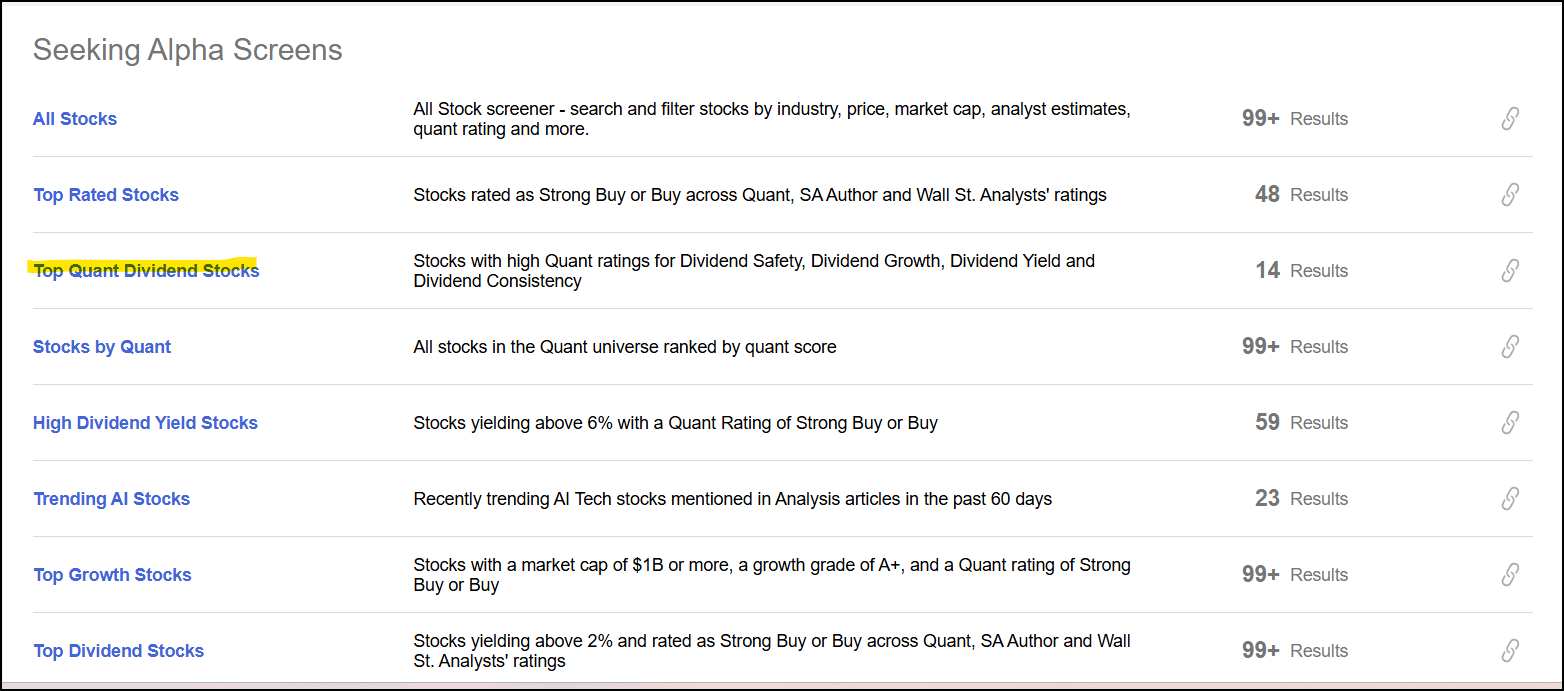
This initially yielded 14 stocks—Quant Strong Buys with excellent dividend grades. To broaden my scope and ensure sector diversification, I adjusted the dividend grades to allow for stocks with lower dividend consistency grades. Dividend consistency grades can sometimes penalize a company that has not been paying dividends for a long time, which I wanted to exclude for this article.
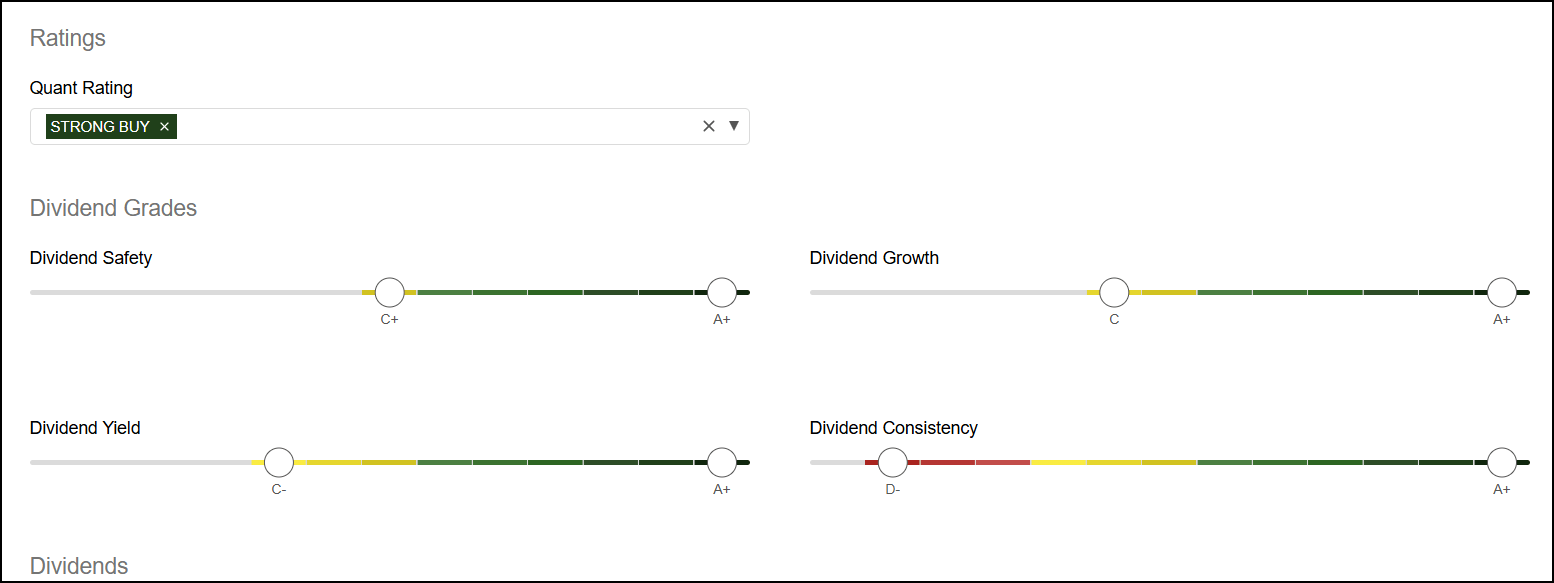
Finally, I added ‘FWD Yield’ as a field from the ‘Advanced Filters’ button. This allows me to screen for specific yield thresholds. For this article, I chose a minimum of 4%.
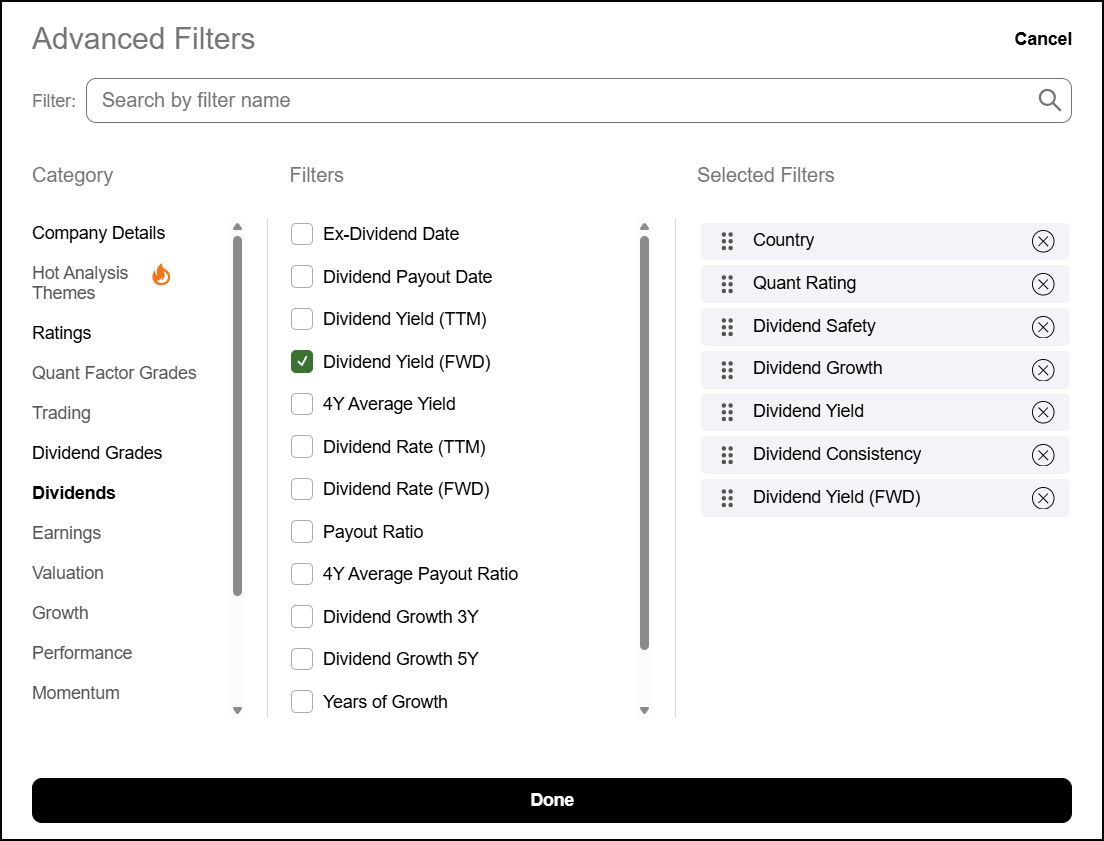
This yielded a selection of 10 stocks. I chose the first three as well as six and seven to diversify beyond the REIT sector.
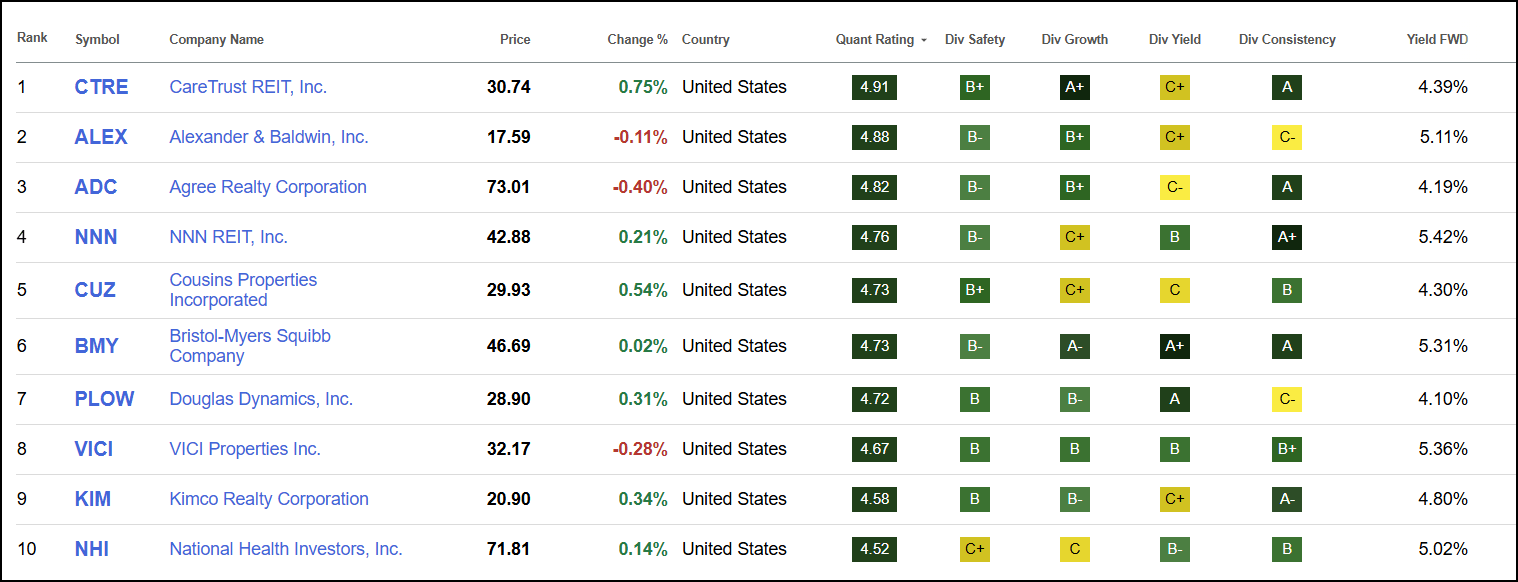
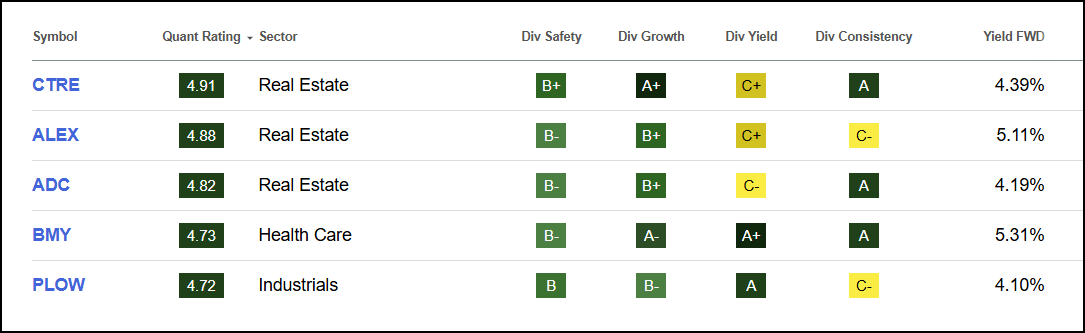
This basket of five stocks has an average dividend yield of 4.62%, well above the 1.16% for the S&P 500 and 1.85% for Vanguard Dividend Appreciation Index Fund ETF Shares (VIG).
Top 5 Dividend Stocks Have an Average FWD Yield of 4.62% vs. the S&P 500’s 1.16%
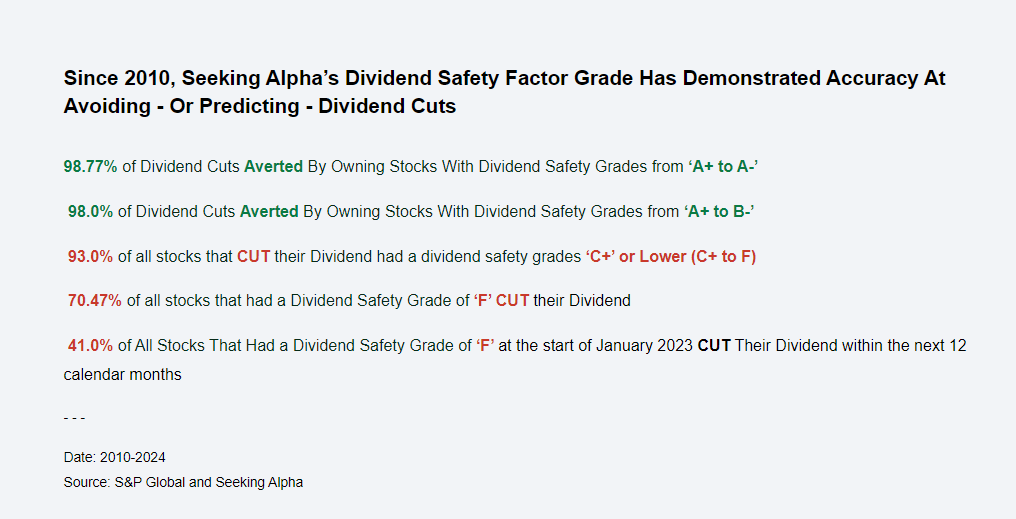
As I mentioned, these stocks were evaluated along multiple dividend grades, including safety and growth. The dividend safety grade leverages a sophisticated data-driven approach to offer a reliable assessment of a company’s ability to keep paying its dividends and avoid dividend cuts.
Dividend Cuts Can Be Avoided With Strong Dividend Safety Grades
Similarly, the dividend growth grade provides an instant characterization of a company’s ability to grow its dividends based on data-driven analysis. This tool is valuable for income-focused investors who want to pinpoint companies with better dividend growth potential.
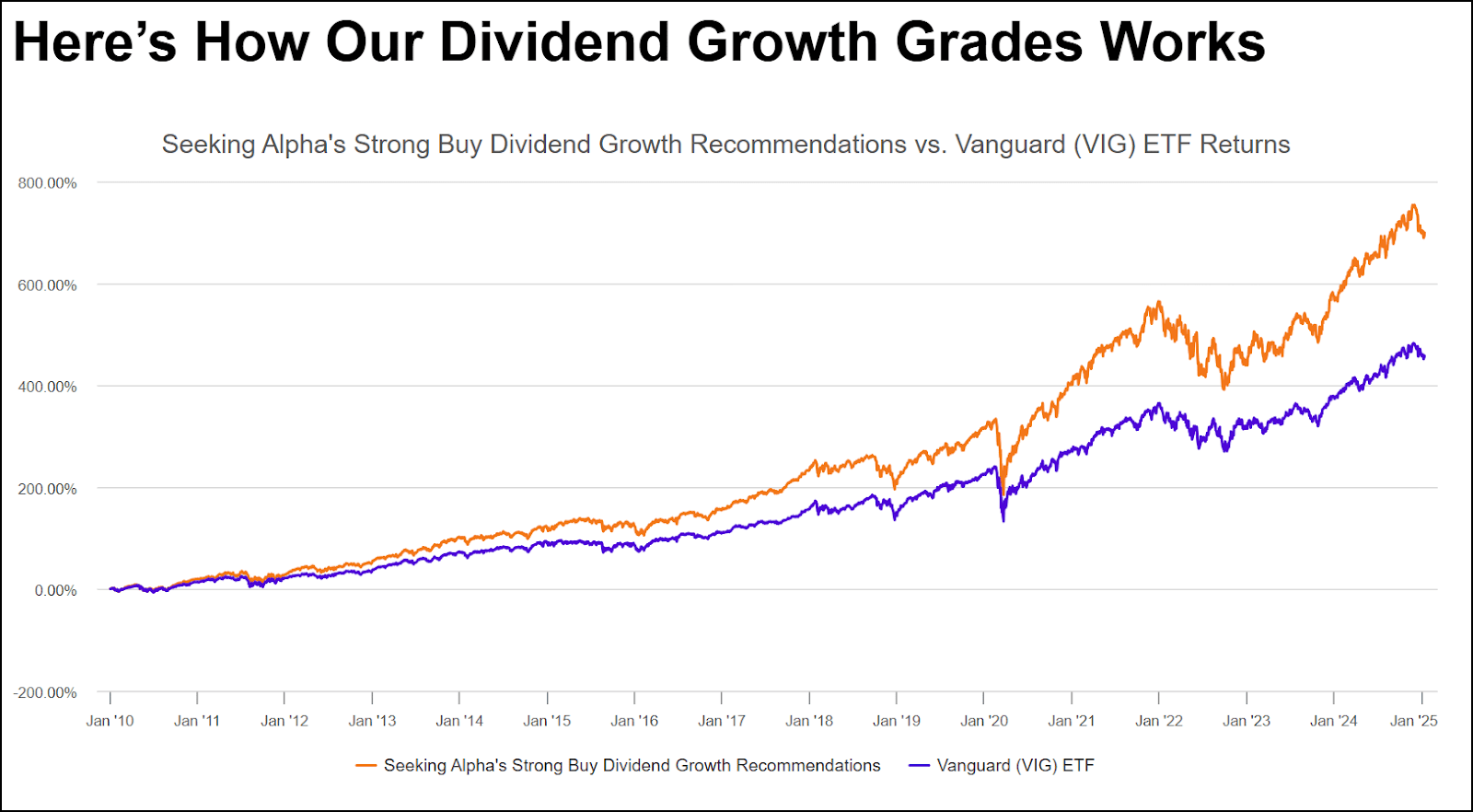
Note that because these stocks were holistically evaluated across factor and dividend grades, they do not represent the highest-yielding dividend stocks. Instead, they’re a combination of dividend yield, safety, and growth, in addition to high factor grades and a Quant “Strong Buy” recommendation.
1. CareTrust REIT, Inc. (CTRE)
- Market Capitalization: $5.86B
- Sector: Real Estate
- Industry: Healthcare REITs
- Quant Sector Ranking (as of 6/27/25): 3 out of 175
- Quant Industry Ranking (as of 6/27/25): 1 out of 17
- Quant Rating: Strong Buy
- FWD Yield: 4.38%
CTRE continues to rank as the No. 1 Quant-ranked Healthcare REIT and has climbed to the No. 3 REIT overall since I published my Stay In May: Top 5 Dividend Stocks article. Since I last covered CTRE, the company closed on its $817M acquisition of Care REIT in the United Kingdom, which is slated to boost its growth and add geographic diversification benefits. Management is so optimistic about the acquisition’s potential that CTRE raised its guidance to a normalized FFO per share of $1.75-$1.78 from $1.68-$1.72.
In addition to management, analysts are also optimistic about the company’s earnings. CTRE’s EPS revision grade has improved from ‘B+’ to an ‘A’ with six FY1 up revisions versus one downward revision.
CTRE Revisions Grade
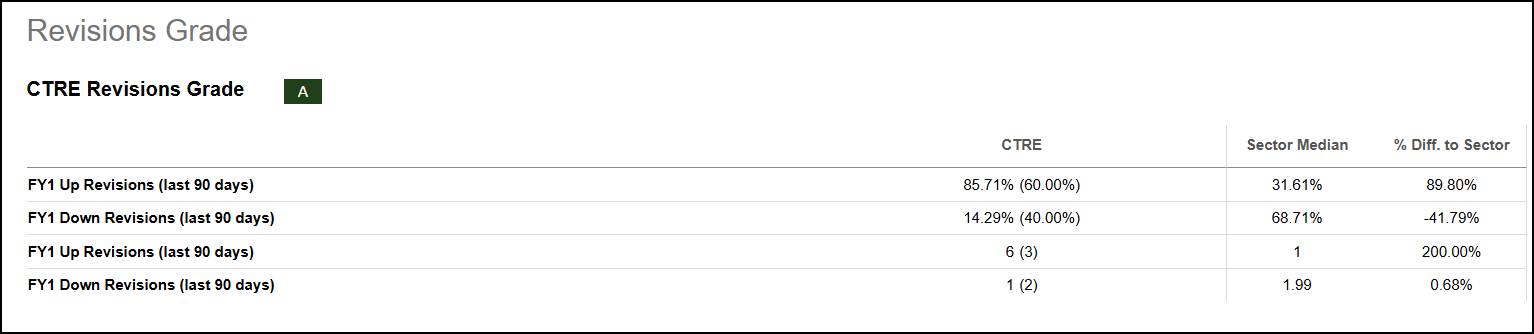
The company shows excellent growth and dividend growth prospects, notching ‘A+’ grades for both categories. Key highlights include a forward FFO growth rate that is 395% above the REIT sector and a Dividend Growth Rate 10Y (CAGR) of nearly 16%. CTRE’s impressive growth figures, coupled with solid profitability and dividend safety, present investors with an attractive balance of stability and potential.
2. Alexander & Baldwin, Inc. (ALEX)
- Market Capitalization: $1.30B
- Sector: Real Estate
- Industry: Diversified REITs
- Quant Sector Ranking (as of 6/27/25): 4 out of 175
- Quant Industry Ranking (as of 6/27/25): 1 out of 13
- Quant Rating: Strong Buy
- FWD Yield: 5.04%
Operating over four million square feet of commercial space, Alexander & Baldwin, Inc. is the No. 1 Quant-ranked Diversified REIT. ALEX is focused on developing and managing commercial, retail, industrial, and office properties in Hawaii. ALEX employs a capital efficient strategy centered on maximizing value from existing land assets through redevelopment projects, expansion of Komohana Industrial Park. In Q1 2025, the company delivered robust results, reporting same-store net operating income up 4.2% while maintaining lease occupancy above 9.
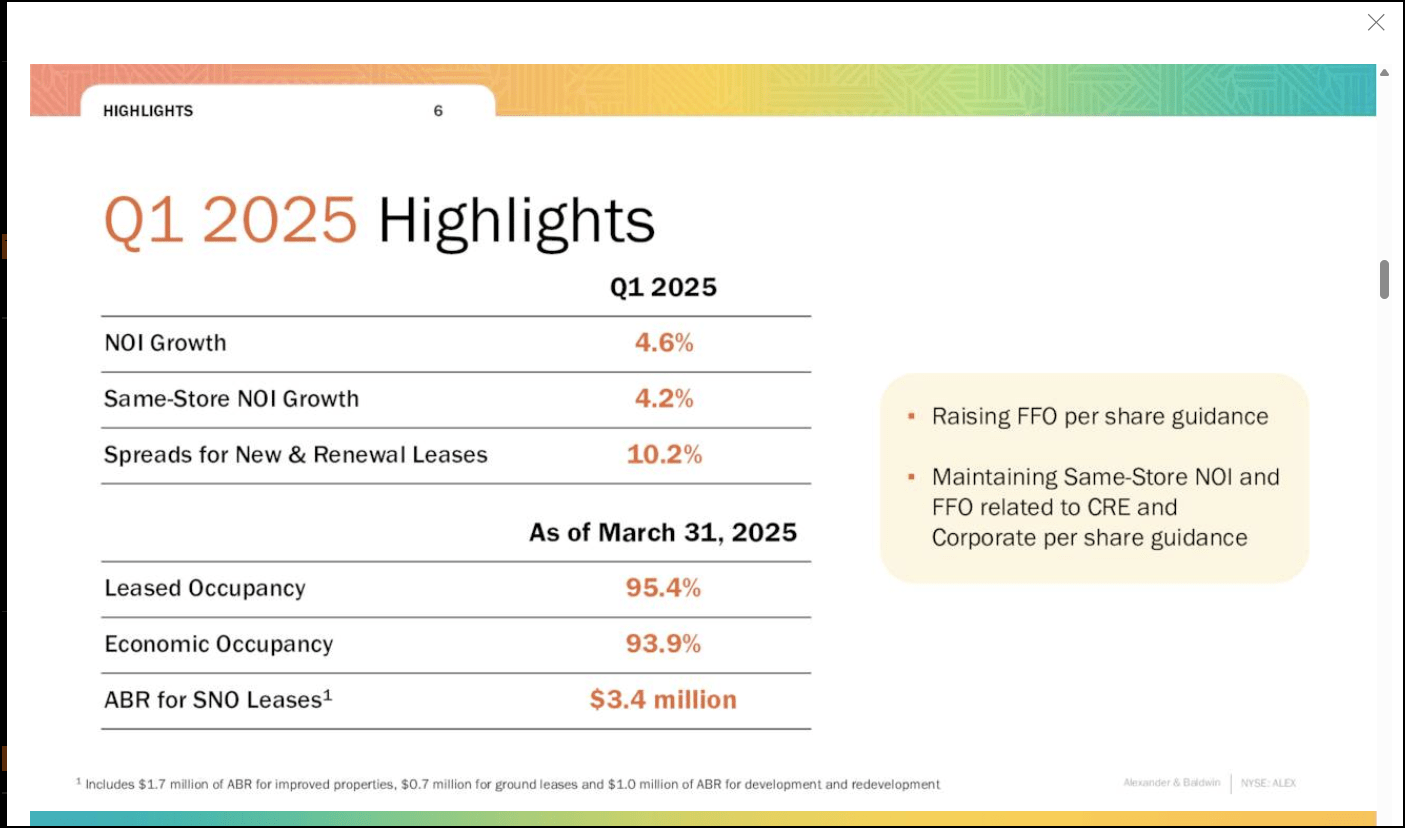
Source: ALEX Q1 2024 Investor Presentation
ALEX sports an overall ‘B’ growth grade, a FWD AFFO growth of 276% above the REIT sector. The company also delivers solid profitability, highlighted by its FFO interest coverage ratio of 4.8x. ALEX’s dividend profile is excellent, yielding over 5% with a track record of growing its dividend over the last three years. Investors looking for a unique exposure to the Hawaiian real estate market, with a safe and impressive dividend, should consider ALEX.
3. Agree Realty Corporation (ADC)
- Market Capitalization: $8.04B
- Sector: Real Estate
- Industry: Retail REITs
- Quant Sector Ranking (as of 6/27/25): 6 out of 175
- Quant Industry Ranking (as of 6/27/25): 1 out of 23
- Quant Rating: Strong Buy
- FWD Yield: 4.21%
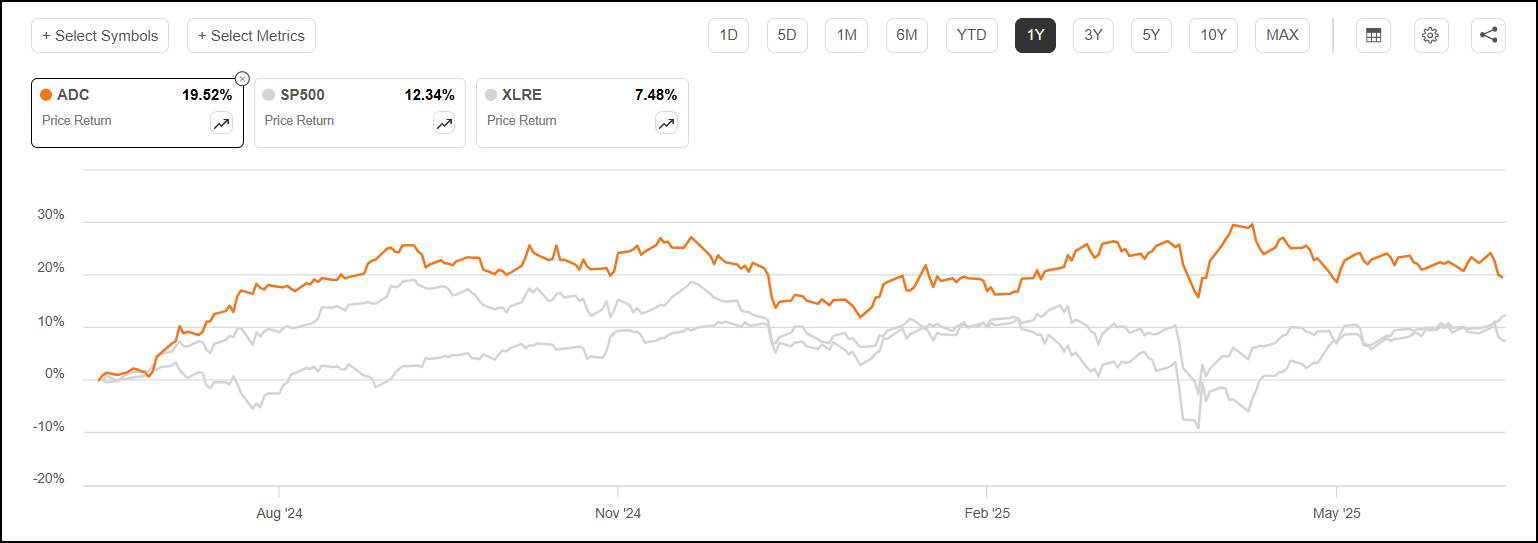
ADC is the top Quant-ranked retail REIT, specializing in essential retail, with a portfolio of tenants including grocery stores, discount retailers, auto parts suppliers, and convenience stores. Operating in 50 states and across 2,400 properties, ADC has strongly outperformed the real estate sector over the past year, returning nearly 20% vs. The Real Estate Select Sector SPDR Fund ETF’s (XLRE) 7.48%.
ADC vs. XLRE Trailing 1Y Return
Despite a volatile macro environment, the company achieved its largest investment volume in Q1 since 2023, with more than $375M invested across 69 platforms with a strategic focus on recession-resistant retailers.
“We launched the acquisition platform in 2010 with a focus on recession-resistant retailers that have adapted to a comprehensive omni-channel strategy. Although we have yet to experience a traditional recession since its inception, our portfolio has proven to be pandemic-proof and we remain confident it will be tariff-resistant,” said Joey Agree, President and CEO of ADC
ADC offers impressive growth, with highlights including an AFFO growth (5Y Hist. CAGR) of more than 168% above the REIT sector, which is supported by exceptional profitability. ADC sports a TTM AFFO margin that’s 92% above the REITs sector, while offering an interest coverage ratio of 2.7x. The REIT’s lower leverage earned it a spot on SA analyst David Johnson‘s list of best REIT stocks earlier in June. This strong profitability contributes to ADC’s attractive dividend safety grade that complements the company’s 4.21% FWD yield. The company also boasts a ‘B+’ dividend growth grade in addition to its rock-solid yield. ADC’s strong profitability and specialty in recession-resistant retailers make it a strong pick in a shifting macro environment.
4. Bristol-Myers Squibb Company (BMY)
- Market Capitalization: $94.94B
- Sector: Health Care
- Industry: Pharmaceuticals
- Quant Sector Ranking (as of 6/27/25): 18 out of 988
- Quant Industry Ranking (as of 6/27/25): 7 out of 176
- Quant Rating: Strong Buy
- FWD Yield: 5.32%
Bristol-Myers Squibb is a global biopharmaceutical company specializing in oncology, immunology treatments, operating through both innovative growth products and established legacy drugs. The company delivered exceptional Q1 2025 performance with $11.2 billion in revenue, driven primarily by 18% growth in its newer drug portfolio.
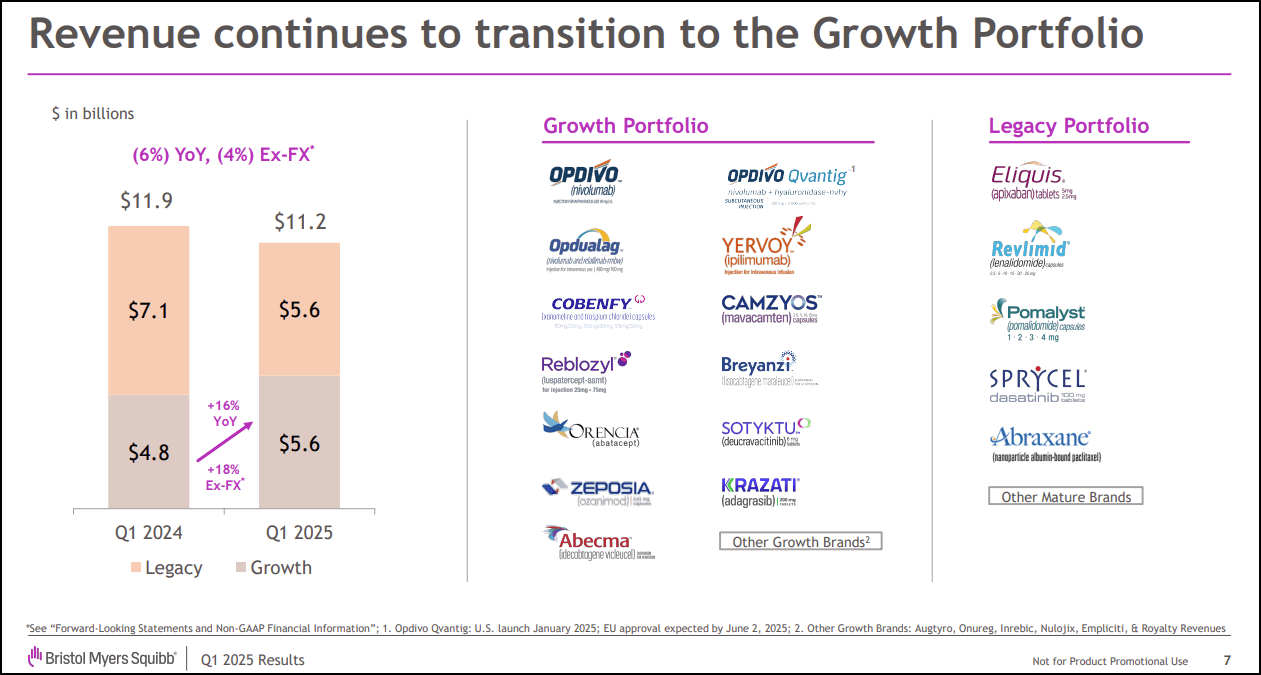
Source Link: BMY Q1 2025 Investor Presentation
BMY raised its full-year revenue guidance to $45.8-46.8 billion and increased EPS projections, reflecting the company’s successful transition toward a diversified portfolio of innovative treatments. BMY’s growth trajectory is evident in its ‘A+’ growth grade, particularly in its impressive 60% EPS FWD Long-Term Growth (3-5Y CAGR), which is more than 450% above the health care sector.
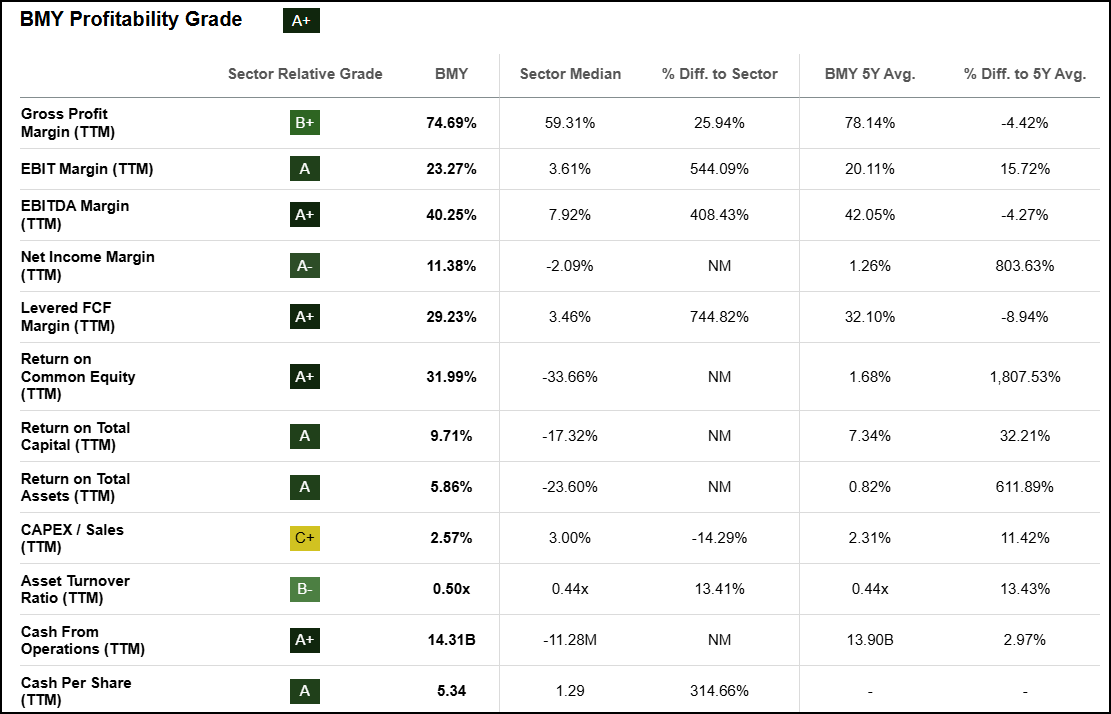
BMY also impresses in terms of profitability. The company boasts a 40% EBITDA margin vs. the sector’s 8%, offering $14B in cash from operations.
BMY Profitability Grade
Bristol rounds out its impeccable fundamental grades with an ‘A+’ valuation grade. The company is trading at a steep discount across key metrics like its FWD PEG, which is more than 90% reduced compared to the healthcare sector. The company’s fundamental strength is dovetailed by its eye-popping 5.32% FWD yield and ‘A-’ dividend growth suggest both BMY’s share price and dividend have further room to run.
5. Douglas Dynamics, Inc. (PLOW)
- Market Capitalization: $679.80M
- Sector: Industrials
- Industry: Construction Machinery & Heavy Transportation Equipment
- Quant Sector Ranking (as of 6/27/25): 33 out of 614
- Quant Industry Ranking (as of6/27/25): 2 out of 31
- Quant Rating: Strong Buy
- FWD Yield: 4.03%
Douglas Dynamics leads North America in manufacturing and installing commercial work truck attachments and equipment, with a specialty focus on snow and ice control systems for trucks and municipal fleets. PLOW serves dealers, fleets, and municipalities across its Work Truck Attachment and Work Truck Solutions segments.
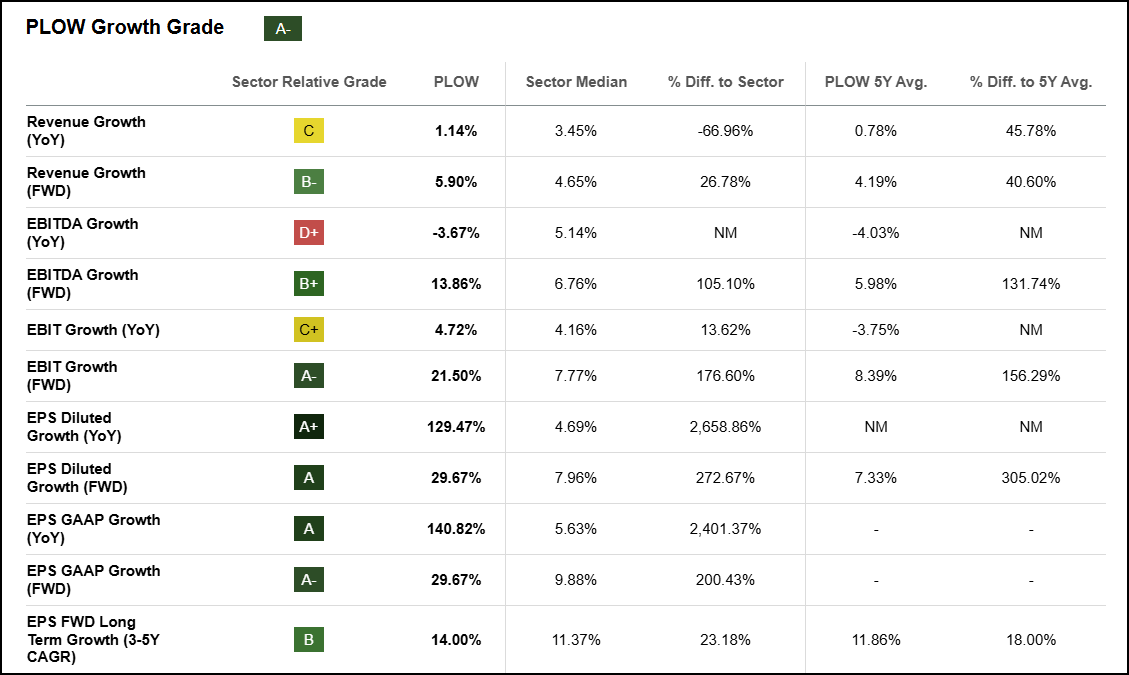
Net sales climbed over 20% in Q1 2025, with gross margins expanding to 24.5%. Strong winter weather drove a 50% increase in the Work Truck solutions segment. This impressive quarter is reflected in the company’s solid growth grade, with a FWD EBITDA growth over 100% above the sector median.
PLOW Growth Grade
The company also displays strong profitability, with a 27% ROE vs. 12% for the sector and a net income margin of 11%. Its earnings track record is strong, beating consensus estimates for the past five consecutive quarters. Analysts have shown unanimous confidence in the company’s earnings potential, with three FY1 up revisions vs. zero downward revisions. PLOW’s current 4.03% FWD yield is head and shoulders above the industrials sector’s median, and is supported by compelling dividend safety metrics, including a dividend yield to dividend payout ratio that’s 24% above the sector median. Investors looking for a high-yielding industrial with excellent fundamentals should consider PLOW.
Conclusion
The S&P 500 has staged a remarkable comeback from near bear market territory in April to hover just below record highs, driven by strong tech earnings, easing trade tensions, and improving inflation data. However, multiple risks loom with reciprocal tariffs slated to resume and the start of Q2 earnings season, where tariff impacts may become visible in corporate results. A barbell investment approach, which combines growth assets with high-quality dividend stocks for income and stability, is one way for investors to prepare for possible turbulence. SA’s Quant Team used its Dividend Grading System to identify five dividend stocks with yields above 4%, strong quant ratings, and excellent dividend growth and safety grades.
The stocks featured here can help complement a diverse portfolio. Alternatively, consider exploring Alpha Picks if you’re seeking a limited number of Seeking Alpha Quant’s best monthly ideas from the hundreds of top quant Strong Buy-rated stocks. If you prefer to rely on investment professionals for stock recommendations, Alpha Picks is a service that identifies high-quality opportunities using a systematic, data-driven approach. It targets stocks with strong financials, attractive valuations, and long-term growth potential, offering research-backed selections designed to help long-term investors outperform the market.
For more active investors with a fixed amount of capital, the PRO Quant Portfolio (PQP) delivers a disciplined, data-driven, systematic model portfolio. Powered by Seeking Alpha’s proprietary Quant system, PQP draws from nearly 5,000 U.S.-listed stocks and ADRs worldwide, selecting top opportunities based on rigorous multi-factor selection. The portfolio holds 30 equal-weighted positions, rebalanced weekly to reflect updated ratings and market conditions. Subscribers receive weekly alerts on all trades and detailed analysis from the Quant Team, making it easy to follow or use as an idea generator.
- I am Steven Cress, Head of Quantitative Strategies at Seeking Alpha. I manage the quant ratings and factor grades on stocks and ETFs in Seeking Alpha Premium.


