EV chargers, (more) industrial steam, electric motors, data-centre cooling tech, heat batteries — even modular buildings.A few are infrastructure. Others look suspiciously like venture capital investments that look odd in an infrastructure income trust. Together, my reconstruction values them at £80m. But how much becomes realisable cash?1. What’s left in the cupboard?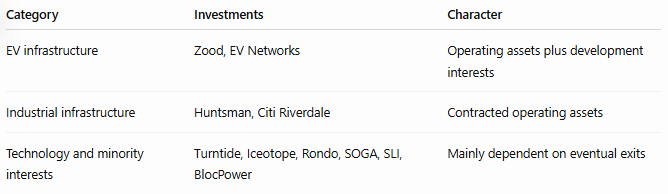 There is approximately £80m of equity value outside SEIT’s five largest investments. Kyotherm’s April 2026 acquisition removed eleven other investments, including Capshare, Future Energy Solutions and Sparkfund, at a price 9% below their September 2025 carrying value.Encouraging — but not a price guarantee for what’s left.The issue isn’t whether these companies are interesting. It’s whether they can be sold, when, and to whom.
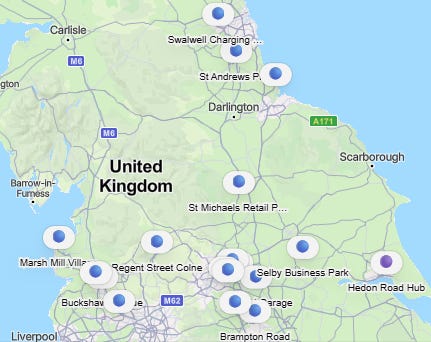
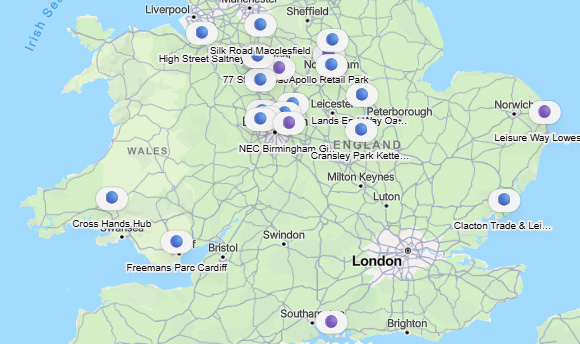
2. Zood — the electric elephant in the roomZood is the largest residual exposure. It owns UK charging infrastructure; The EV Network (EVN) is a separate development business in which SEIT has a minority interest. At the end of 2024 Zood had 29 sites and 127 ultra-fast chargers.SEIT’s March 2025 valuation was £43m, including £10.6m owed to Holdco. My reconstructed March 2026 equity value is approximately £31m — an estimate, not a separately disclosed asset valuation. With £18m of structural debt, that suggests £49m enterprise value, subject to reconciling the shareholder-loan treatment.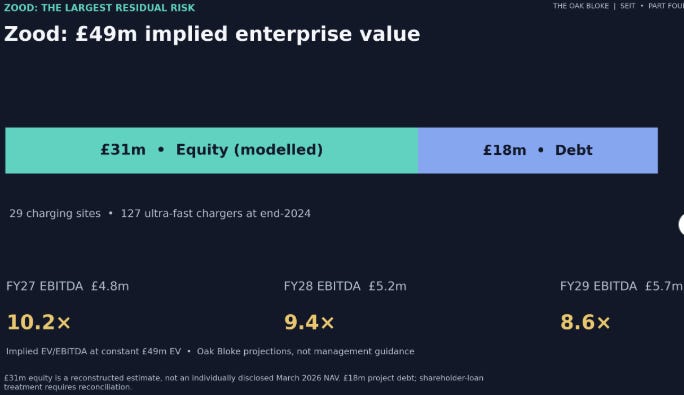 That is 10.2× my FY27 EBITDA forecast of £4.8m, or 8.6× FY29’s £5.7m. Neither forecast is management guidance. A buyer will want actual utilisation, kilowatt-hours sold, site margins, maintenance capex and free cash flow.Connections and site rights have value and these are the 50 Zood and EVN locations.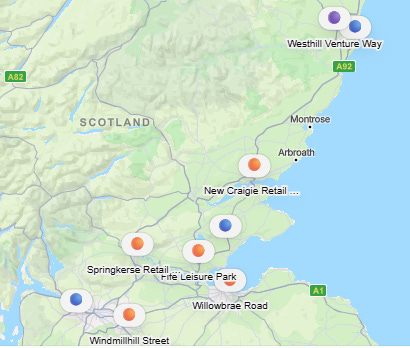
 SEIT confirmed that Zood’s FY26 operating cash was retained in the business, not sent to Holdco. So Zood can be profitable without helping SEIT repay its RCF today.The working model assumes the following levels of Cash generation.
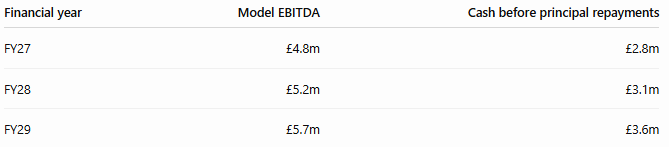 These are Oak Bloke projections, not reported Zood forecasts.
3. Huntsman — a steam engineHuntsman Energy Centre supplies steam under a long-term industrial arrangement. Commercial operation began in June 2023 after delays. The March 2025 equity valuation was £13m, but water treatment, equipment defects and steam-compressor reliability caused problems. A buyer pays for dependable contracted steam, not a faulty boiler. Establish reliability before selling, if the cost of waiting is justified.
4. Citi Riverdale — small but usefulCiti Riverdale is more straightforward, if tiny. My reconstruction implies about £2m equity value from £3m enterprise value and £1m historical debt. Bundle it with similar assets rather than spend a fortune selling it alone.5. V.C. Tech Bets rather than infrastructureThe technology positions are different. Their value may be real, but a minority stake in a promising company is not the same as distributable cash: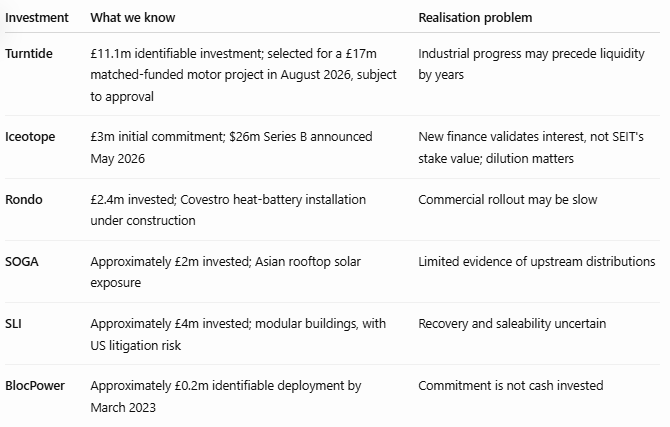
5a
TurntideSEIT invested approximately £8m into Turntide Technologies in May 2022 and a further £3.1m in August 2023. That gives us about £11.1m of identifiable historical investment. Turntide develops efficient electric motor and electrification technology.There is encouraging evidence of continuing industrial development. In August 2026, Turntide announced selection for a £17m matched-funded UK manufacturing project involving axial-flux motors, subject to government approval.That’s relevant to its commercial prospects. However, a £17m project is not a £17m payment to SEIT, nor does it establish a valuation for SEIT’s equity interest.My conclusion: Turntide may have meaningful strategic value, but the wind-down creates a mismatch between the company’s potentially long commercial development timetable and SEIT’s requirement to realise cash.
5b. Iceotope — an interesting beneficiary of AIIceotope is a UK liquid-cooling technology company. SEIT’s initial commitment in June 2022 was approximately £3m. The investment thesis is easy enough to understand. Higher-density computing creates cooling problems, especially in AI infrastructure.And in May 2026 Iceotope announced a $26m Series B financing round led by Two Seas Capital and Barclays Climate Ventures, with participation from other investors. That provides fresh third-party evidence of interest in Iceotope’s technology.Without a valuation, terms and diluted ownership, I cannot translate $26m of company funding into an accurate valuation of SEIT’s stake. This is a particularly important distinction in venture investing. A company can become more valuable while an early investor’s ownership percentage is diluted.My conclusion: Iceotope offers attractive strategic upside and has fresh external financing validation.
5c. Rondo Energy — storing heat in bricks Rondo Energy develops industrial heat batteries. Its technology stores electrical energy as heat in inexpensive solid materials, enabling industrial users to receive high-temperature heat or steam. SEIT invested approximately £2.4m in June 2023.Rondo’s industrial applications make the business unusually relevant to SEIT’s broader investment philosophy. In January 2026, Rondo and Covestro announced the start of construction of a heat-battery installation at Covestro’s Brunsbüttel site in Germany, with commissioning planned for the end of 2026.This is a useful commercial milestone. However, a technology entering commercial deployment can still be many years away from generating substantial shareholder distributions.The investment may ultimately command a meaningful strategic valuation, but it is unlikely to solve SEIT’s immediate liquidity requirements.My conclusion: Rondo is precisely the type of asset I wouldn’t want management to dispose of cheaply simply because its present cash generation is negligible.Nevertheless, some realistic price must be attached to the time and uncertainty involved in exiting the stake.
5d. SOGA, Sustainable Living Innovations and BlocPowerThese are smaller positions, but deserve inclusion rather than simply disappearing into an anonymous residual number.SOGA is associated with commercial rooftop solar investment in Asia, including Vietnam. SEIT originally invested approximately £2m in April 2021.It may offer strategic or project value, but I don’t have sufficient evidence to forecast meaningful cash distributions.Sustainable Living Innovations (SLI) received an approximately £4m SEIT investment in October 2021. Its modular-building technology is interesting, but commercial viability and the residual value of SEIT’s equity matter more than the original investment narrative. There is also public US litigation involving SLI, including a November 2025 order relating to an unpaid settlement and entry of judgment.BlocPower is especially important from an accounting perspective. SEIT’s historical commitment was much larger than the approximately £0.2m I could identify as actually deployed by March 2023.For all three, I would expect opportunistic disposals or transfers, rather than significant near-term operating distributions.6. Reconstructing the historical investmentHere are the four modelled portfolio outcomes. All are net of asset-level debt, but before deducting SEIT’s Holdco RCF and central wind-down expenses.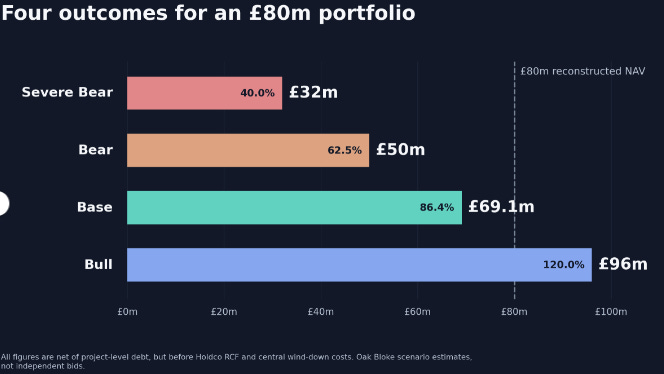 Detailed breakdown:
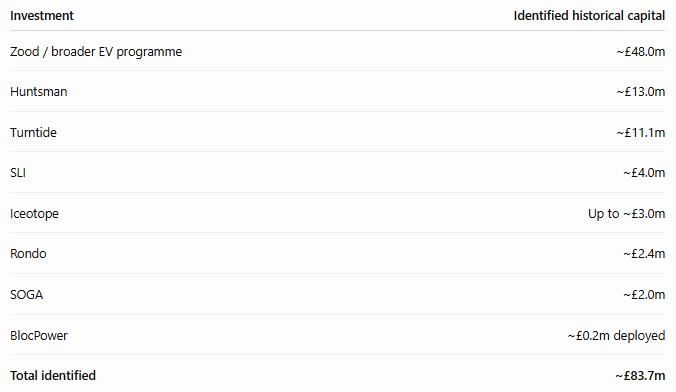 These amounts also mix investment commitments, inferred historic costs and broader programme funding. They should not be mistaken for a precisely audited cash-investment ledger. Nevertheless, they provide a useful perspective.Against approximately £84m of identified historical deployment, the residual portfolio has a reconstructed current NAV of approximately £80m.These don’t look like a collection of assets whose carrying value can automatically be recovered in a hurry.7. Turning £80m of NAV into cashMy base case is that £80m turns into £69m by FY29 with Cash Received being modest over the next 3 years (£7.25m only). In fact I assume further money goes to the portfolio and supports the portfolio.
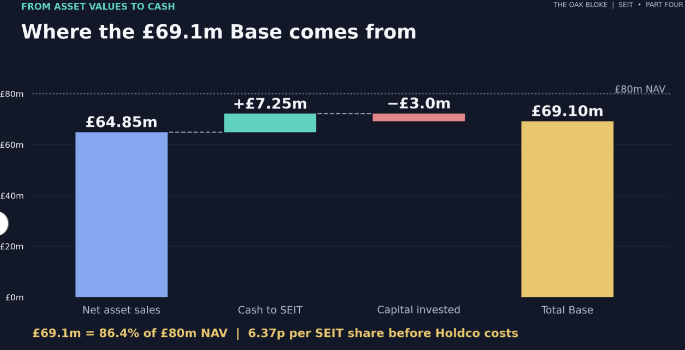 The Cash Bridge Estime to FY29
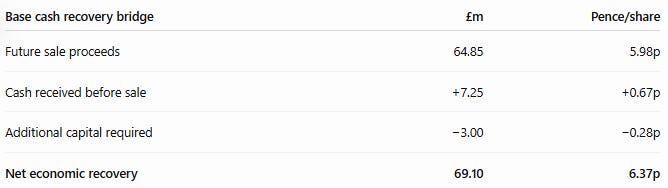 In a bull case SEIT recovers slightly more than NAV while a Severe Bear leaves much of the portfolio effectively worthless.
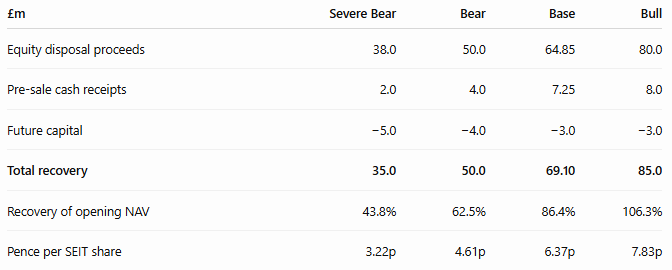 These amounts are net of project debt.8. If we refocus on the actual question the £69.1m Base for the Odds and Sods could still be too generous. Zood’s site economics are insufficiently observable; Huntsman’s defects may persist; and minority investors can be diluted or forced to accept poor secondary-sale prices. Buyers knows SEIT is winding down.Nor does the Kyotherm disposal at 91% of NAV prove that this more awkward collection will achieve anything similar. Much of the £80m remains reconstructed rather than individually disclosed. A £32m Severe Bear is the reminder that accounting value and realised cash are different things.9. Conclusion — Calamitous? Or Calm down dear?£80m on the books. £69.1m in my Base Case. That’s 6.37p a share before Holdco costs. In my Base Case we are now at 40.8p per share capital returns.And two assets still to go.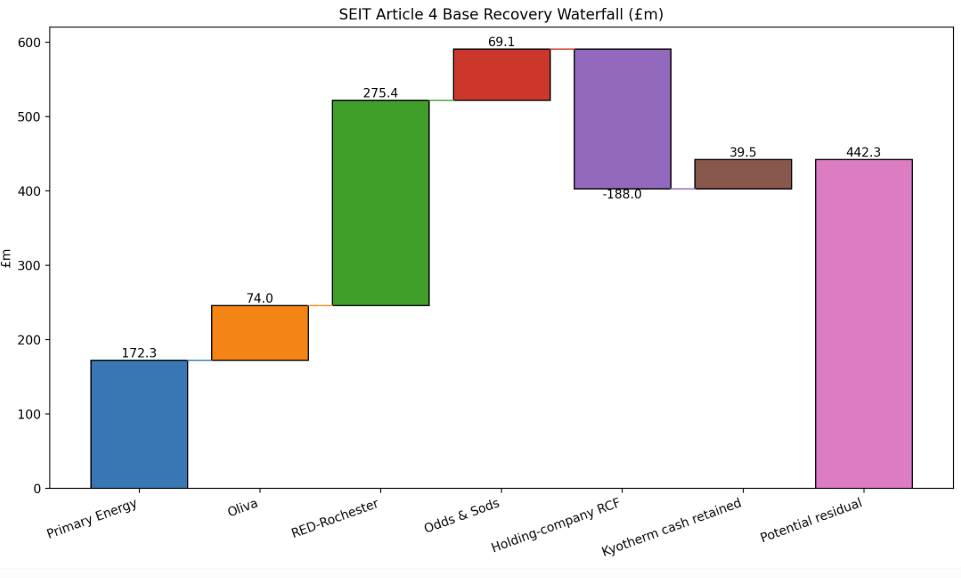
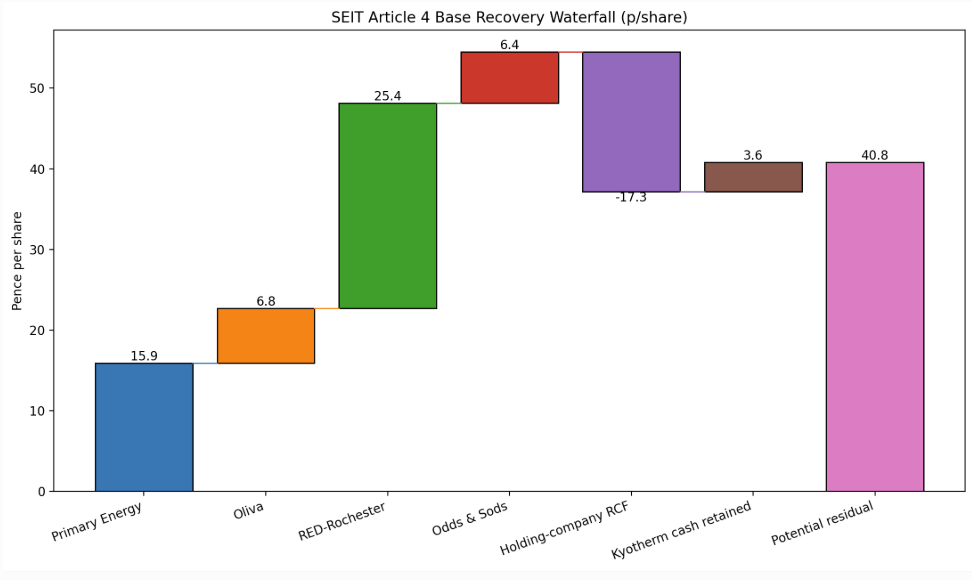 Zood dominates the valuation risk. Huntsman needs dependable operations. Turntide, Iceotope and Rondo have genuine commercial promise, but that is not the same as a cheque for SEIT shareholders.Sell what’s easy, wait only where time demonstrably adds value, and don’t let the tail hold up the rest of the wind-down. Cash received — and when — is the scorecard.
RegardsThe Oak Bloke.Disclaimers:This content is for educational and informational purposes only. It does not consider your personal circumstances and is not financial, investment, tax, legal, or professional advice. Nothing here is a recommendation, offer, or solicitation to buy, sell, or hold any investment. Investing involves risk, including the loss of capital. You are solely responsible for your own decisionsMicro cap and Nano cap holdings might have a higher risk and higher volatility than companies that are traditionally defined as “blue chip”PS: In my Severe Bear Case model the Detractors are still sneeringly happy. Just 13.2p recovered post DCF vs 33p can SEIT make 19.8p with just two Assets left?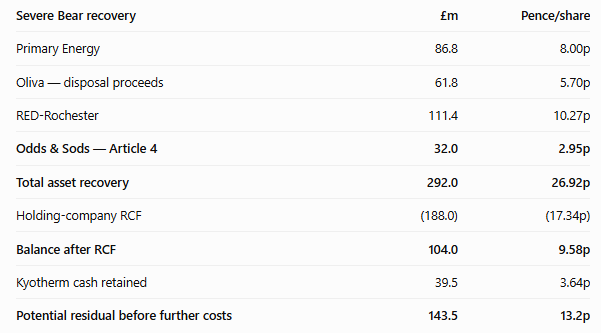
Leave a Reply