Investment Trust Dividends

Category: Uncategorized (Page 3 of 392)

TRIG/ORIT

Government moves to curb gas-driven power price shocks; TRIG sees potential benefits

Wind,Turbines,Silhouette,At,Sunset

The UK government has unveiled a broad package of energy reforms aimed at reducing the influence of volatile gas prices on electricity bills, alongside fresh support for clean power, grid investment and electrification. The measures come as renewed geopolitical tensions and disruption in the Middle East have once again exposed the UK’s reliance on international fossil fuel markets.

At the centre of the package are the government’s plans to “break the link” between gas and electricity prices by expanding the use of long-term fixed-price contracts for renewable generators and increasing the windfall tax on electricity producers benefiting from higher wholesale prices.

Fixed-price contracts for existing renewables

The most significant structural change is a proposal to offer voluntary long-term fixed-price contracts to existing low-carbon generators that are not already covered by subsidy schemes such as Contracts for Difference (CfDs). According to the government, these assets account for roughly a third of Britain’s power supply.

The aim is to shield households and businesses from spikes in wholesale electricity prices, which are often set by gas-fired peaking plant, even when cheaper renewables and nuclear supply much of the system.

The government says that Britain has already reduced the frequency with which gas sets the power price from around 90% of the time in the early 2020s to around 60% today, and this should fall further as more renewable capacity is built and comes online.

Windfall tax increased

The government has also announced changes to the Electricity Generator Levy (EGL), which was introduced to capture exceptional revenues earned by generators during periods of elevated gas prices. The tax rate under the levy is increasing from 45% to 55% and with immediate effect and its duration is being extended. The government says that the additional revenues generated by the levy will help fund support for households and businesses facing higher energy costs.

Wider clean energy package

The announcement also included a wider range of measures intended to accelerate the energy transition and reduce bills over time, including:

  • bigger grants for households using heating oil and LPG to install low-carbon heating;
  • extra funding for solar panels on social housing, schools and colleges;
  • plans to unlock public land for renewable development;
  • reforms to planning, grid access and network connections;
  • easier installation of EV chargers, heat pumps and rooftop solar;
  • funding to expand UK heat pump manufacturing; and
  • a new delivery plan for “Reformed National Pricing”, which the government says could unlock up to £20bn of system benefits between 2030 and 2050.

What it means for TRIG

The Renewables Infrastructure Group (TRIG) has released a statement following the government’s announcement saying that several elements of the package could be supportive for its portfolio.

Most notably, the possible extension of CfD-style contracts to operational renewable assets could improve revenue visibility and reduce earnings volatility for existing projects. TRIG said this policy aligns closely with its strategy of increasing fixed-price income, noting that around 75% of its projected revenues over the next five years are already contracted or fixed-price in nature. The company expects its eligible operational assets to participate in the proposed allocation process in 2027, if the scheme proceeds.

TRIG also said the higher Electricity Generator Levy is not expected to affect its Q1 2026 NAV. Its current power price assumptions remain below the threshold at which the levy applies, meaning no impact is expected on asset values or dividend cover.

Meanwhile, policies to accelerate electrification through EV adoption, heat pumps and network upgrades may support longer-term demand for electricity, strengthening the case for renewable generation and battery storage assets such as those held in TRIG’s portfolio.

What it means for ORIT

Octopus Renewables Infrastructure (ORIT) has also published an update in response to the UK government’s energy policy changes. ORIT estimates that the removal of Carbon Price Support from April 2028 would reduce forecast power prices for its unhedged UK assets by around £2–3/MWh initially, fading over time as renewables play a larger role in setting electricity prices, with a hit to net asset value is less than 0.5p per share. The increase in the Electricity Generator Levy from 45% to 55% is not expected to have a material impact on the trust.

More positively, the government’s proposal for voluntary long-term fixed-price contracts for existing low-carbon generators could create an opportunity for ORIT to lock in additional stable revenues in future. That would fit well with the trust’s income-focused strategy and may help further reduce exposure to wholesale power price volatility.

Written By Matthew Read

Head of Production and Senior Research Analyst

The advantages of investment trusts

The benefits of using investment trusts to build wealth through market cycles is demonstrated by a real-world example.

By Rupert Hargreaves

Investment trusts – JP Morgan office building
(Image credit: Cheng Xin/Getty Images)

Investment trusts are the ideal vehicle to build long-term wealth. A real-world example recently posted on LinkedIn by investment manager John Moore makes this point well.

The portfolio was set up in 1999 and initially held Gartmore Shared Junior Zero Div (7.3% by value), English & Scottish Investors (18.4%), Finsbury Trust (18.2%), Law Debenture (19.8%), Majedie Investments (17.7%) and Scottish Mortgage (18.5%). You will notice that some of these no longer exist, while others have changed significantly.

English & Scottish Investors has undergone several reinventions. It became Gartmore Global Trust in 2002 and Henderson Global Trust in 2011. It was merged into Henderson International Income Trust in 2016 and this was then merged with JPMorgan Global Growth & Income (LSE: JGGI) in 2025.

Get 6 free issues +
a free water bottle

Stay ahead of the curve with MoneyWeek magazine and enjoy the latest financial news and expert analysis, plus 58% off after your trial.

Tracing investment trust returns back over multiple decades and mergers is challenging. However, I estimate (using Google’s Gemini AI tool) that an investment of £1 in 1999 would now be worth £7.42 in JGGI shares today – an annual return of 7.8%. The fate of the Gartmore Shared Junior Zero Dividend trust, created in 1993, was less happy. This was a split-capital trust that emerged from Gartmore Value in 1993.

During the late 1990s, split-capital investment trusts with complicated structures became fashionable. Many ended up holding the shares of other splits. This financial engineering was a disaster – when the tech bubble burst, the sector imploded under a mass of debt and cross-shareholdings. By 2003, most split structures had either collapsed or been wound up. The Financial Services Authority, the then-regulator, stepped in and set up a £194 million compensation fund in 2004.

The rest of the portfolio still exists, with some manager and strategy changes. Finsbury Trust is now Finsbury Growth & Income (LSE: FGT) and has been run by Nick Train since Lindsell Train, the company he co-founded, was appointed portfolio manager in 2000. The shares have returned 677% since then, despite recent lacklustre performance.

Why you should consider investment trusts

Majedie Investments (LSE: MAJE) traces its roots back to 1910 as Majedie (Johore) Rubber Estates, a plantation company in Malaysia and is still controlled by the founding Barlow family. In 2002, the trust backed the launch of Majedie Asset Management, which ran its investments until it was acquired by Liontrust in 2022. Today, it is a multi-manager investment trust overseen by Marylebone Partners (now part of Brown Advisory). Gemini estimates that an investment would have returned 4.1% per year between 1999 and 2026.

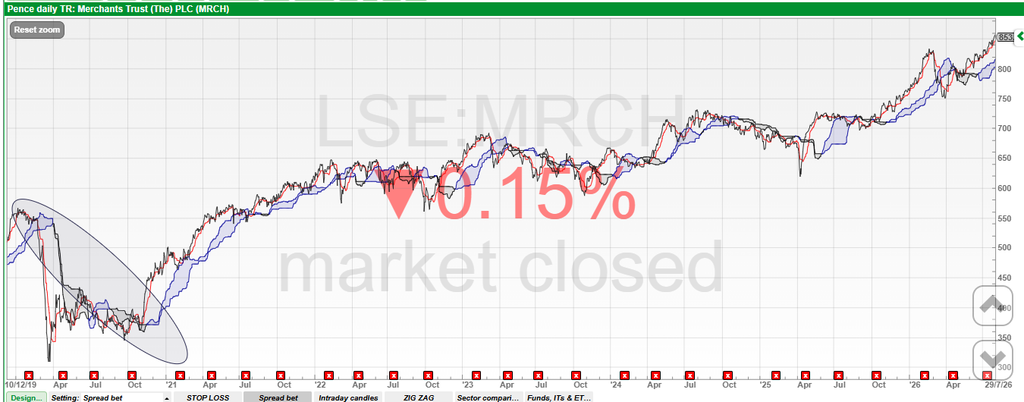
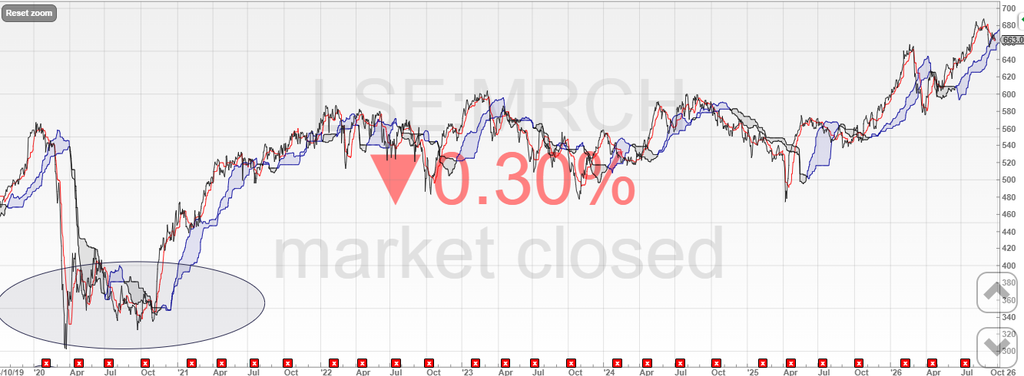
Scottish Mortgage (LSE: SMT) and Law Debenture (LSE: LWDB) will be very familiar to many MoneyWeek readers. Like Majedie, Scottish Mortgage began by funding rubber plantations in Southeast Asia in 1909, but quickly began investing more widely. Today, it holds a high-conviction global portfolio of public and private growth stocks. I calculate it has returned 16.7% since 1999. Law Debenture is a unique combination of a UK equity portfolio and a professional services business. I estimate its annual return has been 11.8%.

So this portfolio has probably returned 11%-12% per year since 1999, compared to 8.2% for the MSCI AC World index, assuming no rebalancing and dividend reinvestment. The performance of the biggest winners more than offsets the losers. Investment trusts can use their fixed capital to invest and survive market cycles that can be terminal for open-ended funds.

This is why the MoneyWeek portfolio, set up in 2012, is based on investment trusts. There have been a few changes over the years, but the goal has remained the same: a global, set-and-forget portfolio. It now holds JGGI, LWDB and SMT (and has held FGT): other positions are AVI Global (LSE: AVI)Caledonia (LSE: CLDN) and Personal Assets (LSE: PNL).

 Law Debenture is a unique combination of a UK equity portfolio and a professional services business. I estimate its annual return has been 11.8%.

The obvious question is why LWDB isn’t in your Snowball or why wasn’t is added when Mr. Market gave you the chance ?

It took several years to become an overnight success and it isn’t in the SNOWBALL, although it should be, because of the low yield and when prices fall, yields rise so there are always higher yielding shares to add to the SNOWBALL.

But

Across the pond

Next Rate Cut in 2027!? We Say No. This 7.6% Dividend Is Our Play

Brett Owens, Chief Investment Strategist
Updated: April 21, 2026

I just took a glance at the Fed futures market and, frankly, couldn’t believe what I saw.

These traders don’t see a rate cut from the Fed until July of 2027. And even then, only a bare majority do:


Source: CME Group

C’mon man! That’s 15 months from now.

I know predictions are tough, but from where I sit, this one seems awfully hard to justify.

For one, Trump administration pick Kevin Warsh is likely to be installed as Fed chair long before then, with Jay Powell’s term officially up next month. Sure, Warsh has been hawkish in the past, but over the last few months, he’s been in line with the administration’s wish for lower borrowing costs.

Let’s be honest. If (when?) push comes to shove, Warsh will choose self-preservation.

But the Fed drama is the least of my reasons for expecting lower rates. A far bigger one is AI, which is cutting headcount, slowing wage growth and, as it does, grinding on inflation.

Goldman Sachs (GS), for example, recently said that AI is wiping out roughly 16,000 jobs a month on a net-net basis, with the bulk of those on the entry-level side of things. That’s after the US added just 181,000 net jobs last year, or an average of just over 15,000 a month.

In other words, the economy added fewer jobs per month than Goldman says AI is wiping out! Wage growth, too, has trended steadily lower since the big raises doled out in the go-go days of 2020 and 2021.

These are all deflationary. And with AI just starting to flow out to the broader economy, I expect wage growth and hiring to stay on the mat, dragging down price growth more. That means it’s time for us to pounce, while the crowd wrings its hands over inflation.

Our play? Bonds! Specifically, good old-fashioned municipal bonds. We’re into these plays now because:

  1. They pay high (and tax-free) dividends. The fund we’ll discuss next yields 7.6%, and that payout could be worth 11.2% on a taxable-equivalent basis for those in the highest tax bracket.
  2. They’re relatively safe, with bonds backed mainly by revenue-generating assets. Think vital infrastructure, like toll roads and airports.
  3. Municipal bonds tend to be long duration. That’s key now, as these bonds’ value has fallen as rates have risen (since newer debt is being issued at higher rates). But their value stands to gain as rates fall (and newer, competing bonds are issued at lower rates).

When we’re looking to add “munis” to the portfolio of my Contrarian Income Report service, we look to closed-end funds (CEFs), specifically CEF manager Nuveen.

The company has been around since 1898 and manages around $1.4 trillion in assets today. It specializes in bonds, infrastructure and real estate, and its performance is proven. The Nuveen Municipal Income Fund (NZF) has been a staple of our portfolio since April 2023, and it’s returned about 30% in gains and reinvested dividends for us since. That’s a big move for a “boring” fund like this.

Funny thing is, this return came as the fund’s net asset value (NAV, or the value of its underlying portfolio—in purple below) declined, weighed down by the rising 10-year Treasury rate (in orange)—pacesetter for the real interest rates we all pay on our loans:

NZF’s NAV/Interest-Rate “Teeter-Totter”

Another thing to note here is the inverse relationship between NZF’s NAV and interest rates: When rates jump, NZF’s NAV falls (and vice versa). That overall trend toward higher rates cut the fund’s discount to NAV from roughly 14% when we bought to around par today.

That might make it seem like we’re too late here, but we’re not. A look deeper shows that the fund’s narrowing discount is not the result of investors suddenly catching on to our argument that AI will erode inflation and piling in. The fund’s price (shown in orange below) is only up around 6% in that three-year period.

Instead, it’s that falling NAV (again in purple below) that’s wiped out the discount:

NAV Drops, Price Holds Steady

Now that NAV drop looks set to reverse, setting up a nice entry point.

As AI slows wage growth and pulls down inflation, the Fed will cut, putting downward pressure on Treasury rates. As that happens, NZF’s NAV will rise (rates down, NAV up, remember), priming the fund for a premium—and the price growth that goes with it.

Another reason to be bullish? That long duration I mentioned a second ago. As I write, NZF’s portfolio of 671 bonds carries an average leverage-adjusted duration of 14 years. That’s the key to further upside as rates move down.

By the way, that leverage I just touched on amounts to about 35% of the portfolio. That sounds high, but it’s actually a normal ratio for a fund holding government-backed bonds like these. And it’s another benefit as rates decline, since lower rates will cut NZF’s borrowing costs.

But I’ve really left the best for last here: the dividend, and how much it could really mean for you, depending on your tax bracket.

An 11.2% Payout “Disguised” as 7.6%

As you might’ve guessed, NZF’s dividend has provided most of our 30% gain on the fund, since its price has only risen around 6% since we bought. That’s in part because management has hiked the dividend a healthy 85% in the last three years.

Given that the fund’s price tends to move slowly, these hikes went a long way toward boosting NZF’s 4.3% current yield at the time of our buy to 7.6% today.

And that’s before we talk tax benefits, which boost our payout even more—potentially a lot more. In the top tax bracket? NZF’s 7.6% yield flips to a gaudy 11.2% for you, with your federal tax savings, according to Bankrate’s taxable-equivalent yield calculator:


Source: Bankrate.com

In addition, we’ve got a shot at further dividend growth here as rates fall, driven by NZF’s NAV gains and its lower borrowing costs.

At the end of the day, our approach here is pretty simple: Come for the upside as AI swings NZF’s NAV/rate “teeter-totter” back our way. Stay for the 7.6% dividend (shielded from Uncle Sam), which we’ll happily pick up while we wait.

Renewable funds rally

as Department for Energy says move to de-link electricity and gas prices won’t affect RO incentives

  • 21 April 2026
  • QuotedData
  • Gavin Lumsden

Shares in renewable energy providers and infrastructure funds rose today after the government clarified that its plan to break the link between electricity and volatile gas prices would not affect generators accredited under the long-standing renewables obligation (RO) incentive scheme.

Energy secretary Ed Miliband and the chancellor Rachel Reeves announced an immediate hike in the electricity generator levy from 45% to 55%. They said this would ensure more of the “extraordinary revenues” power companies received from gas prices soaring in response to the Middle East war were available to support households and businesses.

Officials hope the tax rise will also encourage older renewable energy generators, which provide around a third of the UK’s power supply, to voluntarily move to long-term fixed-price contracts where they hadn’t already done so.

The move to new wholesale contract for difference (WCfD) would offer generators a stable, fixed price for their electricity and would mean that they and consumers would no longer be exposed to variable gas-linked electricity prices, the Department for Energy Security and Net Zero said.

Crucially, for London-listed renewables funds, the Department for Energy Security and Net Zero said the new WCfD regime, on which it will consult, would not replace their existing RO revenues.

“Under this proposal it is envisaged that generators accredited under the renewables obligation (RO) would continue to receive support via the RO in the way they do currently – with only their wholesale revenues being exchanged for a fixed price CfD,” the Department said.

“Government will only offer contracts to electricity generators where it represents clear value for money for consumers,” it added.

Having fallen last week when the government announced it would scrap the carbon price support tax on fossil fuel burners used to subsidise renewable energy providers, and reports emerged of the plan to uncouple gas and electricity prices, shares in renewable funds rallied. The Renewables Infrastructure Group (TRIG) rose 5% to 67.5p, Greencoat UK Wind (UKW) added 3% to 99p. Power companies CentricaSSE and Drax gained 2%-4%.

Miliband said the government was “doubling down on clean power” as the UK faced its second fossil fuel shock in less than five years since Russia’s invasion of Ukraine also sent gas prices soaring.

Speaking at the Good Growth Foundation conference in London, Miliband announced further measures such as increased grants to upgrade oil and gas boilers, instal solar panels in social housing and schools and streamline planning rules to unlock more public land for renewable projects and speed up their connections to the electricity grid.

Energy groups and trade associations welcomed the moves but regretted the confusion caused last week.

RenewableUK CEO Tara Singh said: “We will work constructively through the details of all the measures being announced by the government, but we have to ensure that we take investors with us. At a time when ministers are hoping to attract record levels of investment into renewables, uncertainty over changes to taxation needs to be clarified immediately so it does not drive up the cost of investment.”

Dhara Vyas, chief executive of Energy UK, said it was frustrating that a positive announcement had been overshadowed by poor communications.

“The UK wins when there is the stability and certainty for companies to invest and we’ve seen the results in the roll-out of clean power, through CfDs for example, which continues to increase our energy security and reduce our reliance on gas. Sudden and ambiguous briefing of potential tax and policy changes outside a fiscal event, like the Budget, damage the UK’s investability and result in uncertainty for businesses and customers.”

5 potential problems with building passive income

Story by Cliff D’Arcy

Businessman with tablet, waiting at the train station platform

Businessman with tablet, waiting at the train station platform© Provided by The Motley Fool

As an older Fool, I love generating passive income. One of my main goals is delivering unearned income for my family. But like work itself, producing passive income is no pushover. In my working and investing life, I’ve encountered these five problems with building passive income:

1. Time and effort

Like everything worthwhile, making and managing money is not easy. It takes time and effort, often with significant upfront work. Also, making better financial decisions means understanding the pitfalls and rewards of money management, which can be boring.

2. Continuous upkeep

Once a plan is in place, it requires constant (even lifelong) commitment. Making extra income is not ‘fire and forget’. This endless maintenance is why my wife and I never became property landlords. We just couldn’t face dealing with tenants, repairs, etc.

3. Initial investment

Making extra financial income often requires some initial investment, because there’s rarely such thing as a free lunch. But making money from, say, stocks and shares doesn’t require a fortune. When I started investing in the 1980s, my yearly purchases probably totalled a couple of hundred pounds. However, this strategy snowballed over decades to improve our lives immeasurably.

4. No guarantees

The future is inherently uncertain. It’s impossible to predict what might be just around the corner, never mind in 10 or 20 years. Investing for income is a long game with no guarantees of success. Then again, a disciplined and long-term approach usually reaps rewards — but not for owners of Russian shares when the revolution came in 1917!

5. Risk of loss

As one old saying goes, the greater the risk, the greater the reward. But taking huge risks can cause a ‘permanent capital loss’ (losing more than is affordable). For example, I once lost £675,000 in 13 months on a single share that went to zero. This caused me great pain, but taught me lucrative lessons about taking excessive risks.

Delightful dividends

My family portfolio generates plenty of passive income from shares, plus some interest from highly rated bonds. Right now, we own maybe 30 different US stocks and UK shares, mostly for their dividend income.

Alas, share dividends are not guaranteed, so they can be cut or cancelled at short notice. That’s why I buy into solid businesses with good dividend histories, such as FTSE 100 firm Legal & General Group (LSE: LGEN).

Legal & General is one great British business I truly admire. Founded in 1836, today it is a leading provider of UK life assurance, long-term savings, and investment products. It currently manages over £1.1trn of assets for individuals and institutions.

This company has an enviable dividend record. In 2014, the dividend was 13.4p a share. This reward has risen every year since, except for Covid-wracked 2020, when it was unchanged from 2019. In 2024, the payout was 21.36p — up 59.4% in nine years.

As I write, this stock trades at 241p, valuing the group at £13.7bn. Its dividend yield is a whopping 8.9% a year, one of the very highest in the London stock market.

I suspect that in the next financial meltdown, L&G shares will take a beating as its earnings and cash flow fall. But the company has billions of pounds in reserves to keep paying dividends, so I hope to own this stock in perpetuity!

FSFL

Foresight Solar Fund Limited Update on UK Carbon Price Support removal

Foresight Solar Fund Limited

(“Foresight Solar”, “FSFL” or the “Company”)

Update on UK Carbon Price Support removal

Foresight Solar, the fund investing in solar and battery storage assets to build income and growth, notes the UK government’s announcement on 16 April 2026 that it will remove the Carbon Price Support (CPS) mechanism from April 2028. The government’s move is intended to reduce wholesale electricity prices for consumers and industry in the medium term.

Based on the investment manager’s analysis, the removal of the CPS is expected to have a limited impact on Foresight Solar’s net asset value (NAV) of between 0.5 pence per share and 1.0 pence per share based on the 31 December 2025 NAV. As at this date, Foresight Solar’s NAV per share was 99.2p.

This estimate remains subject to review as independent power price forecasters update their forecasts. The Foresight Solar board and the investment manager will provide a further update in due course.

The change will have no impact on FSFL’s dividend target and expected 1.1x dividend cover for 2026.

Mitigating factors

It is important to note that the announced removal of the CPS mechanism is not taking place in isolation, with the outlook for UK power markets impacted by a range of factors. The expected effect on Foresight Solar’s NAV is limited by several mitigating factors:

·    Active power price hedging: With merchant prices remaining elevated, the Company continues to benefit from its hedging strategy. As a reminder, Foresight Solar took advantage of recent market volatility to contract 87% of global forecast total revenues for 2026, 75% for 2027 and 63% for 2028.

·    Market assumptions: Foresight Solar’s power price forecast is based on a blended average from three independent consultants, which captures a range of underlying forecasts. Two of them had already assumed a reduction or removal of the CPS over time, while the third estimated a tapered, longer-term impact. As a result, the effect was already partially reflected in current valuations.

·    Geographic diversification: Approximately 25% of FSFL’s portfolio capacity is located outside the UK, reducing exposure to UK-specific policy changes.

·    Timing of impact: The effect of CPS removal is expected to be concentrated in the period between 2028 and 2030, with minimal impact on the Company’s near-term cashflows.

·    Expected policy harmonisation: The UK and the European Union are currently in the process of negotiating a Carbon Border Adjustment Mechanism that is likely to align Emissions Trading Scheme (ETS) prices.

What is the Carbon Price Support?

The Carbon Price Support is a UK-specific tax applied to fossil fuel-based electricity generation. It increases the cost of generating power from gas and coal, which in turn has historically supported higher wholesale electricity prices.

With coal now fully phased out of the British generation mix and a focus on reducing electricity costs, the government has decided to end this mechanism from 2028. Its removal is expected to result in a modest reduction in UK power prices over time – and was already anticipated to varying degrees by market consultants.

Outlook

The board believes that the impact of this policy change is limited and manageable within the context of the Company’s diversified portfolio and active hedging strategy. Foresight Solar will continue to monitor market developments and hedge production as appropriate to maintain revenue visibility and support its dividend.

The SNOWBALL and the 4pc rule

The SNOWBALL has a comparator share, to monitor the income available from the SNOWBALL and the income from the comparator share VWRP using the 4% rule.

The fcast income for this financial year is £10,500, the actual income will be around 14k but although this extra income could be spent, it’s not guaranteed to be repeatable as it contains some special dividends.

The value of the comparator share VWRP, using 100k of seed capital is £159,642, not too shabby.

Using the 4% rule you could today withdraw income of £6385, if you use the 4% rule, it’s recommended to have a 3 year cash buffer, so you are not selling shares during market crashes.

You have to decide for yourself, how your replace your cash buffer if markets are crashing and you then have to sell shares to replenish your cash buffer, otherwise you are taking a big risk with the rest of your retirement.

One option if your plan includes taking out your tax free amount, to build 25% of your portfolio in VWRP or a similar share.

Income using and annual rate of 7% nearly doubles every ten years, if we jump to the 30 year figure, you would receive income of 51k.

The SNOWBALL is currently well ahead of the current plan but 30 years is a long, long time, so if you are not be able to re-invest at that rate every year, your journey may take longer, although with the current enhanced dividends with ETF’s it could be shorter.

The table shows that income using the SNOWBALL would be 51% of seed capital, every year without selling any shares, although it would still be your duty to check the next fcast dividends for your Snowball.

To earn income of 51k per year, VWRP using the 4% rule would have to be valued at around 1.2 million to provide the same amount of income.

Remember the quoted amounts do not take into account inflation

The 4pc Rule

The Telegraph

Bag of money being emptied

Bag of money being emptied

If there’s a superstar in the world of retirement planning, it’s William Bengen. His “4pc rule” has helped countless people avoid running out of money in retirement.

Mr Bengen, an American financial planner, conducted a detailed analysis of a huge number of hypothetical retirement scenarios in a range of economic circumstances to arrive at his rule.

He found that even investors who retired at the worst possible time would be able to fund a 30-year retirement if they limited withdrawals to 4pc of their savings in the first year of retirement and increased them in line with inflation thereafter.

Some would be able to withdraw more each year, fund a retirement longer than 30 years or even leave at death a large sum to pass on to their children.

In the three decades since he published his original research, Mr Bengen has continued to refine his rule as further data was released, enabling him to improve his analysis. Much like Mr Bengen, those applying his rule should keep an eye on the markets and inflation to ensure their plan remains sustainable.

Here, Telegraph Money explains how to use it:

How much of your pension fund can you safely withdraw?

The rule is simple: if a retiree were to withdraw 4pc of their pension pot in the first year of their retirement and then increase withdrawals by the annual rate of inflation, their pension pot would last them no less than 30 years.

He modelled his rule from 1926 onwards, meaning that even accounting for “worst case scenarios”, such as the Wall Street Crash and Great Depression, the pot would not run out.

But with a further 31 years of refinement, Mr Bengen has discovered that savers can afford to increase their withdrawals if they plan appropriately.Years after creating the ‘4pc rule’, William Bengen discovered that savers can afford to increase withdrawals with planning - Supplied

Years after creating the ‘4pc rule’, William Bengen discovered that savers can afford to increase withdrawals with planning.

His research relates to American investors, but the broad principles also should apply to the UK.

It states that if a pension pot is invested 50-50 between large-cap US stocks and US Treasuries, a saver can draw down their pot starting at 4pc. However, if they add a broader range of assets, including international stocks and smaller US companies, they can safely increase their withdrawals to 4.7pc of the initial pension pot.

How to manage falling markets

If you do plan to fund retirement from a pot of money invested partly in shares, your biggest fear may be a bear market. After all, pension providers allow you to look up the value of your pot every day, and in a bear market, that value will be falling, perhaps dramatically. In those circumstances, it may well feel reckless not only to maintain your withdrawals at a predetermined rate, but to increase them every year in line with inflation.

But when Mr Bengen looked at the figures, he found that the tendency of markets to recover was enough to prevent permanent damage to retirement income from a bear market in the early years of retirement, even at initial withdrawal rates as high as 7.2pc.

In a research paper commissioned by Fidelity International, he said: “Although bear markets can have painful effects on portfolios in the short term, they are usually followed by recoveries, which enable the portfolio to regain its former value and then some.

He did, however, warn that this reassuring conclusion might not apply to particularly severe bear markets.

Stock markets will always tumble thanks to emotional investors. Stay the course and profit

How to manage inflation

Rather than bear markets, what retired investors should really fear is a severe or prolonged bout of inflation, Mr Bengen said. When he modelled the effects of such an inflationary period – specifically, 4.6pc in the first year of retirement and rising to 10.2pc in the seventh year, before a slow decline – for a saver who started with a withdrawal rate of 5.5pc, he found that the saver could not afford to just carry on with the planned withdrawals.

Doing that would result in the withdrawals quickly becoming unsustainable, putting the saver on course to run out of money well before 30 years had passed. In this scenario, what Mr Bengen called a “draconian” 28pc cut in withdrawals in the sixth year would be required to restore the plan’s sustainability.

He added: “How many of us could contemplate a 28pc reduction in withdrawals from our retirement accounts in mid-retirement?

“For many, it would be a severe blow. And, even given this harsh reduction, we can’t be sure it will be sufficient if inflation persists at a high level.

“This underscores the observation that inflation is the greatest threat to the lifestyles of retirees.”

We should emphasise that if the saver had instead stuck to the original 4pc rule and not opted for first-year withdrawals of 5.5pc, all would have been well.

Mr Bengen concluded: “A retirement withdrawal plan requires active management. Adjustments may have to be made during retirement, although not all deviations from the plan require immediate action.

“Bear markets come and go, and many can be safely ignored. However, high, sustained inflation may be the justification for panic.”

When to reduce withdrawal rates

Mr Bengen’s method for reassessing withdrawal rates might require a moment to understand but is simple in principle.

It involves the calculation at the start of retirement of what each year’s withdrawals will be as a percentage of the theoretical value of the pot each year, assuming steady inflation and investment growth at historically average rates.

You then compare, as retirement progresses, that hypothetical withdrawal rate with the actual one. The actual figure, calculated each year, is your actual withdrawal, in pounds, divided by the actual value of the pot at the beginning of that year.

The two withdrawal rates – the hypothetical and the actual – are bound to differ because variations in inflation will affect the amount you withdraw each year, while the value of the pot will, in practice, fluctuate from year to year in line with the financial markets.

It is this difference between the hypothetical and the actual withdrawal rates that you need to pay attention to. Small, brief gaps are nothing to worry about, but a wide and prolonged gap is a sign that withdrawals may be unsustainable.

Ed Monk is an investment writer at Fidelity International. Mr Bengen’s new book, A Richer Retirement: Supercharging the 4pc Rule to Spend More and Enjoy More, analyses more withdrawal scenarios.

XD Dates this week

Thursday 23 April


Aberdeen Asian Income Fund Ltd ex-dividend date
AVI Japan Opportunity Trust PLC ex-dividend date
Bankers Investment Trust PLC ex-dividend date
City of London Investment Trust PLC ex-dividend date
Foresight Solar Fund Ltd ex-dividend date
International Public Partnerships Ltd ex-dividend date
Invesco Bond Income Plus Ltd ex-dividend date
Invesco Global Equity Income Trust PLC ex-dividend date
JPMorgan Claverhouse IT PLC ex-dividend date
JPMorgan India Growth & Income PLC ex-dividend date
TwentyFour Income Fund Ltd ex-dividend date

Compound Interest

If you are just starting on your journey, whilst current markets are scary, out of adversity comes opportunity because as prices fall yields rise.

Buying Yield.

If you pick the right share that yield should gently rise over time.

Running Yield

If the price continues to rise, the running yield will fall and you could take out your profit or sell your position and re-invest into your Snowball at a higher yield.

If you look at the chart, compound interest takes a while to make a noticeable difference, so if you are just starting out GL.

You have to allow for inflation but a yield on your original investment of 53%.

« Older posts Newer posts »

© 2026 Passive Income Live

Theme by Anders NorenUp ↑