Questor: Private equity is snapping up cheap property funds – this one is no exception
Story by Russ Mould
City of London
Commercial property is still an area of which many investors remain wary, given the relentless onslaught posed by online rivals to brick-and-mortar retailers and the impact of hybrid working upon demand for office space.
But the result is that some real estate investment trusts, Reits, trade at big discounts to net asset value.
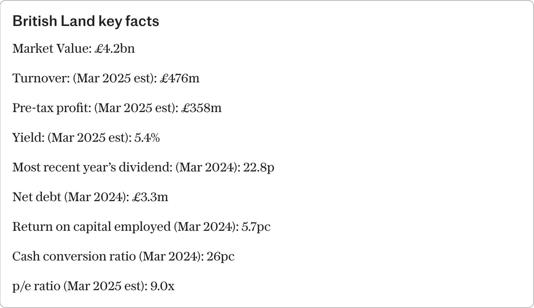
British Land (which Questor tipped in 2018) is one example. Its last reported NAV was 562p per share, and while the danger is the discount closes because the share price goes down, rather than asset values go up, the property giant may yet pay its way in the portfolio.
Questor: Private equity is snapping up cheap property funds – this one is no exception
Lowly Reit valuations are attracting attention. Private equity giant Starwood is bidding for Balanced Commercial Property Trust while Segro is in the process of buying Tritax EuroBox and New River Reit is bidding for Capital & Regional.
Hi! I know this is somewhat off topic but I was wondering if you knew where I could get a captcha plugin for my comment form? I’m using the same blog platform as yours and I’m having trouble finding one? Thanks a lot !
Amedeo Air Four Plus Ltd ex-dividend date Aquila Energy Efficiency Trust PLC ex-dividend date AVI Japan Opportunity Trust PLC ex-dividend date BlackRock Latin American Investment Trust PLC ex-dividend date Bluefield Solar Income Fund Ltd ex-dividend date JPMorgan Asia Growth & Income PLC ex-dividend date JPMorgan Emerging Markets Investment Trust PLC ex-dividend date JPMorgan Japan Small Cap Growth & Income PLC ex-dividend date Merchants Trust PLC ex-dividend date Mid Wynd International Investment Trust PLC ex-dividend date MP Evans Group PLC ex-dividend date North American Income Trust PLC ex-dividend date Primary Health Properties PLC ex-dividend date SLF Realisation Fund C Ltd ex-dividend date SLF Realisation Fund Ltd ex-dividend date Strategic Equity Capital PLC ex-dividend date Supermarket Income REIT PLC ex-dividend date US Solar Fund PLC ex-dividend date
If u are in your accumulation stage, u have time on your side in case u buy a clunker. JGGI currently pays a 4% dividend re-based every year on it’s NAV. Part is paid from capital but the cash is still yours to do with as u wish. In the long term it’s doubtful u will lose any of your hard earned, if u can choose when to sell but there are periods of flatlining, so u need the dividend.
To achiever the target portfolio of 7% u would need to split your capital and buy a high yielder such as NESF, other Trusts are available and u could most probably accept a blended yield of 6% and hope that u can take some profits from JGGI to re-invest in your portfolio. Most probably not a great time to buy JGGI but maybe one to watch if there is market weakness before a hoped for Santa Rally.
tokekwin inspirationsdanceacademy.com mattfogle@yahoo.com 218.3.199.232 Wonderful blog! I found it while browsing on Yahoo News. Do you have any suggestions on how to get listed in Yahoo News? I’ve been trying for a while but I never seem to get there! Many thanks.
There’s been a flurry of news from Chrysalis, culminating in the launch of its share buyback programme. Elsewhere, abrdn Property Income sells its portfolio, while Invesco Global Equity Income and Schroder Japan vie for the biggest dividend increase.
By Frank Buhagiar
Chrysalis Commences Buyback Programme
Chrysalis (CHRY) had a busy week. First up, the growth capital investor signalled it was planning to trigger its capital allocation policy (CAP) to bring forward the point at which it can return capital to shareholders. The company announced it had secured a £70 million debt facility with Barclays Bank. The plan, to draw down the full £70 million commitment to cover the first pillar of the CAP – a £50m “buffer” to cover working capital and any follow-on investments.
Just a few days later and the company announced the commencement of the second pillar of the CAP – buybacks. “The Company is now in a position to enact the second pillar of the CAP, initially via the launch of a share buyback programme of up to £40 million, representing approximately 8% of the Company’s current market capitalisation.” This followed another press release that revealed Visa had agreed to acquire portfolio holding Featurespace. The total consideration was not disclosed, but Chrysalis said it expects to receive around £89 million cash in total. That would represent a 20% premium to the company’s latest £74.2 million carrying value for its Featurespace investment. It would also mean, CHRY stands to make around three times the total £29.5 million it invested in Featurespace.
Winterflood: “We remain mildly puzzled at the urgency of conducting debt-financed share buybacks, but this transaction certainly changes the perspective. If the purpose of the debt facility was bridge financing, the financial risk profile is substantially lowered. The Featurespace transaction is a textbook exit, providing helpful validation of Chrysalis due diligence, valuation and portfolio quality, which had been under natural scrutiny following the challenges at wefox. While investors will continue to eye widely anticipated IPOs for Klarna and Starling, this deal will aid confidence in the remainder of the portfolio, and could pave the way for new investments in an attractively priced venture field once buybacks are completed.”
abrdn Property Income to Sell Portfolio
abrdn Property Income (API) put out a press release confirming “that it has entered into an agreement with certain funds and accounts managed by GoldenTree Asset Management LP for the sale of the entire share capital of abrdn Property Holdings Limited (APH), a wholly-owned subsidiary of API” for £351m. As part of the deal, API’s debt facility will be transferred in full to GoldenTree. APH holds API’s entire investment property portfolio, meaning the fund will be left with Far Ralia, 1,471 hectares of open moorland in the Scottish Highlands. Could think of worse things to be left holding.
JPMorgan notes “API said in the annual report that it was soft marketing Far Ralia – it was valued between £8-£10m at 31/12/24 and they went so far to say that the capital value uplift on a sale could make this investment one of its better investments.” Meanwhile, “In our view an immediate asset sale makes good sense, though it has inevitably involved taking a haircut to the 30/6/24 valuation, in this case of 8% (we have previously assumed 10% in our modelling).”
Dividend Watch
Invesco Global Equity Income (IGET) set to hike dividend by 70%. The multi-share class fund that recently consolidated the UK Equity, Balanced Risk Allocation and the Managed Liquidity shares into the Global Equity Income share-class unveiled a new dividend policy alongside its full-year results. This will see the fund pay an annual dividend of at least 4% in equal amounts each quarter. The dividend is calculated on the unaudited year-end NAV. Based on the first interim dividend of 3.13p, the projected annualised total dividend of 12.52p per share represents an eye-catching +70% increase over the annual dividend that was paid to shareholders of any share class for the year ending 31 May 2024.
Schroder Japan (SJG) goes one better with 100% dividend increase. This follows the announcement in the latest full-year results that the fund is adopting an enhanced dividend policy to pay out 4% of the average NAV in each financial year. As for how enhanced, well the Board declared a final dividend for the year of 10.81p per share, an increase of 100.19% over previous year’s payout.
The Results Round-Up – The Week’s Investment Trust Results
Seven investment companies in this week’s round-up. Five posted double-digit returns for their respective reporting periods, but which fund topped the lot clocking an eye-catching +28% NAV total return for the year?
By Frank Buhagiar•
JPMorgan Global Growth and Income (JGGI) riding the wave
JGGI’s +28% NAV total return for the full year easily trumped the MSCI AC World Index’s (sterling) +20.1%. The outperformance is no one-off either. Over five years, the +110.5% NAV total return is not far off double the benchmark’s +67.8%. The portfolio managers sound cautiously optimistic that the strong run will continue, “We believe that global stock picking across our core investment universe remains attractive and rewarding, and we see many well-priced opportunities. The Company has exposure to a number of long-term trends, such as the rapid adoption of AI tools, cloud computing and the transition to renewable energy.” Optimistic part ticked. As for the caution, “our caution about the near-term outlook, and the possibility of recession, has also influenced positioning. We have increased exposure to defensive sectors, which should outperform during any slowdown.”
Chairman Tristan Hillgarth meanwhile commented on the wave of consolidation that has swept through the sector – JGGI’s been in the thick of the consolidation wave and could well continue to be. That’s because “your Company’s size and performance track record make it a potentially attractive partner for other investment trusts.” With the shares barely budging on the day, the market adopted a wait-and-see approach.
Numis: “The outperformance was particularly impressive in 2023 given market performance was driven by a few U.S. tech stocks, and the approach seeks to combine ideas in both ‘growth’ and ‘value’ styles. The fund has grown substantially in recent years, through consolidation, tap issuance and strong performance. The fund has seen rollovers from Scottish IT and JPMorgan Elect, and most recently JPMorgan Multi-Asset Growth & Income in March.”
North American Income (NAIT), vive la difference
NAIT’s +11.1% NAV per share return for the latest half year beat the Russell 1000 Value Index’s +11.0% (sterling) by the narrowest of margins. The fund outperformed the S&P High Yield Dividend Aristocrat Index’s +9.8% (sterling) with room to spare though. A good platform then for the new fund managers at Janus Henderson who focus on “companies providing attractive current income and growth potential.” The portfolio managers believe the “emphasis on companies with consistent cash flows and healthy balance sheets can help buffer shareholder returns in the event economic demand is weaker than anticipated” and, presumably, maintain the fund’s differentiated offering. As Chair Charles Park writes “NAIT has something different to offer; a higher than index yield, a rising dividend and capital growth.” Shares tickled 2p lower at 306p on the day of the results but, by the end of the week, had more than made up the shortfall.
Winterflood: “Post period-end, material changes to portfolio, as Henderson took over management. Increased exposure to IT, with companies positioned to benefit from AI spending added. Increased weighting to Healthcare, which managers believe will ‘hold up well in the case of an unexpected slowdown in the economy, but should also do well over the cycle given the amount of innovation we are seeing in biotech and medical devices’. Also increased exposure to REITs, given ‘attractive dividend yields’.”
CQS New City High Yield’s (NCYF) clean sweep
NCYF’s full-year numbersticked all the boxes: +19.07% NAV total return; +22.73% ordinary share price total return; 8.62% dividend yield; share price trading at a +5.26% premium to net assets as at year-end. No wonder Chair Caroline Hitch is “delighted with the Company’s performance in this financial year”. What’s more “Against a backdrop of declining rates forecast, albeit at a steady pace, the global economic outlook appears reasonably good, and we remain optimistic for healthy performance from the Company in the coming year.” The portfolio manager is feeling positive too “We remain positive in our outlook as we continue to identify investment opportunities across a wide and diverse range of sectors and stocks, and we expect to see a resumption of high yield and financial issuances at the end of the third and beginning of the fourth quarters of 2024.” Shares took a breather though, finishing the day unchanged.
Schroders Capital Global Innovation’s (INOV) balancing act
INOV reported a -17.1% decrease in NAV for the half year after a handful of stocks negatively impacted performance. These included Oxford Nanopore Technologies and Autolus Therapeutics among the public equity holdings and Ocuterra and Reaction Engines in the private equity camp. Despite the disappointing performance, progress continued to be made towards rebalancing the portfolio. According to the investment managers, “We have continued to make progress in delivering the share buyback, shifting the portfolio to focus on private equity, and investing in exciting new opportunities across venture, growth and life sciences.” With the shares closing a tad lighter at 9.7p, the market seemingly focused on the half-year performance.
JPMorgan: “The split of the portfolio is 76% private unquoted investments, 6% investments listed on the LSE, 3% investments listed on a recognised overseas stock exchange, 15% cash/money market funds. INOV expects its liquid resources to be sufficient to meet its goals for share buybacks and to meet the funding requirements of the existing portfolio and to selectively fund new investments. We are Underweight.”
Baillie Gifford China Growth’s (BGCG) cautious optimism
BGCG’s +10.2% NAV return for the latest half-year periodcouldn’t quite match the MSCI China All Shares Index’s (sterling) +12.0%. Even so, “After an unprecedented three consecutive years of drawdowns in Chinese equities”, the positive numbers, a welcome return to form. There could be more to come. For, despite “the 12.0% rise over the period, our benchmark MSCI China All Shares is still trading at an extremely low multiple relative to the last 20 years and at nearly a 60% discount to the U.S. At the same time, its forecast earnings growth is expected to be one of the highest among major equity markets.”
Risks remain though. The economy’s transition from “property-led growth to one driven by technological development and scientific progress” may not be smooth and then there’s geopolitics, particularly with the U.S. election looming. “Overall, we remain cautiously optimistic that China will successfully navigate this transition and that the companies it produces will become increasingly world-class as a result.” Share price continued its vertical climb following the results – shares have now soared almost 40% in a little over two weeks as hopes grow that steps taken by the Chinese authorities will kick start the economy. Onwards and upwards.
Winterflood: “Managers observe that while the economy remains ‘relatively lacklustre’, share prices are supported by policy support, corporate focus on shareholder returns and low valuations.”
Dunedin Income Growth’s (DIG) concentration
DIG reported an +8.2% NAV total return for the half year compared to the FTSE All Share’s +12.3%. According to Chair David Barron, “The Company’s performance relative to the market reflects the portfolio of high quality companies which were out of favour during the period.” Nevertheless, “The portfolio continues to showcase strong quality characteristics while delivering a premium yield and stronger dividend growth compared to the FTSE All-Share Index.” That’s down to the fund managers selecting “high-quality, sustainable companies that can provide income resilience and capital growth across various economic conditions.”
The concentrated portfolio does mean “performance can lag the benchmark in periods where businesses exposed to rising commodity prices and positively geared to rising interest rates are in favour”. A price worth paying in the short term – cue a penny drop in the share price to 283p on the day of the results.
Winterflood: “Underperformance was primarily driven by quality names being out of favour.”
VietNam Holding’s (VNH) watershed moment
VNH had a good year. More than good. For, according to Chairman Hiroshi Funaki, “This year has been another watershed moment: the Fund has outperformed the market, the discount to net asset value (‘NAV’) has fallen to less than 5% and the Company’s shares have been included in the FTSE All Share and FTSE Small Company indices.” In terms of performance, NAV per share was up +23.6% compared to the Vietnam All Share Index’s +9.5%. That means VNH has outperformed the index for one, three, five, ten and 15 years.
No surprise Citywire named the fund ‘the best emerging market single-country fund’ and awarded the Investment Manager’s team a coveted triple-A performance. No surprise either that 99% of shareholders voted to extend the fund for a further five years back in December 2023. Question, is how can the fund top all that this coming year? Tune in next year to find out. In the meantime, shares added 7p on the day to close at 404p.
Winterflood: “Portfolio comprises 24 companies, top 10 holdings 63.2% of NAV. No unlisted exposure (up to 20% allowed). Portfolio P/E ratio 12.9x, 2025 expected EPS growth +20%.”
but don’t have enough funds to spread the risk, just in case u pick the wrong share.
The chart in the header, obviously from an advantageous point in time but with a re-investing dividends strategy weak markets are your friend. Now the position has doubled u could take out your stake and invest in a higher yielder and carry on with the strategy.
Current yield a variable 6% no discount to NAV as it’s an ETF