
How to make yourself £5,000 in passive income from stocks and shares

Story by Alex Sebastian
28 Aug
- Dividend Basics: Dividends are periodic payments companies make to shareholders. The dividend yield is calculated as annual dividend ÷ share price × 100. Consistency over years is key for reliable income.
- High-Yield Stocks & Funds: Best options include asset managers, insurers, and REITs. For hands-off investing, consider equity income funds or ETFs, which provide managed portfolios of dividend-paying stocks with varying fees.
- Growing Your Income: Start with spare money or lump sums, reinvest dividends (compounding) to increase holdings, and aim for long-term growth. Example: investing £8,000/year at 5% yield could reach £100,000 in under 10 years.

Passive income is the financial holy grail for many people.
The idea of making money in your sleep, while on the beach or engaging in your favourite hobby is highly appealing.
It is, of course, easier said than done. There is no shortage of people online claiming they can let you in on the secret to passive income, but the vast majority of these are scams, or active side hustles – entirely reputable, but where you need to do the legwork.
The stock market, however, offers arguably the most accessible, attainable and reliable route towards generating a passive income.
What are dividend yields?
Generating an income from stocks centres on dividends. These are the payments companies send to their shareholders periodically.
UK companies pay semi-annually in most cases, with the money split into an interim dividend and final dividend each year. Some companies pay once year, while in the US and other places, quarterly dividends are the norm.
The dividend yield of a stock is the percentage of its price that gets paid out in the dividend. To calculate it, you divided the company’s annual dividend per share by its share price and multiply that by 100.
So, for a stock with £5 per share dividend and £100 price, the yield it pays is 5per cent.
The numbers will vary year to year, but if they are reasonably steady over time, or even increasing, that is what investors should be looking for.
It is crucial that the dividend has been consistently strong over several years. One good payout followed by a sharp fall is not going to get you far.
Which stocks pay the highest dividends?
Dividends yields vary significantly from company to company. They can be as high as a double-digit percentage on occasions, or as low as zero. Many companies use all the money they bring in to fund their operations and growth plans, rather than paying a dividend.
But there are also types of companies that tend to pay high, consistent dividends, which should form the basis of any effort to generate an income through picking stocks.
First and foremost are asset managers and insurers, particularly in the UK. These are often mature companies, with most of their growth behind them and relatively stable costs of doing business.
This means much of the money they make can be given to their shareholders. Legal & General has been the highest yielding FTSE 100 stock in recent years at around 7.6 per cent, while Aberdeen Group has yielded around 7.1 per cent, M&G in the 7 per cent range and Admiral at 6.4 per cent.
Investment trusts, particularly real estate investment trusts (REITs) are another good option. These are companies which have a sole focus on investing money in assets on behalf their shareholders.
What are equity income funds?
If you do not feel sufficiently knowledgeable or comfortable picking a portfolio of dividend yielding stocks yourself, then investing in an equity income fund, or exchanged-traded fund (ETF), is perhaps the way to go.
Equity income funds have fund managers and analysts identifying the best stocks to meet a target level of income. They will do all the work in finding the stocks most likely to provide a reliable income at the minimal level of risk needed to achieve this. This will of course come with a fee attached. These vary, but broadly land between 0.6 per cent and 1 per cent per year in most cases.
Top-performing equity income funds over the past three years include JOHCM UK Equity Income, TM Redwheel UK Equity Income and Man Income Fund. As always, past performance does not mean future performance will be the same.
There are also ETFs that are structured to target a wide selection of strong, consistent dividend payers. These are not managed on a day-to-day basis, but are tweaked occasionally by the provider.
The advantage over actively managed funds is a lower fee, typically in the region of 0.15 per cent to 0.4 per cent. Examples include iShares UK Dividend and Vanguard FTSE All-World High Dividend Yield.
How to generate a £5k income from stocks
Clearly some spare money is required to start with, so generating an income from shares is not going to be for everyone, but it might be more achievable than many people think – and you certainly don’t need thousands of pounds going spare to get started.
But being consistent could see you save several thousand pounds a year, and doing so over five to ten years would get you to a point where a meaningful amount of dividend income could then be generated.

Year after year, shares can compound to grow far bigger (Getty Images)
If you are fortunate enough to receive a lump sum from selling something, perhaps a work bonus or inheritance, that offers a great starting point and puts reaching passive income on fast forward.
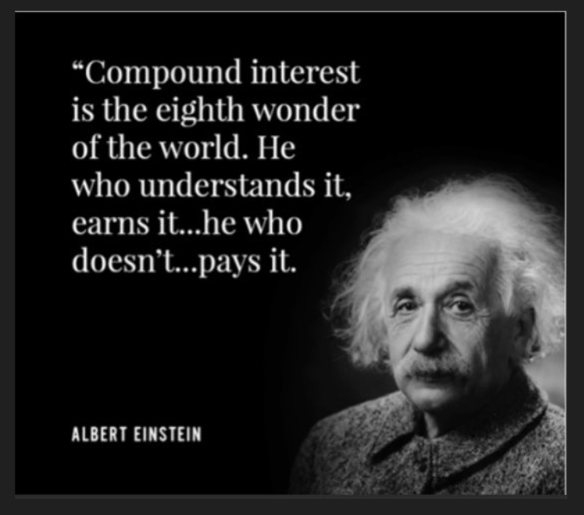
Best of all, everyone can let compounding go to work to do the heavy lifting over time. Compounding sees you reinvest the dividends you receive back in the same shares (rather than receiving the cash) to increase how many shares you own. In turn, that means next time there’s a dividend payout you get a larger amount – and so on, repeated year after year.
This requires deferred gratification, as you are sacrificing any income you could draw now to benefit from a much bigger passive income later down the line.
By way of a broad example, putting £8,000 a year into a dividend fund yielding around 5 per cent which reinvests the dividends – known as the accumulation units of the fund – could get you reach a total of £100,000 in under ten years, without considering any price gain to the shares. Share prices can also fall of course, particularly in the short term – but if your goal is accumulating shares that’s actually not a problem when it comes to dividend payment time, as the same amount of money can compound into more shares than if the price was higher at that time.
Once you reach £100,000 you could switch to what is called the income units of the funds you are using, instead of accumulation.
An alternative method would be to target higher growth funds at the start, which could reach your target several years earlier if they rose at an annual 7-8 per cent rate, for example, then switch to the dividend fund once you are either at your £100,000 target or ready to start taking income.
With a yield of 5 per cent you would have £5,000 a year paid out to you in passive income, plus still have the value of any continued rise in the prices of shares held by the fund – and if doing so inside an ISA, there would be no tax to pay on any of the gains.
When investing, your capital is at risk and you may get back less than invested. Past performance doesn’t guarantee future results.

Leave a Reply