
Short answer: DX (Dynex Capital) is a high‑yield, high‑risk mortgage REIT with a 15.4% dividend yield, extreme leverage, and improving earnings spreads, but still exposed to rate‑cycle volatility. It is not a traditional property REIT — it is a leveraged bond‑carry vehicle. For income investors, DX is attractive only if you accept the volatility and the risk of dividend cuts.
📌 DX — Full Investment Analysis (Grounded in latest data)
🧭 1. What DX is
DX is an internally managed mortgage REIT (mREIT) investing in:
- Agency RMBS (Fannie/Freddie)
- Ginnie Mae MBS
- CMBS
- Interest‑only strips
It earns money from net interest spread, not rents. This makes DX behave more like a leveraged bond fund than a property REIT.
Source:
💰 2. Dividend & Income Profile
- Dividend yield: 15.41%
- Dividend: $2.04 annually, paid monthly
- Payout ratio: 211% of GAAP operating cash flow (very high)
- Dividend risk score: F
- Years of dividend growth: 2
Source:
Interpretation: DX’s dividend is not safe. Mortgage REIT dividends move with interest spreads and leverage. DX has cut dividends in past rate cycles.
📈 3. Earnings & Spread Trends
DX’s Q2 2026 results show meaningful improvement:
- EAD per share: $0.36 (+63.6% YoY)
- Net interest spread: 1.17%, up 21 bps YoY
- Portfolio growth: +40% YoY
- Coupons locked: 5–6% RMBS
Source:
Interpretation: DX is benefiting from stabilising rates and higher‑coupon MBS. This is the strongest operational improvement in several years.
⚖️ 4. Leverage & Balance Sheet
- Leverage: 8.1× equity
- Debt/book capital: 88.55%
- Net debt/EBITDA: 26.35×
Source:
Interpretation: DX is extremely leveraged — typical for mREITs, but still dangerous. Small spread changes = large earnings swings.
📊 5. Valuation & Returns
- Price: ~$13
- PE: 5.31
- ROE: 13.74%
- 12‑month return: +20.6%
- 10‑year CAGR: 6.97% (below S&P 500’s 13.49%)
Source:
Interpretation: DX is cheap on earnings but historically underperforms broad equities. Returns come mostly from dividends, not price appreciation.
🧨 6. Key Risks
Rate cycle risk (dominant)
DX is highly sensitive to:
- Yield curve inversion
- Rapid rate hikes
- Spread compression
This is the single biggest determinant of dividend safety.
Dividend cut risk
Payout ratio >200% of GAAP OCF is unsustainable long‑term.
Leverage risk
8× leverage magnifies both gains and losses.
MBS market volatility
Agency MBS are safe from credit risk, but not from duration/hedging risk.
🧠 7. Is DX a Buy?
UK‑based, income‑focused, analytical, and comfortable with REITs — here’s the tailored view:
DX is a buy only if you want:
- Very high monthly income
- Exposure to stabilising US rate spreads
- A contrarian, high‑yield mREIT with improving fundamentals
DX is not a buy if you want:
- Dividend stability
- Low volatility
- Property‑backed REITs (SUPR, PHP, SREI, LMP, etc.)
- Predictable NAV growth
My verdict:
DX = Speculative Income Buy …but only for a small position size due to dividend risk and leverage.
The improving spreads and strong EAD beat are positives, but the payout ratio and leverage mean DX should never be a core holding.
📌 Recommendation Table
| Factor | DX Score | Comment |
|---|---|---|
| Dividend Yield | ⭐⭐⭐⭐⭐ | 15.4% monthly income |
| Dividend Safety | ⭐⭐ | Payout >200% OCF |
| Earnings Trend | ⭐⭐⭐⭐ | Strong EAD growth |
| Leverage | ⭐⭐ | 8× leverage = high risk |
| Valuation | ⭐⭐⭐⭐ | Cheap PE, below 52‑week high |
| Long‑term Stability | ⭐⭐ | mREITs structurally volatile |
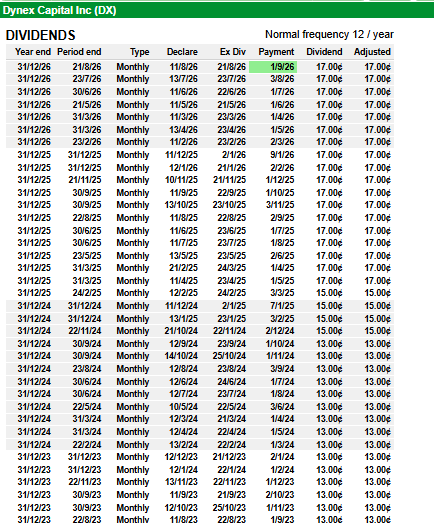

Not tradeable in the UK, the search continues.
Leave a Reply