Yield Shield: Outpacing VIG By 48% With 3 All-Weather Income Leaders
May 04, 2026, 3:55 PM ETVIG, THG, FDX, NJR
SA Quant Strategist
Summary
- A resurgence in inflation driven by energy price spikes from geopolitical tensions has created an environment where passive dividend benchmarks are struggling to maintain real purchasing power.
- A diversified mix across the Financial, Industrial, and Utilities sectors provides a defensive “Yield Shield,” built to combat inflation and volatility.
- By combining “Strong Buy” Quant ratings with elite Dividend Safety, this trifecta of all-weather leaders offers a 48% income premium over VIG, proving that investors can withstand volatility.
- I am Steven Cress, Head of Quantitative Strategies at Seeking Alpha. I manage the quant ratings and factor grades on stocks and ETFs in Seeking Alpha Premium. I also lead Alpha Picks, which selects the two most attractive stocks to buy each month, and also determines when to sell them.

Building a Yield Shield
The first four months of 2026 have delivered an important reminder to income investors: Safety will require an active mindset more often than not. Ending the first quarter, sticky inflation has become a concern once again—bolstered by a 12% spike in energy prices ignited by the U.S. involvement in the Iran War.
For those parked in standard dividend appreciation benchmark ETFs, the results have been less than ideal. While the broad market has remained resilient—with the S&P 500 rising 10.4% in April for its biggest monthly gain since November 2020—income investors searching for yield in traditionally “safe” ETFs have struggled to keep pace with the recent reemergence of inflation.
As the calendar turns over and we hit the month of May, financial pundits across the media are likely to dust off their favorite annual warning, “Sell in May and go away.” After all, it’s a midterm year, right?
Recent history writes a different story, though. While the next six months do typically produce weaker gains, it has rarely been negative. In fact, since 2016, only 2022 saw negative performance in May-October.
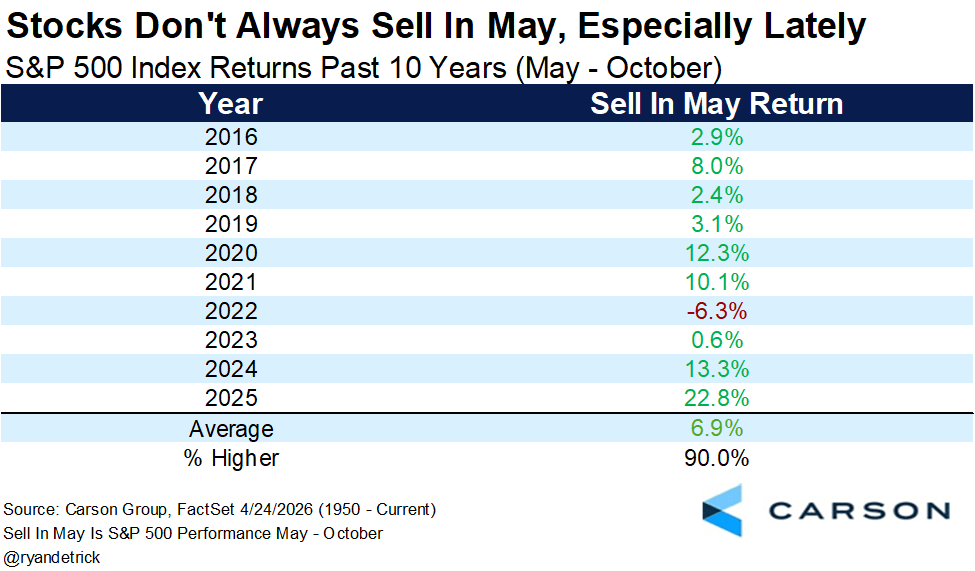
Skeptics would be right to point out that 2022, the last midterm year, was also fraught with inflation worries. But 2026 is not 2022. The “noise” may continue to echo across Wall Street this summer, which is why investors should be looking for an “all-weather” diversified solution.
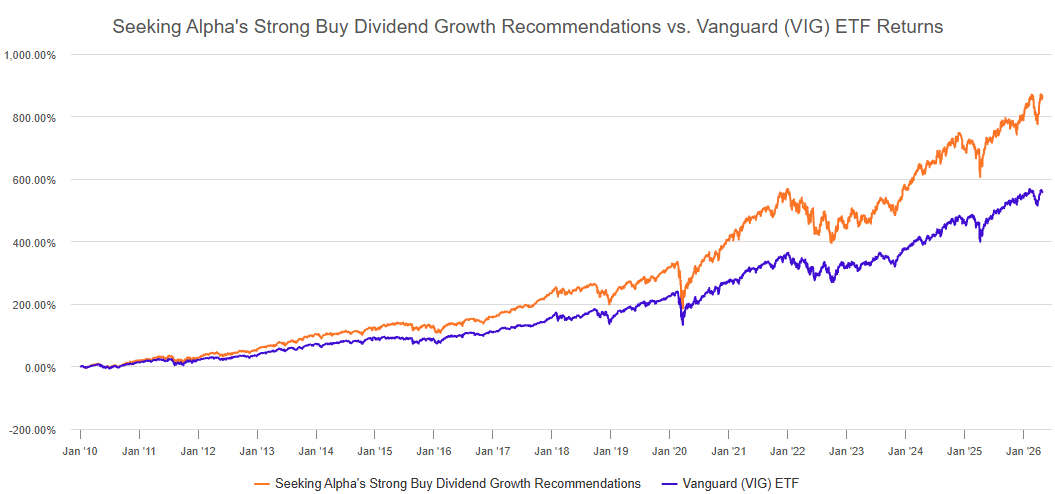
Investors can find signals in Seeking Alpha’s Quant Model, which has consistently outperformed the Vanguard Dividend Appreciation ETF (VIG) over the past decade. The historical chart below illustrates the effectiveness of this quantitative approach and sets the table for the three-pillar strategy we’re discussing today.
Three Sector Pillars
Today, we are looking at a trifecta of income leaders across the Financial, Industrial, and Utilities sectors. Three companies that together can capitalize on sticky inflation, withstand geopolitical shocks, and provide a safe yield cushion.
To see why this targeted approach is necessary, let’s compare our selected three stocks to VIG using the Trailing Twelve Month [TTM] Yield.
And to better understand the inflation gap, we have averaged the Pre-War inflation of 2.4% (February) and the Post-War inflation of 3.3% (March) to settle on a “Hurdle Rate” of 2.85%. This smoothes out the “war premium” volatility and provides a baseline for what income investors should be seeking.
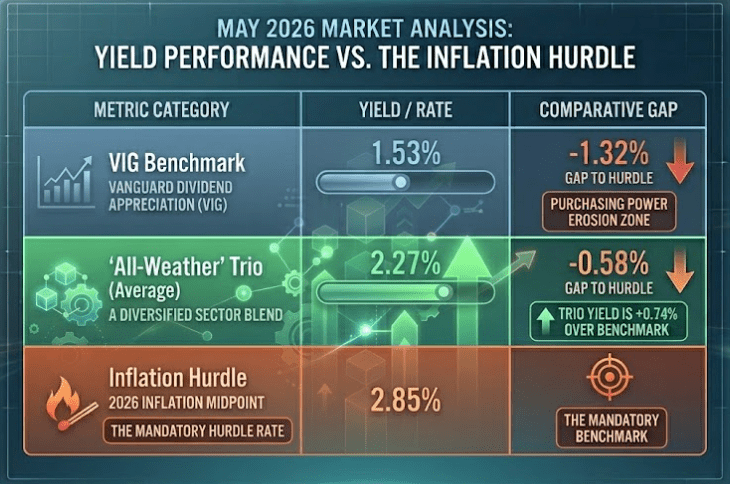
VIG’s passive income is no longer within striking distance of the cost of living in the current economic climate. Our All-Weather Trio represents a 48% income premium over the benchmark (when taking the simple average of the trio’s Dividend Yields [TTM] compared to that of VIG), more sector diversification, and a positive spread against pre-war inflation.
If you are looking to outright beat post-war inflation, our Quant Model has highlighted some top dividend stocks yielding over 6%.
Top Dividend Stocks: All-Weather
To select the best “all-weather” dividend stocks to feature in this article, I used the Seeking Alpha Stock Screener and chose the pre-selected Top Quant Dividend Stocks and filtered for Quant Strong Buys. I then selected stocks that exhibited strong Profitability Factor Grades, high Dividend Safety Grades, and ensured the selections created a sector-diverse group.
The dividend safety grade leverages a sophisticated data-driven approach to offer a reliable assessment of a company’s ability to keep paying its dividends and avoid dividend cuts. Our own Quant System backtesting helped avert 98.1% of Dividend Cuts By Owning Stocks With Dividend Safety Grades from A+ to B-.
1. The Hanover Insurance Group, Inc. (THG)
- Market Capitalization: $6.65B
- Quant Rating: Strong Buy
- Sector: Financials
- Industry: Property and Casualty Insurance
- Quant Sector Ranking (as of 4/28/2026): 12 out of 684
- Quant Industry Ranking (as of 4/28/2026): 3 out of 54
- Dividend Yield (FWD): 2.03%
The Financial Fortress
Among my top dividend stock picks for volatile markets in March, the Hanover Insurance Group provides coverage for business, personal, and specialty lines across the U.S.
A diversified portfolio with pricing power has allowed THG to perform across a volatile economic cycle. Insurance is one of the few sectors where the rising costs for consumers can directly translate into widening margins, offering a potential inflation buffer.
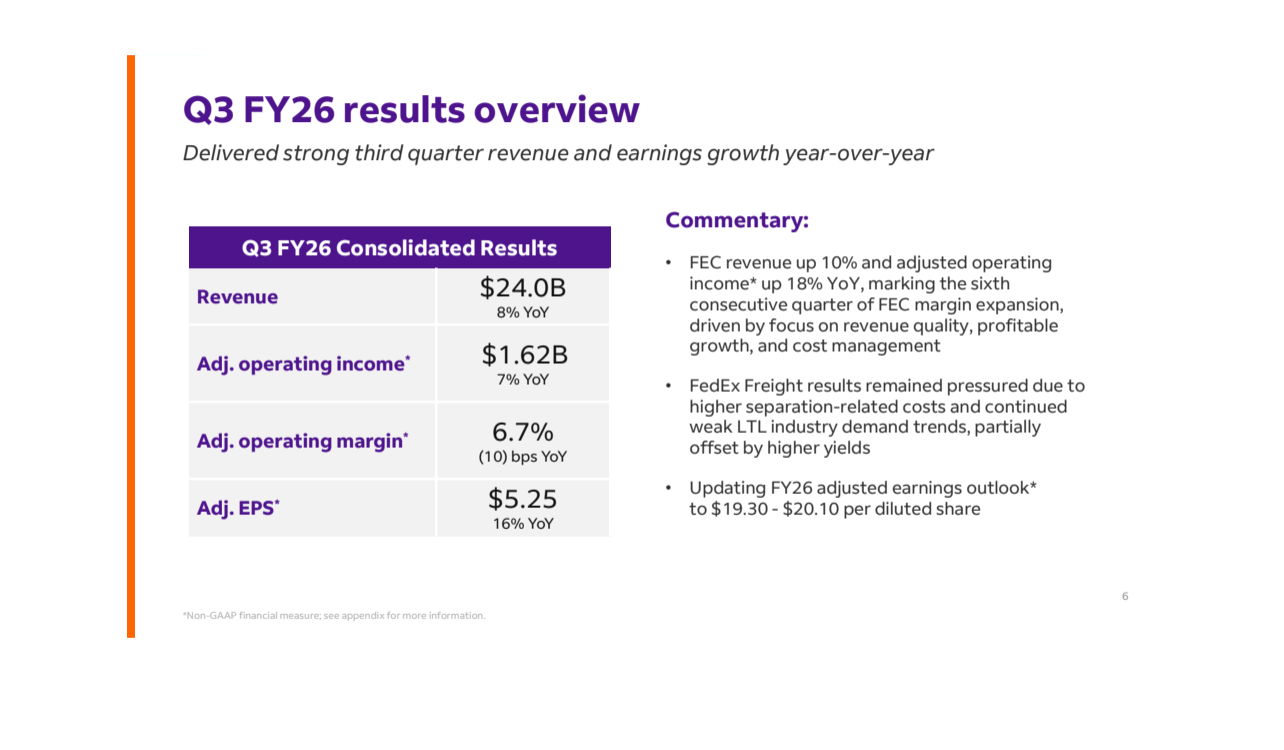
On its recent Q1 earnings call, CEO John “Jack” C. Roche said the company “achieved record first quarter performance, including an operating return on equity of 20.3% and operating earnings per share of $5.25…”
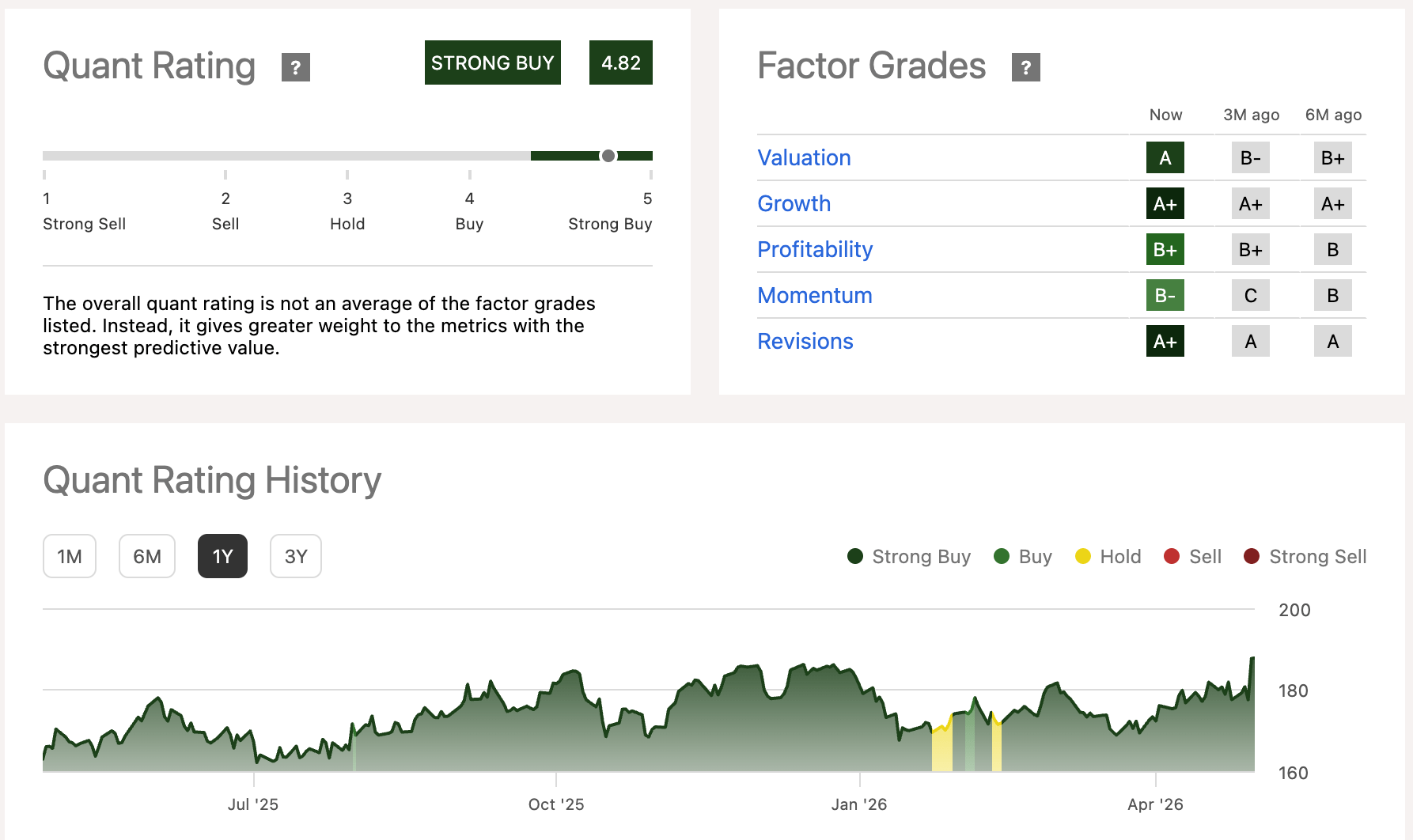
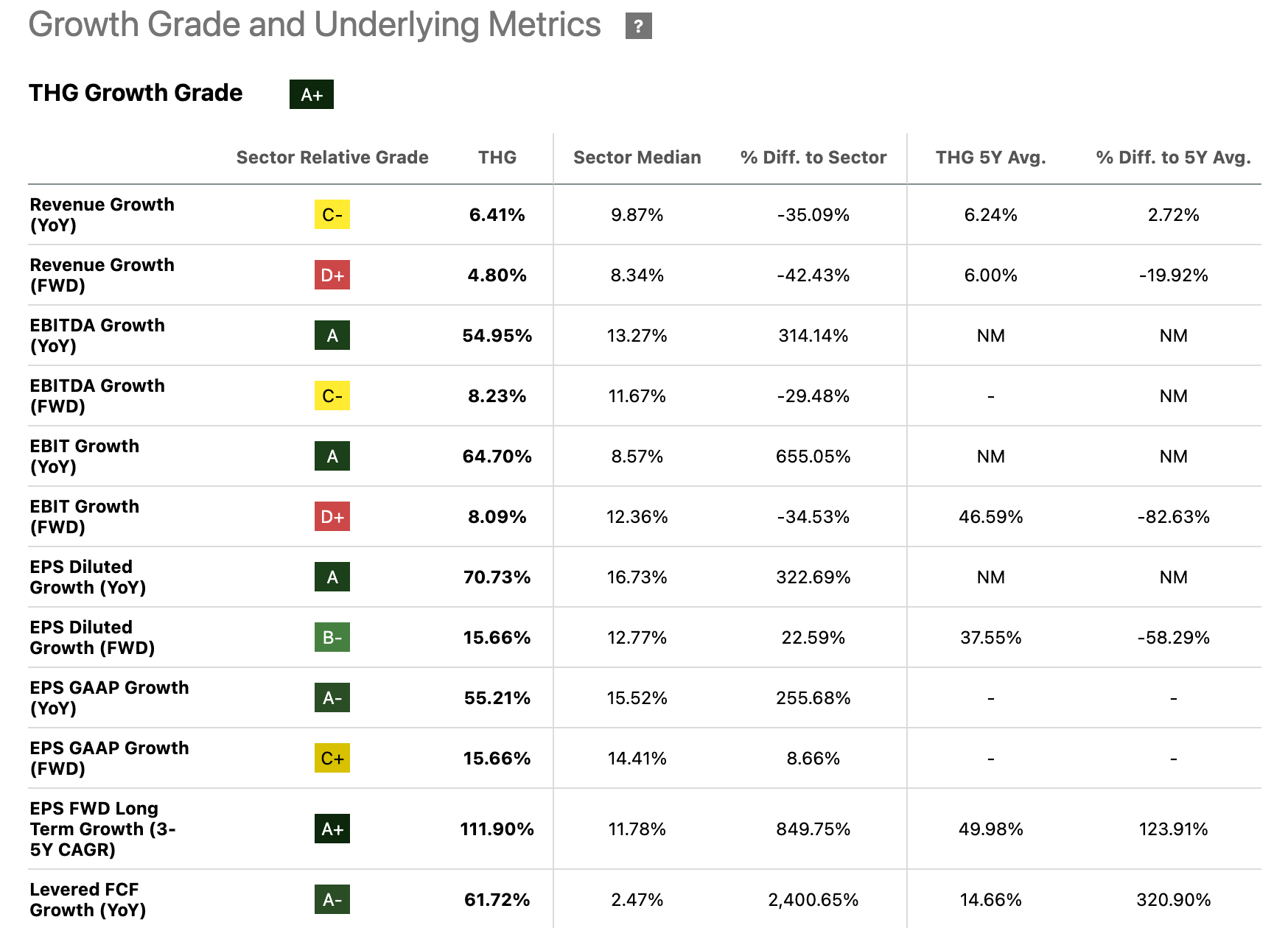
This recent financial success is a pillar of its ‘A+’ Growth Grade and is fueled by management’s expectations that its first quarter growth will continue to accelerate. This is illustrated below by its ‘A+’ grade in EPS FWD Long-Term Growth.
Dividend Grade Scorecard
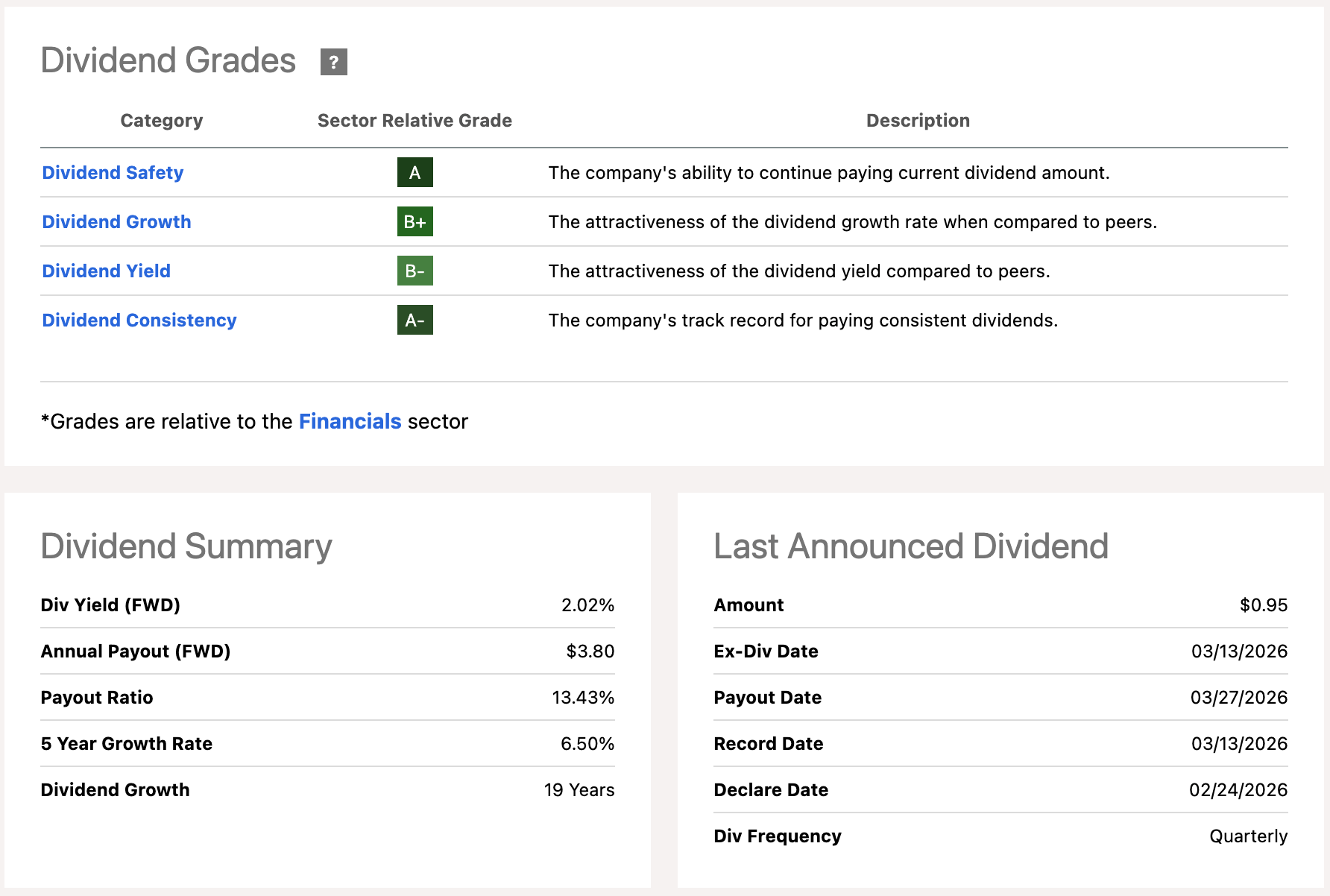
THG’s Dividend Consistency Grade of an ‘A-‘ is backed by its two-decade track record of dividend payments, outpacing this reliable sector’s median of 15.7 years by over 27%. This should give investors prioritizing quality and reliability an appealing opportunity to capitalize on this uncertain inflationary climate.
2. FedEx Corporation (FDX)
- Market Capitalization: $93.93B
- Quant Rating: Strong Buy
- Sector: Industrials
- Industry: Air Freight and Logistics
- Quant Sector Ranking (as of 5/1/2026): 3 out of 611
- Quant Industry Ranking (as of 5/1/2026): 1 out of 13
- Dividend Yield (FWD): 1.47%
The Industrial Engine
When global energy markets are the catalyst for increased volatility, the industrial sector may not be the first place you look for value as it often feels the burden of rising energy costs quickly. But FedEx has proven to be an exception to that thinking.
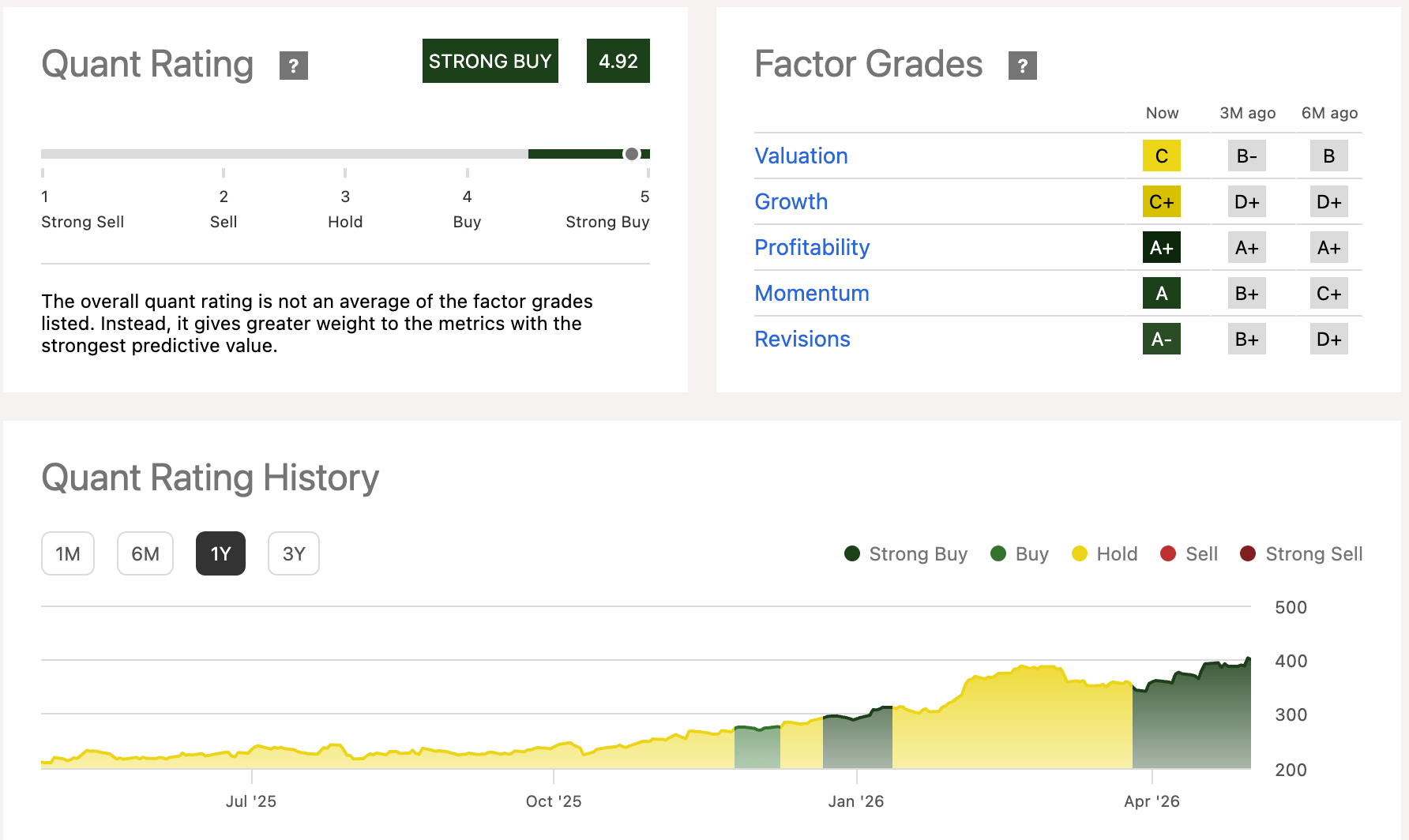
The world’s largest express package provider was able to create internal efficiencies this year, unlocking tremendous value. Our Quant System currently rates FDX a Strong Buy, backed by an ‘A+’ Profitability Grade and an ‘A’ Momentum Grade that has improved consistently over the past year.
FedEx showed remarkable revenue growth of 8% in FYQ3, with a 5% increase in U.S. domestic package volumes driven by significant account acquisitions resulting in increased market share. This is coupled with the tremendous success of its “DRIVE” program, which met its cost-savings target in FY2025, saving $2.2B.
Dividend Grade Scorecard
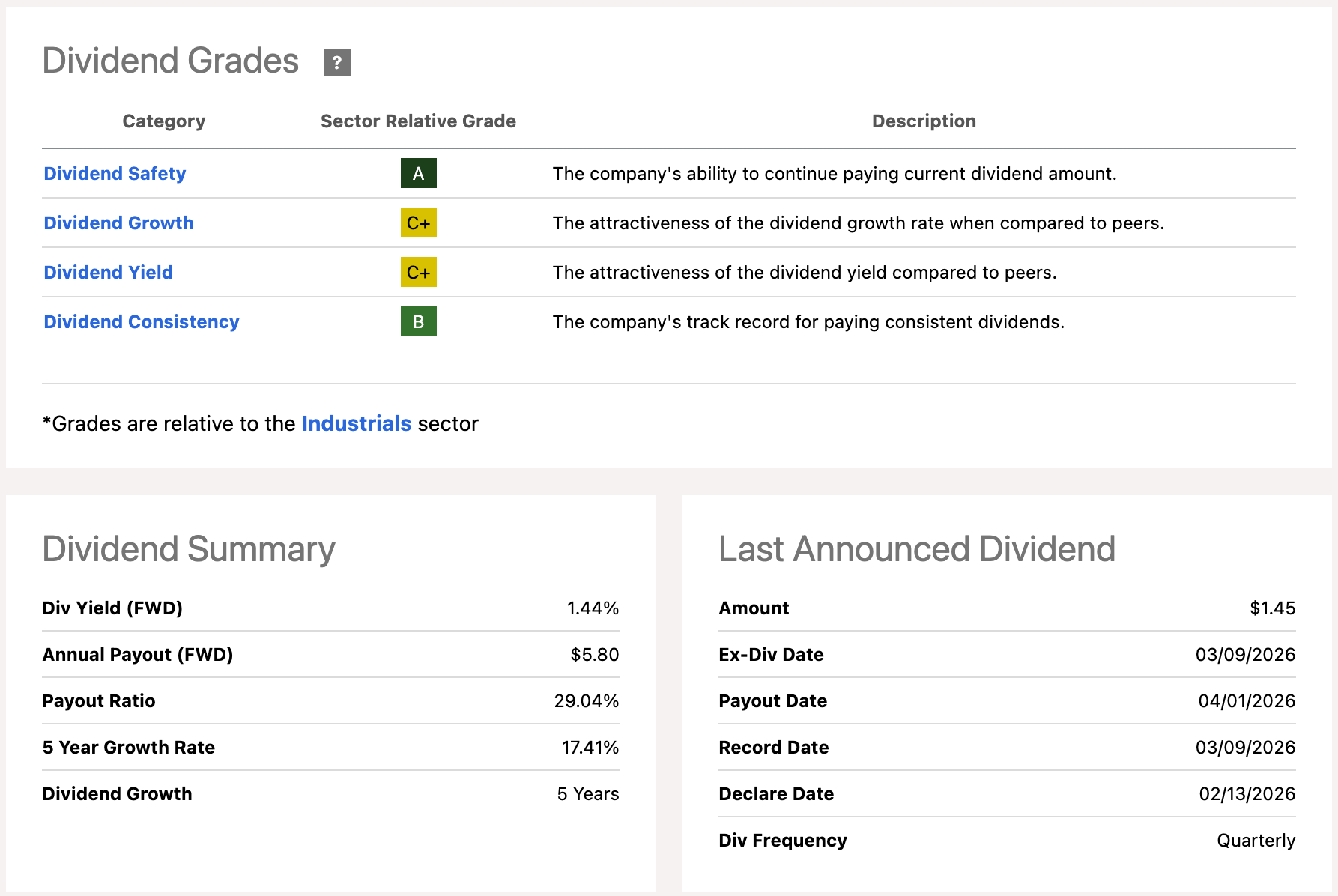
FedEx’s strong Quant Profitability Grade is a primary driver behind its ‘A’ Dividend Safety Grade. Led by its Cash From Operations (TTM) at $8.18B, a figure that trounces the sector median of $416.86M. At about 20x that of its Industrial peers, FedEx’s cash position provides a significant cushion to weather the temporary rise in energy costs while maintaining long-term strategic initiatives.
3. New Jersey Resources Corporation (NJR)
- Market Capitalization: $5.65B
- Quant Rating: Strong Buy
- Sector: Utilities
- Industry: Gas Utilities
- Quant Sector Ranking (as of 5/4/2026): 7 out of 113
- Quant Industry Ranking (as of 5/4/2026): 1 out of 13
- Dividend Yield (FWD): 3.39%
The Utility Anchor
The final pillar of this VIG-beating trio provides the foundation for our all-weather grouping. New Jersey Resources Corporation (NJR) offers a non-discretionary staple of the utilities industry, securing stable and reliable cash flows that benefit from a supportive regulatory environment. NJR is comprised of five business units:
- New Jersey Natural Gas
- NJR Clean Energy Ventures
- NJR Energy
- Storage & Transportation
- NJR Home Services
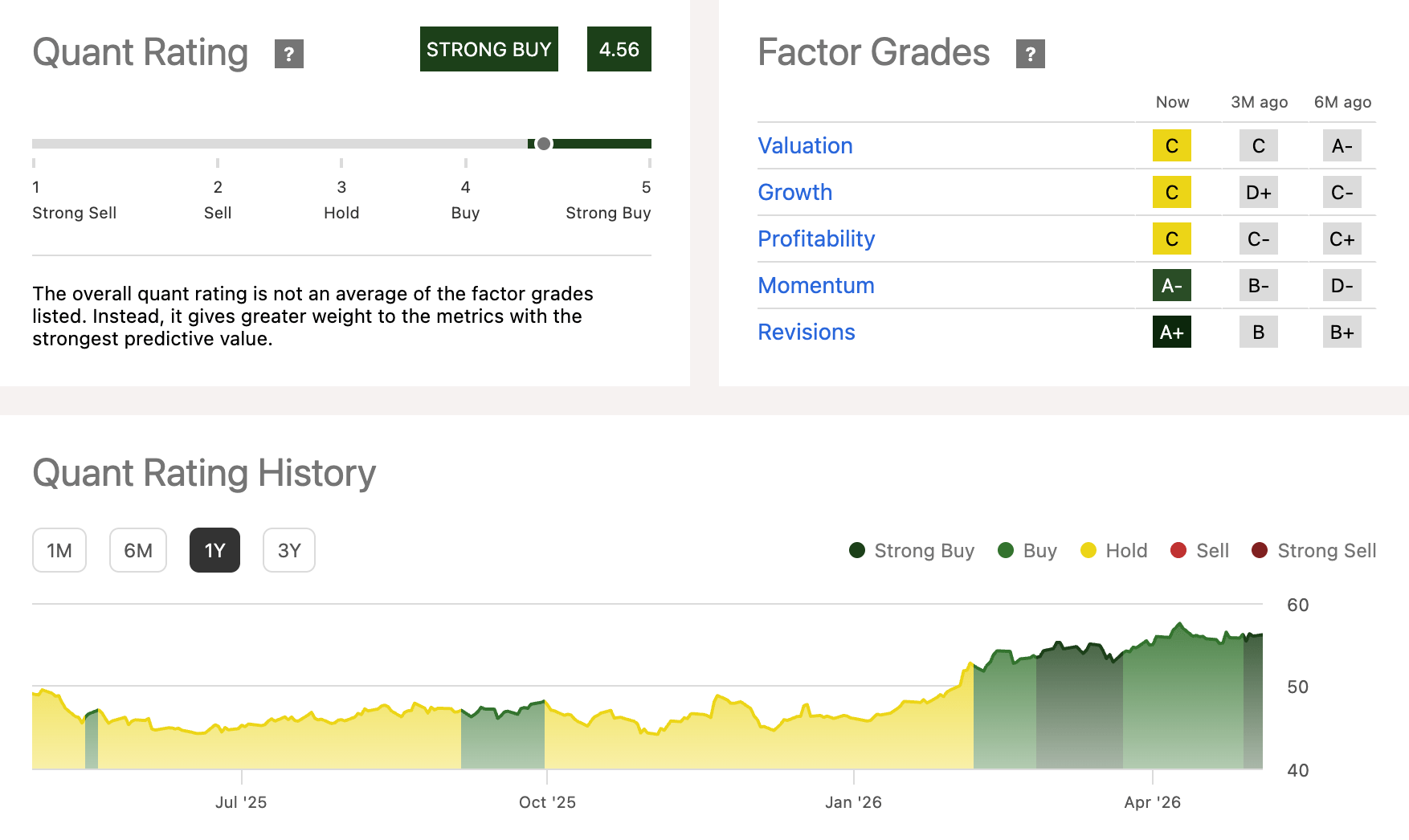
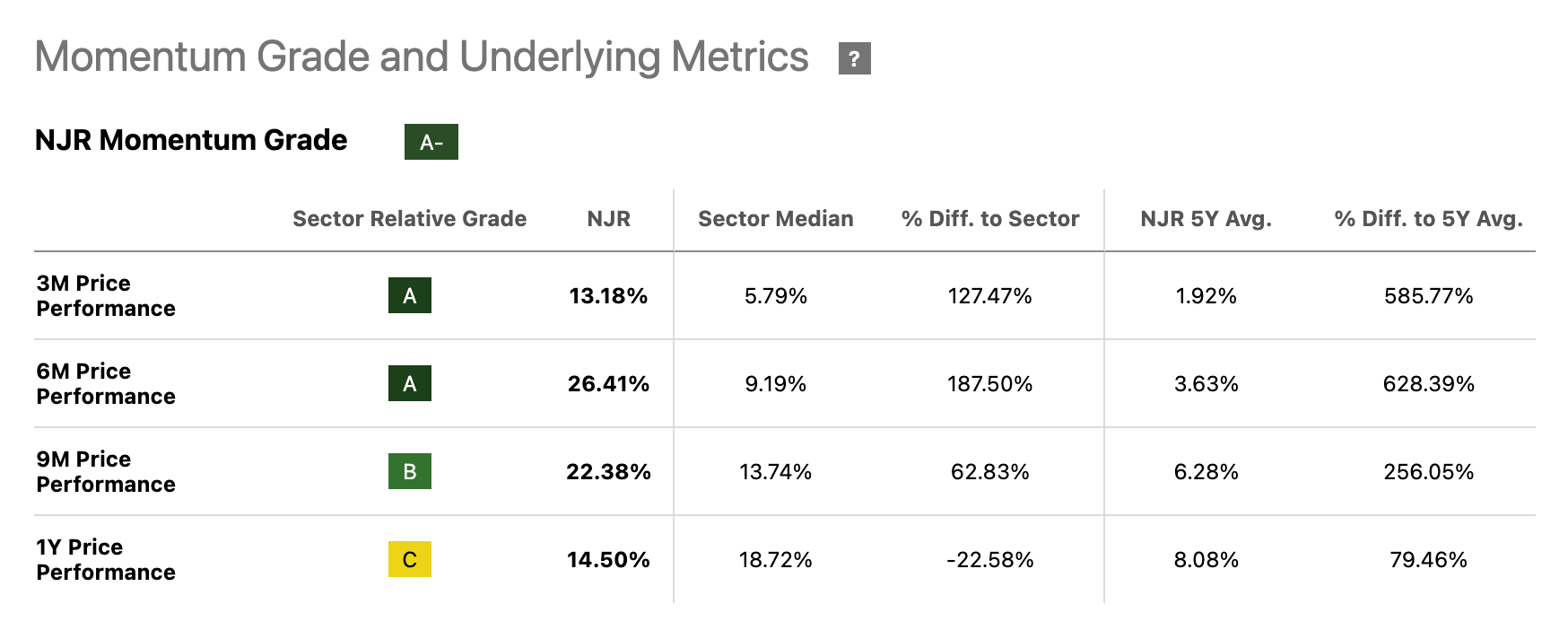
Our Quant System currently highlights NJR’s rapid Momentum Grade increase – currently an ‘A-’, when only six months ago it was rated a ’D-’. Investors should consider capturing this momentum heading into the summer. As shown below, NJR’s 3M and 6M Price Performance both have strong ‘A’ ratings and beat the sector median by more than double. This recent uptrend has also led to six upward revisions to year-end EPS guidance.
Before diving into the dividend grades, I want to address NJR’s low-rated Cash Per Share (TTM) metric. Unlike tech firms that hoard cash to buffer against volatile economic environments, utilities like NJR “hoard” active infrastructure. In this sector, cash not invested is an asset not being utilized for future growth.
Because returns are regulated, cash flows are only generated when infrastructure is active and in the ground. Income investors shouldn’t be concerned about a lean cash balance sheet because this process requires significant, continuous capital investment and is largely a byproduct of putting its capital to work. You don’t have to look very far to find proof of a healthy business model. Just take a look at its dividend payout history…
Dividend Grade Scorecard
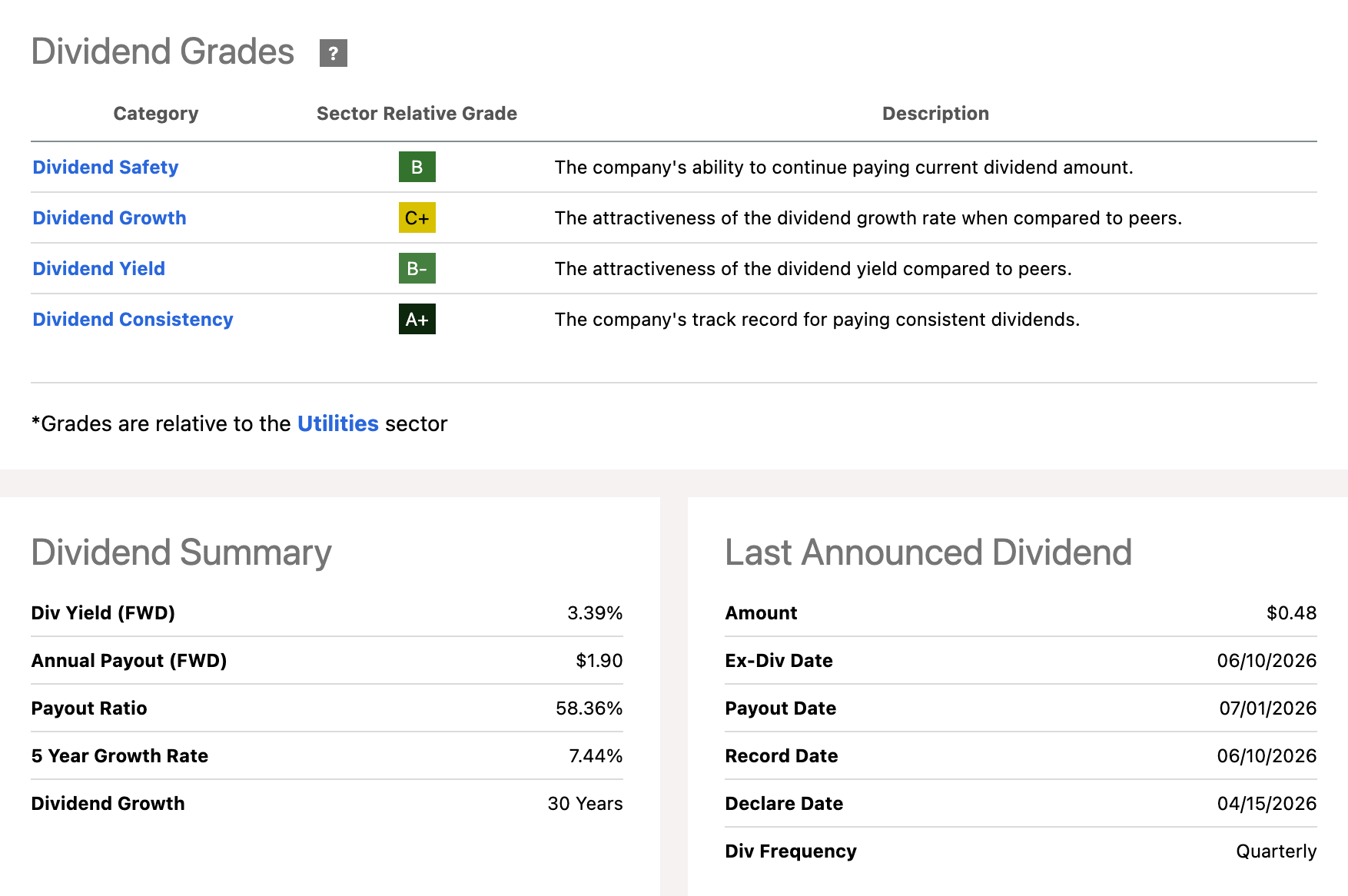
NJR’s reliable track record is underpinned by its strong dividend consistency grade, highlighted by an eye-popping 36 consecutive years of payments—including 30 straight years of growth. This reliability is matched by its strong income potential, with NJR’s Dividend Yield [FWD] standing at 3.39%, topping the sector median by 8.30%.
Looking Ahead: All-Weather Protection
This year has so far presented investors with curveball after curveball. However, you don’t have to sacrifice returns for safety, nor do you have to risk your portfolio for growth. You simply need a balanced, “quantamental” approach to income investing—one that finds the sweet spot of an all-weather portfolio.
While we hope inflation doesn’t stick around, income investors must be prepared for any scenario that comes down the pike later this year. If the first four months are any roadmap, more surprises are likely on the horizon, and this trio of all-weather stocks is ready to shield you from them.
More on my IG service
- I am Steven Cress, Head of Quantitative Strategies at Seeking Alpha. I manage the quant ratings and factor grades on stocks and ETFs in Seeking Alpha Premium. I also lead Alpha Picks, which selects the two most attractive stocks to buy each month, and also determines when to sell them.
This article was written by
Steven Cress, Quant Team
Analyst’s Disclosure: I/we have no stock, option or similar derivative position in any of the companies mentioned, and no plans to initiate any such positions within the next 72 hours. I wrote this article myself, and it expresses my own opinions. I am not receiving compensation for it. I have no business relationship with any company whose stock is mentioned in this article
Seeking Alpha’s Disclosure: Past performance is no guarantee of future results. No recommendation or advice is being given that any particular security, portfolio, transaction or investment strategy is suitable for any specific person. The author is not advising you personally concerning the nature, potential, value or suitability of any particular security or other matter. You alone are solely responsible for determining whether any investment, security or strategy, or any product or service, is appropriate or suitable for you based on your investment objectives and personal and financial situation. Steven Cress is the Head of Quantitative Strategy at Seeking Alpha. Any views or opinions expressed herein may not reflect those of Seeking Alpha as a whole. Seeking Alpha is not a licensed securities dealer, broker or US investment adviser or investment bank.

Wonderful web site. Plenty of useful information here. I?m sending it to a few friends ans also sharing in delicious. And naturally, thanks for your sweat!
I think other web site proprietors should take this web site as an model, very clean and fantastic user friendly style and design, as well as the content. You are an expert in this topic!
smile
smile
you’re truly a excellent webmaster. The website loading pace is incredible. It seems that you are doing any unique trick. Also, The contents are masterpiece. you have done a wonderful activity on this topic!
Usually I don’t read post on blogs, but I wish to say that this write-up very forced me to try and do it! Your writing style has been surprised me. Thanks, very nice post.
Thanks a lot for sharing this with all of us you actually know what you are talking about! Bookmarked. Please also visit my web site =). We could have a link exchange contract between us!
Thank you for another magnificent article. Where else could anyone get that type of information in such a perfect way of writing? I have a presentation next week, and I am on the look for such information.
Thanks for your blog post. A few things i would like to contribute is that personal computer memory ought to be purchased but if your computer still cannot cope with that which you do by using it. One can mount two RAM boards of 1GB each, in particular, but not one of 1GB and one of 2GB. One should look for the car maker’s documentation for the PC to make sure what type of memory is needed.