
His first book Security Analysis, which he co-authored with David Dodd, was published in 1934. In Security Analysis, he proposed a clear definition of investment that was distinguished from what he deemed speculation. It read, “An investment operation is one which, upon thorough analysis, promises safety of principal and a satisfactory return. Operations not meeting these requirements are speculative.”
Warren Buffett describes The Intelligent Investor (1949) as “the best book about investing ever written.”[6] Graham exhorted the stock market participant to first draw a fundamental distinction between investment and speculation.

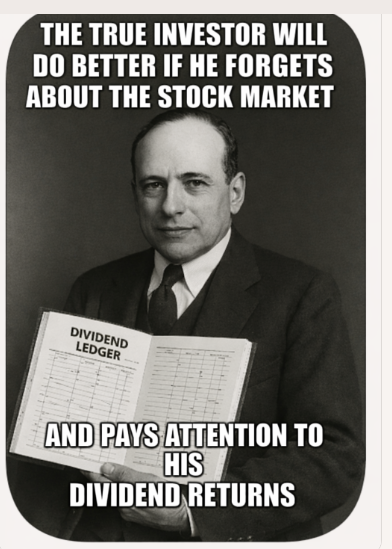
Graham wrote that the owner of stocks should regard them first and foremost as conferring part ownership in a business. With that perspective in mind, the stock owner should be unconcerned with erratic fluctuations in stock prices, since in the short term the stock market behaves like a voting machine, but in the long term it acts like a weighing machine (i.e. its true value will be reflected in its stock price in the long run).
Graham distinguished between defensive and enterprising investors. The defensive investor seeks to minimize the time and effort — and, above all, the worry — of investing. So the defensive investor seldom trades, renouncing the attempt to forecast market behavior and security prices, instead holding for the long term. The enterprising investor, in contrast, is one who has more time, interest, and can devote the effort to original analysis seeking exceptional buys in the market. Graham recommended that enterprising investors devote substantial time and effort to analyze the financial state of companies. When a company is available at a discount to its intrinsic value, a “margin of safety” exists, which makes it suitable for investment.
Graham wrote that “investment is most intelligent when it is most businesslike.” By that he meant that investing, like running a business, is a systematic effort to maximize the likelihood of earning a reasonable return and to minimize the probability of suffering a severe loss. Thinking for yourself is vital: “You are neither right nor wrong because the crowd disagrees with you,” Graham wrote. “You are right because your data and reasoning are right.”
Graham’s favorite metaphor is that of Mr. Market, a fellow who turns up every day at the investor’s door offering to buy or sell his shares at a different price. Usually, the price quoted by Mr. Market seems plausible, but occasionally it is ridiculous. The investor is free either to agree with his quoted price and trade with him, or to ignore him completely. Mr. Market doesn’t mind this, and will be back the following day to quote another price. The investor should not regard the whims of Mr. Market as determining the value of the shares that the investor owns. The investor should profit from market folly rather than participate in it. The investor is best off concentrating on how the underlying businesses perform, not on how Mr. Market behaves.
Leave a Reply